

Best Day Trips from Đerdap 2026: Zaječar, Negotin Wine Region, Viminacium & More
Disclaimer: Travel information is subject to change. Always verify opening hours and transport options before visiting. This guide is for informational purposes only.
Quick Answer: Best day trips from Đerdap: Zaječar (50km, Roman Gamzigrad/Felix Romuliana UNESCO site), Negotin wine region (60km, Serbia's finest wines), Viminacium (120km, largest Roman city in Serbia). All reachable by car within 1-2 hours. Explore eastern Serbia real estate on Investra.io.
Introduction: Đerdap as a Base for Exploring Eastern Serbia
Đerdap National Park is not just a destination in itself — it is an ideal base for exploring one of Serbia's most historically rich and undervisited regions. Eastern Serbia, stretching from the Danube gorge to the Bulgarian border, contains some of the country's most significant Roman archaeological sites, the finest wine-producing region, and a landscape of rolling hills, medieval monasteries, and traditional villages that feels genuinely off the beaten path.
The region around Đerdap was the heartland of the Roman province of Moesia Superior, and the concentration of Roman monuments within a 150km radius is extraordinary — from the Tabula Traiana inscription visible from the gorge to the UNESCO-listed Felix Romuliana palace complex near Zaječar and the vast Viminacium legionary fortress near Kostolac. Combined with the Negotin wine region (producing some of Serbia's best wines from indigenous varieties) and the traditional villages of the Timok Valley, eastern Serbia offers a week or more of rewarding exploration.
According to World Bank tourism data, eastern Serbia receives fewer than 8% of Serbia's total tourist arrivals despite containing over 30% of the country's UNESCO-listed and nationally significant heritage sites — making it one of Europe's most underappreciated cultural tourism destinations.
Day Trip 1: Zaječar and Felix Romuliana (50km, 1 hour drive)
The town of Zaječar is the regional centre of eastern Serbia and the gateway to Felix Romuliana (Gamzigrad), one of Serbia's two UNESCO World Heritage Sites. The palace complex was built by the Roman Emperor Galerius (co-emperor with Diocletian) in the late 3rd and early 4th centuries AD as his retirement residence and mausoleum. The site features extraordinary mosaic floors, the remains of two temples, a tetrapylon gateway, and the tombs of Galerius and his mother Romula on the nearby Magura hill.
Felix Romuliana is open daily from 9:00 to 17:00 (summer) and 9:00 to 15:00 (winter). Entrance costs 500 RSD (€4.20) for adults. The on-site museum houses artefacts from the excavations including sculpture, coins, and architectural fragments. Allow 2-3 hours for the site and museum.
Zaječar itself is a pleasant town with a good local museum (Zavičajni muzej Zaječar) covering the region's history from prehistory to the present, several excellent restaurants serving traditional eastern Serbian cuisine, and a lively market. The town is known for the Gitarijada guitar festival held each August — one of Serbia's most popular music festivals.
Day Trip 2: Negotin Wine Region (60km, 1 hour drive)
The Negotin wine region, centred on the town of Negotin in the Krajina district, is Serbia's most celebrated wine-producing area and one of the Balkans' finest. The region's continental climate, limestone soils, and indigenous grape varieties — particularly Prokupac, Tamjanika, and Začinak — produce wines of genuine character and quality that are increasingly attracting international attention.
The Negotin wine region has over 40 registered wineries, ranging from small family operations to larger producers with modern facilities and tasting rooms. The most celebrated include Rajković Winery (known for its Prokupac and Tamjanika), Matalj Winery (producing award-winning natural wines), and Šijački Winery (one of the oldest in the region, with wines dating the tradition to the 18th century).
A wine tour of the Negotin region typically involves visiting 2-3 wineries with tastings and a traditional lunch. Several operators in Donji Milanovac and Zaječar offer organised wine tours with transport. Self-drive tours are also popular — the winery roads pass through beautiful rolling countryside with views of the Danube valley. According to Forbes, Serbian wines from indigenous varieties represent some of the best value in European viticulture, with quality bottles available for €8-20 at the winery.
Day Trip 3: Viminacium — Serbia's Largest Roman City (120km, 1.5 hours drive)
Viminacium, located near the town of Kostolac on the Danube, was the capital of the Roman province of Moesia Superior and one of the largest Roman cities in the Balkans, with a population estimated at 40,000 at its peak in the 2nd-3rd centuries AD. The site covers approximately 450 hectares and includes the remains of a legionary fortress, amphitheatre, baths, temples, and an extraordinary necropolis with over 14,000 documented graves.
Ongoing excavations at Viminacium have produced remarkable finds, including well-preserved mosaics, sculptures, and the famous "Viminacium mammoth" — the skeleton of a mammoth discovered in 2009 that is now displayed in a purpose-built museum on site. The site is open daily from 9:00 to 17:00, with entrance costs of 700 RSD (€6) for adults. Guided tours in English are available.
Viminacium is approximately 120km from Donji Milanovac — a longer day trip but easily combined with a stop at the Golubac Fortress on the return journey.
Day Trip 4: Timok Valley and Traditional Villages (30-50km)
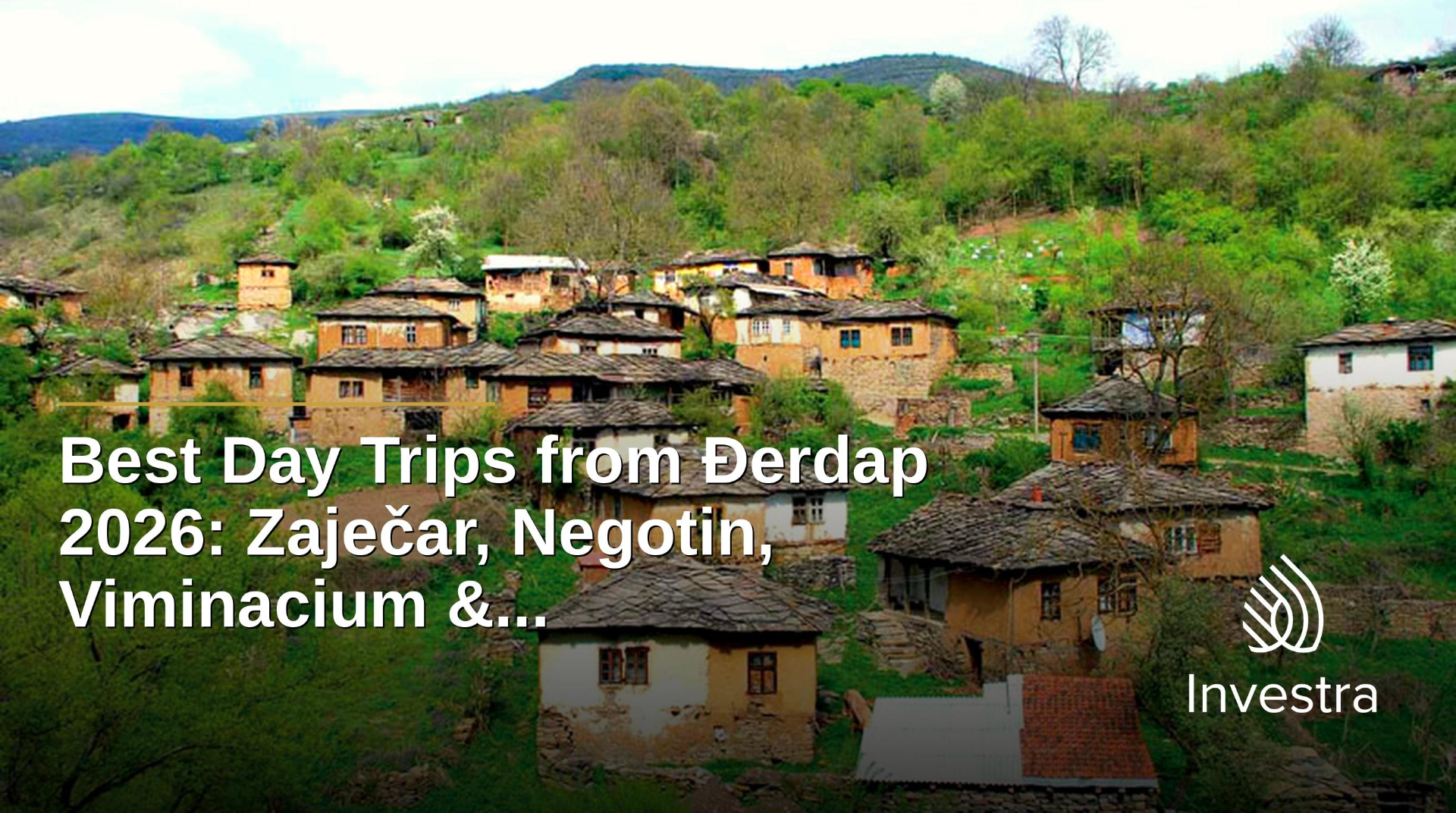
The Timok Valley, stretching south from the Danube towards the Bulgarian border, contains some of the best-preserved traditional Serbian village architecture in the country. Villages like Rajac, Rogljevo, and Šarbanovac have maintained their traditional stone and timber architecture, wine cellars (pivnice), and agricultural practices largely unchanged for generations.
The pivnice (wine cellars) of the Rajac area are a unique cultural phenomenon — small stone buildings built into the hillside for wine storage, many dating to the 18th and 19th centuries, now used as social gathering places where local families and friends meet to drink wine and socialise. Several pivnice owners welcome visitors for informal tastings.
Day Trip 5: Lepenski Vir and Donji Milanovac (within the park)
For those based in Golubac or the western part of the park, a day trip to Lepenski Vir and Donji Milanovac covers the park's most important archaeological site and its main town. The Lepenski Vir museum (9,000-year-old settlement, €3.50 entry) is followed by a boat tour from Donji Milanovac through the Great Kazan gorge (€25/person, 3-4 hours). This combination makes for a full and rewarding day.
Real Estate and Investment in Eastern Serbia
Eastern Serbia, including the Đerdap area and the surrounding Zaječar and Negotin districts, represents one of Serbia's most interesting emerging real estate markets. Property prices are among the lowest in Serbia — typically €200-500/m² for existing properties — while the region's growing tourism appeal, UNESCO heritage sites, and wine tourism are supporting increasing demand.
Investra.io lists verified properties across eastern Serbia, including guesthouses, agricultural land, and village properties suitable for renovation. For investment strategy and business consulting, sinisadagary.com provides expert guidance. Legal support for foreign investors is available through Findes.si.
Recommended Content
- Đerdap Travel Guide 2026
- Real Estate Investment in Serbia 2026
- Business Consulting — sinisadagary.com
- Cross-Border Investment — Findes.si
Odkrijte globalne investicijske priložnosti na Unifyr.space — vaš portal za pametne investicije.
📚 Recommended Content
Frequently Asked Questions About Day Trips from Đerdap
Q1: What is the best day trip from Đerdap?
Felix Romuliana (Gamzigrad) near Zaječar is the most rewarding day trip — a UNESCO World Heritage Site with extraordinary Roman mosaics and architecture, just 50km from Donji Milanovac. The Negotin wine region (60km) is the best choice for food and wine enthusiasts.
Q2: Can I visit Viminacium as a day trip from Đerdap?
Yes, but it is a long day — approximately 1.5 hours each way from Donji Milanovac. Consider combining it with a stop at Golubac Fortress on the return journey. Alternatively, visit Viminacium as a day trip from Belgrade (80km) and Đerdap separately.
Q3: Is the Negotin wine region worth visiting?
Absolutely. The Negotin region produces some of Serbia's finest wines from indigenous varieties like Prokupac and Tamjanika. Several wineries offer tastings and tours. The landscape of rolling vineyards and traditional villages is also beautiful. Plan a full day for a proper wine tour.
Q4: Do I need a car to do day trips from Đerdap?
A car is strongly recommended for most day trips. Public transport connections between Donji Milanovac and destinations like Zaječar and Negotin are limited. Organised tours with transport are available from Donji Milanovac and Belgrade for the main attractions.
Q5: What is Felix Romuliana and why is it a UNESCO site?
Felix Romuliana (Gamzigrad) is a late Roman palace complex built by Emperor Galerius in the late 3rd century AD. It is UNESCO-listed for its extraordinary state of preservation, including mosaic floors, temple remains, and the imperial mausoleum. It is one of only two UNESCO World Heritage Sites in Serbia.
Q6: Are there guided day tours from Đerdap to these destinations?
Yes, several operators in Donji Milanovac and Belgrade offer guided day tours to Felix Romuliana, the Negotin wine region, and Viminacium. The national park visitor centre can provide recommendations. Prices typically range from €35-65 per person including transport and guide.
Q7: Can I combine multiple day trips in one visit to Đerdap?
Yes. A 3-4 day stay in Đerdap allows you to combine a boat tour through the gorge, Lepenski Vir, Golubac Fortress, and one or two day trips to Felix Romuliana or the Negotin wine region. This is the recommended minimum for a comprehensive experience of the region.
Q8: What traditional food should I try in eastern Serbia?
Eastern Serbia has a distinctive cuisine: pečenje (roasted pork or lamb), pasulj (bean stew), and various grilled meats are staples. The region is known for excellent homemade cheeses, cured meats, and of course local wines. Traditional restaurants (kafane) in villages offer the most authentic experience.
Q9: Is eastern Serbia safe for tourists?
Eastern Serbia is very safe for tourists. Crime rates are low, locals are welcoming to visitors, and the main tourist sites have good facilities. The main practical challenge is limited English language skills outside of tourist centres — a basic Serbian phrasebook or translation app is useful.
Q10: What is the best way to get around eastern Serbia?
A rental car is by far the most practical option. Roads are generally good, though some rural routes are narrow. Petrol stations are available in all towns. Alternatively, organised tours from Belgrade or Donji Milanovac cover the main attractions with transport included.