
 English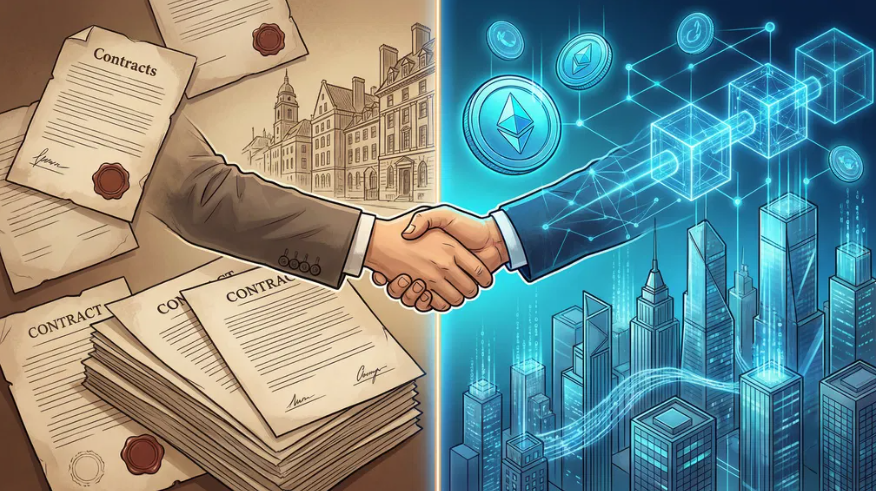
Introduction
The real estate industry, a cornerstone of the global economy, has been notoriously slow to innovate. For decades, the process of buying and selling property has been mired in paperwork, intermediaries, and high transaction costs. But a technological revolution is underway, and it’s poised to reshape the industry from the ground up. Blockchain technology and real estate tokenization are introducing a new paradigm that challenges the traditional way of doing things. This article compares blockchain-based real estate with the traditional model and explains why tokenization is the undisputed future of property investment.
The Traditional Real Estate Model: A Flawed System
For generations, real estate transactions have followed a familiar, yet cumbersome, process:
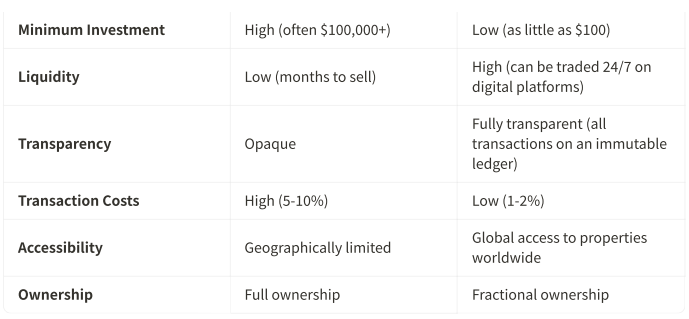
•High Barriers to Entry: Investing in real estate has traditionally required substantial capital, often in the hundreds of thousands or even millions of dollars. This has excluded a vast majority of the population from participating in one of the most reliable wealth-building asset classes.
•Illiquidity: Real estate is one of the most illiquid assets. Selling a property can take months, or even years, and involves a lengthy process of finding a buyer, negotiating a price, and navigating a complex legal and financial closing process.
•Lack of Transparency: The traditional real estate market is often opaque. Information about property values, ownership history, and transaction costs is not always readily available, creating an uneven playing field for buyers and sellers.
•High Transaction Costs: The involvement of numerous intermediaries—brokers, lawyers, title companies, and banks—results in high transaction costs, which can eat up 5-10% of the property’s value.
•Geographic Limitations: Investing in properties outside of one’s own geographic region is often difficult and expensive, limiting diversification opportunities.
The Blockchain Real Estate Model: A Paradigm Shift

Why Tokenization is the Future
1. Democratization of Investment
Tokenization breaks down the high financial barriers of traditional real estate, allowing anyone to invest with a small amount of capital. This democratization of investment empowers a new generation of investors to build wealth through property ownership.
2. Enhanced Liquidity
By converting illiquid real estate assets into tradable digital tokens, tokenization creates a secondary market where investors can buy and sell their shares with ease. This enhanced liquidity is a game-changer for an asset class that has long been characterized by its lack of it.
3. Unprecedented Transparency and Security
Blockchain’s immutable ledger provides a single source of truth for all transactions, eliminating the potential for fraud and disputes. Smart contracts automate processes like rental income distribution, further enhancing transparency and security.
4. Reduced Costs and Increased Efficiency
By disintermediating the transaction process, tokenization significantly reduces the fees associated with buying and selling property. This increased efficiency translates into higher returns for investors.
5. Global Market Access
Tokenization removes geographical barriers, allowing investors to build a diversified global real estate portfolio from the comfort of their homes. This opens up a world of investment opportunities that were previously inaccessible.
Frequently Asked Questions (FAQ)
Q1: Is tokenized real estate legally recognized?
Yes, in many jurisdictions, tokenized real estate is treated as a digital security and is subject to securities regulations. Platforms like Slaff.io work with legal experts to ensure that all offerings are compliant with the relevant laws.
Q2: How is the value of a token determined?
The value of a token is directly tied to the value of the underlying real estate asset. The property is professionally appraised to determine its fair market value, which is then divided by the total number of tokens to determine the initial token price.
Q3: What happens if the platform (e.g., Slaff.io) goes out of business?
In a properly structured tokenization, your ownership rights are legally tied to the property itself, not the platform. This means that even if the platform were to cease operations, your ownership stake in the property would remain intact.
Conclusion
The contrast between traditional and blockchain-based real estate is stark. While the traditional model is plagued by inefficiency, high costs, and exclusivity, the tokenization model offers a future that is accessible, liquid, transparent, and efficient. Slaff.io is at the forefront of this revolution, providing a platform that empowers investors to participate in the future of real estate. The shift is inevitable. The future of real estate is tokenized.
Disclaimer: This article is for informational purposes only and does not constitute financial or investment advice. Real estate and blockchain investments carry risks, including the potential loss of principal. Past performance is not indicative of future results. Before making any investment decisions, consult with a qualified financial advisor and conduct thorough due diligence. Slaff.io does not guarantee any specific outcome or profit.
Related Posts
No related posts available.