
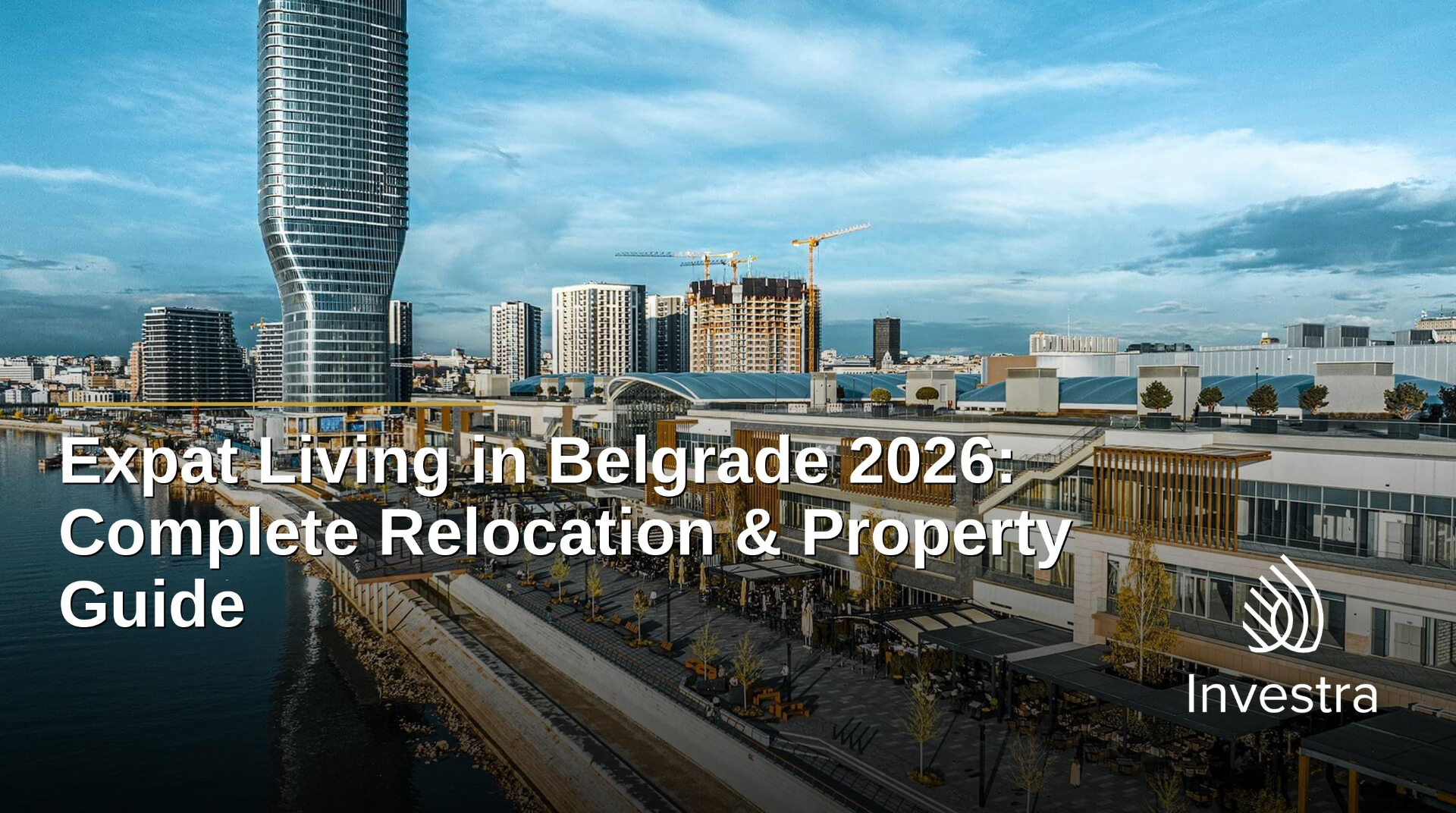
Expat Living in Belgrade 2026: Complete Relocation & Property Guide
Expat Living in Belgrade 2026: Complete Relocation & Property Guide
Why Expats Keep Moving to Belgrade
Belgrade feels different from many Western European capitals. The city moves at a human pace, with rents and home prices that still allow middle-income families room to breathe. English is common in business districts and among younger professionals, yet Serbian remains essential for daily errands and local friendships. Most newcomers notice the river views and the mix of old Ottoman streets with new glass towers within weeks of arrival.
Market Overview in 2026
The local real estate scene has matured since the post-pandemic years. Foreign buyers now account for roughly one in four transactions, helped by clearer ownership rules and faster notary processes. New supply has increased, especially along the Sava riverfront, yet demand from both locals and remote workers keeps upward pressure on well-located units. Serbia’s stable currency peg and low property taxes continue to support steady interest from outside investors.
One useful read on the broader picture is the Belgrade Real Estate Market 2026 report, which tracks transaction volumes and price movements by district.
Property Prices and Trends
City-wide, resale apartments now average 2,750-2,900 EUR per square meter. New-build projects in central zones often list between 3,400 and 4,200 EUR per square meter, depending on finish level and parking inclusion. Waterfront apartments at Belgrade Waterfront command the highest figures, sometimes exceeding 5,000 EUR per square meter for river-facing units.
Rental yields remain attractive. A two-bedroom flat purchased at 2,800 EUR per square meter and rented for 850-950 EUR monthly typically delivers 6.1 percent gross yield before costs. Net yields after management fees and vacancy sit closer to 5.4 percent. Capital gains have averaged 7-9 percent annually over the past three years in core districts, though growth has slowed from the double-digit spikes seen in 2022-2023.
Buyers looking for detailed legal steps can review the Buying Property in Serbia as a Foreigner guide before making offers.
Cost of Buying and Holding
Transaction costs for foreigners total around 3.5-4 percent, including notary, registration, and agency fees. Annual property tax runs between 0.4 and 0.8 percent of assessed value. More background appears in the Serbia Property Taxes 2026 overview.
Best Neighborhoods for Expats
Choice of district shapes both daily life and long-term returns. Each area offers a distinct mix of schools, cafés, and transport links.
Dorćol
Dorćol sits between the Danube and the old town. Expats like the mix of renovated warehouses turned lofts and quiet residential streets. Average prices here run 3,100-3,600 EUR per square meter. The neighborhood has several international nurseries and a growing number of co-working spots. Weekend markets and riverside paths make it popular with families who want walkability without downtown noise.
Vračar
Vračar remains the go-to choice for professionals and couples. Tree-lined avenues lead to Kalenić market and several embassies. Prices average 3,300 EUR per square meter. Public transport reaches the city center in under fifteen minutes. Many expats note the strong sense of community formed around local sports clubs and language exchanges.
Zemun
Zemun offers a quieter, almost village-like atmosphere within city limits. Riverside homes and older Austro-Hungarian buildings attract retirees and remote workers seeking lower density. Prices range from 2,400-2,800 EUR per square meter. The area has improved ferry links and new cycling paths along the Danube.
Belgrade Waterfront
The waterfront development continues to expand with new towers and retail. Units here appeal to investors seeking modern amenities and higher liquidity. A deeper look at this micro-market is available in the Belgrade Waterfront Real Estate 2026 piece. Prices start around 4,000 EUR per square meter for smaller units and climb quickly for larger river views.
Investment Potential and Realistic Returns
Belgrade still offers entry prices well below comparable cities such as Budapest or Prague. Rental demand stays firm from students, diplomats, and tech workers on short contracts. Over a five-year hold, total returns combining yield and modest appreciation have averaged 9-11 percent annually for well-chosen central apartments.
Investra.io lists hundreds of verified properties with current yield estimates and neighborhood comparisons, making it straightforward to run numbers before shortlisting viewings. Expats who buy through local agents with English support report smoother closings and better after-sales maintenance options.
Healthcare access has improved with several private clinics offering English-speaking staff and international insurance billing. International schools such as the British International School and the French School maintain waiting lists, so early enrollment matters. Cost of living for a couple without children runs roughly 1,800-2,200 EUR monthly, including rent, dining out twice a week, and utilities.
Community events organized through expat Facebook groups and the American-Serbian Chamber of Commerce help newcomers build networks quickly. Visas remain straightforward for most EU and US citizens, with temporary residency available through property ownership or remote-work registration.
Real Estate Investment Insights by Siniša Dagary at sinisadagary.com tracks similar cross-border moves and offers additional context on regional timing.
Rental Yields & ROI
Belgrade continues to offer attractive rental yields for expat investors in 2026, with gross yields typically ranging between 5.8% and 7.2% in prime central locations. Apartments in Dorćol and Vračar deliver the strongest returns due to consistent demand from young professionals and digital nomads, while properties near the Sava waterfront command premium rents that offset slightly lower percentage yields. Investors purchasing units between €120,000 and €180,000 can expect monthly rents of €650–€950, depending on size and condition.
Calculating Net Returns
After accounting for property tax (0.4%), maintenance fees, and occasional vacancy periods, net yields settle around 4.5–5.8%. Currency stability of the Serbian dinar against the euro helps protect returns for foreign owners. Many expats reinvest rental income into further renovations, boosting long-term capital appreciation that averaged 8–11% annually in Belgrade’s key districts over the past three years.
The Buying Process
Foreign buyers follow a straightforward sequence when acquiring residential property in Belgrade. The process begins with obtaining a tax identification number from the Serbian Tax Authority, followed by signing a preliminary purchase agreement with a 10% deposit held in escrow. A licensed notary then prepares the final sales contract, which is registered at the Real Estate Cadastre within 30 days.
Financing and Payment Options
Most expats pay in cash or via international bank transfer, though some Serbian banks now offer mortgage products to non-residents with stable income documentation. Closing costs, including notary fees, cadastre registration, and transfer tax, total approximately 3–4% of the purchase price. The entire transaction typically completes within six to eight weeks when all paperwork is prepared correctly.
Legal Considerations
Foreign nationals enjoy the same property ownership rights as Serbian citizens for residential real estate. However, agricultural land remains restricted unless the buyer establishes a Serbian-registered company. It is essential to verify that the property is free of liens through an official cadastre extract before signing any agreement.
Tax Obligations and Residency Implications
Property tax is levied annually at a low rate, while capital gains tax applies at 15% if the property is sold within five years. Expats who spend more than 183 days per year in Serbia may trigger tax residency status, requiring them to declare worldwide income. Consulting a bilingual lawyer specializing in cross-border transactions is strongly recommended to structure ownership efficiently.
Practical Tips
Opening a local bank account simplifies rent collection and utility payments. Major banks such as Banca Intesa and Raiffeisen accept foreign passports and proof of address for account setup within one week. Currency conversion through licensed exchange offices or fintech platforms like Wise helps minimize fees when transferring rental income abroad.
Community Integration and Daily Life
Joining expat groups on platforms such as InterNations or local Facebook communities accelerates social connections and provides reliable recommendations for service providers. Learning basic Serbian phrases improves interactions with neighbors and tradespeople, while English is widely spoken in real estate agencies and international clinics. Keeping digital copies of all ownership documents and residency permits ensures quick access during any administrative process.
Recommended Content
- Serbia Real Estate Market 2026: Complete Guide
- Buying Property in Serbia as a Foreigner 2026
- Belgrade Real Estate Market 2026
- Real Estate Investment Insights by Siniša Dagary
- Finds Group - Real Estate Investment Advisory
Odkrijte globalne investicijske priložnosti na Unifyr.space — vaš portal za pametne investicije.
📚 Recommended Content
Frequently Asked Questions
What rental yields can expats expect in Belgrade in 2026?
Gross yields typically range from 5.8% to 7.2% in prime districts, with net yields around 4.5–5.8% after expenses.
Can foreigners buy property in Serbia without restrictions?
Yes, foreign nationals have the same rights as locals for residential real estate, though agricultural land requires a local company structure.
How long does the property purchase process take?
The full process usually completes within six to eight weeks once the preliminary agreement is signed.
What are the main closing costs for buyers?
Closing costs average 3–4% of the purchase price, covering notary fees, cadastre registration, and transfer tax.
Do expats need a Serbian bank account?
While not mandatory, a local account greatly simplifies rent collection, utility payments, and tax compliance.
Is financing available for non-resident buyers?
Some Serbian banks now offer mortgages to foreigners with documented stable income, though cash purchases remain most common.
What taxes apply to rental income for expats?
Annual property tax is low at 0.4%, and income tax on rents applies if the owner becomes a Serbian tax resident.
Are there capital gains taxes when selling?
Capital gains tax is 15% if the property is sold within five years of purchase.
How can expats verify a property has no liens?
Request an official extract from the Real Estate Cadastre before signing the purchase contract.
What practical steps help with community integration?
Joining expat networks, learning basic Serbian, and using bilingual service providers accelerate integration and daily life management.
Related Posts
No related posts available.
