
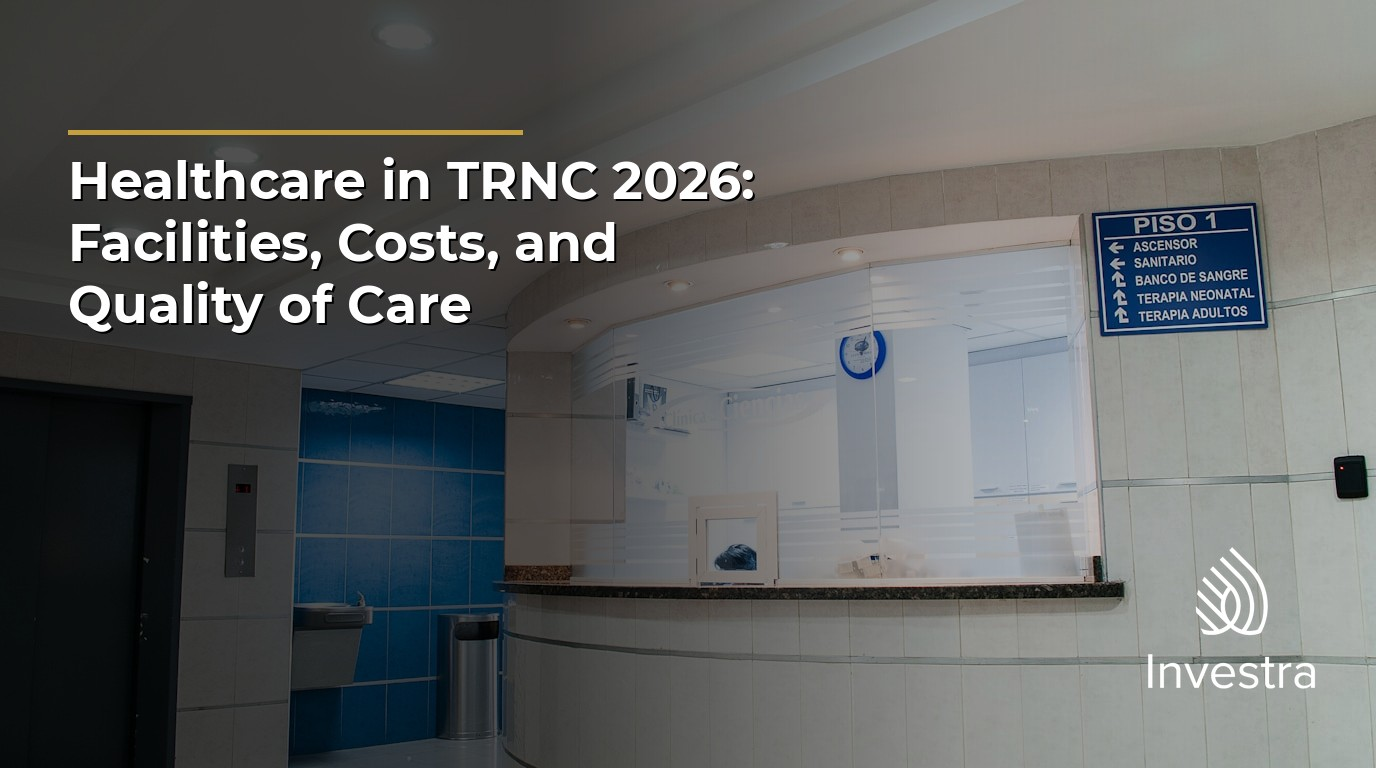
Healthcare in TRNC 2026: Facilities, Costs, and Quality of Care
Healthcare in TRNC 2026: Facilities, Costs, and Quality of Care
Disclaimer: The information provided in this article is for general informational purposes only and does not constitute medical or legal advice. Healthcare systems and costs are subject to change. Always consult with a qualified medical professional or insurance advisor for personal guidance.
For anyone considering relocating to, retiring in, or investing in property in Northern Cyprus (TRNC), understanding the local healthcare system is a fundamental part of the decision-making process. In 2026, the healthcare landscape in TRNC has evolved considerably, offering a blend of public services and a growing private sector that caters specifically to the large expat and international student community. At Investra.io, we believe that informed investors make better decisions — and that includes understanding the quality of life infrastructure in the regions where they invest.
This comprehensive guide covers everything you need to know about healthcare in Northern Cyprus: from the structure of the public health system and the quality of private hospitals, to health insurance options, costs, and practical tips for expats managing their health in TRNC.
1. Overview of the TRNC Healthcare System
The healthcare system in Northern Cyprus operates on a dual model: a public (state) sector and a private sector. The public system is administered by the TRNC Ministry of Health and provides services to TRNC citizens and registered residents at subsidized rates. The private sector has grown substantially over the past decade, driven by the increasing number of foreign residents, retirees, and international students who demand higher standards of care and shorter waiting times.
Quick Answer: TRNC has a dual healthcare system — public hospitals for residents at low cost, and a well-developed private sector for expats and those seeking faster, higher-quality care. Most expats opt for private health insurance. Learn more about living in TRNC at Investra.io.
The public health system is funded through general taxation and social security contributions. TRNC citizens and those with valid residency permits who contribute to the social security system are entitled to use public health facilities. Services include general practitioner (GP) consultations, specialist referrals, hospital admissions, emergency care, and prescription medications at subsidized prices.
However, the public system faces challenges common to many developing healthcare systems: limited resources, older equipment in some facilities, and longer waiting times for non-emergency procedures. For this reason, the majority of expats and foreign property owners in TRNC choose to use the private healthcare sector, which offers a significantly higher standard of facilities, English-speaking staff, and modern medical technology.
2. Major Public Hospitals in Northern Cyprus
The TRNC has several public hospitals distributed across the main population centers. Understanding their locations and specializations is important for both residents and visitors.
Burhan Nalbantoğlu State Hospital, Nicosia (Lefkoşa)
This is the largest and most comprehensive public hospital in Northern Cyprus, located in the capital city of Nicosia. It serves as the primary referral center for complex cases and offers a wide range of specialties, including cardiology, oncology, neurology, orthopedics, and maternity services. The hospital has undergone several modernization projects in recent years, improving its diagnostic capabilities and surgical facilities.
Kyrenia State Hospital (Girne)
Located in the popular coastal city of Kyrenia, this hospital serves the large expat and tourist population in the region. It offers emergency services, general medicine, and a range of specialist consultations. Given the high concentration of foreign residents in Kyrenia, the hospital has made efforts to improve English-language services.
Famagusta State Hospital (Gazimağusa)
Famagusta's state hospital serves the eastern region of TRNC, including the large student population of Eastern Mediterranean University. It provides emergency care, general medicine, and specialist services. The hospital is well-positioned to handle the health needs of the city's diverse population.
Other Regional Facilities
Smaller health centers and polyclinics are distributed throughout TRNC in towns such as Morphou (Güzelyurt), Iskele, and various villages. These provide primary care services and refer complex cases to the main hospitals.
3. Private Healthcare Facilities in TRNC
The private healthcare sector in Northern Cyprus has expanded rapidly to meet the demands of the growing international community. Private hospitals and clinics offer shorter waiting times, modern equipment, English-speaking medical staff, and a more personalized patient experience.
Quick Answer: Private hospitals in TRNC offer modern facilities, English-speaking doctors, and significantly shorter waiting times compared to public hospitals. Costs are reasonable by European standards. For a full expat guide to living in TRNC, visit North Cyprus Expat Guide 2026.
Near East University Hospital (Yakın Doğu Üniversitesi Hastanesi), Nicosia
This is one of the most advanced and well-equipped private hospitals in Northern Cyprus, affiliated with Near East University. It offers a comprehensive range of medical services, including advanced diagnostics, surgery, oncology, cardiology, and fertility treatments. The hospital is equipped with modern technology including MRI, CT scanners, and robotic surgery capabilities. It attracts patients not only from TRNC but also from Turkey and other countries seeking high-quality, cost-effective medical care.
Dr. Burhan Nalbantoğlu Private Hospital, Nicosia
A leading private hospital offering a wide range of specialist services. Known for its cardiology and orthopedics departments, it provides a high standard of care with modern facilities and experienced medical staff.
Kyrenia Private Hospitals and Clinics
Kyrenia has a concentration of private clinics and small hospitals catering to the large expat community. These range from general practice clinics to specialist centers for dentistry, physiotherapy, dermatology, and ophthalmology. Many of these clinics have English-speaking staff and are accustomed to working with international patients and insurance companies.
Dental Care
Dental care in TRNC is a particular attraction for expats and medical tourists. The quality of dental services is high, with many dentists trained in Turkey or Europe, and costs are significantly lower than in the UK, Germany, or other Western European countries. Many expats specifically choose to have dental work done in Northern Cyprus due to the combination of quality and affordability.
4. Health Insurance Options for Expats in TRNC
Understanding your health insurance options is critical before relocating to or spending extended periods in Northern Cyprus. There are several approaches to consider.
International Health Insurance
For most expats, purchasing a comprehensive international health insurance policy is the recommended approach. These policies, offered by providers such as Cigna Global, AXA, Allianz Care, and Bupa Global, provide coverage for private medical care in TRNC and also offer emergency evacuation coverage for serious conditions that may require treatment in Turkey or Europe.
The cost of international health insurance varies significantly based on age, pre-existing conditions, and the level of coverage selected. For a healthy individual in their 40s, a comprehensive policy typically costs between €1,500 and €3,000 per year. For retirees in their 60s and 70s, premiums can be considerably higher.
Local TRNC Health Insurance
Several local insurance companies in TRNC offer health insurance policies that cover treatment at private hospitals within Northern Cyprus. These are generally more affordable than international policies but do not provide coverage outside of TRNC. They are a viable option for those who are confident they will not need medical care abroad and are primarily seeking coverage for routine private care and emergencies within TRNC.
Quick Answer: Most expats in TRNC opt for international health insurance (€1,500–€3,000/year) for comprehensive coverage including emergency evacuation. Local TRNC policies are cheaper but limited to in-country coverage. For residency requirements, see our TRNC Residency Permit Guide 2026.
TRNC Social Security System
Expats who are employed in TRNC and contribute to the local social security system (Sosyal Sigortalar Dairesi) are entitled to use the public health system at subsidized rates. However, the coverage is limited to public facilities, and the quality and waiting times may not meet the expectations of those accustomed to Western European healthcare standards.
European Health Insurance Card (EHIC)
It is important to note that the European Health Insurance Card (EHIC) is not valid in Northern Cyprus, as TRNC is not recognized by the European Union. EU citizens should not rely on their EHIC for coverage in TRNC and must arrange separate health insurance.
5. Healthcare Costs in TRNC
One of the significant advantages of healthcare in Northern Cyprus is its affordability relative to Western European standards. While costs have increased in recent years due to inflation and the growing demand for private services, TRNC remains a cost-effective destination for medical care.
The following table provides a general overview of typical healthcare costs in TRNC in 2026:
| Service | Approximate Cost (Private) |
|---|---|
| GP Consultation | £30 – £60 |
| Specialist Consultation | £60 – £120 |
| Blood Test (standard panel) | £40 – £80 |
| X-Ray | £30 – £60 |
| MRI Scan | £150 – £300 |
| Dental Consultation | £20 – £40 |
| Dental Implant (per tooth) | £500 – £900 |
| Emergency Room Visit | £50 – £150 |
| Day Surgery (minor procedure) | £500 – £1,500 |
These costs are substantially lower than equivalent services in the UK, Germany, or Scandinavia, making TRNC an attractive destination for medical tourism as well as long-term residency.
6. Emergency Services and Medical Evacuation
In the event of a medical emergency in Northern Cyprus, the emergency services number is 112, which connects to ambulance, fire, and police services. Response times in urban areas like Nicosia and Kyrenia are generally reasonable, though response times in rural areas can be longer.
For serious medical conditions that require advanced treatment not available in TRNC, medical evacuation to Turkey is the standard procedure. The proximity of TRNC to Turkey (approximately 70 km) means that air evacuation to major Turkish hospitals in cities like Ankara, Istanbul, or Mersin can be arranged relatively quickly. This is why international health insurance policies with medical evacuation coverage are strongly recommended for all expats and long-term residents.
Some conditions, particularly complex cardiac procedures, advanced cancer treatments, and organ transplants, may require transfer to specialist hospitals in Turkey or Europe. Having comprehensive international health insurance ensures that these costs are covered and that the logistical arrangements are handled by the insurance provider.
7. Mental Health Services in TRNC
Mental health services in Northern Cyprus are an area that has historically been underdeveloped, as in many Mediterranean countries. However, the growing expat community and the large student population have driven demand for psychological and psychiatric services, and the private sector has responded.
Several private clinics in Nicosia and Kyrenia now offer psychological counseling, cognitive behavioral therapy (CBT), and psychiatric consultations, often with English-speaking practitioners. Near East University Hospital has a dedicated psychiatry department. Costs for private psychological counseling typically range from £50 to £100 per session.
For expats struggling with the challenges of relocation, cultural adjustment, or isolation, accessing mental health support is important. Online therapy platforms that connect patients with licensed therapists in their home countries are also widely used by the expat community in TRNC.
8. Pharmacies and Medication Availability
Pharmacies (Eczane) are widely available throughout Northern Cyprus, with most towns having at least one pharmacy. In larger cities like Nicosia and Kyrenia, there are numerous pharmacies, and a rotating on-call system ensures that at least one pharmacy is open 24 hours in each district.
Quick Answer: Pharmacies are widely available in TRNC. Most common medications are available, often at lower prices than in Europe. Bring a supply of specialized medications and your prescriptions when relocating. Explore all aspects of expat life at Investra.io.
Most common medications are available in TRNC pharmacies, often at prices lower than in Western Europe. Generic medications are widely available and are significantly cheaper than branded equivalents. However, some specialized medications may not be available locally and may need to be imported from Turkey or ordered from abroad. Expats who rely on specific medications should bring an adequate supply when relocating and consult with a local doctor about obtaining prescriptions for ongoing medications.
Prescription requirements in TRNC are generally less strict than in many European countries for common medications, but controlled substances require a valid prescription from a registered TRNC doctor.
9. Healthcare for Retirees in TRNC
Northern Cyprus has become an increasingly popular retirement destination, particularly for British, German, and Scandinavian retirees. The combination of a warm climate, affordable cost of living, and improving healthcare facilities makes it an attractive option for those in their retirement years.
For retirees, the key healthcare considerations are: obtaining comprehensive health insurance before arriving (as pre-existing conditions become more significant with age), establishing a relationship with a local GP, and understanding the referral pathway for specialist care. Many retirees in TRNC use a combination of local private care for routine needs and travel to Turkey or their home country for major procedures.
The social aspect of healthcare is also important for retirees. Several expat communities and social clubs in Kyrenia and other areas provide support networks that can be invaluable for navigating the local healthcare system and sharing recommendations for trusted doctors and clinics.
For those considering retirement in TRNC, our North Cyprus Expat Guide 2026 provides a comprehensive overview of all aspects of life as a foreign resident, including healthcare, residency, and daily living. You can also find expert consulting support at sinisadagary.com and business advisory services at Findes.si.
Quick Answer: For retirees, TRNC offers affordable private healthcare, English-speaking doctors, and easy access to specialist care in Turkey. Comprehensive international health insurance is essential. Explore retirement living options at Investra.io.
10. The Future of Healthcare in TRNC
The TRNC government has recognized the importance of a strong healthcare system for attracting foreign investment and residents, and there are ongoing initiatives to improve public health infrastructure. Investments in new medical equipment, hospital renovations, and the recruitment of specialist doctors from Turkey are gradually raising the standard of public healthcare.
The private sector continues to grow, with new clinics and specialist centers opening regularly. The presence of major university hospitals, particularly Near East University Hospital, ensures that TRNC has access to cutting-edge medical research and technology. Medical tourism is also emerging as a significant sector, with patients from the Middle East, Africa, and Europe visiting TRNC for cost-effective dental, cosmetic, and elective procedures.
For property investors and those considering relocation, the trajectory of healthcare development in TRNC is positive. While the system is not yet at the level of Western European standards across the board, the private sector provides a high quality of care that meets the needs of most expats and foreign residents. With the right health insurance in place, living in Northern Cyprus is a safe and comfortable choice from a healthcare perspective.
To explore investment opportunities in TRNC and connect with a community of like-minded investors, visit Investra.io and attend industry events organized by Mak konferenco.
11. Practical Tips for Managing Your Health in TRNC
Beyond understanding the structure of the healthcare system, there are several practical steps that expats and property owners should take to ensure they are well-prepared for any health-related situations in Northern Cyprus.
First and foremost, register with a local GP as soon as you arrive or take up residency. Having an established relationship with a doctor who knows your medical history is invaluable in an emergency. Ask for recommendations from other expats in your community, as word-of-mouth is often the most reliable way to find trusted medical professionals in TRNC.
Secondly, keep a comprehensive medical file with you at all times. This should include a summary of your medical history, a list of current medications (with generic names, as brand names may differ in TRNC), any known allergies, and contact details for your doctor back home. Having this information readily available can be critical in an emergency situation.
Thirdly, familiarize yourself with the nearest private hospital or clinic to your property. Know the route, the emergency contact number, and the range of services they offer. In a medical emergency, having this information at hand can save precious time.
Finally, ensure that your health insurance policy documents are easily accessible — both in physical form and digitally on your phone. Many insurance providers have 24-hour helplines that can provide guidance in an emergency, arrange direct billing with hospitals, and coordinate medical evacuations if necessary. The Northern Cyprus Real Estate Market Analysis 2026 also provides context on the broader quality of life infrastructure that supports a healthy and comfortable lifestyle in the region.
Frequently Asked Questions (FAQ)
1. Is healthcare in Northern Cyprus good enough for expats?
Yes, particularly in the private sector. Private hospitals and clinics in TRNC offer modern facilities, English-speaking staff, and a high standard of care. For complex procedures, medical evacuation to Turkey is readily available.
2. Do I need health insurance to live in TRNC?
While not legally mandatory for all residents, health insurance is strongly recommended. Without insurance, private healthcare costs can accumulate quickly. International health insurance provides the most comprehensive coverage.
3. Can I use my European Health Insurance Card (EHIC) in TRNC?
No. The EHIC is not valid in Northern Cyprus as TRNC is not recognized by the EU. EU citizens must arrange separate health insurance coverage for their time in TRNC.
4. What is the emergency number in Northern Cyprus?
The emergency number in TRNC is 112, which connects to ambulance, fire, and police services.
5. Are there English-speaking doctors in TRNC?
Yes, particularly in the private sector and in major cities like Nicosia and Kyrenia. Many doctors in TRNC have trained in Turkey, the UK, or other English-speaking countries and are fluent in English.
6. How much does a GP visit cost in TRNC?
A private GP consultation in TRNC typically costs between £30 and £60, which is significantly lower than in the UK or Germany.
7. Is dental care good in Northern Cyprus?
Yes, dental care is one of the highlights of the TRNC healthcare system. Quality is high, dentists are well-trained, and costs are significantly lower than in Western Europe. Many expats specifically travel to TRNC for dental work.
8. What happens if I need specialist treatment not available in TRNC?
For conditions requiring advanced specialist treatment, patients are typically transferred to hospitals in Turkey, particularly in cities like Ankara, Istanbul, or Mersin. International health insurance with medical evacuation coverage handles the logistics and costs.
9. Are medications readily available in TRNC pharmacies?
Most common medications are available. However, specialized medications may not be stocked locally. Expats should bring an adequate supply of any specialized medications and consult a local doctor for ongoing prescriptions.
10. Is TRNC a good place to retire considering healthcare?
For many retirees, yes. The combination of affordable private healthcare, a warm climate, and a lower cost of living makes TRNC attractive. The key is to have comprehensive health insurance in place and to establish relationships with local medical providers before you need them.
Recommended Content (Priporočljiva vsebina)
- North Cyprus Expat Guide 2026
- TRNC Residency Permit Guide 2026
- Ultimate Guide to Buying Property in TRNC 2026
- North Cyprus Tax Guide for Property Investors
- Kyrenia Complete Property Guide 2026
- TRNC Rental Market Guide 2026
- Universities in TRNC 2026
- Siniša Dagary - Personal Brand & Consulting
Follow Us
Stay updated with the latest insights on living, investing, and thriving in Northern Cyprus. Connect with Investra on our official channels:
📚 Priporočene vsebine / Recommended Reading
Razširite svoje znanje z naslednjimi strokovnimi vsebinami:
- 📖 Slovenian Real Estate Market 2026: A Complete Analysis & Forecast
- 📖 Ljubljana Real Estate: An Investor's Guide to Prices, Rents & Yields in 2026
- 📖 Slovenia Property Investment: A 5-Year Performance Review vs. Europe (2026)
Strokovne vsebine: sinisadagary.com — Poslovni svetovalec & Sales Leadership trener
Related Posts
No related posts available.
