
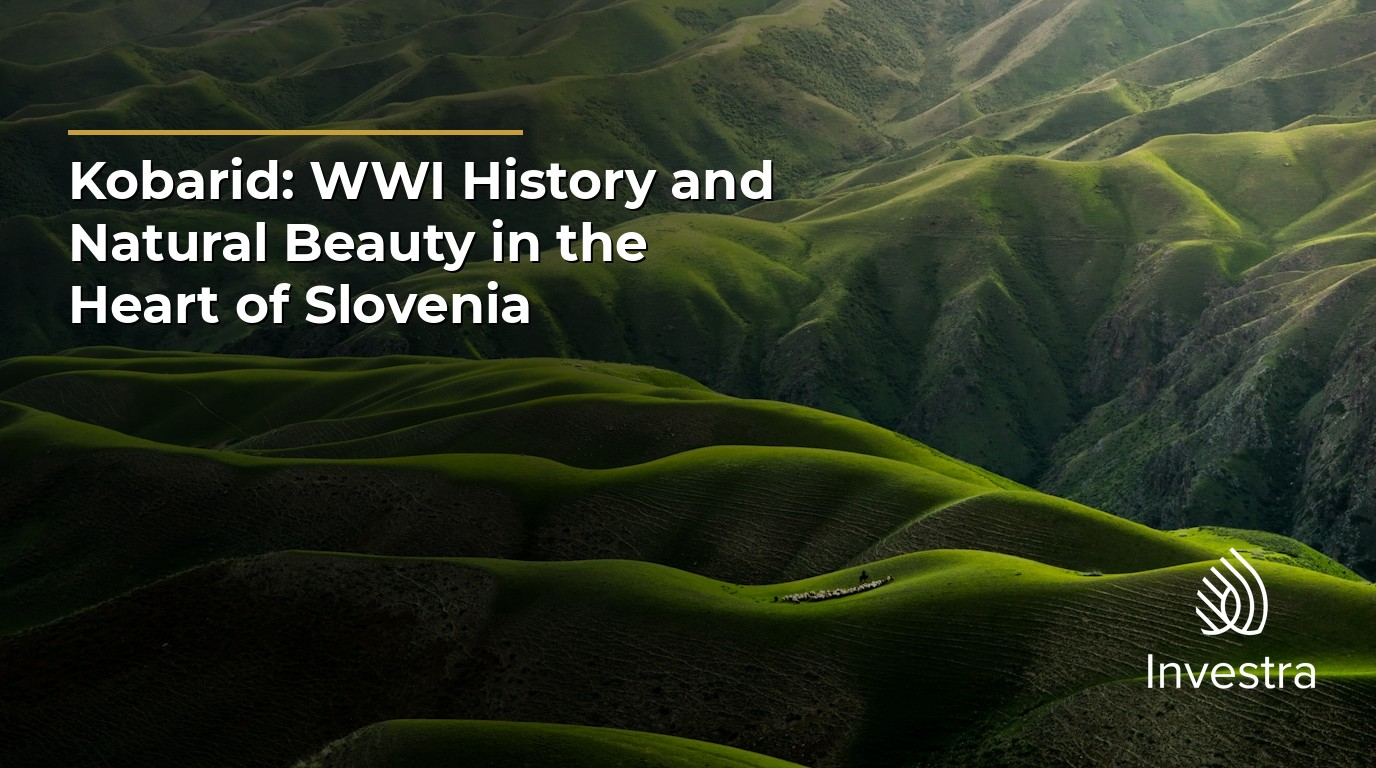
Kobarid: WWI History and Natural Beauty in the Heart of Slovenia
Kobarid: WWI History and Natural Beauty in the Heart of Slovenia
Disclaimer: The information provided in this article is for general informational purposes only and does not constitute financial, investment, or legal advice. Tourism statistics, property prices, and historical site accessibility are subject to change. Always conduct independent research and consult with official local authorities before making travel or investment decisions. Investors should not invest money they cannot afford to lose.
Nestled in the breathtaking Soča Valley, surrounded by the towering peaks of the Julian Alps, lies the small Slovenian town of Kobarid. While it may appear as a tranquil alpine retreat today, Kobarid holds a profound and somber place in European history. Known in Italian as Caporetto, this town was the epicenter of one of the most devastating battles of World War I.
In 2026, Kobarid offers a unique juxtaposition: it is simultaneously a poignant memorial to the tragedies of war and a vibrant hub for outdoor adventure and world-class gastronomy. At Investra.io, we understand that the value of a location is often deeply intertwined with its history and natural assets. This comprehensive guide explores the historical significance, the stunning natural environment, and the emerging investment potential of Kobarid.
1. The Historical Context: The Isonzo Front
To understand Kobarid, one must understand the Isonzo Front (Soška fronta). During World War I, the valley of the Soča River (known as the Isonzo in Italian) was the site of a brutal, protracted conflict between the Austro-Hungarian Empire and the Kingdom of Italy. From May 1915 to October 1917, twelve major battles were fought along this mountainous terrain.
Quick Answer: The Battle of Caporetto (the 12th Battle of the Isonzo) in October 1917 was a catastrophic defeat for the Italian army. A combined Austro-Hungarian and German offensive utilized innovative infiltration tactics and poison gas to break the Italian lines, forcing a chaotic retreat. This battle was famously chronicled by Ernest Hemingway, who served as an ambulance driver on the Italian front, in his novel A Farewell to Arms. Explore more historical sites with Investra.io.
The sheer scale of the conflict in such a difficult, alpine environment makes the Isonzo Front one of the most grueling theaters of the First World War. Today, the remnants of this conflict—trenches, bunkers, and supply lines—are still visible throughout the surrounding mountains.
2. The Kobarid Museum (Kobariški muzej)
The focal point for understanding this history is the award-winning Kobarid Museum. Dedicated specifically to the events of the Isonzo Front, and the Battle of Caporetto in particular, the museum is widely considered one of the best World War I museums in Europe.
The museum does not glorify war; rather, it focuses on the human experience of the soldiers on both sides who endured the horrific conditions of high-altitude warfare. Through extensive photographic archives, personal letters, weapons, and detailed topographical models, the museum provides a deeply moving and educational experience.
For investors looking at the region, the museum is a significant economic driver. It attracts historians, descendants of soldiers, and general tourists year-round, providing a steady baseline of visitors to the town regardless of the season.
3. The Italian Charnel House (Italijanska kostnica)
Overlooking the town from the hill of St. Anthony is the imposing Italian Charnel House. Built in 1938 and inaugurated by Benito Mussolini, this massive, octagonal monument holds the remains of over 7,000 Italian soldiers who fell in the surrounding battles.
The Charnel House is reached by a road lined with the Stations of the Cross, leading up to the 17th-century Church of St. Anthony at the summit. The site offers not only a place for somber reflection but also panoramic views of the Soča Valley and the town of Kobarid below.
4. The Kobarid Historical Trail
For those who wish to explore the history in the landscape itself, the Kobarid Historical Trail is essential. This 5-kilometer circular walking route connects the town's major historical and natural sights.
Quick Answer: The Historical Trail takes visitors from the Kobarid Museum, up to the Italian Charnel House, through the remains of the third Italian line of defense (featuring restored trenches and bunkers), and down to the spectacular Soča Gorge and the Kozjak Waterfall. It is a profound way to experience how the scars of war have been reclaimed by nature.
The trail is well-marked and relatively easy to walk, making it accessible to most visitors. It serves as a perfect example of how heritage tourism can be integrated seamlessly with outdoor recreation.
5. The Natural Wonder: The Soča River
Contrasting sharply with its dark history is the vibrant, almost surreal beauty of the Soča River. Often called the "Emerald Beauty," the river is famous for its striking, vivid turquoise color, which is a result of the limestone bedrock it flows over.
In the vicinity of Kobarid, the river cuts through a narrow, dramatic gorge. The Napoleon Bridge (Napoleonov most), a single-arch stone bridge originally built by Napoleon's troops in 1750 (and rebuilt after being destroyed in WWI), offers one of the best vantage points to view the river as it squeezes through the rocky chasm.
6. Kozjak Waterfall (Slap Kozjak)
Located just a short walk from the Napoleon Bridge, along the Kobarid Historical Trail, is the Kozjak Waterfall. This is one of Slovenia's most photographed natural attractions, and for good reason.
The waterfall is hidden within a dark, cavernous gorge. A wooden walkway leads visitors over the rushing stream, deep into the rocky chamber where the 15-meter waterfall plunges into a stunning blue-green pool. The contrast between the dark, enclosed space and the brilliant color of the water creates a truly magical atmosphere.
7. Outdoor Adventure in the Julian Alps
While neighboring Bovec is often dubbed the "adventure capital" of Slovenia, Kobarid offers its own extensive array of outdoor activities, often with fewer crowds. The surrounding peaks, notably Mount Krn and Mount Matajur, provide excellent hiking and mountaineering opportunities.
The Soča River itself is a playground for water sports enthusiasts. While the gorge near Kobarid is too dangerous for casual rafting, the wider sections of the river are popular for kayaking, hydrospeeding, and world-class fly fishing (specifically for the endemic Marble Trout).
For those interested in the burgeoning outdoor tourism market, the Soča Valley presents significant investment opportunities. To understand how lifestyle and tourism drive property values, explore our TRNC Rental Market Guide.
8. Gastronomy: The Kobarid Culinary Circle
Kobarid punches far above its weight class when it comes to gastronomy. The town is famous for the "Kobarid Culinary Circle," an association of local restaurants dedicated to preserving and elevating traditional Soča Valley cuisine.
Quick Answer: The culinary scene in Kobarid is world-renowned. It is home to Hiša Franko, the restaurant helmed by Ana Roš, who was named the World's Best Female Chef in 2017 and whose restaurant holds multiple Michelin stars. The presence of such high-caliber dining attracts a sophisticated, high-net-worth demographic to this remote alpine town.
The local cuisine is a fascinating blend of Mediterranean, Alpine, and Slavic influences. Signature dishes include Kobariški štruklji (sweet dumplings filled with walnuts and raisins), local Tolmin cheese, and fresh Soča trout. The elevation of the local culinary scene has had a direct, positive impact on regional property values and the demand for luxury short-term rentals.
9. Real Estate and Investment Potential in Kobarid
The real estate market in Kobarid is distinct from the broader Slovenian market. It is characterized by limited supply, strict zoning laws designed to protect the natural environment, and a growing demand from international buyers seeking a pristine alpine lifestyle.
Investors are primarily targeting two types of properties: historic village houses suitable for renovation into boutique bed-and-breakfasts, and larger plots of land outside the town center for the development of eco-resorts or luxury chalets. The success of high-end gastronomy in the area has proven that there is a market for premium, experiential tourism.
For a broader analysis of how regional markets are performing across the country, consult our Slovenian Real Estate Market 2026 Analysis.
10. The Impact of the "Ana Roš Effect"
The international acclaim of Hiša Franko has had a profound "halo effect" on Kobarid. It has placed the town on the global culinary map, attracting a demographic of "foodie" tourists who are willing to travel specifically for a dining experience and require high-end accommodation.
This has stimulated investment in local infrastructure and encouraged other businesses to elevate their standards. For real estate investors, properties located within a short drive of these culinary hotspots command premium rental rates. This phenomenon is similar to the impact of luxury developments in other emerging markets; compare this with the trends outlined in our Iskele & Esentepe Property Guide.
11. Navigating the Regulatory Environment
Investing in the Soča Valley requires careful navigation of local regulations. Much of the area falls under the protection of the Triglav National Park or is designated as Natura 2000 protected land. This means that obtaining building permits for new construction can be a lengthy and complex process.
However, these strict regulations are exactly what preserves the region's pristine character and, consequently, its long-term value. Investors must work closely with local architects and legal advisors who understand the nuances of Slovenian conservation law. For strategic advice on structuring investments in highly regulated markets, visit sinisadagary.com.
12. Seasonal Dynamics and Tourism Flow
Like many alpine destinations, Kobarid experiences strong seasonal fluctuations. The peak season runs from June through September, driven by outdoor sports and summer holidays. During this time, occupancy rates for short-term rentals are exceptionally high.
The shoulder seasons (May and October) are increasingly popular with hikers and history enthusiasts. Winter is the quietest season, as Kobarid does not have its own major ski resort (though the Kanin ski area is accessible via nearby Bovec). Investors must factor these seasonal dynamics into their financial projections when calculating annual yields.
13. Sustainable Tourism and Future Development
The municipality of Kobarid is acutely aware of the need to balance tourism growth with environmental preservation. The focus for 2026 and beyond is on sustainable, low-impact tourism. This includes promoting cycling, improving public transport links, and supporting local, organic agriculture.
Quick Answer: Future development in Kobarid is likely to favor boutique, eco-friendly projects over large-scale resort hotels. Investors who align their projects with these sustainability goals will find a much more receptive local government and a target market that increasingly values environmental responsibility.
This shift towards sustainability is a global trend affecting real estate markets everywhere. To understand how these factors play out in other regions, read our TRNC Property Investment Guide 2026.
14. Integrating Technology in Heritage and Nature Tourism
While the appeal of Kobarid is rooted in the past and the natural world, technology is playing an increasing role in the visitor experience. The Kobarid Museum utilizes interactive displays, and local tourism boards are developing AR (Augmented Reality) apps that allow hikers to visualize the WWI front lines as they walk the historical trails.
For property managers, the integration of smart home technology and automated booking systems is essential for maximizing efficiency in the short-term rental market, especially for owners managing properties remotely. The intersection of technology and physical assets is a theme explored deeply in our article on Tokenization of Assets: The Future of Investing.
15. Cultural Events and Local Festivals
Kobarid's cultural calendar is another factor that enriches the visitor experience and supports the local economy. Throughout the year, the town hosts various events that celebrate its heritage and gastronomy. The most notable is the "Jestival" (Food and Art Festival), held annually in October. This event brings together local chefs, artists, and musicians, transforming the town square into a vibrant celebration of Soča Valley culture.
For investors, these events are critical markers of a community's vitality. A strong calendar of local festivals extends the tourist season, driving occupancy rates for short-term rentals during what would otherwise be quieter months. Understanding how local culture impacts real estate yields is a key component of our advisory services; for a comparative look at how events drive tourism in other regions, see our North Cyprus Tax Guide for Property Investors.
16. The Role of Agriculture in the Local Economy
While tourism is the most visible economic driver in Kobarid, agriculture remains a foundational element of the region's identity and sustainability. The steep alpine pastures are ideal for dairy farming, and the production of Tolminc cheese (a hard, full-fat cow's milk cheese with a protected designation of origin) is a point of immense local pride.
This agricultural base supports the high-end gastronomy that Kobarid is famous for, ensuring a farm-to-table supply chain that is both sustainable and highly appealing to modern consumers. Investors looking at rural or semi-rural properties often find that integrating small-scale agricultural elements (like an orchard or a small vineyard) significantly enhances the property's appeal to eco-conscious buyers. Explore similar rural investment strategies in our Famagusta Property Investment Guide.
17. Connectivity and Infrastructure Upgrades
Kobarid's remote feel is part of its charm, but accessibility is crucial for its continued economic development. In recent years, significant investments have been made in upgrading the road networks connecting the Soča Valley to central Slovenia and neighboring Italy.
Furthermore, the expansion of high-speed internet and 5G connectivity into these alpine valleys has made Kobarid an increasingly viable option for digital nomads and remote workers. This demographic shift is creating a new tier of demand for long-term residential rentals, diversifying the local real estate market beyond purely tourist-focused properties. For insights into how infrastructure impacts property values, read our Lefkosa Nicosia Property Guide.
18. Architectural Heritage and Renovation Challenges
The architectural style of Kobarid is a unique blend of Alpine and Mediterranean influences, characterized by thick stone walls, steep roofs to shed heavy snow, and small windows designed to retain heat. Preserving this architectural heritage is a priority for local authorities.
For real estate investors, this means that renovating older properties requires a deep respect for traditional building techniques and materials. While this can increase the initial capital outlay and extend project timelines, the resulting properties command significant premiums in the market. Buyers are increasingly willing to pay for authenticity and historical character, a trend we also observe in the Mediterranean; see our Property Buying Guide for Foreign Investors in the EU for more details.
19. Future Prospects: Kobarid in 2030 and Beyond
Looking ahead to the next decade, Kobarid is positioned to capitalize on several macro trends in global tourism and real estate. The increasing desire for "slow tourism"—where visitors spend more time in a single location, immersing themselves in the local culture and environment—plays directly to Kobarid's strengths. The town offers a depth of experience that cannot be fully appreciated in a rushed day trip.
Furthermore, as climate change continues to impact traditional summer destinations in Southern Europe with extreme heat, the cooler, alpine environments of the Julian Alps are expected to see a surge in popularity. This "climate migration" will likely drive sustained demand for real estate in regions like the Soča Valley. Investors who recognize these long-term shifts can secure valuable assets before they become fully priced into the market. For a comprehensive look at how environmental factors are reshaping investment strategies globally, explore our Future of Real Estate Guide.
20. Conclusion: The Unique Value Proposition of Kobarid
Kobarid is a destination that defies simple categorization. It is a place where the deep scars of 20th-century history are woven into one of the most beautiful natural landscapes in Europe, all complemented by a world-class culinary scene.
Quick Answer: For travelers, Kobarid offers a profound and multifaceted experience. For investors, it represents a niche, high-value market where strict environmental protections ensure long-term scarcity and capital preservation. Partner with Investra.io to navigate the unique opportunities in this pristine alpine region.
As Slovenia's reputation as a premium, sustainable destination continues to grow, towns like Kobarid will only become more desirable. Whether you are seeking a historical pilgrimage, an outdoor adventure, or a strategic real estate investment, Kobarid delivers on all fronts. For comprehensive consultancy and leadership training to guide your broader investment decisions, visit Findes.si.
Frequently Asked Questions (FAQ)
1. Where is Kobarid located?
Kobarid is located in the Soča Valley in northwestern Slovenia, near the border with Italy. It is situated at the foothills of the Julian Alps.
2. What is Kobarid famous for?
It is most famous for the Battle of Caporetto during World War I, its stunning natural scenery (including the Soča River and Kozjak Waterfall), and its world-class gastronomy (notably Hiša Franko).
3. How long does it take to walk the Kobarid Historical Trail?
The 5-kilometer circular trail typically takes 3 to 5 hours to complete, depending on your pace and how much time you spend at the various historical sites and the waterfall.
4. Is the Kobarid Museum suitable for children?
While the museum deals with the serious and somber topic of war, it is highly educational and suitable for older children and teenagers. Parents should use their discretion for very young children.
5. Can you swim in the Soča River near Kobarid?
The water is exceptionally cold year-round (rarely exceeding 15°C/59°F) and the currents in the gorge can be dangerous. While some brave souls take a quick dip, it is generally more popular for kayaking and rafting in designated wider sections.
6. Do I need a guide to visit the WWI sites?
No, the Kobarid Historical Trail and the major sites are well-marked with informational placards in multiple languages. However, hiring a local guide can provide a much deeper understanding of the history.
7. How do I get to the Kozjak Waterfall?
The waterfall is accessed via a well-maintained walking path that starts near the Napoleon Bridge. It is about a 30-minute walk from the bridge to the waterfall.
8. Is Kobarid a good place for real estate investment?
Yes, particularly for boutique hospitality and luxury short-term rentals. However, supply is limited, and building regulations are strict due to environmental protections.
9. When is the best time to visit Kobarid?
The best time for outdoor activities is from June to September. May and October offer beautiful colors and fewer crowds, making them ideal for hiking and visiting historical sites.
10. How far is Kobarid from Ljubljana?
Kobarid is approximately a 2-hour drive from the capital, Ljubljana, depending on traffic and the route taken (either via the Vršič Pass or through the town of Tolmin).
Recommended Content (Priporočljiva vsebina)
- Slovenian Real Estate Market 2026: A Complete Analysis & Forecast
- TRNC Property Investment Guide 2026
- The Future of Real Estate: How Tokenization is Democratizing Property Investment
- Legal Guide to Buying Property in TRNC
- Ljubljana Real Estate: An Investor's Guide
- Iskele & Esentepe Property Guide
- Tokenization of Assets: The Future of Investing in 2026
- Kyrenia Complete Property Guide
Follow Us
Stay updated with the latest insights on living, investing, and thriving in the Mediterranean and beyond. Connect with Investra on our official channels:
Related Posts
No related posts available.
