

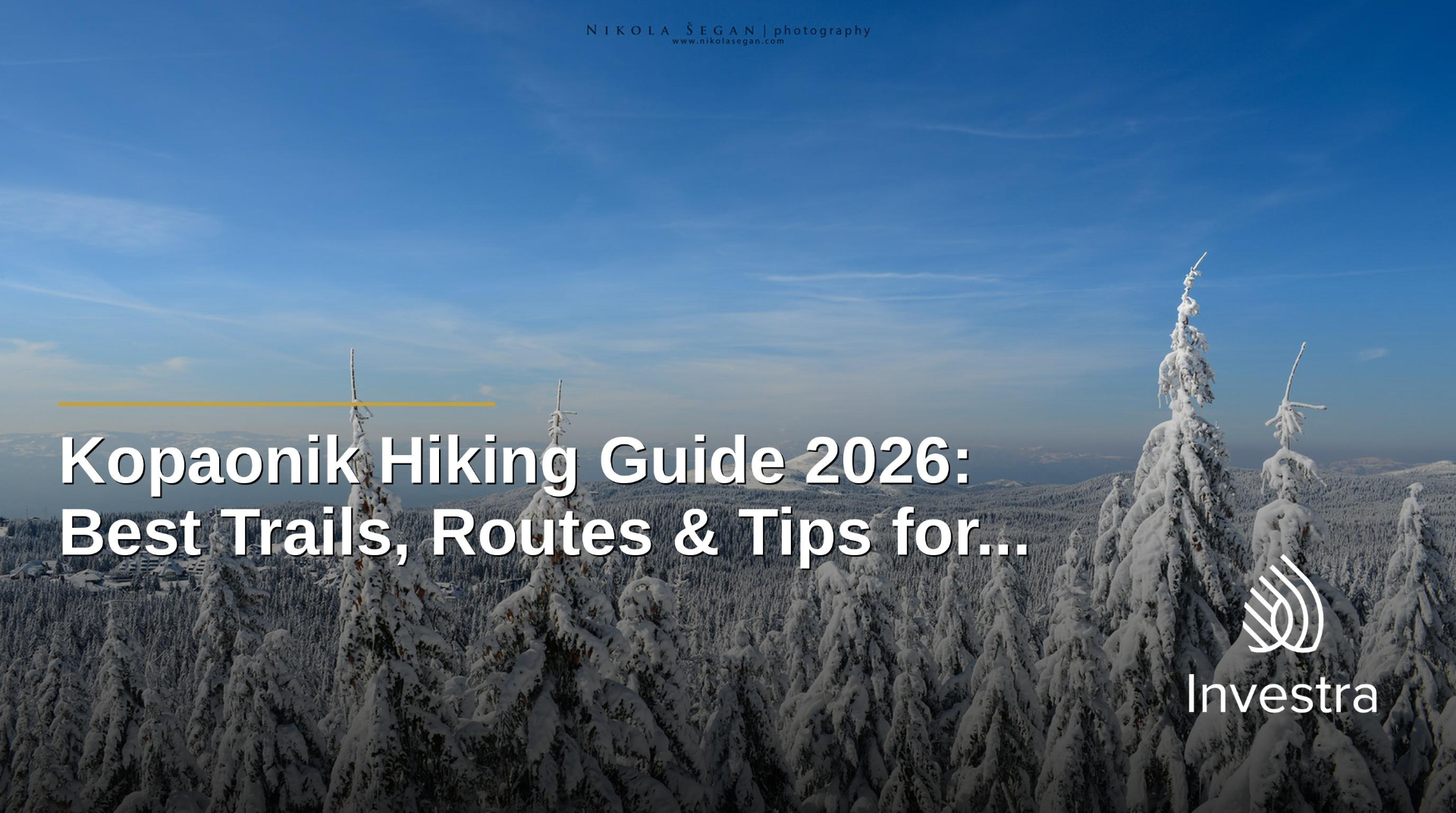
Kopaonik Hiking Guide 2026: Best Trails, Routes & Tips for Serbia's National Park
Safety Disclaimer: Mountain hiking carries inherent risks. Always check weather forecasts before setting out, carry appropriate equipment, and inform someone of your planned route. Emergency number: 194 (mountain rescue Serbia).
When the last skiers descend in April, Kopaonik undergoes a remarkable transformation. The slopes that were covered in white become carpeted in green, and the mountain reveals its true identity as one of the Balkans' most biodiverse and spectacular hiking destinations. Kopaonik National Park, established in 1981 and spanning 11,810 hectares, harbors over 1,600 plant species — many of them endemic to the Kopaonik massif — along with golden eagles, peregrine falcons, and the elusive Balkan lynx. The park's 200+ kilometers of marked hiking trails range from gentle family strolls through wildflower meadows to challenging summit ascents that reward hikers with panoramic views extending across four countries. This comprehensive guide covers the best trails, practical tips, and everything you need to know for hiking at Kopaonik in 2026.
Kopaonik National Park: Overview and Best Hiking Season
> **Quick Answer:** Best hiking season: June–September. Park covers 11,810 hectares with 200+ km of marked trails. Entry is free. Guided tours available from €20/person. Peak wildflower season: late June–July.Kopaonik National Park encompasses the central massif of the Kopaonik mountain range in south-central Serbia. The park's altitude ranges from approximately 1,000 meters at its lower boundaries to 2,017 meters at Pančićev Vrh, creating a dramatic range of habitats from mixed deciduous forest at lower elevations through dense conifer forest to open subalpine meadows and rocky summit terrain. This altitudinal diversity supports exceptional biodiversity, making Kopaonik a destination of international significance for botanists, ornithologists, and nature enthusiasts.
The hiking season at Kopaonik runs from late May through October, with the optimal period being June through September when trails are snow-free, temperatures are pleasant, and the mountain's extraordinary flora is in full display. Late June and July represent the peak wildflower season, when the subalpine meadows transform into a tapestry of color with hundreds of species in simultaneous bloom. August offers the most reliable weather, while September brings spectacular autumn foliage and fewer crowds. The park is free to enter, with parking available at multiple trailheads. Guided botanical and wildlife tours are available through the National Park visitor center at prices starting from €20 per person.
Best Hiking Trails at Kopaonik: Top 5 Routes
> **Quick Answer:** Top 5 trails: (1) Pančićev Vrh summit (6–8 hours, challenging); (2) Samokovska River loop (3 hours, easy); (3) Gobelja meadows (4 hours, moderate); (4) Suvo Rudište to Karaman ridge (5 hours, moderate); (5) Brzećka River gorge (2 hours, easy).The trail to Pančićev Vrh (2,017 m) is Kopaonik's signature hike and a must for any serious mountain walker visiting the park. The most popular route begins from the resort center at Suvo Rudište and ascends through a combination of ski pistes (in summer these are grassy slopes), forest tracks, and rocky ridgeline paths to reach the summit. The total distance is approximately 12 kilometers round trip with 600 meters of ascent, typically taking 6–8 hours at a comfortable pace. The summit rewards hikers with extraordinary 360-degree views across Serbia, Kosovo, North Macedonia, and on exceptionally clear days, Bulgaria and Montenegro.
For families and less experienced hikers, the Samokovska River loop provides a gentle 3-hour introduction to Kopaonik's natural beauty. The trail follows the Samokovska River through a mixed forest rich in wildflowers and bird life, with several picnic spots and a small waterfall as highlights. The Gobelja meadows route is a moderate 4-hour circuit that showcases Kopaonik's famous subalpine meadows at their most spectacular during the June–July wildflower season. The Brzećka River gorge trail is the shortest option at approximately 2 hours, following a dramatic river gorge with impressive rock formations and lush riparian vegetation.
Kopaonik Wildlife: What to See and Where
> **Quick Answer:** Kopaonik wildlife highlights: golden eagle, peregrine falcon, Balkan lynx (rare), roe deer, wild boar, and 100+ bird species. Best wildlife viewing: early morning in forest edges and meadow margins.Kopaonik National Park supports a rich and varied wildlife community that reflects the mountain's diverse habitats. The park's most iconic resident is the golden eagle (Aquila chrysaetos), which nests on the rocky cliffs of the upper mountain and can frequently be seen soaring on thermal currents above the summit plateau. Peregrine falcons also breed in the park, and their spectacular hunting stoops are occasionally witnessed by hikers on the upper trails. The Balkan lynx, one of Europe's most endangered large predators, has been recorded in the park's more remote areas, though sightings are extremely rare.
More commonly encountered mammals include roe deer, which are frequently seen grazing in forest clearings at dawn and dusk, and wild boar, whose rooting activity is visible along many forest trails. Red squirrels are abundant in the conifer forests, and the park's meadows support healthy populations of various vole and shrew species that in turn attract raptors. The park's birdlife is exceptional, with over 100 species recorded including the white-backed woodpecker, Ural owl, and several species of warbler and flycatcher. Guided wildlife watching tours, particularly early morning excursions, significantly increase the chances of memorable wildlife encounters.
Kopaonik Wildflowers: A Botanical Paradise
> **Quick Answer:** Kopaonik has 1,600+ plant species including 60+ endemic species. Peak bloom: late June–July. Notable species: Kopaonik violet (Viola kopaonikensis), Serbian spruce (Picea omorika), mountain gentian, and dozens of orchid species.Kopaonik's botanical diversity is arguably its most remarkable natural feature. The mountain's position at the crossroads of several European biogeographic zones, combined with its altitudinal range and relatively undisturbed natural habitats, has created conditions for an extraordinary concentration of plant species. The 1,600+ species recorded in the park include approximately 60 endemic species — plants found nowhere else on Earth — making Kopaonik a site of global botanical significance.
The Kopaonik violet (Viola kopaonikensis) is perhaps the most famous endemic, a delicate purple flower that blooms in rocky habitats on the upper mountain in June. The Serbian spruce (Picea omorika), one of the world's rarest conifers and a glacial relict, grows in several locations within the park and is considered a national natural monument. Mountain gentians (Gentiana species) provide spectacular blue and purple displays in late summer, while the park's meadows host an exceptional diversity of orchid species including the fragrant orchid, elder-flowered orchid, and several spotted orchid species. Guided botanical walks led by park naturalists provide the best introduction to this remarkable flora.
Practical Hiking Information: Equipment, Safety, and Maps
> **Quick Answer:** Essential equipment: hiking boots, waterproof jacket, sun protection, 2L water, snacks, map/GPS. Weather can change rapidly. Emergency: 194 (mountain rescue). Trail maps available at National Park visitor center (€5).Preparing properly for hiking at Kopaonik ensures a safe and enjoyable experience. The mountain's altitude means that weather can change rapidly, with clear morning skies sometimes giving way to afternoon thunderstorms — a common summer pattern in the Balkans. Carrying a waterproof jacket is essential even on apparently fine days. Sturdy hiking boots with ankle support are recommended for all but the gentlest trails, as many paths cross rocky terrain or wet meadows. Sun protection (sunscreen, sunglasses, hat) is particularly important at altitude where UV radiation is stronger than at sea level.
Carrying at least 2 liters of water per person is essential, as water sources on the mountain are limited and should not be consumed without treatment. High-energy snacks and a packed lunch are advisable for longer routes. Trail maps are available at the National Park visitor center at Suvo Rudište for €5, and several hiking apps including Komoot and AllTrails have Kopaonik trail data. Mobile phone coverage is generally good at the resort center and on the upper mountain, but can be intermittent in forested valley sections. In case of emergency, call 194 for mountain rescue services, which operate year-round.
Kopaonik Summer Activities Beyond Hiking
> **Quick Answer:** Summer activities: mountain biking (50+ km trails), paragliding, horseback riding, botanical tours, adventure park (zip lines, climbing), and spa facilities. Most activities bookable at resort center.Hiking is just one of many summer activities available at Kopaonik. Mountain biking has grown significantly in popularity, with the resort operating a network of 50+ kilometers of dedicated bike trails ranging from gentle gravel paths through the forest to technical downhill routes for experienced riders. Bike rental is available at the resort center, and guided biking tours are offered for those who prefer company and local knowledge on the trails.
Paragliding tandem flights offer a spectacular bird's-eye perspective of the mountain and surrounding landscape, with experienced pilots providing safe introductory flights for those with no prior experience. Horseback riding through the National Park's meadows and forests is available through several stables operating in the resort area. The resort's adventure park provides family-friendly thrills with zip lines, rope bridges, and climbing walls. For those seeking relaxation, several hotels' spa facilities are open to non-guests during summer, offering thermal pools, saunas, and massage treatments that complement an active hiking day perfectly.
Kopaonik Investment Perspective: Why Hikers Are Also Investors
> **Quick Answer:** Kopaonik's growing summer tourism (hiking, biking, nature) is driving year-round property demand. Summer bookings now represent 35% of annual rental income, up from 20% five years ago. [Investra.io](https://investra.io/en?referral_code=XGaQMADiyq) tracks market trends.The growing recognition of Kopaonik as a world-class summer hiking destination has significant implications for property investors. Five years ago, summer bookings represented approximately 20% of annual rental income for resort properties; today that figure has grown to approximately 35% and continues to rise. This trend reduces the seasonal concentration of rental income and improves the overall investment case for Kopaonik property. The National Park's increasing international profile — with growing visitor numbers from Germany, Austria, the Netherlands, and the UK — suggests further growth potential in the summer tourism segment.
For investors interested in the intersection of nature tourism and real estate, Kopaonik represents an early-stage opportunity in a market that is still discovering its summer potential. Properties marketed specifically to summer hikers and nature tourists, with appropriate amenities (drying rooms, bike storage, trail information), can command premium rates and achieve higher occupancy than standard resort apartments. For investment analysis and property listings, [Investra.io](https://investra.io/en?referral_code=XGaQMADiyq) provides comprehensive market data. Investment insights from Siniša Dagary are available at [sinisadagary.com](https://sinisadagary.com), and professional advisory services through [findes.si](https://www.findes.si).
FAQ: Kopaonik Hiking Guide 2026
### Q1: When is the best time to hike at Kopaonik? The best hiking season is June through September. Late June and July offer peak wildflower displays, while August provides the most reliable weather. September is beautiful with autumn colors and fewer crowds. ### Q2: How difficult is the hike to Pančićev Vrh? The hike to Pančićev Vrh (2,017 m) is rated moderate to challenging. The most popular route from Suvo Rudište is 12 km round trip with 600m of ascent, taking 6–8 hours. Good fitness and proper equipment are required. ### Q3: Is Kopaonik National Park free to enter? Yes, entry to Kopaonik National Park is free. Guided tours are available from €20/person. Trail maps cost €5 at the visitor center. ### Q4: What wildlife can I see at Kopaonik? Golden eagles, peregrine falcons, roe deer, wild boar, and 100+ bird species. The Balkan lynx is present but rarely seen. Early morning visits to forest edges offer the best wildlife viewing opportunities. ### Q5: Are there endemic plants at Kopaonik? Yes, Kopaonik has 60+ endemic plant species including the Kopaonik violet (Viola kopaonikensis) and the Serbian spruce (Picea omorika). The park has 1,600+ plant species total. ### Q6: What equipment do I need for hiking at Kopaonik? Essential: hiking boots, waterproof jacket, sun protection, 2L water, snacks, trail map or GPS. For summit hikes, add warm layers as temperatures drop significantly at altitude. ### Q7: Are there guided hiking tours at Kopaonik? Yes, guided botanical, wildlife, and general hiking tours are available through the National Park visitor center from €20/person. Private guides can be arranged for specialized interests. ### Q8: Can I mountain bike at Kopaonik in summer? Yes, Kopaonik has 50+ km of dedicated mountain bike trails. Bike rental is available at the resort center. Guided biking tours are offered for various skill levels. ### Q9: What is the emergency number for mountain rescue at Kopaonik? The Serbian mountain rescue number is 194. Mobile coverage is generally good at the resort center and upper mountain, but can be intermittent in forested valleys. ### Q10: How many hiking trails does Kopaonik National Park have? Kopaonik National Park has 200+ kilometers of marked hiking trails ranging from easy family walks to challenging summit routes.Recommended Content
Discover more about Serbia's natural wonders and investment opportunities at Investra.io. Nature and travel insights from Siniša Dagary at sinisadagary.com. Real estate advisory at Findes.si.
Odkrijte globalne investicijske priložnosti na Unifyr.space — vaš portal za pametne investicije.