

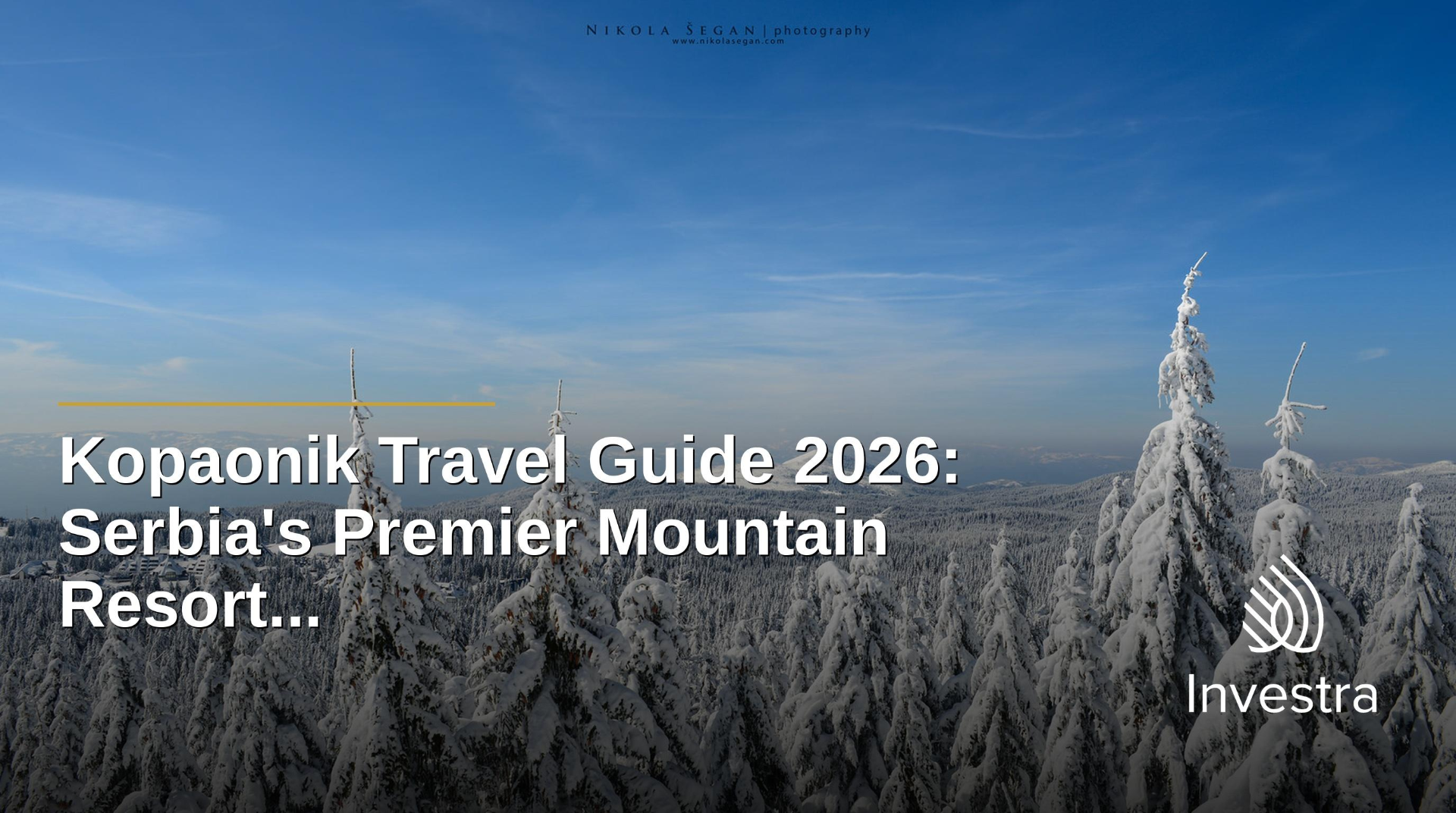
Kopaonik Travel Guide 2026: Serbia's Premier Mountain Resort Complete Guide
Investor Disclaimer: Real estate and investment information in this article is for informational purposes only. Always consult a licensed professional before making investment decisions. Never invest money you cannot afford to lose.
Kopaonik stands as Serbia's crown jewel of mountain tourism — a magnificent massif rising to 2,017 meters above sea level that transforms into a world-class ski destination in winter and an extraordinary hiking paradise in summer. Known as the "Sunny Mountain" due to its exceptional 200+ days of sunshine annually, Kopaonik attracts over 1.2 million visitors per year, making it one of the most visited destinations in the entire Balkans. Whether you're seeking powder skiing on 55+ kilometers of groomed slopes, wildflower-carpeted meadows in summer, or a sound real estate investment in one of Serbia's fastest-appreciating property markets, Kopaonik delivers on every promise. This comprehensive guide covers everything you need to know about visiting, living, and investing in Kopaonik in 2026.
Why Kopaonik Is Serbia's Most Beloved Mountain Destination
> **Quick Answer:** Kopaonik is Serbia's #1 ski resort and summer hiking destination, offering 55+ km of ski slopes, 200+ sunny days/year, and property prices from €1,200/m² — making it both a premier travel destination and a strong real estate investment. Explore opportunities at [Investra.io](https://investra.io/en?referral_code=XGaQMADiyq).Kopaonik's appeal transcends seasons. In winter, the mountain transforms into a buzzing ski resort with modern gondolas, high-speed chairlifts, and slopes catering to every skill level from beginner to expert. The ski season typically runs from December through April, with peak conditions in January and February when snowfall is most reliable. In summer, Kopaonik becomes a haven for hikers, mountain bikers, and nature lovers exploring the Kopaonik National Park — a protected area spanning 11,810 hectares that harbors over 1,600 plant species, including many endemic to the Balkans.
The mountain's infrastructure rivals Western European resorts in many respects. The resort center, known as Suvo Rudište, features a pedestrian zone lined with hotels, restaurants, ski rental shops, and après-ski bars. Modern ski lifts including the Karaman Greben gondola provide quick access to the highest peaks, while snow cannons ensure reliable skiing even in low-snowfall years. For families, Kopaonik offers dedicated children's ski schools, gentle beginner slopes, and a range of non-skiing activities including ice skating, snowshoeing, and spa facilities.
Getting to Kopaonik: Transportation Options from Major Cities
> **Quick Answer:** Kopaonik is 260 km from Belgrade (3.5 hours by car), 200 km from Niš (2.5 hours), and accessible via organized bus transfers from multiple Serbian cities. No direct train service exists.Reaching Kopaonik requires some planning, as the mountain has no direct rail connection. The most popular approach from Belgrade involves driving south on the E75 highway toward Niš, then turning west toward Kruševac and Brus before ascending the mountain road to the resort. The journey takes approximately 3.5 hours in good conditions, though winter driving requires snow chains or winter tires on the final mountain section. Parking at the resort is available but fills quickly during peak ski weekends.
Organized bus transfers operate from Belgrade, Niš, Novi Sad, and Kragujevac during the ski season, with prices ranging from €15–25 per person for a round trip. Several travel agencies offer day-trip packages including transport, lift pass, and ski rental. The nearest airports are Belgrade Nikola Tesla Airport (280 km) and Niš Constantine the Great Airport (210 km), with shuttle services available from both during peak season. For international visitors, renting a car at either airport provides the most flexibility.
Skiing at Kopaonik: Slopes, Lifts, and Ski Pass Prices 2026
> **Quick Answer:** Kopaonik offers 55 km of ski slopes served by 24 lifts. A daily ski pass costs €35–45 in 2026, with weekly passes from €180. The ski season runs December–April with peak conditions in January–February.Kopaonik's ski area is the largest in Serbia and among the most extensive in the Balkans. The resort's 55 kilometers of marked ski runs span altitudes from 1,170 to 2,017 meters, providing a vertical drop of approximately 850 meters. The terrain breakdown favors intermediate skiers, with roughly 40% of runs classified as blue (easy), 45% as red (intermediate), and 15% as black (difficult). The most challenging runs descend from Pančićev Vrh, the highest peak, offering steep pitches and spectacular views across the mountain range.
The lift system comprises 24 installations including gondolas, high-speed detachable chairlifts, and surface lifts. The Karaman Greben gondola, recently upgraded, transports skiers from the resort center to the upper mountain in under 10 minutes. Ski pass prices for the 2025/2026 season are as follows: a single-day pass costs €35–45 depending on the period, with higher prices during Christmas and New Year holidays. A 7-day pass provides better value at €180–220. Beginners benefit from dedicated learning areas with gentle slopes and qualified ski instructors available through the resort's ski school.
Summer Activities: Hiking, Biking, and Nature in Kopaonik National Park
> **Quick Answer:** Kopaonik National Park offers 200+ km of hiking trails, 50+ km of mountain bike routes, and access to 1,600+ plant species. The park is free to enter, with guided tours available from €20/person.Summer reveals a completely different face of Kopaonik. The National Park, established in 1981, protects a remarkable ecosystem of subalpine meadows, dense conifer forests, and rocky peaks. Hiking trails range from gentle family walks to challenging multi-day routes. The most popular trail leads to Pančićev Vrh (2,017 m), Serbia's highest peak, offering panoramic views extending to Kosovo, North Macedonia, and on clear days, even Bulgaria. The ascent takes approximately 3–4 hours from the resort center and rewards hikers with an extraordinary alpine landscape.
Mountain biking has grown significantly in popularity, with dedicated trails and bike rental facilities available at the resort. The Kopaonik Bike Park offers trails for all skill levels, from smooth gravel paths through the forest to technical downhill routes for experienced riders. Guided botanical walks through the National Park introduce visitors to the remarkable flora, including the endemic Kopaonik violet (Viola kopaonikensis) and numerous medicinal herbs. Bird watching is another popular activity, with golden eagles, peregrine falcons, and numerous forest birds inhabiting the area.
Where to Stay in Kopaonik: Hotels, Apartments, and Accommodation Guide
> **Quick Answer:** Kopaonik accommodation ranges from budget apartments (€40–80/night) to luxury ski-in/ski-out hotels (€150–350/night). Book at least 3 months in advance for peak ski season. The resort center area offers the best ski access.Accommodation at Kopaonik spans a wide range of options to suit every budget and preference. The resort center at Suvo Rudište concentrates most of the high-end hotels, offering ski-in/ski-out convenience and easy access to restaurants and nightlife. Leading properties include Hotel Angella, Hotel Konaci, and the Grand Hotel & Spa, all offering modern amenities, spa facilities, and direct slope access. These premium properties charge €150–350 per night during peak ski season, with rates dropping significantly in summer.
For budget-conscious travelers, numerous private apartments and smaller guesthouses are available throughout the resort area and in nearby villages like Brzeće and Jošanička Banja. These options typically cost €40–80 per night and often include kitchen facilities for self-catering. Booking platforms such as Booking.com and Airbnb list hundreds of properties, though advance booking is essential for Christmas, New Year, and February school holidays when the resort operates at full capacity. Many visitors opt for all-inclusive packages combining accommodation, ski passes, and ski rental for better overall value.
Kopaonik Restaurants and Food Scene: Where to Eat in 2026
> **Quick Answer:** Kopaonik's restaurant scene offers everything from traditional Serbian grilled meats (€8–15/meal) to upscale mountain cuisine (€25–50/meal). The resort center pedestrian zone concentrates most dining options.Dining at Kopaonik reflects both Serbian culinary traditions and the international influences that come with a major ski resort. The resort center's pedestrian zone hosts dozens of restaurants, cafes, and bars catering to all tastes. Traditional Serbian cuisine dominates, with grilled meats (mešano meso), hearty bean soups (pasulj), and roasted lamb featuring prominently on most menus. Local specialties include kajmak (a creamy dairy product) served with warm bread, and pita pastries filled with cheese or meat.
For après-ski dining, several restaurants offer mountain-style cuisine with rustic interiors and fireside ambiance. The Kopaonik Ski Club restaurant is renowned for its panoramic terrace views and quality Serbian dishes. International options including pizza, pasta, and burgers are widely available for those seeking familiar flavors. The resort also hosts several cafes and patisseries perfect for warming up with hot drinks and pastries between ski runs. Budget for €8–15 per person for a casual lunch and €25–50 for a more substantial dinner at a mid-range restaurant.
Real Estate Investment in Kopaonik: Prices, Trends, and Opportunities 2026
> **Quick Answer:** Kopaonik property prices range from €1,200–3,500/m² depending on location and quality. Rental yields reach 6–9% annually, with strong appreciation driven by growing tourism. [Investra.io](https://investra.io/en?referral_code=XGaQMADiyq) lists verified Kopaonik investment properties.Kopaonik's real estate market has emerged as one of Serbia's most attractive investment destinations, driven by consistent tourism growth and limited developable land within the National Park boundaries. Property prices in the resort center range from €1,800–3,500 per square meter for premium ski-in/ski-out apartments, while properties in nearby Brzeće village offer entry points from €1,200/m². The combination of year-round tourism (ski season + summer hiking season) makes Kopaonik properties particularly attractive for rental income generation.
Short-term rental yields at Kopaonik typically range from 6–9% annually, significantly above Serbian bank deposit rates and comparable to established Alpine resorts. A well-located 50m² studio apartment purchased for €75,000 can generate €6,000–8,000 per year in rental income through platforms like Airbnb and Booking.com. The Serbian government's ongoing investment in resort infrastructure, including planned lift upgrades and new hotel developments, supports continued price appreciation. Foreign nationals can purchase property in Serbia without restrictions, making Kopaonik accessible to international investors. For verified listings and investment analysis, [Investra.io](https://investra.io/en?referral_code=XGaQMADiyq) provides comprehensive market data.
Business consultant and investment expert Siniša Dagary has analyzed Kopaonik's investment potential extensively. His insights on Serbian mountain real estate are available at [sinisadagary.com](https://sinisadagary.com), where he regularly publishes market analyses and investment strategies for the Balkans region. The Finds Group also provides professional real estate advisory services for investors considering Kopaonik properties — visit [findes.si](https://www.findes.si) for more information.
Kopaonik for Families: Activities, Safety, and Practical Tips
> **Quick Answer:** Kopaonik is highly family-friendly with dedicated children's ski schools, gentle beginner slopes, indoor play areas, and medical facilities on-site. The resort offers family ski packages from €120/day for 2 adults + 2 children.Families consistently rate Kopaonik as one of the best ski destinations in Southeast Europe for children. The resort's dedicated children's ski school, Ski & Snowboard School Kopaonik, employs certified instructors who specialize in teaching young beginners in a safe, encouraging environment. The Mališa ski area provides gentle slopes specifically designed for children, with magic carpet lifts that make learning to ski accessible even for toddlers. Children under 7 ski free with a paying adult, making Kopaonik particularly economical for families.
Beyond skiing, families enjoy ice skating at the resort's outdoor rink, snowshoeing excursions through the National Park, and indoor activities at the resort's entertainment centers. Medical facilities including a ski patrol station and a small medical clinic operate throughout the ski season, providing peace of mind for parents. The resort center's pedestrian zone is car-free, creating a safe environment for children to move freely between activities. Summer brings additional family-friendly activities including guided nature walks, butterfly spotting, and the resort's adventure park with zip lines and climbing walls.
Kopaonik Weather and Best Time to Visit
> **Quick Answer:** Best skiing: January–March (reliable snow, -5 to -15°C). Best hiking: June–September (15–25°C, wildflowers in bloom). Avoid late April and November (transitional periods with limited activities).Kopaonik's climate is characterized by cold, snowy winters and mild, pleasant summers — a combination that supports year-round tourism. The mountain receives an average of 200+ sunny days per year, earning its nickname "Sunny Mountain." Winter temperatures at the resort center typically range from -5°C to -15°C, with snowfall beginning in November and lasting through April at higher elevations. The snowpack is generally reliable, supplemented by an extensive snow cannon system that ensures skiing conditions even during warmer periods.
Summer temperatures at Kopaonik are considerably cooler than in Serbia's lowlands, typically ranging from 15–25°C during the day — a refreshing contrast to Belgrade's summer heat. This makes Kopaonik particularly attractive for summer visitors seeking relief from urban heat. The wildflower season peaks in June and July when the subalpine meadows burst into color, attracting botanists and nature photographers from across Europe. Autumn brings spectacular foliage colors in September and October, though the resort operates with limited facilities during this shoulder period.
Practical Information: Visa, Currency, Health, and Safety
> **Quick Answer:** EU/UK/US citizens can enter Serbia visa-free for 90 days. Currency is Serbian Dinar (RSD); €1 ≈ 117 RSD in 2026. Emergency number: 194 (mountain rescue). Travel insurance with ski cover is strongly recommended.Visiting Kopaonik requires standard preparation for international travel to Serbia. Citizens of EU member states, the United Kingdom, United States, Canada, and Australia can enter Serbia visa-free for stays up to 90 days within a 180-day period. The Serbian currency is the Dinar (RSD), though many businesses at the resort accept euros informally. ATMs are available at the resort center, and major credit cards are widely accepted at hotels and larger restaurants.
Health and safety infrastructure at Kopaonik is well-developed for a mountain resort. The ski patrol operates throughout the ski season, providing first aid and mountain rescue services. Travel insurance that includes ski coverage is strongly recommended, as helicopter evacuation from the mountain can be expensive without insurance. The nearest hospital is in Raška (45 km) or Brus (40 km), with more comprehensive facilities in Kruševac (80 km). Mobile phone coverage at the resort is generally good, though signal can be intermittent on more remote trails.
FAQ: Kopaonik Travel Guide 2026
### Q1: When is the best time to ski at Kopaonik? The best skiing conditions at Kopaonik occur from late January through early March, when snowfall is most reliable and temperatures are consistently cold. The Christmas and New Year period is also excellent but very crowded and expensive. The ski season officially runs from December through April. ### Q2: How much does a ski pass cost at Kopaonik in 2026? A daily ski pass at Kopaonik costs €35–45 depending on the season period, with higher prices during peak holidays. A 7-day pass costs €180–220 and offers better value. Children under 7 ski free with a paying adult. ### Q3: Can foreigners buy property at Kopaonik? Yes, foreign nationals can purchase property in Serbia without restrictions. Kopaonik properties range from €1,200–3,500/m², with rental yields of 6–9% annually. Visit [Investra.io](https://investra.io/en?referral_code=XGaQMADiyq) for verified listings. ### Q4: Is Kopaonik suitable for beginner skiers? Absolutely. Kopaonik has excellent facilities for beginners, including dedicated learning areas, certified ski schools, and gentle slopes. The Mališa area is specifically designed for beginners and children. ### Q5: How do I get from Belgrade to Kopaonik? The most common route is by car (3.5 hours) via the E75 highway toward Niš, then west toward Kruševac and Brus. Organized bus transfers operate during ski season from €15–25 round trip. No direct train service exists. ### Q6: What is the altitude of Kopaonik ski resort? The resort center (Suvo Rudište) sits at approximately 1,770 meters above sea level. The highest point, Pančićev Vrh, reaches 2,017 meters — the highest peak in Serbia. ### Q7: Are there summer activities at Kopaonik? Yes, Kopaonik is equally popular in summer. The National Park offers 200+ km of hiking trails, mountain biking, botanical tours, and wildlife watching. Summer temperatures are pleasantly cool at 15–25°C. ### Q8: What is the best hotel at Kopaonik? Top-rated hotels include Hotel Angella, Hotel Konaci, and Grand Hotel & Spa, all offering ski-in/ski-out access and modern amenities. Prices range from €150–350/night during peak ski season. ### Q9: Is Kopaonik expensive compared to Alpine ski resorts? Kopaonik is significantly more affordable than comparable Alpine resorts. Ski passes, accommodation, food, and ski rental all cost roughly 40–60% less than in Austria, Switzerland, or France, making it excellent value for money. ### Q10: What is Kopaonik National Park known for? Kopaonik National Park is renowned for its exceptional biodiversity, including 1,600+ plant species (many endemic), golden eagles, and pristine subalpine ecosystems. It was designated a National Park in 1981 and covers 11,810 hectares. ### Q11: Can I visit Kopaonik without skiing? Absolutely. Many visitors come for the mountain air, spa facilities, hiking, and relaxation without ever putting on skis. The resort has numerous non-skiing activities in both winter and summer. ### Q12: What is the snow situation like at Kopaonik? Kopaonik receives an average of 150–200 cm of snow annually. The resort has an extensive snow cannon system covering most slopes, ensuring reliable skiing conditions throughout the season.Recommended Content
Explore more Serbia travel and investment guides on Investra.io. For personal insights on Balkan real estate investment, visit sinisadagary.com. Professional real estate advisory services are available through Findes.si.
Odkrijte globalne investicijske priložnosti na Unifyr.space — vaš portal za pametne investicije.