
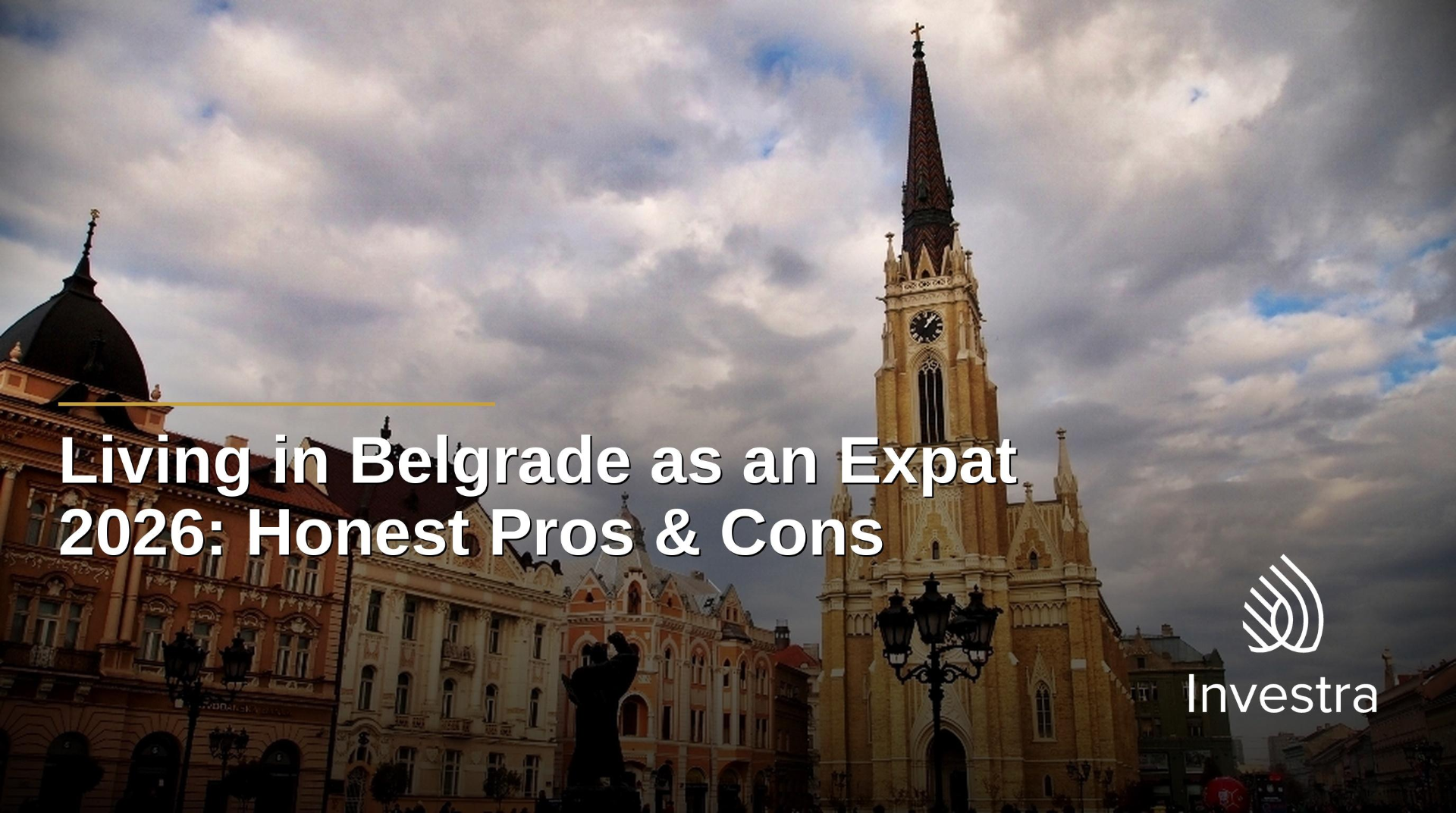
Living in Belgrade as an Expat 2026: Honest Pros & Cons
Living in Belgrade as an Expat 2026: Honest Pros & Cons
I’ve been living in Belgrade for a while now, and let me tell you, it’s a city that grabs hold of you. It’s not your typical polished European capital. It’s raw, it’s energetic, and it’s full of contradictions. If you’re considering moving here, you’re probably wondering what it’s really like. Is it as cheap as everyone says? Is the bureaucracy really that bad? I’m going to give you the honest truth about living in Belgrade as an expat in 2026. I’ve experienced the highs and lows firsthand, and I want to share my unfiltered perspective to help you make an informed decision.
The Pros of Living in Belgrade
Living in Belgrade comes with a unique set of advantages that you won\'t easily find elsewhere in Europe. It’s a city that truly offers a distinctive lifestyle, blending historical charm with modern vibrancy. What makes it so appealing to so many, myself included?
Quick Answer: The main pros of living in Belgrade include a remarkably low cost of living, a vibrant and ceaseless nightlife and cafe culture, exceptionally fast and reliable internet, and incredibly warm, hospitable, and welcoming locals. It\'s a city where you can genuinely enjoy a high quality of life without the exorbitant expenses often associated with other European capitals.
1. Affordability and Cost of Living: Your Wallet Will Thank You
Let\'s talk about the elephant in the room: money. One of the biggest draws for expats, and certainly for me, is the cost of living. Compared to Western Europe or North America, Belgrade is incredibly affordable. You can rent a decent, spacious apartment in the city center, dine out regularly at fantastic restaurants, and immerse yourself in a vibrant social life for a mere fraction of what it would cost in cities like London, Paris, or New York. According to the latest Numbeo data for July 2026, the estimated monthly costs for a single person are around $797, excluding rent. When I first saw these figures, I was skeptical, but my experience has confirmed them. A comfortable one-bedroom apartment in a desirable central location averages around $800 per month. This remarkable affordability allows you to live comfortably, save money, or invest in enriching experiences and even property. It’s a game-changer for financial freedom.
2. Vibrant Nightlife and Cafe Culture: The City That Never Sleeps
Belgrade is famous for its nightlife, and rightly so. The city truly never seems to sleep. From the iconic floating river clubs (known as splavovi) on the Sava and Danube rivers, pulsating with electronic music, to the intimate underground techno clubs and cozy jazz bars tucked away in charming streets, there\'s something for every taste. But it\'s not just about partying until dawn. The cafe culture here is a way of life, a daily ritual. Serbians absolutely adore their coffee, and you\'ll find cafes bustling with activity at all hours of the day, from early morning espressos to late-night conversations over rakija. It\'s the perfect environment for socializing, catching up with friends, people-watching, or simply relaxing with a good book and soaking in the city\'s unique atmosphere. I\'ve spent countless hours in these cafes, and they\'ve become an integral part of my daily routine.
3. Warm and Welcoming Locals: A Sense of Belonging
I was genuinely surprised by how friendly and hospitable the Serbian people are. They are incredibly proud of their country, their culture, and their history, and they are genuinely eager to share it with foreigners. You\'ll often find yourself invited to impromptu dinners, family gatherings, and traditional slavas (family patron saint days), which are truly unforgettable experiences. While the language barrier can be a hurdle initially, especially with older generations, many younger people speak excellent English, and even those who don\'t will go out of their way to help you with a smile and a gesture. This warmth creates a strong sense of belonging, making it easier to integrate and feel at home, something I deeply appreciate.
4. Fast and Reliable Internet: A Digital Nomad\'s Dream
For digital nomads, remote workers, and anyone reliant on connectivity, fast and reliable internet is non-negotiable. Belgrade delivers on this front with flying colors. The broadband infrastructure is excellent, boasting high speeds and stable connections available throughout the city, from apartments to cafes and coworking spaces. You won\'t have any trouble finding cafes with free, robust Wi-Fi or setting up a lightning-fast connection in your apartment. This has been a huge plus for my work, allowing me to stay connected and productive without any hiccups.
5. Strategic Location and Travel Opportunities: Gateway to the Balkans
Belgrade\'s geographical location in the heart of the Balkans makes it an excellent strategic base for exploring the wider region. You can easily take spontaneous weekend trips to breathtaking neighboring countries like Bosnia and Herzegovina, Montenegro, Hungary, Romania, and even further afield. The Nikola Tesla Airport (BEG) offers numerous low-cost flights to major European destinations, making international travel both convenient and surprisingly affordable. I\'ve explored so much of this part of Europe thanks to Belgrade\'s accessibility, and it\'s an adventurer\'s paradise.
6. EU Candidate Status: A Future of Growth
Serbia\'s ongoing process of accession to the European Union, while slow, signals a commitment to reform and integration. This status brings with it potential benefits such as increased foreign investment, improved infrastructure, and greater political stability in the long term. For expats, this could mean more job opportunities, enhanced legal protections, and a more harmonized regulatory environment. While it\'s a gradual process, the direction of travel is clear, offering a sense of future growth and opportunity that can be reassuring for those looking to settle long-term. This forward momentum is something I find particularly encouraging.
The Cons of Living in Belgrade
Of course, no place is perfect, and Belgrade, for all its charm, has its share of challenges. It\'s important to be aware of these before making the move, as they can significantly impact your daily life. What are the potential pitfalls that you might encounter?
Quick Answer: The main cons of living in Belgrade are the notoriously complex and slow bureaucracy, significant air pollution during the colder winter months, a challenging language barrier that can hinder daily interactions, and an often aggressive and chaotic driving culture. These factors collectively demand a considerable amount of patience, adaptability, and sometimes, a good sense of humor to navigate successfully.
1. Bureaucracy and Red Tape: A Test of Patience
Dealing with Serbian bureaucracy can be a monumental test of patience, and I speak from personal experience. Whether you\'re applying for a residency permit, attempting to open a bank account, or trying to register a business, you\'ll likely encounter long lines, confusing and often opaque procedures, and an overwhelming amount of paperwork. The system can feel archaic and inefficient, demanding multiple visits to various offices, each with its own set of requirements. It\'s highly recommended, almost essential, to hire a local lawyer or consultant to help you navigate this labyrinthine system, especially if you don\'t speak Serbian. Trust me, it\'s an investment that will save you countless hours of frustration and potential headaches. This is perhaps the biggest hurdle I\'ve faced here.
2. Air Pollution: A Breath of Concern
This is a serious and undeniable issue, particularly during the colder winter months. Belgrade often ranks among the most polluted cities in the world, a concerning reality for residents. This pollution is a combination of factors, including the widespread use of low-quality coal and wood for heating in older buildings, heavy traffic congestion, and industrial emissions from surrounding areas. If you have any pre-existing respiratory issues, or even if you don\'t, this is something you need to consider very carefully. Many expats, myself included, invest in high-quality air purifiers for their homes, and some even wear masks on particularly bad days. It\'s a stark contrast to the otherwise beautiful environment.
3. The Language Barrier: More Than Just Words
While English is widely spoken among the younger generation, particularly in the tech and expat communities, you\'ll still encounter numerous situations where knowing Serbian is essential. Dealing with government officials, local tradespeople, or older locals can be incredibly difficult without some knowledge of the language. Beyond spoken communication, Serbia uses both the Cyrillic and Latin alphabets, which adds an extra layer of complexity for newcomers trying to read street signs, menus, or official documents. Learning even basic phrases will significantly enhance your daily life and integration, but be prepared for moments of linguistic frustration. I\'m still working on it!
4. Driving Culture and Traffic: A Daily Challenge
Driving in Belgrade is not for the faint of heart, and I would strongly advise against it if you\'re not accustomed to aggressive driving styles. The traffic can be chaotic, unpredictable, and often feels like a free-for-all. Local drivers are frequently aggressive, impatient, and sometimes disregard traffic rules. Parking is also a major headache, especially in the city center, where spaces are scarce and often expensive. Many expats, myself included, choose to rely on the extensive public transportation network, taxis (which are relatively affordable), or simply walking, which is often the quickest way to get around. It\'s a choice that reduces stress significantly.
5. Limited Availability of Certain Goods: Adjusting Expectations
While you can find most basic necessities and a growing range of international products in Belgrade\'s larger supermarkets, you might struggle to find specific international brands, specialized dietary products (like gluten-free or vegan options in smaller stores), or the latest electronics at competitive prices. Import taxes can be quite high, making ordering items from abroad expensive and often time-consuming, with customs procedures adding another layer of bureaucracy. You\'ll learn to adapt and find local alternatives, but it can be frustrating at times when you can\'t find that one specific item you\'re used to. It\'s all part of the expat adjustment, I suppose.
6. Cultural Differences and Social Nuances: Learning the Unwritten Rules
Beyond the language, there are subtle but significant cultural differences and social nuances that can take time to understand. Serbians are direct, and their communication style can sometimes be perceived as blunt by those from more indirect cultures. There\'s a strong emphasis on family, tradition, and community, which can be wonderful but also sometimes challenging to navigate as an outsider. Understanding the local humor, social etiquette, and historical context is a continuous learning process. It\'s about learning the unwritten rules, and sometimes, I still get it wrong!
Pros vs. Cons: A Quick Comparison
To help you weigh your options and visualize the trade-offs, here\'s a quick comparison of the pros and cons of living in Belgrade, along with some real data from Numbeo (July 2026). This table should give you a clearer picture of what to expect.
| Feature | The Good (Pros) | The Bad (Cons) | Numbeo Data Context (2026) | | :--- | :--- | :--- | :--- | | Cost of Living | Highly affordable compared to Western Europe, allowing for a higher quality of life on a smaller budget. | Salaries are significantly lower if working for local companies, making remote work or international employment more attractive. | Single person estimated monthly costs: ~$797 (excluding rent). Meal at an inexpensive restaurant: ~$11.64. Milk (1L): ~$1.46. | | Housing | Good quality apartments are available for rent and purchase, often at attractive prices. | Prices in the city center are steadily rising, and finding modern amenities can sometimes be a challenge in older buildings. | 1-bedroom apartment in city center: ~$800/month. Price per square meter to buy in city center: ~$5,370. | | Social Life | Incredible nightlife, vibrant cafe culture, and numerous cultural events. Serbians are very social and welcoming. | Can be overwhelming for introverts or those who prefer a quieter, more private lifestyle. | Domestic draft beer (0.5L) in a restaurant: ~$3.39. Cappuccino: ~$3.12. | | Environment | Beautiful parks, rivers (Sava and Danube), and green spaces within and around the city. | Severe air pollution during winter months due to heating and traffic, impacting health and outdoor activities. | Belgrade often ranks among the most polluted cities globally in winter. | | Administration | N/A | Complex, slow, and often frustrating bureaucracy for residency, banking, and other official matters. Requires significant patience. | N/A | | Language | Many younger people and those in service industries speak English. | Serbian is a complex language with two alphabets (Cyrillic and Latin), making full immersion challenging. | N/A | | Transportation | Affordable public transport, taxis, and a walkable city center. | Aggressive driving culture, chaotic traffic, and limited parking, making driving stressful. | Taxi start (standard tariff): ~$3.10. Monthly public transport pass: N/A (often free for residents). |
Is Belgrade Right for You? My Personal Take
So, after all this, should you move to Belgrade? It really depends on what you\'re looking for in an expat experience. If you, like me, value affordability, a vibrant and dynamic social scene, and a truly unique cultural immersion, and you\'re willing to put up with some bureaucratic headaches and the occasional winter smog, then Belgrade could be an absolutely fantastic choice. It\'s a city that rewards patience, an open mind, and a willingness to embrace the unexpected. It’s not always easy, but I can honestly say it’s rarely boring. Every day brings something new, and that’s a thrill I wouldn’t trade.
As an expat, I\'ve found that the key to truly enjoying life here is to embrace the beautiful chaos, make an effort to learn a few words of Serbian, and actively connect with both the incredibly warm locals and the growing expat community. It’s a journey of discovery, and I’m still learning something new every day. If you’re up for an adventure, Belgrade might just be your next home.
Investra.io: Your Gateway to Serbian Real Estate
Considering making Belgrade your permanent home or looking for investment opportunities in this dynamic city? Investra.io is your trusted partner for exploring the Serbian real estate market. Whether you\'re searching for a modern apartment in New Belgrade, a charming property in Vračar, or a strategic investment in the city\'s burgeoning districts, our platform offers a comprehensive selection and expert guidance. We understand the nuances of the local market and are here to help you find your ideal property.
FAQ: Living in Belgrade
Is Belgrade safe for expats?
Yes, Belgrade is generally very safe for expats. Violent crime is rare, and you can walk around most parts of the city at night without feeling threatened. However, as with any large city, you should always take standard precautions against petty theft like pickpocketing. I personally feel very secure here.
Do I need to learn Serbian to live in Belgrade?
While you can certainly get by with English in the city center, in tourist areas, and among younger people, learning some basic Serbian will significantly improve your experience and ease your integration. It shows respect for the local culture and makes dealing with bureaucracy, shopping, and everyday tasks much smoother. Plus, it opens up so many more doors to local interactions!
What is the healthcare system like in Serbia?
Serbia has a public healthcare system, but it is often underfunded and can be overcrowded, leading to longer wait times. Most expats, myself included, opt for private health insurance, which provides access to modern facilities and English-speaking doctors at a reasonable cost. There are several excellent private clinics in Belgrade.
How easy is it to find an apartment in Belgrade?
Finding an apartment is relatively easy, especially with the help of local real estate agents or online platforms. However, prices in the city center have been steadily rising in recent years. It\'s always best to visit properties in person before committing. Be prepared to pay a deposit (usually one or two months\' rent) and the first month\'s rent upfront.
Can I drink the tap water in Belgrade?
Yes, the tap water in Belgrade is generally considered safe to drink. I drink it regularly without any issues. However, some people prefer the taste of bottled water, which is inexpensive and widely available in all supermarkets and kiosks.
What is the best neighborhood for expats in Belgrade?
Popular neighborhoods for expats include Stari Grad (Old Town) for its central location, historic charm, and vibrant atmosphere; Dorćol for its trendy cafes, boutiques, and bohemian vibe; and Vračar for a quieter, more residential feel with beautiful architecture and green spaces. New Belgrade is also popular for its modern apartments, business centers, and excellent infrastructure, particularly for families.
How do I get a residency permit in Serbia?
The process for obtaining a residency permit in Serbia can be complex and depends on your nationality and the purpose of your stay (e.g., work, study, family reunification, property ownership). It typically involves submitting various documents to the local police station for foreigners. It\'s highly advisable to consult with a local lawyer or the Serbian embassy/consulate in your home country for the most up-to-date and specific requirements, as rules can change.
Is Belgrade a good place for digital nomads?
Absolutely! Belgrade is increasingly popular among digital nomads due to its attractive combination of a low cost of living, fast and reliable internet, a thriving cafe culture conducive to remote work, and a vibrant social scene. There are also numerous coworking spaces available throughout the city, fostering a strong community of remote professionals. It\'s a fantastic hub for location-independent workers.
What is the driving culture like in Belgrade?
The driving culture in Belgrade can be quite aggressive and chaotic. Drivers often exhibit impatience, and traffic rules are sometimes interpreted loosely. Parking in the city center is also a significant challenge. Many expats choose not to drive and instead rely on public transport, taxis, or walking. If you do drive, be prepared for a fast-paced and assertive environment.
Are there international schools in Belgrade?
Yes, there are several reputable international schools in Belgrade that cater to the expat community, offering curricula such as the International Baccalaureate (IB) or American and British systems. These schools provide a high standard of education and a multicultural environment for expat children.
Priporočene vsebine / Recommended Reading
- Belgrade Real Estate Market 2026
- Belgrade Neighborhoods Guide 2026
- Top 15 Things to Do in Belgrade
- Serbia Visa and Residency Guide 2026
- Buying Property in Serbia as a Foreigner 2026
- AI Business Consultant
- Business Strategy AI Transforming Growth
Odkrijte globalne investicijske priložnosti na Unifyr.space — vaš portal za pametne investicije.
📚 Recommended Content
Social Links
Connect with Investra.io on our social media channels for the latest updates, property listings, and insights into the real estate market:
- LinkedIn: https://www.linkedin.com/company/investra-international
- Facebook: https://www.
Q1: How much money do I need per month to live comfortably in Belgrade as an expat in 2026?
Most expats budget between €800-1,200 per month for a comfortable lifestyle including rent, food, utilities, and entertainment in central Belgrade. If you live outside the city center, costs can drop to €600-800 monthly, though prices have been rising approximately 5-8% annually since 2024.
Q2: What is the typical timeline for obtaining a residence permit in Serbia?
The standard residence permit process takes 30-45 days from submission, though temporary residence permits for EU/US citizens can be issued within 10-15 days at the police station. You'll need proof of accommodation, health insurance, and sufficient funds (approximately €500-600 monthly minimum).
Q3: How do rental prices in Belgrade compare to other European capitals?
Belgrade apartments typically rent for €400-700 monthly for a one-bedroom in central areas like Stari Grad or Palilula, significantly cheaper than Prague (€600-900) or Budapest (€550-850). Outside the center, you can find quality apartments for €300-450, making it one of Europe's most affordable capitals.
Q4: Can I buy property in Serbia as a foreign expat and what are the restrictions?
Non-EU citizens can purchase residential property in Serbia, but must obtain permission from the Ministry of Interior first, a process taking 15-30 days and costing approximately €30-50 in fees. EU citizens face fewer restrictions and can typically purchase property more easily, though you'll need a Serbian tax number and a local bank account.
Q5: What is the cost of healthcare for expats and is private insurance necessary?
Public healthcare costs approximately €50-100 monthly through mandatory registration, but many expats opt for private insurance at €60-150 monthly for better service and English-speaking doctors. Private medical consultations cost €40-80, with most expats finding healthcare quality comparable to Western Europe at a fraction of the cost.
Q6: How long does it take to find an apartment in Belgrade and what should I budget for moving costs?
Finding an apartment typically takes 2-4 weeks, with most landlords requiring 2 months deposit plus one month's rent upfront (average €800-1,400 total for central areas). International moving from Western Europe costs €2,500-5,000, though many expats use local movers for €300-800 to transport belongings within the region.
Q7: What are the visa options for remote workers wanting to relocate to Serbia?
Serbia offers a Temporary Residence Permit for remote workers requiring proof of monthly income around €500-600 and health insurance, valid for one year and renewable. This is more accessible than many European countries and doesn't require a job contract with a Serbian employer.
Q8: How expensive is it to learn Serbian and are English speakers manageable in Belgrade?
Language courses cost €150-300 monthly for group classes or €20-30 per hour for private tutoring, with most courses lasting 3-6 months for basic fluency. English proficiency is high in Belgrade's expat areas (70-80% speak English), though learning Serbian significantly improves daily life and job prospects.
Q9: What are the main tax implications for expats earning income in Serbia?
Serbia has a flat 15% personal income tax rate plus 10.2% employer contribution (covered differently based on employment type), and non-residents are taxed only on Serbian-sourced income. Remote workers typically register as self-employed and should consult a local accountant (€50-100 monthly service) to ensure compliance with both Serbian and home-country tax obligations.
Q10: How walkable is Belgrade and what are transportation costs for expats?
Belgrade is highly walkable in central districts like Stari Grad and Vračar, with most amenities within 15-20 minutes on foot. A monthly public transport pass costs €15-20 and covers trams, buses, and metro; taxis average €0.50-0.70 per kilometer, making it far cheaper than Western Europe for getting around.
facebook.com/investra.io/ - YouTube: https://www.youtube.com/@InvestraEnterprises
Ready to invest in Serbia? Browse properties on Investra.io → https://investra.io/en/real-estate/serbia
In partnership with Findes Group & Partners, your trusted financial and investment advisors.
Related Posts
No related posts available.
