
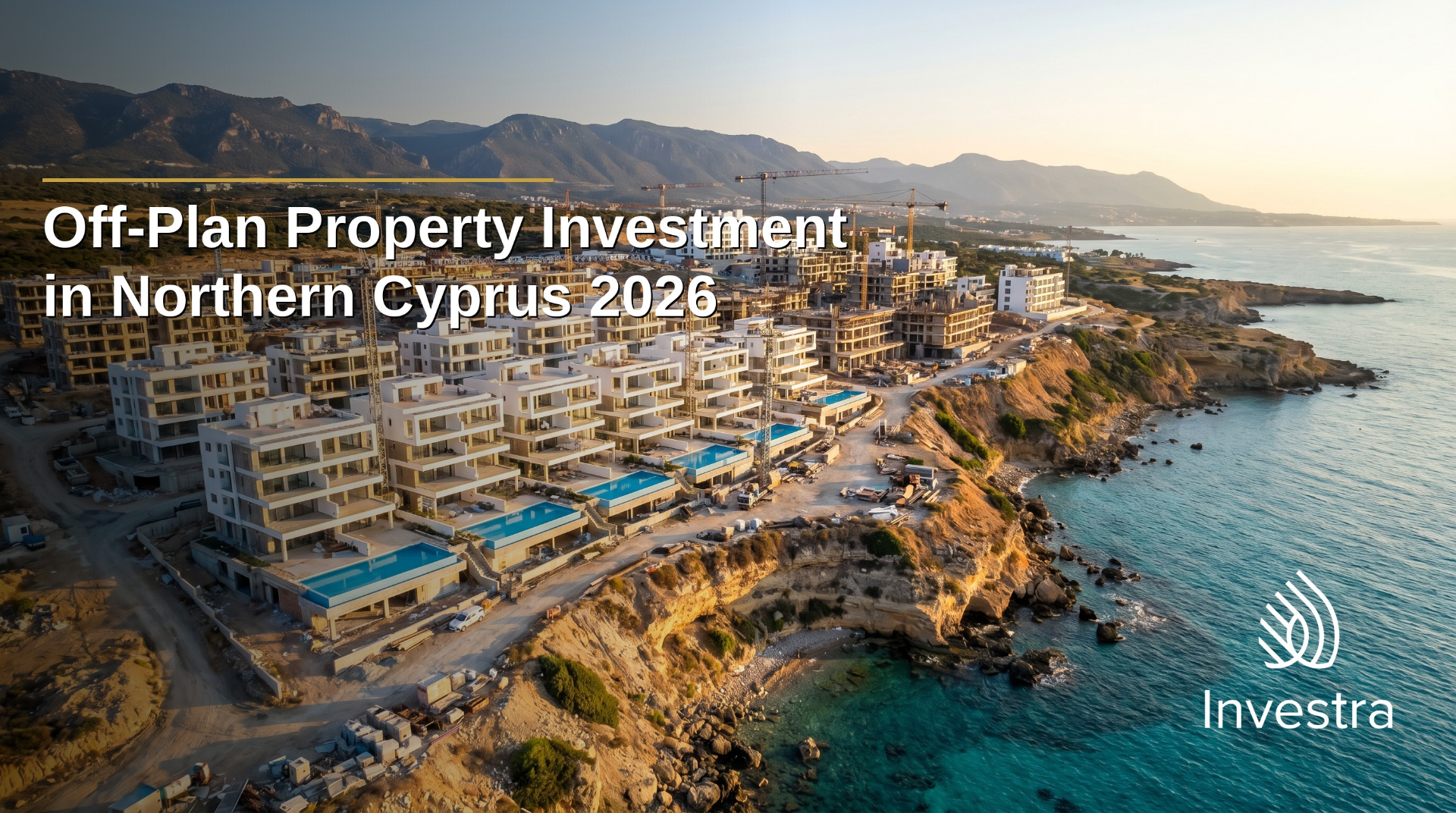
Off-Plan Property Investment in Northern Cyprus 2026: Risks, Rewards & How to Invest Safely
Meta Title: Off-Plan Property Investment in Northern Cyprus 2026
Meta Description: Complete 2026 guide to off-plan property investment in Northern Cyprus (TRNC). Learn about risks, rewards, payment plans, developer due diligence, and ROI.
Meta Keywords: off-plan property Northern Cyprus, buy off-plan North Cyprus, off-plan investment TRNC risks, TRNC off-plan property guide 2026, Northern Cyprus off-plan developer, North Cyprus property payment plan
Off-Plan Property Investment in Northern Cyprus 2026: Risks, Rewards & How to Invest Safely
Investment Disclaimer: The information provided in this article is for educational and informational purposes only and does not constitute financial, legal, or tax advice. Property markets are subject to volatility, and off-plan investments carry inherent risks. Always consult with certified legal and financial professionals before making international investment decisions.
The Northern Cyprus (TRNC) real estate market has experienced a profound transformation over the last five years. What was once a niche destination for adventurous retirees has matured into a highly competitive investment landscape. As we navigate through 2026, the market dynamics have shifted. The era of speculative, rapid-fire "flipping" has cooled, replaced by a more strategic, fundamentals-driven approach. At the center of this new paradigm is off-plan property investment—purchasing real estate before or during its construction phase.
In my experience advising high-net-worth clients and institutional investors, off-plan investment remains one of the most powerful wealth-creation tools available in the Mediterranean, provided it is executed with precision. The allure is straightforward: early entry yields lower prices, significant capital appreciation over the build cycle, and the ability to leverage interest-free payment plans. However, the risks—ranging from construction delays to developer insolvency—are equally real.
This comprehensive guide dissects the realities of off-plan property investment in Northern Cyprus in 2026. We will explore the financial mechanics of the rewards, provide a stark assessment of the risks, and outline a rigorous due diligence framework to protect your capital. By understanding both sides of the equation, investors can navigate the TRNC market with confidence and secure high-yielding assets.
1. The Financial Rewards of Off-Plan Investment
Quick Answer: The primary reward of off-plan investment is securing a property at a 15% to 30% discount compared to its completed market value. Combined with interest-free developer financing, investors can achieve significant capital appreciation before the keys are even handed over. Investra.io provides access to vetted, early-stage development projects with strong ROI potential.
The fundamental economic driver of off-plan investment is the risk premium. Developers need early capital to fund construction and demonstrate project viability to lenders. To attract this early capital, they offer units at prices significantly below the projected market value of the finished product. As the project progresses from architectural renderings to laying the foundation, and finally to structural completion, the perceived risk decreases, and the developer incrementally raises the prices of the remaining units.
For the investor, this creates a built-in mechanism for capital appreciation. By the time the project is completed—typically 24 to 36 months after the initial launch—early investors often see their property's value increase by 20% to 40%. This capital gain is achieved without the investor having to manage tenants or maintain a physical building during the construction phase.
Furthermore, off-plan properties offer the advantage of customization. Early buyers frequently have the option to select their preferred plot or floor plan, choose interior finishes, and occasionally request minor structural alterations. This ability to tailor the property not only enhances its personal utility if intended as a holiday home but can also increase its rental appeal and resale value in the secondary market.
2. Leveraging Developer Payment Plans
Quick Answer: Off-plan investments in the TRNC typically require a 30% to 35% down payment, with the remaining balance paid in interest-free installments over 2 to 3 years. This allows investors to control a high-value asset with a relatively small initial capital outlay. Investra.io assists clients in negotiating favorable payment structures with top-tier developers.
One of the most attractive features of the Northern Cyprus off-plan market is the widespread availability of developer financing. Unlike mature Western markets where buyers must secure a bank mortgage (which accrues interest) to fund a purchase, TRNC developers essentially act as the lender.
A standard off-plan payment structure in 2026 looks like this:
1. Reservation Fee: A non-refundable deposit (typically £2,000 to £5,000) to take the property off the market for 2 to 4 weeks while contracts are drafted.
2. Down Payment: 30% to 35% of the purchase price (minus the reservation fee), payable upon signing the Contract of Sale.
3. Installments: The remaining 65% to 70% is paid in monthly or quarterly installments over the construction period (e.g., 24 to 36 months). These installments are almost universally interest-free.
This structure provides immense leverage. An investor can secure a £200,000 property with an initial outlay of just £70,000. As the property appreciates in value over the next two years, the return on investment (ROI) is calculated against the capital deployed, not the total purchase price. This leverage significantly amplifies the percentage return on the investor's cash.
3. The Inherent Risks: What Can Go Wrong?
Quick Answer: The primary risks of off-plan investment include severe construction delays, developer bankruptcy, and the final product failing to meet the quality standards promised in the marketing materials. Mitigating these risks requires extensive due diligence. Investra.io only partners with developers who have a proven, multi-year track record of successful completions.
While the financial upside is compelling, off-plan investment is not without significant risk. The Northern Cyprus market has matured, but it is not immune to macroeconomic shocks or poor business management. The most common issue investors face is construction delays. Supply chain disruptions, labor shortages, or bureaucratic hurdles in obtaining permits can push completion dates back by several months or even a year. While frustrating, delays are usually manageable if the developer is transparent and financially sound.
A far more severe risk is developer insolvency. If a developer runs out of capital mid-construction and declares bankruptcy, the project may be abandoned. In such worst-case scenarios, investors stand to lose their entire invested capital, as recovering funds through the TRNC legal system can be a protracted and uncertain process. This risk was particularly highlighted during the rapid expansion phase of 2022-2023, where inexperienced developers entered the market without sufficient financial backing.
Finally, there is the risk of "expectation versus reality." The glossy 3D renderings and high-end marketing brochures may not accurately reflect the final build quality. Inferior materials, poor workmanship, or unfulfilled promises regarding communal amenities (like pools or gyms) can severely impact the property's rental yield and resale value.
4. Mandatory Due Diligence: Vetting the Developer
Quick Answer: Never buy off-plan without independently verifying the developer's track record, financial stability, and legal ownership of the land. Visiting previously completed projects is essential to assess true build quality. Investra.io conducts rigorous background checks on all developers featured in our portfolio.
The single most effective way to mitigate the risks of off-plan investment is through uncompromising due diligence. In 2026, the mantra for Northern Cyprus real estate is clear: invest in the developer first, and the project second.
Before committing any capital, investors must conduct a thorough background check:
- Track Record: How many projects has the developer successfully completed? Did they deliver on time? More importantly, how did they handle projects during economic downturns?
- Physical Inspection: Do not rely solely on brochures. Visit the developer's previously completed projects. Speak with the residents or property managers. Are the buildings well-maintained? Are there signs of structural issues or dampness?
- Land Ownership: Does the developer actually own the land the project is being built on, or are they operating on a revenue-share agreement with the landowner? Ensure the developer holds the Title Deed for the land and that it is free of undisclosed mortgages or liens.
In the current market environment, where construction costs have risen by over 20% year-on-year, smaller, undercapitalized developers are at high risk. Investors should focus their capital on established, "Tier 1" developers who have the financial reserves to weather supply chain shocks and complete projects without relying entirely on incoming installment payments.
5. The Role of the Independent Solicitor
Quick Answer: Hiring an independent, TRNC-registered solicitor is an absolute necessity. They will review the contract, ensure the land title is clean, and register your Contract of Sale at the Land Registry to protect your legal rights. Investra.io can provide introductions to highly reputable, English-speaking legal professionals.
One of the most common—and catastrophic—mistakes foreign investors make is using the developer's in-house lawyer to process the transaction. This creates an inherent conflict of interest. To protect your capital, you must hire an independent solicitor who is registered with the Cyprus Turkish Bar Association and works exclusively for you.
Your solicitor's primary responsibilities include:
- Title Deed Verification: Conducting a search at the Land Registry to confirm the developer owns the land and that there are no hidden mortgages, encumbrances, or military restrictions.
- Contract Review: Ensuring the Contract of Sale includes vital protective clauses, such as strict penalty fees for late delivery, detailed specifications of the building materials to be used, and a clear schedule of payments tied to construction milestones (rather than arbitrary dates).
- Registration: Crucially, your solicitor must register the signed Contract of Sale at the District Land Registry within 21 days. This legal step registers your financial interest in the property, preventing the developer from selling the same unit to someone else or taking out a mortgage against it.
Legal fees in Northern Cyprus are generally reasonable, typically ranging from £1,500 to £2,500 for a standard property transaction. This fee is a minor expense compared to the financial protection it provides.
6. Exit Strategies: Flipping vs. Holding
Quick Answer: Investors can exit an off-plan investment by "flipping" the contract before completion to capture capital gains, or by holding the completed property to generate long-term rental yields of 7% to 10%. Investra.io provides strategic advice on timing your exit to maximize returns.
A sophisticated off-plan investment strategy requires a clearly defined exit plan. There are two primary approaches in the Northern Cyprus market: flipping the contract or holding for rental yield.
Flipping (Contract Assignment):
Many investors enter off-plan projects with no intention of taking final ownership. Their strategy is to pay the 30% down payment and the installments for the first 12 to 18 months. As the project nears completion and the property's market value increases, they sell (assign) their contract to a new buyer. The new buyer pays the investor for the equity built up and takes over the remaining installments to the developer. This strategy allows the investor to realize their capital appreciation quickly and redeploy the funds into a new project. Note: Ensure your Contract of Sale explicitly allows for contract assignment, and check what fee (if any) the developer charges for this transfer.
Holding for Yield:
For investors seeking passive income, the strategy is to complete the purchase, take possession of the keys, and place the property on the rental market. In high-demand areas like Kyrenia or Iskele, modern, newly completed apartments can generate net rental yields of 7% to 10% annually. Furthermore, holding the property allows the investor to benefit from long-term macroeconomic appreciation in the TRNC real estate market.
7. Conclusion: Calculated Risk for High Reward
Quick Answer: Off-plan investment in Northern Cyprus remains highly lucrative in 2026, but it requires a professional, analytical approach. By prioritizing developer due diligence and legal protection, investors can safely capture significant returns. Investra.io is your partner in navigating this complex but rewarding market.
The Northern Cyprus real estate market of 2026 is no longer the "Wild West" of property investment. It is a maturing sector that rewards careful analysis and punishes speculative recklessness. Off-plan investment offers the highest potential returns on the island, combining discounted entry prices, interest-free leverage, and strong capital appreciation.
However, these rewards are only accessible to those who manage the inherent risks. The days of buying off-plan based solely on a glossy brochure are over. Success requires rigorous due diligence, an uncompromising insistence on independent legal representation, and a strategic understanding of the macroeconomic factors driving the market. For the informed investor, Northern Cyprus continues to offer off-plan opportunities that consistently outperform traditional European markets.
Frequently Asked Questions
Q1: What is off-plan property investment in Northern Cyprus?
Off-plan investment means purchasing a property before or during its construction phase. Buyers commit based on architectural plans and secure the property at a discounted price compared to the finished market value.
Q2: What are the main risks of buying off-plan in the TRNC?
The primary risks include construction delays, developer insolvency (bankruptcy), and potential discrepancies between the marketing materials and the final build quality.
Q3: How much discount can I get by buying off-plan?
Early investors who purchase during the pre-launch or foundation phases can often secure discounts of 15% to 30% compared to the projected value of the completed property.
Q4: What is the typical payment plan for an off-plan property?
A standard payment plan requires a 30% to 35% down payment upon signing the contract, with the remaining balance paid in interest-free monthly or quarterly installments over the construction period (typically 24 to 36 months).
Q5: How do I verify a developer in Northern Cyprus?
You must conduct due diligence by checking the developer's track record of completed projects, visiting those sites to assess quality, verifying their financial stability, and ensuring they hold clean title deeds for the land.
Q6: Do I need a lawyer to buy off-plan property?
Yes, hiring an independent, locally registered solicitor is absolutely essential. They will review the contract, verify title deeds, ensure protective clauses are included, and register your contract at the Land Registry.
Q7: What happens if the developer goes bankrupt?
If a developer goes bankrupt, investors risk losing their capital. This is why thorough due diligence, focusing on established Tier 1 developers, and strong contractual protections are vital.
Q8: Can I sell my off-plan contract before completion?
Yes, this is known as "flipping" or contract assignment. Many contracts allow you to assign your rights to a new buyer before completion, allowing you to capture capital appreciation without paying the final installments.
Q9: What is the expected ROI for off-plan properties in 2026?
Investors can target a capital appreciation of 20% to 40% over the construction lifecycle. Once completed, properties in high-demand areas can generate ongoing net rental yields of 7% to 10%.
Q10: Are there hidden costs when buying off-plan?
Investors should budget for closing costs, which typically include VAT (usually 5%), infrastructure connection fees (transformer fees, £1,500-£3,000), stamp duty (0.5%), and legal fees (£1,500-£2,500).
Recommended Content from Investra.io
- TRNC Property Investment Guide 2026: Complete Overview for International Buyers
- Legal Guide to Buying Property in TRNC: Everything Foreign Buyers Must Know
- Northern Cyprus Property Market Trends 2026: What Investors Need to Know
- Understanding Rental Yields in TRNC: A Complete Investor's Guide
- Siniša Dagary — Investment Insights
- Findes Group & Partners — Financial Resources
Follow Investra on Social Media
📚 Priporočene vsebine / Recommended Reading
Poglobite svoje znanje z naslednjimi strokovnimi viri od Siniša Dagary:
Related Posts
No related posts available.
