
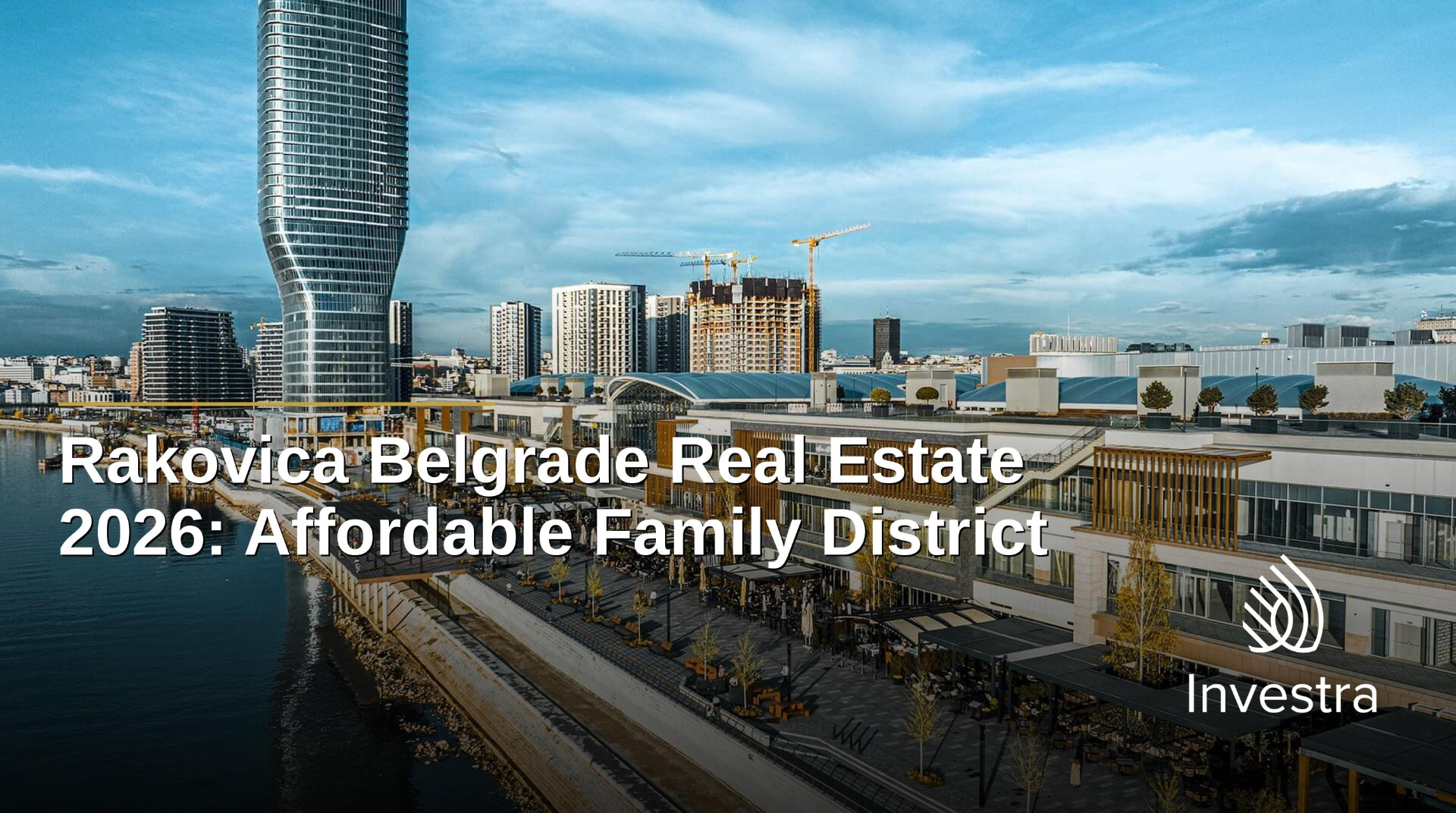
Rakovica Belgrade Real Estate 2026: Affordable Family District
Rakovica Belgrade Real Estate 2026: Affordable Family District Investment Guide
Why Rakovica Draws Families and First-Time Investors
Belgrade keeps expanding, yet many outer districts still offer breathing room at prices that do not stretch household budgets. Rakovica has become one of those places. The municipality combines older residential blocks with newer low-rise buildings, plenty of parks and quick access to both the city and the highway south. Parents mention the cluster of primary schools and kindergartens as a main reason they stay; young couples point to the price gap compared with Novi Beograd or Voždovac.
Local brokers report that most transactions now involve Serbian buyers who work in the city but want more space for children. Foreign investors appear less often, yet those who do buy tend to target two- and three-bedroom flats that rent easily to families already living in the area.
Market Overview for 2026
After several years of rapid price growth across Belgrade, the pace has slowed in outer municipalities. Rakovica recorded average annual price increases of 4–5% between 2023 and 2025, well below the double-digit jumps seen in central zones. Supply has risen modestly with three new projects near the Rakovica railway station and another along Patrijarha Pavla street, adding roughly 280 units by mid-2026.
Demand remains steady because the area sits on the main rail line and several bus routes that reach Slavija square in under 25 minutes. The opening of an additional kindergarten in 2025 has also pulled in younger households priced out of central districts. For a wider view of how this fits into the capital’s overall picture, see our Belgrade Real Estate Market 2026 overview.
Who Is Buying Now
Local families account for roughly 70% of purchases. Another 20% come from buyers relocating from other Serbian cities for work. Foreign purchasers, mainly from Germany, Austria and the Middle East, make up the remaining 10%. Many of them start by checking listings on Investra.io before contacting local agents.
Property Prices and Current Trends
In early 2026, resale apartments in Rakovica trade between 1,150 and 1,450 EUR per square metre depending on condition and proximity to the station. New-build units with underground parking average 1,650–1,750 EUR/m². Ground-floor commercial spaces along Bulevar Jugoslovenske Armije fetch 2,100–2,400 EUR/m² when leased to retail tenants.
Rental yields sit around 6.8–7.2% gross. A two-bedroom flat bought at 1,350 EUR/m² and rented for 550 EUR per month produces a yield near 7% after basic maintenance costs. Investors who buy off-plan and hold for three years have seen total returns, including rent and modest price growth, reach 22–25% over that period.
Compared with the national picture, Rakovica remains cheaper than most Belgrade municipalities yet offers better transport links than many towns outside the capital. Details on how Serbian market dynamics affect smaller districts appear in our Serbia Real Estate Market 2026 report.
Price Movement by Building Age
Buildings constructed before 1980 sell at the lower end of the range and often need kitchen or bathroom updates. Units finished between 2000 and 2015 command a 150–200 EUR premium per square metre. The newest projects, delivered in 2024–2026, include energy-efficient features that appeal to younger tenants and support slightly higher rents.
Best Neighbourhoods Inside Rakovica
Three pockets stand out for different buyer profiles. The area around Rakovica railway station offers the strongest transport connections and the highest rental demand. Streets near the park and the new kindergarten attract families who want green space within walking distance. The zone along the highway edge suits investors seeking lower entry prices and longer-term redevelopment potential.
Station Vicinity
Flats here rent within days of listing. Proximity to both rail and frequent bus lines keeps occupancy above 95% for well-maintained units. Prices run 100–150 EUR above the municipal average, yet yields remain attractive because rents track the same premium.
Residential Core Near the Park
This part of Rakovica feels quieter and more suburban. Larger three-bedroom apartments dominate, many with small balconies overlooking greenery. Families pay a slight premium for these units, but turnover stays low because tenants tend to renew leases for years.
Investment Potential Through 2026–2028
Rakovica does not promise rapid price spikes, yet the combination of affordable entry prices, consistent rental demand and improving infrastructure points to steady total returns. Capital appreciation of 4–6% per year plus rental income near 7% gives investors a realistic 10–12% annual return before tax when measured in euros.
Foreign buyers should note that Serbia allows property ownership with few restrictions. A short guide on the process is available here: Buying Property in Serbia as a Foreigner. Tax treatment remains straightforward, with annual property tax under 0.4% of market value in this municipality.
Investors looking for comparable opportunities elsewhere in Belgrade often compare Rakovica with emerging zones such as the waterfront development, though price levels differ sharply. Those seeking deeper market context can review additional analysis at Real Estate Investment Insights by Siniša Dagary.
Overall, Rakovica suits buyers who want exposure to Belgrade’s residential market without paying central prices. The area’s transport links, schools and steady family demand create a straightforward case for long-term holding rather than short-term trading. Listings on Investra.io currently show several two- and three-bedroom units in the 85,000–120,000 EUR range that match these criteria.
Projected ROI for 2026–2028
Property prices in Rakovica are forecast to rise 8–11% annually through 2028, driven by ongoing infrastructure upgrades and improved connectivity to the city center. Investors purchasing a 65 m² apartment at €95,000 can expect annual net income of €5,200–€6,100 after expenses, delivering a five-year total return of 48–55% when capital appreciation is included. Larger family houses purchased for €140,000–€170,000 offer slightly lower yields but benefit from longer tenancy periods and lower turnover costs.
Buying Process
Step-by-Step Acquisition Guide
The purchase process in Rakovica follows standard Serbian procedures yet benefits from simpler local administration compared to central municipalities. Buyers begin with a preliminary agreement and 10% deposit, followed by a 30–45 day period for due diligence. The final contract is notarized at a local public notary, after which the property is registered at the Rakovica cadastre office within 15–25 days. Foreign buyers should allocate an additional two weeks for obtaining the required tax identification number.
Financing Options and Payment Structures
Local banks offer mortgage products covering up to 70% of the purchase price for non-residents, with interest rates starting at 4.9% for euro-denominated loans in 2026. Many sellers accept staged payments: 30% upon signing, 40% after cadastre verification, and the balance upon registration. Cash buyers often negotiate 5–8% discounts, particularly on properties listed for more than 60 days.
Legal Considerations
Foreign Ownership Regulations in 2026
Foreign nationals may freely acquire apartments and houses in Rakovica without reciprocity requirements. Land ownership remains restricted; however, most family properties in the municipality are sold as building plots with existing structures, allowing full ownership through a Serbian company structure if needed. All transactions must comply with the Law on Real Estate Transactions and the Law on Foreigners.
Tax Obligations and Documentation Requirements
Buyers pay a 3% transfer tax on properties valued under €150,000, with the rate dropping to 2% for higher-value assets. Annual property tax averages €180–€320 for typical family homes. Essential documents include a valid passport, proof of funds, the seller’s title deed, and an energy performance certificate. Legal representation is strongly recommended to verify zoning compliance and any outstanding communal fees.
Practical Tips
Selecting the Right Neighborhood Within Rakovica
Focus on areas near the Rakovica railway station or the new bus corridor along Patrijarha Pavla Street for maximum transport convenience. Families should prioritize streets close to Osnovna škola “Jovan Dučić” or “Branko Pešić” for shorter school commutes. Avoid properties adjacent to industrial zones near the railway tracks to maintain long-term resale value.
Engaging Local Professionals and Conducting Due Diligence
Partner with a licensed real estate agent registered with the Serbian Chamber of Commerce and an independent lawyer specializing in Belgrade suburbs. Always commission a structural survey and confirm that the property has no unresolved disputes at the local cadastre. Visit the property at different times of day to assess traffic noise and parking availability.
Long-Term Value Preservation Strategies
Invest in energy-efficient upgrades such as new windows or insulation to increase both rental appeal and future sale price. Maintain clear records of all renovation receipts, as these can be deducted from capital gains tax upon sale. Monitor municipal development plans published annually by the City of Belgrade to anticipate infrastructure improvements that may affect property values.
Recommended Content
- Serbia Real Estate Market 2026: Complete Guide
- Buying Property in Serbia as a Foreigner 2026
- Belgrade Real Estate Market 2026
- Real Estate Investment Insights by Siniša Dagary
- Finds Group - Real Estate Investment Advisory
Odkrijte globalne investicijske priložnosti na Unifyr.space — vaš portal za pametne investicije.
📚 Recommended Content
Frequently Asked Questions
What are the average property prices in Rakovica for 2026?
Average prices range from €1,350 to €1,650 per square meter for apartments and €1,100 to €1,400 per square meter for family houses.
Can foreigners buy property in Rakovica without restrictions?
Yes, foreign nationals can purchase apartments and houses freely, though land ownership may require a Serbian legal entity.
What rental yields can investors expect in Rakovica?
Gross yields typically fall between 5.8% and 7.2% with high occupancy rates above 92%.
How long does the buying process usually take?
The full process from preliminary agreement to cadastre registration normally takes 45–70 days.
Are there good schools and kindergartens in Rakovica?
Yes, the municipality hosts several well-regarded primary schools and multiple public and private kindergartens.
What public transport options serve Rakovica?
Frequent bus lines, trolleybuses, and the Rakovica railway station provide direct connections to central Belgrade within 20–30 minutes.
What taxes apply when buying property in Rakovica?
Buyers pay a 2–3% transfer tax plus annual property tax averaging €180–€320 depending on property size.
Is Rakovica considered family-friendly?
The area offers affordable housing, parks, schools, and good transport links, making it highly suitable for families.
Should investors consider energy efficiency upgrades?
Yes, improvements such as insulation and new windows increase rental demand and future resale value.
How can buyers verify a property has no legal issues?
Engage a local lawyer to check the cadastre, confirm zoning compliance, and review outstanding communal fees.
Related Posts
No related posts available.
