
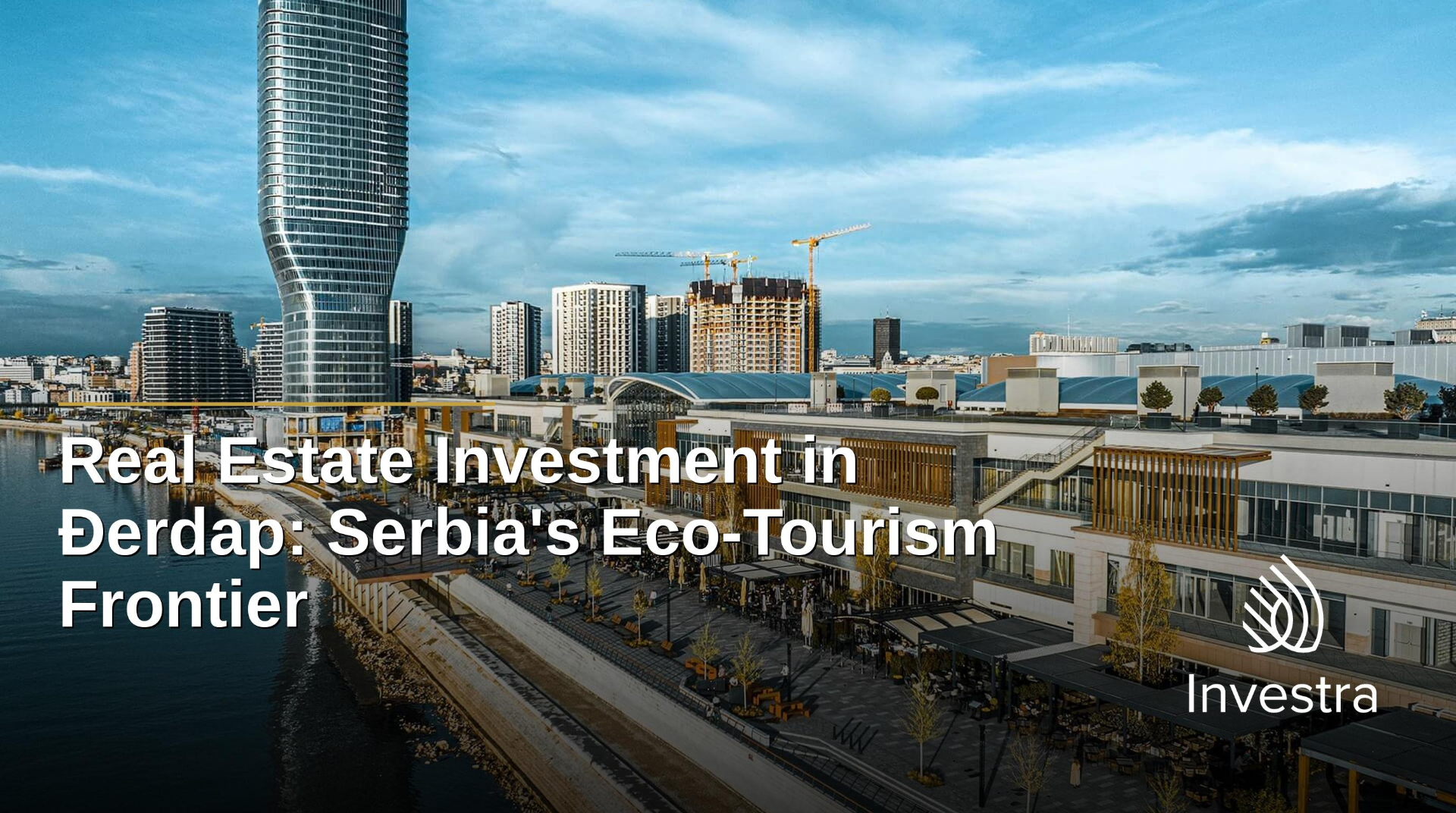
Real Estate Investment in Đerdap: Serbia's Eco-Tourism Frontier
Quick Answer: Đerdap real estate offers Serbia’s most affordable eco-tourism investment frontier, with houses priced €30,000–100,000 and land from €5–20 per square metre. Growing visitor numbers to the national park and Iron Gates create strong demand for guesthouses and eco-lodges, especially in Kladovo and Donji Milanovac, while strict park rules protect long-term value.
Real Estate Investment in Đerdap: Serbia's Eco-Tourism Frontier
Đerdap National Park stretches along the Danube where Serbia meets Romania, offering dramatic limestone cliffs, the narrow Iron Gates gorge, and some of Europe’s most important archaeological sites. The region’s combination of untouched nature and improving infrastructure has turned it into an emerging hotspot for eco-tourism. Visitors arrive year-round to hike, kayak, and explore Roman ruins at Felix Romuliana and the massive hydroelectric dam. This steady flow of nature-loving travellers creates genuine demand for quality accommodation and services. At the same time, property prices remain among the lowest in Serbia, making Đerdap an attractive destination for both lifestyle buyers and investors seeking rental yields. Houses in good condition can still be found between €30,000 and €100,000, while building land ranges from €5 to €20 per square metre. Foreign buyers benefit from straightforward legal procedures when working with experienced local advisors. Whether you dream of running a riverside guesthouse or developing low-impact eco-lodges, the park’s protected status ensures the landscape stays pristine and property values remain stable. The following sections explore the tourism appeal, investment opportunities, legal framework, and practical details you need to make an informed decision.
Discovering the Natural Wonders of Đerdap National Park
Đerdap National Park covers 63,680 hectares of forested hills, deep canyons, and the widest stretch of the Danube in Europe. The Iron Gates, or Đerdapska klisura, is the park’s crown jewel—a 100-kilometre gorge where the river narrows dramatically between towering cliffs. Boat tours depart daily from Kladovo and Donji Milanovac, passing the massive 1970s hydroelectric dam and the submerged ancient site of Lepenski Vir. Birdwatchers can spot golden eagles, black storks, and even the rare wallcreeper along the cliffs. In spring and autumn, the forests explode with colour, attracting photographers and hikers to marked trails such as the 12-kilometre path from Tekija to the Vratna monastery. Summer brings kayakers and stand-up paddleboarders to the calmer Danube bays near Brza Palanka. Winter offers quieter visits with opportunities to see the frozen waterfalls at Vratna Gates. Local guides charge around €40–60 for a full-day boat trip including lunch, while entrance fees to the park remain modest at €3 per person. The combination of dramatic scenery and rich history keeps occupancy rates high for well-managed accommodation. Investors who position properties near popular trailheads or boat landings benefit from consistent seasonal demand that extends beyond the peak summer months.
The Rise of Eco-Tourism in Serbia's Đerdap Region
Eco-tourism in Đerdap has grown steadily since the park received enhanced protection status in 2019. International travellers, particularly from Germany, Austria, and the Netherlands, seek authentic experiences that combine nature, archaeology, and local cuisine. Small-group tours focusing on birdwatching, stargazing, and traditional fishing now run throughout the year. Local operators report 25–30% annual growth in overnight stays between 2021 and 2024. This trend directly benefits property owners who can offer sustainable guesthouses or glamping units. Properties with private river access or views of the gorge command premium nightly rates of €60–110 in high season. Many visitors also seek experiences such as foraging workshops, organic wine tastings at nearby vineyards in Negotin, and cycling along the Danube cycle path. The Serbian government has invested in new signage, electric boat charging points, and visitor centres, further boosting the region’s appeal. As tourism infrastructure improves, demand for quality lodging outpaces supply, creating a clear window for investors. Those who purchase now can renovate traditional stone houses into eco-certified accommodations and benefit from both capital appreciation and strong rental income. The region’s proximity to Romania also brings cross-border day-trippers who often extend their stay when comfortable lodging is available.
Affordable Real Estate Opportunities in Đerdap
Current market data shows Đerdap remains Serbia’s most affordable national-park area for real estate. Detached houses with gardens in villages such as Tekija, Brza Palanka, and Miroč typically sell between €30,000 and €65,000. Larger family homes or renovated stone buildings near Kladovo reach €80,000–100,000. Building plots with Danube views start at €5 per square metre and rarely exceed €20 per square metre outside the strictest protection zones. Many properties include existing fruit orchards or vineyards, adding extra income potential through agritourism. Foreign buyers should note that national-park regulations limit new construction to designated zones and require environmental impact assessments. However, renovation of existing structures faces fewer hurdles. Working with a trusted real estate platform helps investors identify compliant listings quickly. Average renovation costs for a three-bedroom house range from €15,000 to €35,000 when using local materials and labour. Once complete, these properties can achieve occupancy rates of 55–70% during the April–October season, delivering gross yields between 8% and 12%. The low entry price combined with growing tourism makes Đerdap a compelling alternative to more saturated markets such as Tara or Kopaonik.
Kladovo – The Strategic Investment Hub
Kladovo serves as the administrative and commercial centre of the Đerdap region. Located directly on the Danube and connected by bridge to Romania, the town benefits from cross-border trade and tourism. Daily ferry services and the E-771 highway bring both Romanian day visitors and longer-stay travellers from further afield. The town centre offers supermarkets, pharmacies, banks, and a small hospital, making it practical for year-round living or operations. Several waterfront restaurants and cafés already attract steady custom, yet the number of quality guesthouses remains limited. Investors can purchase older buildings along the main promenade for €55,000–85,000 and convert them into boutique accommodations with river views. The local municipality actively supports tourism projects that respect environmental guidelines. Proximity to the Iron Gates boat terminal and the archaeological site of Diana means guests can walk to major attractions. Property prices here are still 30–40% lower than comparable Danube towns in Romania. For those seeking higher rental yields, Kladovo offers the best balance of infrastructure, footfall, and affordability in the entire park area. Many successful owners also offer guided fishing trips and wine-tasting packages, increasing average guest spend.
Donji Milanovac and Guesthouse Investment Potential
Donji Milanovac, situated on a wide Danube bay, has become the preferred base for families and nature enthusiasts. The town features a long promenade, several beaches, and direct access to the park’s most popular hiking trails. Guesthouse opportunities here are particularly strong because the existing supply consists mainly of small family-run pensions with limited capacity. Modern eco-designed properties with private terraces and solar power can command €75–110 per night. Purchase prices for suitable buildings range from €40,000 to €90,000. Local regulations encourage the use of traditional stone and wood, helping new builds blend with the landscape. Investors who install energy-efficient systems often qualify for municipal grants covering up to 20% of renovation costs. The town’s annual Danube Festival and fishing competitions create predictable spikes in demand. Many owners report that September and October now generate almost as much revenue as July and August thanks to shoulder-season marketing. Working alongside a business consultant Siniša Dagary can help structure operations for maximum tax efficiency and compliance with park rules. The combination of natural beauty, improving infrastructure, and limited competition makes Donji Milanovac an excellent location for first-time guesthouse investors.
Navigating National Park Regulations and Building Restrictions
Đerdap National Park operates under three protection zones with varying building rules. Zone I (strictest) allows almost no new construction, while Zone II and III permit renovation and limited new builds provided environmental standards are met. All projects require approval from the park authority and the local municipality. Foreign buyers must submit architectural plans that demonstrate minimal visual impact and proper wastewater management. Typical approval timelines range from three to six months. Existing houses inside the park can usually be modernised without major obstacles, especially if the footprint remains unchanged. Land outside designated building zones can still be purchased for agricultural or forestry use, offering additional income through timber or organic farming. Investors should budget €2,000–4,000 for legal and permitting fees. The strict rules actually protect long-term value by preventing overdevelopment. Those who comply early gain a competitive advantage as demand for certified eco-accommodation continues to rise. Consulting specialists familiar with both Serbian property law and park regulations is essential before signing any purchase contract.
Đerdap vs Tara: Choosing Your Investment Frontier
While Tara National Park offers dramatic mountain scenery and established winter tourism, Đerdap provides a completely different investment profile. Tara properties start at €70,000–150,000 for comparable houses, and land prices often exceed €30 per square metre. Đerdap’s lower entry costs allow investors to acquire larger plots or multiple units for the same budget. Tourism in Tara is more seasonal, concentrated around ski months, whereas Đerdap enjoys steady spring-to-autumn demand from river cruisers and hikers. Cross-border traffic from Romania adds an extra revenue stream absent in Tara. Infrastructure improvements, including the new highway section between Požarevac and Kladovo scheduled for 2026, will further increase accessibility. For buyers focused on eco-tourism and year-round occupancy, Đerdap currently offers superior risk-adjusted returns. Many investors begin with a Serbia real estate portfolio in Đerdap before expanding to other regions. The choice ultimately depends on preferred landscape and target guest profile, yet current pricing and growth trends strongly favour the Danube frontier.
Practical Information
Đerdap is reachable by car from Belgrade in approximately three hours via the E-771 road. Buses run twice daily from Belgrade to Kladovo (€12–15) and Donji Milanovac (€10–13). The nearest international airport is Belgrade Nikola Tesla, with transfers available through local taxi companies (€90–120). Best visiting months are April–June and September–October for pleasant temperatures and fewer crowds. July and August bring peak heat and river traffic. Entry to the national park costs €3 per person; boat tours start at €25 for a two-hour trip. Restaurants in Kladovo offer fresh fish dishes for €8–14. Local fuel prices average €1.45 per litre. ATMs are available in both main towns, and most guesthouses accept card payments. Spring flooding can occasionally affect lower river roads, so check conditions before travel.
Frequently Asked Questions
Can foreigners buy property in Đerdap National Park?
Yes, foreigners can purchase property in Serbia, including inside Đerdap National Park, provided they follow the same rules as Serbian citizens. The key restrictions come from the park’s zoning system rather than nationality. Buyers must obtain approval for any renovation or new construction from the park authority. Working with an experienced lawyer and a local real estate platform ensures all permits are secured before purchase. Many foreign owners successfully operate guesthouses after completing straightforward legal procedures.
What are the average rental yields for guesthouses in Kladovo?
Well-managed guesthouses in Kladovo achieve occupancy rates of 55–70% between April and October. Nightly rates range from €60 to €110 depending on season and amenities. After operating costs, investors typically see net yields between 7% and 11%. Properties with river views or private moorings command the highest rates and fastest bookings.
How long does it take to obtain building permits inside the park?
Approval timelines average three to six months for renovation projects and up to nine months for new builds. The process involves the park authority, the local municipality, and environmental assessment. Early engagement with planning consultants familiar with Đerdap regulations significantly shortens the timeline.
Is September a good time to visit and view properties?
September offers excellent weather, fewer tourists, and lower accommodation rates, making it ideal for property viewings. Many owners are also more available for negotiations during the shoulder season. The landscape remains lush and the Danube is calm, allowing comfortable boat trips between viewings.
What grants are available for eco-friendly renovations?
The municipality of Kladovo and the national park administration offer grants covering 15–20% of costs for solar panels, wastewater treatment, and energy-efficient insulation. Applications must be submitted before construction begins. Successful applicants receive reimbursement after final inspection and certification.
Đerdap combines breathtaking natural beauty with genuinely affordable real estate and rising eco-tourism demand. Whether you seek a personal riverside retreat or a portfolio of sustainable guesthouses, the region offers compelling opportunities. Explore current listings and expert guidance at Investra.io to begin your journey into Serbia’s most promising eco-tourism frontier.
Legal Process for Foreign Buyers Acquiring Property in Đerdap
Foreign nationals can legally purchase residential and commercial property in Serbia, including within Đerdap National Park boundaries, under the same conditions as Serbian citizens following the 2014 amendments to the Law on Foreigners and Property Ownership. The process begins with obtaining a personal identification number (PIB) from the tax authorities, which requires a valid passport and proof of address, usually completed in one to two weeks at the local branch in Kladovo. Next, buyers must secure a bank account with a Serbian institution such as Banca Intesa or Raiffeisen Bank to handle the transaction funds; opening costs average €50 and takes three days. A licensed real estate agent or lawyer then conducts a title search at the Real Estate Cadastre Office in Bor, verifying ownership, encumbrances, and zoning compliance with park regulations. This due diligence phase costs €800–1,200 and prevents surprises from unresolved inheritance claims common in rural Danube villages. Once a property is selected, the sales contract is drafted in Serbian and English, notarized at a local notary in Kladovo for €150–250, and registered at the cadastre within 30 days. Foreign buyers face no additional taxes beyond the standard 0.5% transfer tax and 5% VAT on new builds, though park-zone properties require an environmental compliance certificate from the Đerdap National Park Authority before final registration. Working with a real estate platform streamlines access to pre-vetted listings that already meet these criteria. Investors should also budget for a local tax advisor to handle annual property tax filings, which average €150–300 yearly for a typical guesthouse. The entire purchase timeline ranges from six to ten weeks when all documents are prepared correctly, allowing quick entry into the market before the next tourism season begins.
Odkrijte globalne investicijske priložnosti na Unifyr.space — vaš portal za pametne investicije.
📚 Recommended Content
Future Outlook and Emerging Trends in Đerdap Eco-Tourism Investments
The outlook for Đerdap real estate remains highly positive as Serbia positions the Iron Gates region as a flagship for sustainable tourism in the Western Balkans. The Serbian government’s 2025–2030 National Tourism Development Strategy allocates €45 million for new visitor infrastructure, including an expanded eco-trail network linking Lepenski Vir with the Vratna monastery and electric shuttle services from Kladovo to remote trailheads. These improvements are expected to increase annual visitor numbers from the current 180,000 to over 300,000 by 2028, directly boosting occupancy and nightly rates for compliant properties. Cross-border cooperation with Romania’s Iron Gates Natural Park is also advancing, with joint marketing campaigns targeting German and Austrian tour operators that already fill river cruise ships docking at Kladovo. Emerging trends include the rise of “slow tourism” packages combining multi-day kayaking expeditions with farm-to-table experiences at nearby organic producers in the Negotin wine region. Investors who install solar arrays and rainwater systems can market their guesthouses as carbon-neutral, commanding a 15–20% price premium and qualifying for additional EU-funded green grants. Land prices are projected to rise 8–12% annually as the new Požarevac–Kladovo highway section opens in late 2026, cutting travel time from Belgrade to under two hours. Compared with saturated markets, Serbia real estate in Đerdap still offers entry-level opportunities at €30,000–50,000 for turnkey renovation projects. Early movers who partner with a business consultant Siniša Dagary to structure eco-certification and digital marketing strategies will capture the highest yields as international booking platforms list more Danube properties. Long-term holders can also benefit from potential re-zoning in peripheral park areas, unlocking higher-density eco-lodge developments while preserving the core gorge’s protected status.
What financing options exist for foreign investors buying in Đerdap?
Foreign buyers typically use cash or Serbian bank mortgages, although local banks require at least 30% down payment and proof of stable income abroad. Interest rates currently average 5.5–7.5% for euro-denominated loans with terms up to 20 years. Some investors secure financing through EU green funds or Serbian development agencies that offer subsidized rates for sustainable tourism projects. Consulting a cross-border financial advisor ensures compliance with both Serbian banking rules and the buyer’s home-country tax obligations. Many successful purchasers combine personal savings with small construction loans from local credit cooperatives in Kladovo, keeping total borrowing costs under €20,000 for modest guesthouse renovations.
How can investors market their Đerdap properties to international eco-tourists?
Successful owners list on platforms such as Booking.com and Airbnb while also partnering with specialized tour operators focused on Danube cruises and birdwatching holidays. Creating a bilingual website with professional photography, drone footage of the gorge, and details about sustainable features helps attract direct bookings and reduces commission fees. Social media campaigns targeting German, Austrian, and Dutch audiences during winter months generate advance reservations for spring and summer. Collaborating with local fishing and hiking guides to offer package deals increases average guest spend by 25–40%. Consistent five-star reviews and eco-certification labels further differentiate properties in a growing but still niche market.
Đerdap combines breathtaking natural beauty with genuinely affordable real estate and rising eco-tourism demand. Whether you seek a personal riverside retreat or a portfolio of sustainable guesthouses, the region offers compelling opportunities. Explore current listings and expert guidance at Investra.io to begin your journey into Serbia’s most promising eco-tourism frontier.
Nearby Destinations in Serbia
Invest in Đerdap Real Estate
Looking to invest in Đerdap? Explore verified properties and investment opportunities on Investra.io — Đerdap Real Estate.
Related Posts
No related posts available.
