
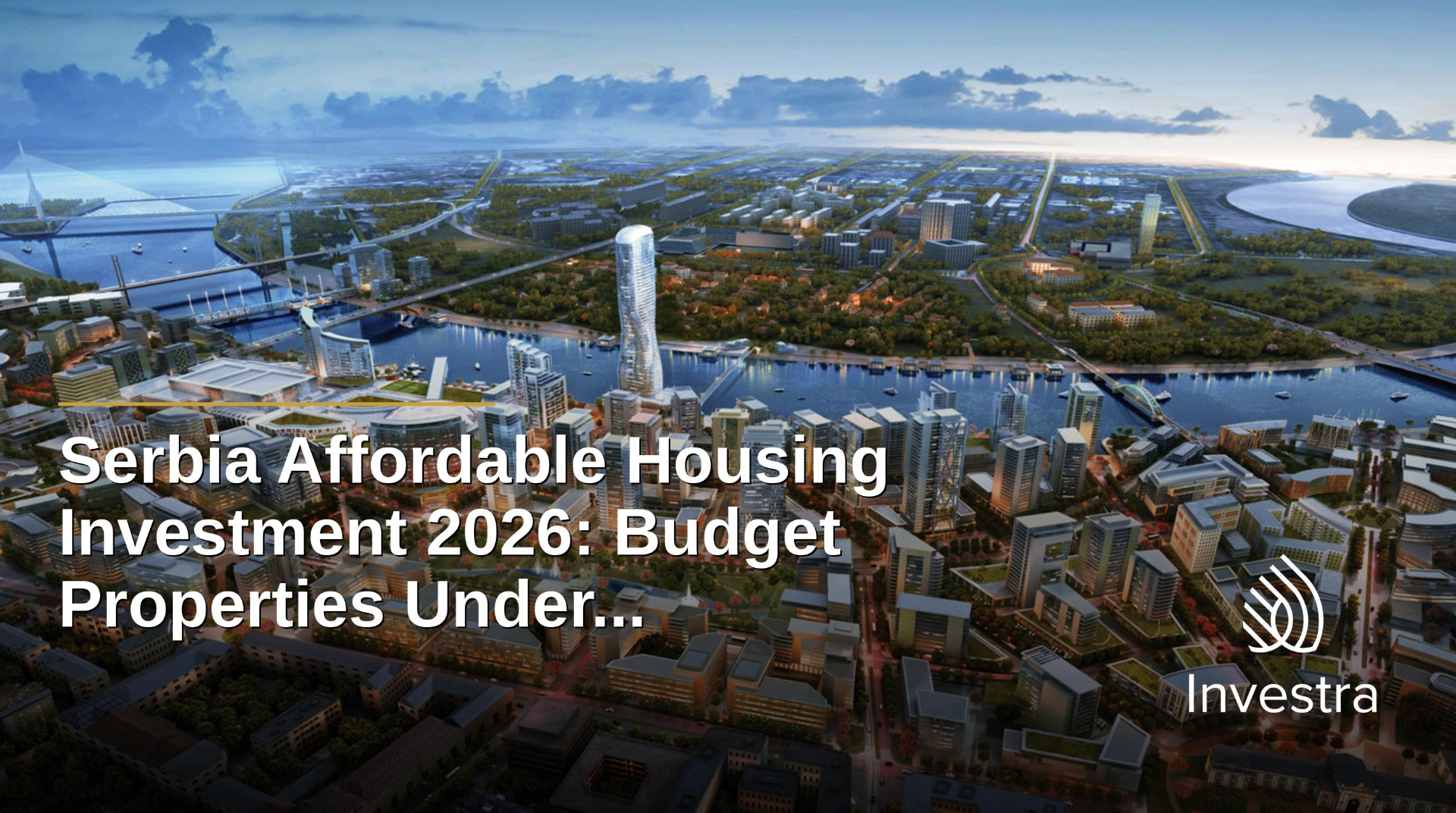
Serbia Affordable Housing Investment 2026: Budget Properties Under...
Serbia Affordable Housing Investment 2026: Budget Properties Under €50,000
Why Serbia Attracts Budget Investors Right Now
Serbia keeps drawing attention from buyers who want entry-level real estate without stretching past €50,000. The country sits outside the eurozone, so purchase prices remain lower than in neighboring EU states. At the same time, steady demand from local renters and a growing number of remote workers keeps occupancy rates high in well-chosen spots.
Many buyers start by comparing Serbia with Bulgaria or North Macedonia. Serbia edges ahead on infrastructure spending and simpler ownership rules for foreigners. A two-bedroom apartment in a mid-sized city can still close for €42,000 after modest negotiation, leaving room in the budget for new windows and a fresh coat of paint.
Stable Currency and Low Entry Barriers
The Serbian dinar trades with limited swings against the euro, which reduces currency risk for euro-based investors. Foreign nationals can buy apartments and houses directly, with only minor restrictions on agricultural land. Full ownership transfers through the cadastre in six to eight weeks once the purchase contract is notarized.
Investra.io lists dozens of verified listings under the €50,000 mark each month, complete with photos, floor plans, and price history. This transparency helps buyers avoid overpaying in cash deals that still dominate the lower end of the market.
Market Overview for 2026
Average asking prices for residential units across Serbia rose 4.8 percent year-on-year through late 2025. The increase stayed modest outside Belgrade, where supply remains tighter. In cities such as Niš, Kragujevac, and Subotica, prices per square meter sit between €380 and €520 for older stock that needs light renovation.
Rental demand holds firm because new housing construction focuses on higher-priced segments. A €45,000 apartment in Niš typically rents for €280 to €320 per month once updated, producing a gross yield near 7.5 percent. After property tax, insurance, and a 10 percent vacancy allowance, net yields settle around 5.8 percent.
Transaction volumes at the budget level increased 12 percent in 2025, driven by both domestic buyers and foreign investors from Germany, Austria, and the UK. Banks now offer mortgage rates starting at 4.9 percent for non-residents who put down 30 percent, though many cash buyers still dominate the under-€50,000 segment.
Serbia Real Estate Market 2026Price Trends by Property Type
Studio and one-bedroom units in panel buildings from the 1970s and 1980s represent the most common options below €50,000. These sell for €350 to €450 per square meter. Small family houses on the edge of towns often list between €38,000 and €48,000 for 70 to 90 square meters, though they usually require new roofs or heating systems.
Newer builds rarely appear under the €50,000 ceiling outside of distressed sales or unfinished projects. Investors who buy such units and finish them themselves can achieve resale prices 25 percent above their total cost within 18 months.
Best Areas for Properties Under €50,000
Belgrade remains the most expensive market, so budget buyers look elsewhere. Niš, Serbia’s third-largest city, offers the strongest combination of price, rental demand, and transport links. Apartments near the university district trade at €420 per square meter on average.
Kragujevac provides similar pricing with slightly lower rents but faster price growth tied to new automotive plants. Subotica, near the Hungarian border, attracts cross-border commuters and keeps yields steady at 6.2 percent. Smaller towns such as Zaječar and Leskovac deliver the lowest entry prices, often €300 per square meter, yet vacancy risk rises if local employment weakens.
Urban Versus Rural Trade-Offs
City-center apartments deliver easier management and higher liquidity. Rural houses under €50,000 can include large plots, but they demand more hands-on oversight and longer marketing times when selling. Investors who prefer passive income usually stick to apartments within 30 minutes of a regional hub.
Investra.io filters allow users to sort by distance to universities, hospitals, and bus stations, which helps identify locations with consistent tenant pools.
Buying Property in Serbia as a ForeignerInvestment Potential and Realistic Returns
A typical €47,000 purchase in Niš breaks down as €39,000 for the unit, €4,500 in taxes and notary fees, and €3,500 for basic renovation. After completion, the property rents for €300 monthly. Annual net cash flow after all costs reaches €2,050, equal to a 4.4 percent cash-on-cash return on the full €47,000 outlay.
Capital appreciation adds another layer. Properties in Niš and Kragujevac have recorded 3 to 5 percent annual price growth over the past three years. If that pace continues, the same apartment could reach €58,000 by 2029, lifting total annualized returns above 9 percent when combined with rental income.
Key risks include slower economic growth in secondary cities and unexpected repair costs on older buildings. Investors who budget 8 percent of the purchase price for contingencies and choose units with recent roof or heating upgrades reduce these downsides sharply.
Market data and listing alerts appear regularly on Investra.io, giving buyers an early look at fresh inventory before it reaches local agencies.
Belgrade Real Estate Market 2026Further reading on regional opportunities is available at Real Estate Investment Insights by Siniša Dagary.
Legal Process for Acquiring Budget Properties Under €50,000
Dealing with the legal requirements is key when buying affordable homes in Serbia. Foreign investors need a personal identification number from the Serbian Tax Administration before any purchase. That comes before the preliminary contract, which sets out the property details, price, and payment schedule. A notary then verifies the final sales agreement to meet the Law on Real Estate Transactions. For properties under €50,000 in areas like Niš or Subotica, extra checks must confirm no unpaid municipal debts or ownership disputes from the post-privatization years.
Due Diligence Requirements
Title searches at the Real Estate Cadastre show any liens or co-ownership claims. Buyers on a budget should set aside time for these checks, since older properties often have hidden claims attached. A local attorney who knows foreign investment rules helps avoid common problems, especially when the seller’s papers are incomplete.
Tax Implications for Affordable Housing Investors
Serbia applies a 0.4% to 3% property tax rate based on assessed value, with lower brackets applying to most units priced below €50,000. Transfer taxes reach 0.5% for residential purchases, though exemptions exist for first-time buyers meeting residency criteria. Capital gains tax stands at 15% on profits from resale within five years, decreasing thereafter. Investors should factor in annual utility and maintenance levies that average €200-400 for compact apartments in secondary cities.
VAT and Additional Levies
New builds under the threshold rarely trigger VAT, yet renovation projects may incur 10% value-added tax on materials. Double taxation treaties with most EU countries reduce overall exposure for international buyers. Consulting a fiscal advisor early avoids unexpected liabilities during the 2026 fiscal year.
Practical Tips for Budget-Conscious Investors
Focus on properties requiring cosmetic upgrades rather than structural repairs to maximize returns. Engage local property managers who handle tenant screening and maintenance for 8-12% of monthly rent. Currency fluctuations between the euro and Serbian dinar warrant forward contracts when wiring funds. Visiting target locations during winter reveals heating costs and insulation quality in older stock.
Financing and Payment Strategies
Serbian banks offer limited mortgages to non-residents, so cash purchases dominate the sub-€50,000 segment. Staged payments tied to notary milestones protect against seller default. Partnering with renovation specialists familiar with EU grant programs for energy efficiency can offset upgrade expenses.
Step-by-Step Guide to Completing Your Purchase
- Obtain a Serbian tax identification number via online application or local tax office.
- Engage a licensed real estate agent and attorney to shortlist verified listings.
- Conduct physical inspections and commission an independent valuation report.
- Sign the preliminary agreement with a 10% deposit held in escrow.
- Complete cadastral due diligence and clear any outstanding taxes.
- Execute the final contract before a notary and register ownership.
- Transfer utilities into the new owner's name and arrange property insurance.
- File annual tax declarations and monitor local market trends for exit planning.
Recommended Content
- Serbia Real Estate Market 2026: Complete Guide
- Buying Property in Serbia as a Foreigner 2026
- Belgrade Real Estate Market 2026
- Real Estate Investment Insights by Siniša Dagary
- Finds Group - Real Estate Investment Advisory
Odkrijte globalne investicijske priložnosti na Unifyr.space — vaš portal za pametne investicije.
📚 Recommended Content
Frequently Asked Questions
Can foreigners legally purchase property under €50,000 in Serbia?
Yes, foreign nationals may acquire residential real estate without restrictions, provided they obtain a tax identification number and complete standard notarial procedures.
What taxes apply to budget property acquisitions in Serbia?
Buyers pay a 0.5% transfer tax plus annual property tax ranging from 0.4% to 3% of assessed value, with potential capital gains obligations upon resale.
How long does the purchase process typically take?
The full legal process usually spans four to eight weeks, including due diligence, contract signing, and cadastre registration.
Are renovation costs tax deductible for investors?
Certain energy-efficiency upgrades qualify for deductions or grants, though standard cosmetic renovations remain non-deductible personal expenses.
What financing options exist for non-residents?
Cash transactions predominate, as Serbian banks rarely extend mortgages to foreigners; alternative funding through EU programs may support renovations.
Which locations offer the strongest rental yields under €50,000?
Secondary cities such as Niš, Kragujevac, and Subotica frequently deliver gross yields between 8% and 12% for compact, renovated units.
Do properties under €50,000 require special permits?
No additional permits apply beyond standard ownership registration, though older buildings may need compliance checks for habitability standards.
What risks should budget investors monitor?
Key risks include title disputes, currency volatility, and unexpected maintenance costs in older stock; thorough due diligence mitigates most issues.
Can investors rent out affordable units immediately after purchase?
Yes, once utilities are transferred and the property meets basic safety codes, short-term or long-term rentals can commence without further approvals.
How do I verify a property has no outstanding debts?
Request an official cadastre extract and municipal tax clearance certificate during the due diligence phase before finalizing any agreement.
Related Posts
No related posts available.
