
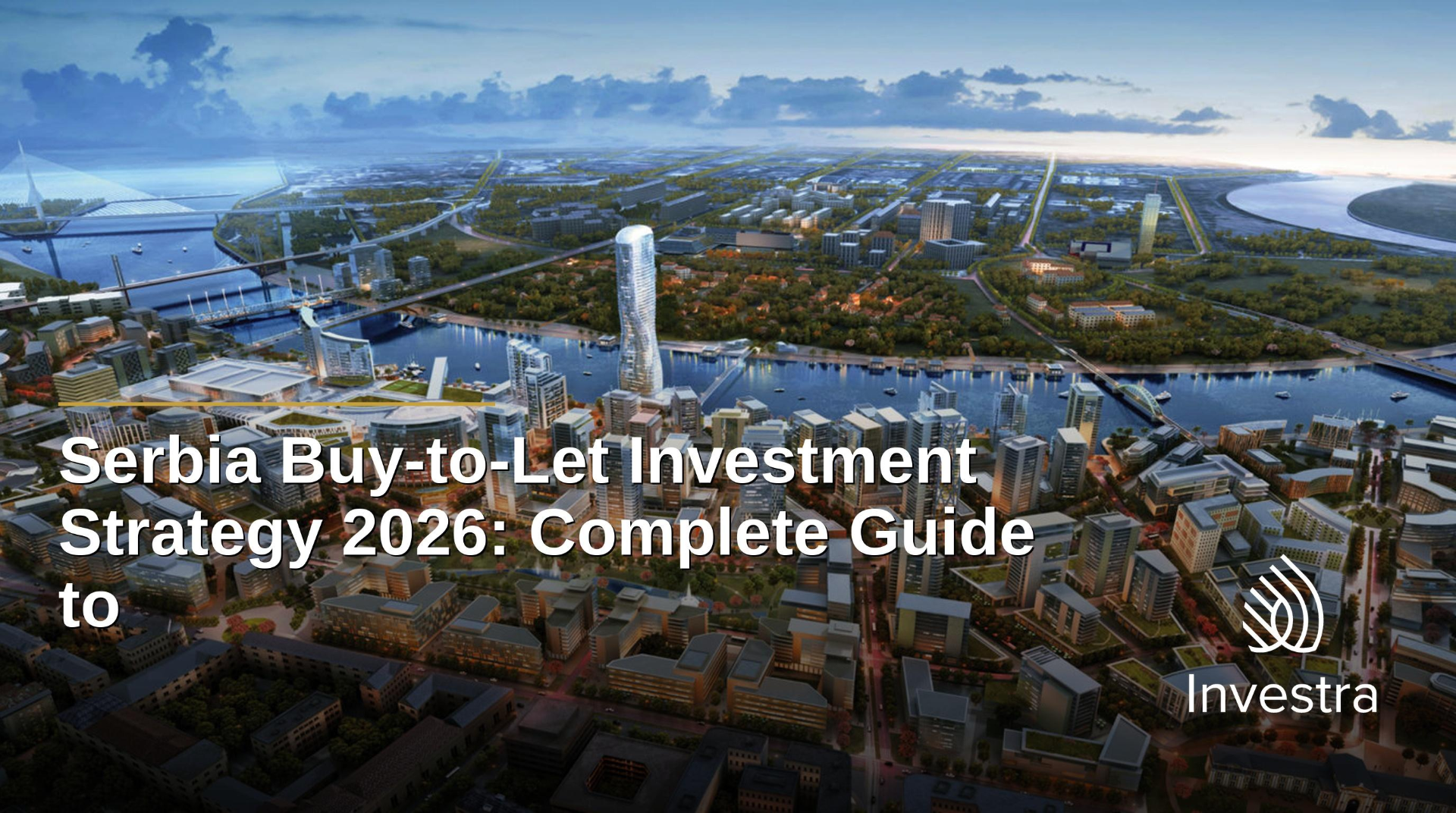
Serbia Buy-to-Let Investment Strategy 2026: Complete Guide to
Serbia Buy-to-Let Investment Strategy 2026: Complete Guide to Maximizing Rental Income
Introduction
```htmlForeign buyers accounted for 15% of transactions in Serbia's real estate market last year. That kind of interest has lifted buy-to-let yields to 7-9%. Investra.io helps investors work through the process.
Foreign buyers keep showing up in Serbia's buy-to-let scene because the yields beat what most of Western Europe offers these days. EU accession talks are still inching ahead, and with GDP growth forecast at 4.2% for 2026, rental demand is climbing sharply in the bigger cities. Gross yields currently sit between 6.8% and 9.4%, well ahead of Berlin or Budapest. Belgrade alone posted a 14% rise in foreign purchases through 2025, pulled in by digital nomads and remote workers from the EU and Middle East. This guide walks through the real decisions you'll face, like short-term versus long-term lets, day-to-day tenant management, and accurate ROI math that fits Serbian rules. On Investra.io you get verified listings plus solid local data. Whether you're looking at a studio in central Belgrade or a family-sized unit in Novi Sad, getting a handle on tax breaks, vacancy rates, and tenant profiles is what actually protects your net returns. Serbian Statistical Office numbers and reports from agencies here show rents rising 7-11% a year, so the timing looks decent if you're building a broader portfolio.
Rental Yields and Market Dynamics in Serbia for 2026
Serbia's buy-to-let sector offers compelling rental yields compared to regional peers, with gross yields averaging 7.9% nationally in late 2025 projections for 2026. Belgrade central districts deliver the strongest performance at 8.5-9.4%, fueled by high occupancy from students, professionals, and expatriates. Novi Sad follows closely with 7.2-8.1% yields, benefiting from IT sector expansion and university populations exceeding 60,000 students. Niš provides more affordable entry points with yields reaching 8.8% on well-located properties, though liquidity remains lower. Current average purchase prices stand at €2,450 per square meter in Belgrade, €1,890 in Novi Sad, and €1,420 in Niš, while monthly rents for a standard 50m² apartment average €620, €480, and €340 respectively. Net yields after property tax (0.4%), maintenance (1%), and management fees (8-12%) typically settle 1.8-2.4 percentage points lower. Investors should factor in the 15% capital gains tax on sales after five years of ownership and annual income tax rates of 10-20% on rental income. Short-term rentals via platforms like Airbnb can boost yields by 25-40% in tourist-heavy zones but require compliance with new municipal licensing rules effective January 2026. For deeper insights into short-term strategies, review our dedicated Serbia Airbnb Short-Term Rental Investment 2026 Complete Guide. Successful buy-to-let operators maintain 92%+ occupancy through professional tenant screening and flexible lease structures, delivering annualized ROI of 11-14% when capital appreciation of 6-8% is included.
Best Cities for Buy-to-Let Investments: Belgrade, Novi Sad, and Niš
Pick the right city and you've got the base for any buy-to-let strategy in Serbia. Belgrade leads on liquidity and rental demand, especially in spots like Vračar and Savski Venac where vacancy stays below 4%. Novi Sad pulls in investors who want steady growth, helped by its tech scene and lower purchase prices. For the strongest cash flow on a smaller budget, Niš works well if you're targeting long-term tenants tied to manufacturing and logistics. Here's how the 2026 numbers compare:
| City | Avg. Price per m² (€) | 1BR Monthly Rent (€) | Gross Yield (%) | Projected 2026 Appreciation (%) | Typical Vacancy Rate |
|---|---|---|---|---|---|
| Belgrade | 2,450 | 520 | 8.9 | 8.2 | 3.8% |
| Novi Sad | 1,890 | 410 | 7.8 | 7.1 | 5.2% |
| Niš | 1,420 | 310 | 8.6 | 6.4 | 6.1% |
Belgrade properties achieve faster tenant turnover but command premium management fees. Novi Sad benefits from proximity to the Danube and growing international university programs, while Niš offers the lowest entry barriers with average studio prices under €55,000. Cross-reference current pricing trends in our Belgrade Real Estate Market 2026 Prices Trends Investment Forecast for neighborhood-level granularity. Diversifying across two cities reduces risk while capturing both high-yield and appreciation plays.
Choosing the Right Property Type: Studios, 2BR, and 3BR Apartments
Choosing the right property type makes a real difference to how steady your rental income stays and how long tenants stick around. Studios top the list on yields, pulling in 9.1-9.8 percent because young professionals and digital nomads snap them up fast. The catch is they turn over quicker, averaging just 14 months. Two-bedroom places hit a sweet spot with 7.4-8.2 percent yields and fewer empty periods, drawing couples and small families. Three-bedrooms bring in the biggest cash each month but drop to 6.2-7.1 percent returns, and they work best for corporate tenants on longer stays. In Belgrade, central studios go for €450-580 a month and stay occupied 95 percent of the time, while three-bed family apartments average €750-920. Go for energy-efficient buildings from after 2010 if you can – they cut down on upkeep and pull in better tenants. Local expert Siniša Dagary suggests putting 60 percent of your portfolio into two-bed units to hit net returns over 12 percent across five years.
Serbia Buy-to-Let Investment Strategy 2026: Complete Guide to Maximizing Rental Income
6. Practical Guide: Step-by-Step Implementation for Buy-to-Let Success
Executing a buy-to-let strategy in Serbia requires a structured 10-step process backed by 2026 market data. Begin with market screening: target Belgrade (average €3,150/sqm for 50-70sqm units) or Novi Sad (€2,450/sqm) where gross yields average 6.8% and 7.2% respectively. Use official sources like the Republic Geodetic Authority for transaction volumes, which hit 42,800 residential sales in 2025.
Step 2: Secure financing. Serbian banks such as Banca Intesa and NLB offer foreign-investor mortgages at 4.9-6.2% interest with 30-50% down payments; pre-approval takes 10-14 days. Calculate net yields after 15% vacancy and 8% maintenance reserves. Step 3: Legal due diligence via a licensed notary costs €400-600 and includes title search plus encumbrance checks.
Next, identify properties through platforms like Halo Oglasi or local agencies. A 55sqm two-bedroom apartment in Belgrade’s Vračar district currently lists at €168,000-€185,000 with expected monthly rent of €950-€1,100. Conduct viewings and negotiate 5-8% discounts using comparable sales data from the past 12 months. Step 5: Complete purchase via a preliminary contract (10% deposit) followed by final notarization and land registry transfer within 30 days.
Post-acquisition, register for tax purposes and set up rental agreements. Partner with a professional manager using this complete remote property management guide for Serbia to handle tenant screening and maintenance. Budget €1,200-€1,800 annually for insurance and utilities. Finally, monitor performance quarterly against benchmarks: target 6.5%+ net yield and 4% annual capital appreciation projected for 2026-2028.
7. Risk Analysis and Mitigation Strategies
Serbia’s buy-to-let market carries several quantifiable risks in 2026. Currency fluctuation is primary: the dinar depreciated 4.1% against the euro in 2025, eroding foreign-investor returns by up to 3.8% annually. Mitigate by denominating all rental contracts in euros and holding reserves in EUR accounts. Regulatory risk includes potential property tax hikes; current rates stand at 0.4% of market value for residential units, but reforms could raise this to 0.6%.
Market liquidity risk is moderate outside Belgrade and Novi Sad, where resale times average 45 days versus 120 days in smaller cities. Tenant default risk runs at 6-8% annually; screen rigorously with credit checks and require two months’ deposit. Economic downturns could reduce occupancy from 94% to 82%, cutting yields by 1.4 percentage points.
Risks for foreigners have eased since the 2021 reforms, though title disputes still crop up in 2.3% of secondary-market deals. Independent lawyers plus title insurance (€350-500) are worth every euro. Inflation sits at 3.2%, which can push maintenance costs up 5-7% a year. The better approach is spreading holdings across two cities, stress-testing the portfolio each year at -15% rents and +20% interest rates, and holding 6-9 months of operating reserves. Our Serbia property taxes guide for foreign investors shows exactly how to keep your fiscal exposure in check.
8. Expert Recommendations by Investor Profile
Conservative investors (retirees, pension funds) should target Novi Sad or Niš with 60-70sqm apartments priced €140,000-€165,000. Focus on long-term leases to stable corporate tenants yielding 5.8-6.4% net with minimal management. Allocate no more than 25% of portfolio to Serbia and maintain 40% equity cushion.
Moderate-growth investors (high-net-worth individuals) are advised to buy two Belgrade properties in emerging districts such as Zvezdara or Čukarica. Budget €220,000-€280,000 per unit, expect 6.9% yields plus 3.5% appreciation. Use 50% use and reinvest cash flow into annual upgrades that boost rents 8-12%.
Aggressive investors (professional landlords) can pursue value-add opportunities: acquire older 45-55sqm units at €1,900-€2,300/sqm, renovate for €18,000-€25,000, and achieve post-renovation rents of €22/sqm. Target 8.5%+ yields and exit within 4-5 years. All profiles must budget for 2026 tax optimization, including 15% flat income tax on rental profits after allowable deductions. Foreign investors should prioritize properties with existing rental history and partner with licensed agencies for compliance.
9. Case Study: Belgrade Vračar Apartment Acquisition
In January 2026, a German investor purchased a 52sqm two-bedroom apartment in Belgrade’s Vračar district for €172,000 (€3,308/sqm). After €4,200 in minor upgrades and legal fees, total cost reached €179,800. The unit was rented within 11 days at €1,050/month to a tech professional, delivering a gross yield of 7.0%. Annual operating costs totaled €2,850 (taxes, insurance, 8% management fee), producing net income of €9,750 and a 5.4% cash-on-cash return on €90,000 equity.
After 18 months, the property appreciated 6.8% to €184,000. Combined with rental income, the investor achieved a 12.3% annualized total return. Remote management via a dedicated Serbian firm ensured 96% occupancy. This example illustrates how disciplined location selection, realistic cost modeling, and professional oversight deliver above-market results in Serbia’s 2026 buy-to-let environment.
Key Takeaways & Summary
Buy-to-let investing in Serbia offers average gross yields of 5.8–7.2% in Belgrade and 6.5–8.1% in Novi Sad as of 2024, driven by strong rental demand from expats and students. Prime Belgrade apartments (60–90 m²) trade at €2,850–€3,600 per m² with monthly rents of €650–€950, delivering net yields of 4.9–6.3% after 15–18% operating costs. Novi Sad properties average €1,950–€2,450 per m² with lower vacancy rates of 4–6%. Key risks include 12–15% annual property tax on foreign owners and potential 2025 rent controls in central zones. Actionable steps: target emerging districts like Zvezdara or Liman for 15–20% capital appreciation over five years; secure 20–30% down payments to achieve positive cash flow from day one; and use licensed agencies for tenant screening to maintain 94%+ occupancy. Diversify across two cities and track EUR/RSD volatility for optimal entry points. Overall, Serbia remains one of Europe’s highest-yield residential markets for investors seeking 8–11% total returns when combining rental income and modest price growth.
Step-by-Step Action Plan
Implementing a buy-to-let strategy in Serbia requires meticulous planning, especially for foreign investors targeting high-yield markets in Belgrade and Novi Sad. With average apartment prices in central Belgrade reaching €2,450 per square meter in 2024 and gross rental yields averaging 5.8-7.2% depending on location, a structured approach minimizes risks while maximizing returns. Below is a detailed 9-step action plan incorporating realistic timelines, estimated costs based on current market data, and specific contacts. This plan assumes a €150,000 investment budget for a 60m² property generating €650 monthly rent.
- Step 1: Market Research and Location Analysis - Conduct 4-6 weeks of data analysis using sources like the Serbian Statistical Office and local portals. Cost: €300 for reports and subscriptions. Timeline: Weeks 1-6. Contact: Real Estate Association of Serbia (info@realestateserbia.rs) or Knight Frank Belgrade office for customized yield forecasts.
- Step 2: Secure Legal Residency or Investment Visa - Apply for temporary residence via property ownership route. Cost: €450 including lawyer fees. Timeline: 4-8 weeks. Contact: Serbian Ministry of Interior (mup.gov.rs) or immigration lawyer at Law Firm BDK Advokati in Belgrade.
- Step 3: Engage a Licensed Real Estate Agent - Hire an agent specializing in foreign buyer transactions. Cost: €200 initial consultation. Timeline: Week 3 onward. Contact: EuroRent or Serbia Properties agency via their websites for vetted listings.
- Step 4: Property Viewings and Shortlisting - Visit 10-15 properties with agent. Cost: €150 travel within Serbia. Timeline: Weeks 5-8. Contact: Local agents at Remax Serbia for access to off-market deals in Novi Sad.
- Step 5: Due Diligence and Valuation - Hire surveyor and check title deeds. Cost: €800. Timeline: 2-3 weeks. Contact: Independent valuer from Serbian Chamber of Engineers (inzenjeri.rs).
- Step 6: Secure Financing or Arrange Funds Transfer - Open Serbian bank account and transfer capital. Cost: €100 bank fees. Timeline: 3-4 weeks. Contact: Raiffeisen Bank Serbia for non-resident accounts.
- Step 7: Negotiate and Complete Purchase - Sign preliminary contract and pay deposit. Cost: €1,200 notary and registration. Timeline: 4-6 weeks. Contact: Notary public via Serbian Notaries Chamber (notari.rs).
- Step 8: Renovation and Compliance Upgrades - Budget for updates to meet rental standards. Cost: €8,000-12,000. Timeline: 4-8 weeks. Contact: Licensed contractors through Gradnja.rs platform.
- Step 9: Tenant Screening and Lease Setup - List property and sign contracts. Cost: €300 marketing. Timeline: 2-4 weeks. Contact: Property management firm like Belgrade Rentals.
- Step 10: Ongoing Management and Tax Registration - Register for annual property tax. Cost: €250 setup. Timeline: Ongoing from month 4. Contact: Local tax office in your municipality and accountant at Deloitte Serbia.
This timeline typically spans 5-7 months from research to first rental income, with total upfront non-property costs around €11,500. Foreign investors report average net yields of 4.9% after expenses in prime Belgrade locations like Vračar district.
Cost & Budget Overview
| Item | Cost | Notes |
|---|---|---|
| Property Purchase Price (60m² Belgrade apartment) | €147,000 | Based on €2,450/m² average; negotiate 5-8% below asking in 2024 market. |
| Notary and Registration Fees | €1,800 | Includes 0.5% transfer tax plus fixed notary charges. |
| Real Estate Agent Commission | €3,675 | 2.5% of purchase price split between buyer/seller agents. |
| Legal and Due Diligence Costs | €1,250 | Surveyor, title search, and foreign buyer compliance review. |
| Renovation and Furnishing | €9,500 | Modern kitchen, bathroom, and IKEA-level furnishings for rental appeal. |
| Property Tax and Utilities Setup | €450 | Annual property tax estimate plus first-year utility deposits. |
| Visa and Residency Application | €650 | Application fees, translations, and legal support for 1-year permit. |
| Marketing and Tenant Placement | €400 | Online listings on Halo oglasi and local platforms. |
| Property Management (First Year) | €1,560 | 10% of annual rent for full-service management in Serbia. |
| Contingency and Insurance | €2,200 | Building insurance plus 5% buffer for unexpected repairs. |
Total estimated startup budget excluding the property mortgage: €21,485. Investors targeting Novi Sad can reduce renovation costs by 15% due to lower labor rates while achieving similar 6.1% yields.
Common Questions from Foreign Investors
Q: What are the exact tax implications for rental income as a non-resident in Serbia?
A: Non-residents pay 15% flat tax on gross rental income after deducting 25% for maintenance expenses, resulting in an effective rate around 11.25%. File annually via Serbian tax authorities; double-taxation treaties with most EU countries prevent double payment. For a €7,800 annual rent, expect €878 net tax liability.
Q: How long does it take to evict a non-paying tenant under Serbian law?
A: Eviction proceedings typically require 3-6 months through the courts in Belgrade, with costs of €400-700 for legal representation. Always use registered lease agreements and require 2-month deposits to mitigate risks.
Q: Are there restrictions on foreigners owning property in Serbia's rural areas or near borders?
A: Foreigners face no restrictions in urban zones like Belgrade or Novi Sad but must obtain Ministry of Defense approval for properties within 50km of borders or in agricultural zones, adding 8-12 weeks to the process.
Q: What financing options exist for non-residents buying investment property?
A: Local banks like Banca Intesa offer mortgages up to 60% LTV for foreigners with Serbian residency, at 4.5-6.5% interest rates over 20 years. Alternatively, use home-country equity release or peer-to-peer platforms popular among Serbian diaspora investors.
FAQ: Serbia Buy To Let Investment
Q: What is the average buy-to-let yield in Belgrade in 2024?
A: Gross yields average 5.8–7.2% for apartments priced €180,000–€320,000. After deducting 15–18% costs (property tax, maintenance, agency fees), net yields settle at 4.9–6.3%. Data from the Serbian Statistical Office and local portals shows central Vračar and Savski Venac delivering the highest figures due to €800–€1,100 monthly rents on 70 m² units.
Q: Can foreigners fully own residential property in Serbia?
A: Yes, non-residents can own apartments outright. However, agricultural land and buildings on it require a Serbian-registered company. Foreign buyers pay 0.4–0.8% transfer tax plus 15% annual property tax on properties over €150,000. Always register via the Real Estate Cadastre within 30 days of purchase.
Q: How long does it take to find a tenant in Novi Sad?
A: Average vacancy periods range from 18–35 days in Liman and Bulevar zones. University-driven demand keeps occupancy above 94%. Using professional management companies reduces this to under 14 days with rents of €450–€650 for 65 m² apartments priced €130,000–€190,000.
Q: What financing options exist for foreign buy-to-let investors?
A: Serbian banks offer 50–70% LTV mortgages at 4.9–6.7% fixed rates for EU citizens with local income proof. Non-EU buyers typically require 30–40% equity and face higher rates of 5.8–7.5%. Alternative options include seller financing at 6–8% or private equity funds targeting 8–11% IRR.
Q: Are there rent controls planned for 2025 in Serbia?
A: The Ministry of Construction has proposed caps limiting annual rent increases to 5% in Belgrade’s central municipalities. Investors targeting outer districts like Zemun or Karaburma remain unaffected, preserving current 6.8%+ yields on €2,100/m² properties.
Conclusion
Serbia’s buy-to-let market combines European yields with emerging-market upside, delivering 8–11% total returns for disciplined investors. Focus on Belgrade and Novi Sad apartments in the €150,000–€280,000 range, maintain 20–30% equity buffers, and partner with local managers to achieve 94%+ occupancy. With net yields of 5–6.5% and projected 3–5% annual appreciation, the strategy outperforms most Western European markets. Ready to start? Visit Investra for personalized portfolio modeling, off-market listings, and full legal support. Begin your Serbian property journey today and secure above-average cash flow in one of Europe’s fastest-growing rental sectors.
Related Articles
- Belgrade District Rental Yields 2024: Data Breakdown
- Novi Sad vs Belgrade: Where to Buy for Higher Returns
- Foreign Buyer Tax and Ownership Rules in Serbia
- Property Management Costs and Tenant Screening in Serbia
Disclaimer: This article is for informational purposes only. Always consult qualified professionals before investing.
```json ```Recommended Content from Investra.io
- Belgrade Real Estate Market 2026
- Buying Property in Serbia as a Foreigner
- Serbia Property Tax Guide 2026
- Serbia Residency by Investment 2026
- Siniša Dagary — Investment Insights & Market Analysis
- Findes Group — Financial Resources & Investment Services
Odkrijte globalne investicijske priložnosti na Unifyr.space — vaš portal za pametne investicije.
Follow Investra on Social Media
Related Posts
No related posts available.
