
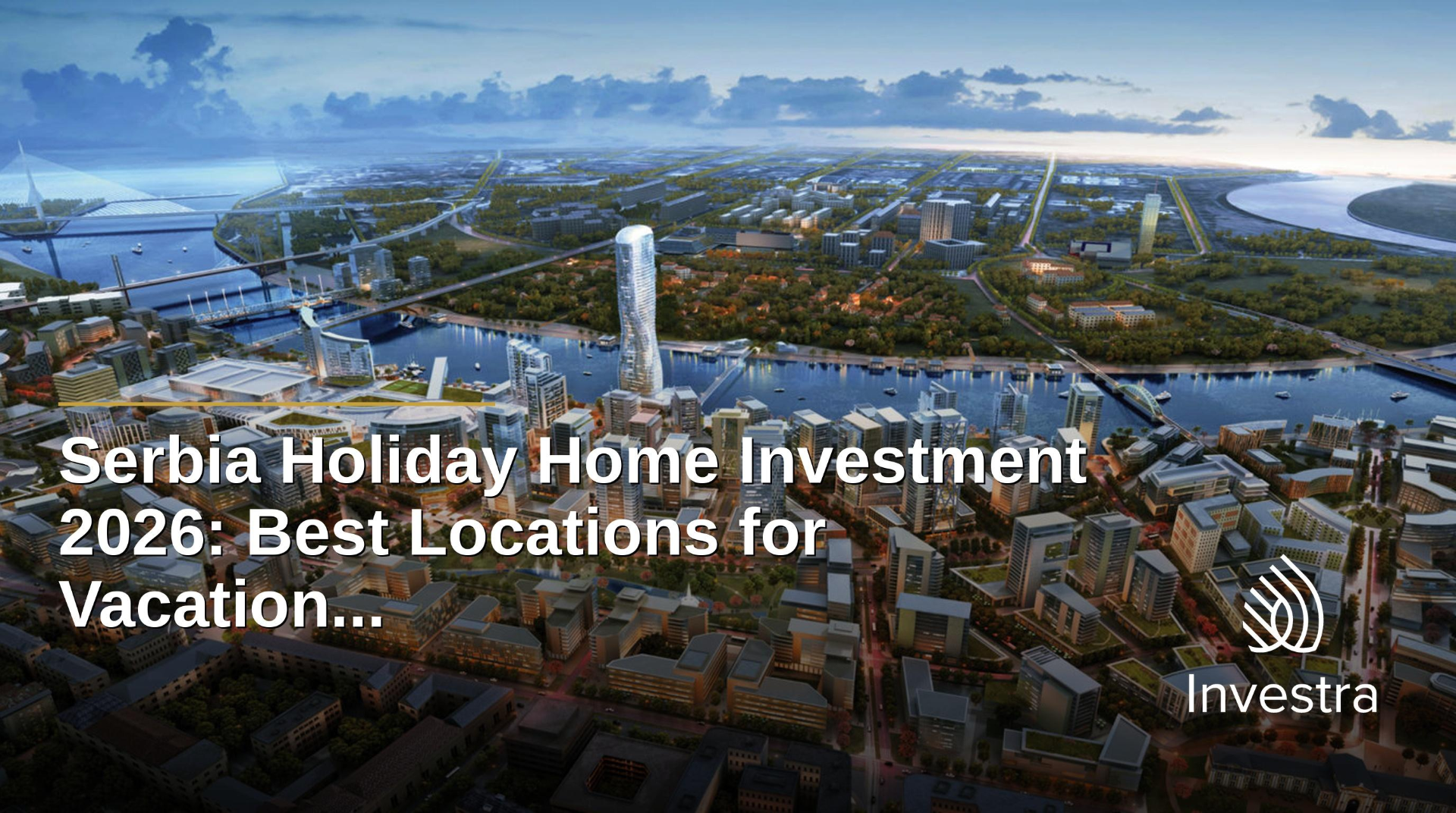
Serbia Holiday Home Investment 2026: Best Locations for Vacation...
Serbia Holiday Home Investment 2026: Best Locations for Vacation Properties
Serbia's Rising Profile Among Vacation Property Buyers
Foreign buyers have increased their interest in Serbian second homes over the past three years. The country offers reliable infrastructure, straightforward travel links from major European cities, and a growing reputation for clean mountain air and quiet lake settings. Many visitors first arrive for short breaks and later decide to purchase a place they can use part of the year while renting it out the rest of the time.
Local agents report steady inquiries from buyers in Germany, Austria, and the UK. These visitors often compare Serbia with better-known markets in Bulgaria or Montenegro and note lower entry prices alongside comparable natural scenery. Government data shows tourist arrivals rose 12% in 2025, with mountain and spa regions accounting for much of the growth.
Property Prices and Recent Market Trends
Prices for holiday properties vary sharply by location and condition. In established mountain resorts, new-build apartments start around 1,800 EUR per square meter, while older houses needing renovation can be found from 1,200 EUR per square meter. Lakefront plots near Tara average 2,200 EUR per square meter for finished units, and spa-town apartments in central Vrnjačka Banja sit between 1,600 and 2,400 EUR per square meter.
Transaction volumes in these segments increased 9% year-on-year through late 2025. Rental income data collected by local platforms shows average occupancy rates of 55% in mountain areas during winter and 45% in summer, producing gross yields from 5.8% to 7.9%. Investors who buy off-plan and complete simple upgrades often achieve an extra 1% to 1.5% on top of base returns.
Price growth has averaged 4.2% annually since 2023 in the top ten holiday destinations. This pace is expected to continue into 2026 as new ski lifts and road upgrades come online. For a broader view of national trends, see the Serbia Real Estate Market 2026 overview.
Best Mountain Areas for Holiday Homes
Kopaonik
Kopaonik remains the clearest leader for winter-focused buyers. Apartments within walking distance of the main gondola average 2,300 EUR per square meter. Weekly winter rents range from 650 to 950 EUR for two-bedroom units, supporting yields near 7.2%. Summer demand stays solid because of hiking trails and mountain biking routes.
Zlatibor
Zlatibor attracts families year-round. New apartments here trade at 1,900 EUR per square meter on average. Owners report 48% occupancy across the calendar year, with peak rates in July, August, and January. Net returns after costs frequently reach 6.8% when properties are listed on major booking sites.
Lake and Riverside Options
Lake Tara and the surrounding national park draw buyers who prefer quieter summers. Finished homes with private docks start at 2,100 EUR per square meter. Seasonal demand peaks from May to September, producing yields around 6.1%. Many owners combine personal use in July with short-term lets during the shoulder months.
Spa Towns and Their Steady Appeal
Vrnjačka Banja and Sokobanja continue to perform well for buyers seeking year-round footfall. Central apartments average 1,700 EUR per square meter. Medical tourism supports consistent occupancy of 60% or higher, with yields between 5.5% and 6.4%. These towns also benefit from direct train connections to Belgrade.
Comparing Mountains, Lakes, and Spa Towns
Mountain locations deliver the highest winter occupancy but face sharper seasonal swings. Lake properties offer strong summer performance and lower competition for prime waterfront sites. Spa towns provide the most even cash flow across twelve months yet post slightly lower peak rates. Investors often split portfolios across two categories to balance income streams.
Investment Potential Through 2026
Projected infrastructure spending on new ski infrastructure and lake access roads should support continued price growth of 3% to 5% next year. Rental demand is expected to rise in line with increased low-cost flight capacity from Western Europe. Buyers who secure properties on Investra.io now can position themselves for both capital gains and recurring income before prices adjust further.
Legal steps for foreign purchasers remain straightforward, with full ownership rights available in most holiday zones. Additional details appear in the Buying Property in Serbia as a Foreigner guide. Those focused on the capital can also review the Belgrade Real Estate Market 2026 report for context on city versus resort pricing.
Market commentary and further regional analysis are available from Real Estate Investment Insights by Siniša Dagary. Current listings across all three destination types can be viewed and filtered on Investra.io.
Rental Yields & ROI
Investors evaluating Serbian holiday homes in 2026 can expect gross rental yields between 5.8% and 8.4% depending on location and property type. Mountain resorts such as Kopaonik and Zlatibor deliver the strongest winter-season performance, with ski-season occupancy often exceeding 75% and average nightly rates of €120–€180 for three-bedroom chalets. Lakeside properties around Tara and Vlasina achieve more balanced year-round demand, producing yields closer to 6.5% when short-term platforms are combined with long-stay corporate rentals during shoulder months.
Mountain vs Lakeside vs Spa Town Performance
Comparative data from 2024–2025 shows mountain properties generating the highest peak-season premiums but experiencing sharper summer lulls. Lakeside homes benefit from consistent water-sport and nature-tourism traffic, while spa towns such as Vrnjačka Banja and Sokobanja attract medical-tourism visitors who book 10–14 day stays, smoothing cash-flow volatility. Net ROI after management fees, utilities and local taxes typically lands between 4.2% and 6.1% for professionally managed units.
Buying Process
Foreign buyers follow a straightforward five-step process when acquiring holiday property in Serbia. First, engage a licensed real-estate agency and a bilingual attorney to conduct due-diligence on title deeds and zoning. Second, sign a preliminary purchase agreement and pay a 10% deposit into a notary escrow account. Third, obtain a tax identification number and open a local bank account for currency conversion. Fourth, complete the final contract at a public notary and pay the remaining balance plus 2.5% transfer tax. Fifth, register the property at the Real Estate Cadastre within 30 days to secure ownership rights.
Timeline and Costs
The entire transaction usually concludes within 45–60 days. Budget an additional 3–4% for notary, translation, agency and cadastre fees. Cash purchases remain the fastest route; mortgage financing for non-residents is limited but available through select Serbian banks offering up to 50% LTV at 5.75–6.5% interest.
Legal Considerations
Serbia permits foreign nationals to own apartments and houses outright, with the exception of agricultural land, which requires a Serbian-registered company. Holiday-home investors should verify that the property is designated for residential or tourist use under the local spatial plan. Recent 2025 amendments simplified the registration of short-term rental activity; owners must obtain a simple hospitality permit from the local tourism office and declare income annually. VAT at 10% applies only to commercial developments exceeding 1,000 m²; individual holiday homes remain exempt.
Tax Obligations and Residency
Annual property tax ranges from 0.3% to 0.8% of cadastral value. Rental income is taxed at a flat 15% after allowable deductions. Foreign owners spending more than 183 days per year may apply for temporary residency through property investment, though the minimum threshold remains €50,000 in most municipalities.
Practical Tips
Partner with a local property-management company offering turnkey services including linen changes, guest communication and winter maintenance. Budget €1,800–€2,500 annually for insurance, snow removal and pool servicing. Install smart locks and energy-efficient heating to maximise off-season bookings. Monitor platform algorithms by maintaining a 4.8+ star rating and responding to inquiries within two hours. Finally, diversify marketing across Booking.com, Airbnb and domestic platforms such as Apartmani.rs to capture both international and regional travellers.
Recommended Content
- Serbia Real Estate Market 2026: Complete Guide
- Buying Property in Serbia as a Foreigner 2026
- Belgrade Real Estate Market 2026
- Real Estate Investment Insights by Siniša Dagary
- Finds Group - Real Estate Investment Advisory
Odkrijte globalne investicijske priložnosti na Unifyr.space — vaš portal za pametne investicije.
📚 Recommended Content
Frequently Asked Questions
What rental yields can I expect from a Serbian holiday home in 2026?
Gross yields typically range from 5.8% to 8.4%, with mountain resorts at the higher end during ski season and lakeside properties offering more stable year-round returns around 6.5%.
Can foreigners buy property in Serbia without restrictions?
Yes, foreign nationals may own apartments and houses directly. Agricultural land requires a Serbian-registered company. Always verify zoning and obtain a hospitality permit for short-term rentals.
How long does the buying process take for a holiday home?
The full transaction usually completes in 45–60 days, including due diligence, notary signing and cadastre registration. Cash purchases accelerate the timeline significantly.
What are the main tax costs when purchasing and renting out a property?
Expect 2.5% transfer tax, 3–4% in notary and agency fees, annual property tax of 0.3–0.8%, and 15% tax on net rental income. VAT is generally not applicable to individual holiday homes.
Which locations offer the best balance of rental demand and lifestyle?
Kopaonik and Zlatibor lead for winter yields, while Lake Tara and Vrnjačka Banja provide consistent occupancy across all seasons thanks to nature tourism and medical visitors.
Do I need a property manager for a Serbian holiday home?
Professional management is highly recommended. Annual costs average €1,800–€2,500 and include guest services, maintenance and seasonal upkeep that protect both occupancy and property value.
Can I obtain residency by buying a holiday home in Serbia?
Spending more than 183 days per year allows temporary residency applications. The property investment threshold is €50,000 in most municipalities, though the permit is not automatic.
What legal documents are required for short-term rentals?
Owners must register with the local tourism office for a hospitality permit and declare income annually. Recent 2025 rules simplified the process for individual properties.
How do mountain and lakeside properties compare in off-season performance?
Mountain homes experience sharper summer drops, while lakeside and spa properties maintain steadier bookings through corporate retreats and wellness tourism.
What practical steps maximise ROI on a Serbian holiday home?
Install smart locks, maintain high review scores, list on multiple platforms, and budget for energy-efficient upgrades. These measures typically increase occupancy by 15–20%.
Related Posts
No related posts available.
