
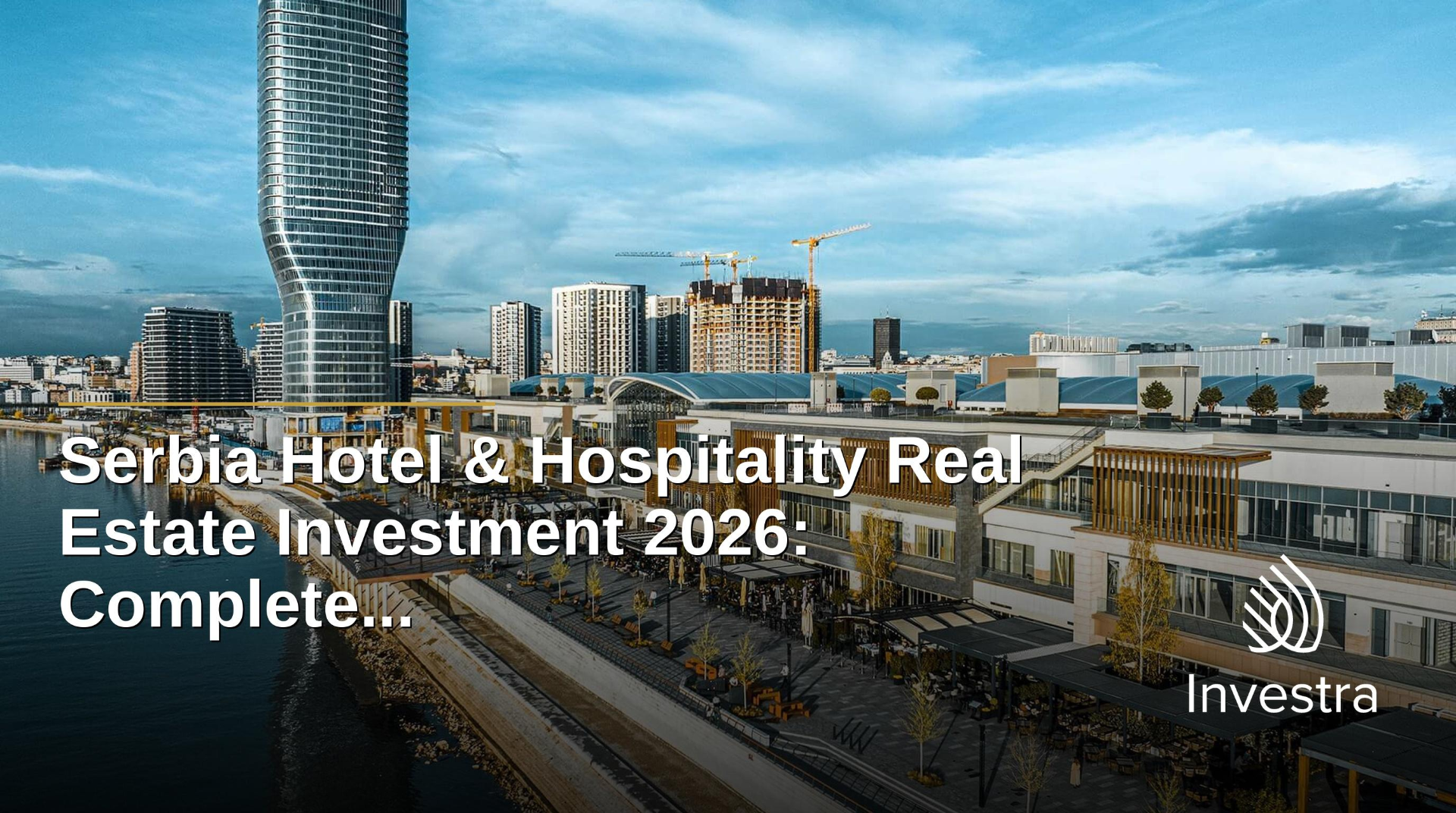
Serbia Hotel & Hospitality Real Estate Investment 2026: Complete...
Serbia Hotel & Hospitality Real Estate Investment 2026: Complete Guide
Answer Capsule: Serbia’s hotel and hospitality real estate market in 2026 offers foreign investors attractive entry points in Belgrade, Novi Sad and emerging mountain and spa destinations, with prime hotel assets trading between €2,800 and €4,500 per square metre and net yields typically ranging from 6.2 % to 8.1 %. Strong tourism recovery, new infrastructure and favourable tax treatment for tourism properties continue to support capital growth and stable income for well-located assets. Investors can source opportunities through Investra.io while reviewing the linked Serbia Property Investment Guide 2026 for broader context.
Introduction
```htmlSerbia has quietly become one of Southeast Europe’s most compelling hospitality investment stories. After years of steady infrastructure upgrades and a deliberate push to diversify beyond Belgrade, the country now attracts both leisure and business travellers in growing numbers. For property investors, this translates into tangible demand for hotel rooms, aparthotels and branded residences that did not exist at scale five years ago.
The timing for 2026 looks particularly interesting. EU accession talks have regained momentum, low-cost carriers have added new routes, and domestic operators are expanding portfolios ahead of expected summer and winter peaks. At the same time, construction costs have stabilised after the 2023–2025 inflation spike, giving developers and buyers clearer pricing signals.
Foreign buyers who understand the nuances of tourism zoning, operating licences and seasonal cash-flow patterns stand to benefit. Those who do not risk overpaying for assets that cannot achieve the occupancy levels required to service debt. This guide breaks down the data, locations and practical steps that matter most for hotel and hospitality real estate decisions in 2026.
Market Overview
Belgrade remains the dominant market, yet secondary cities and resort areas are closing the gap. In the capital, four- and five-star hotel transactions averaged €3,650 per m² during the first half of 2025, with limited new supply expected to reach completion before late 2027. Novi Sad recorded average prices of €2,950 per m² for similar assets, supported by expanding MICE demand and the city’s growing reputation as a university and cultural hub.
Outside the two largest cities, mountain and spa locations such as Kopaonik, Zlatibor and Vrnjačka Banja show the strongest percentage growth in room rates. Average daily rates in these areas rose 11–14 % year-on-year in 2025, driven by domestic weekend demand and increasing inbound traffic from Germany, Austria and the Gulf. Investors tracking Belgrade Real Estate Market 2026 will notice similar yield compression patterns now appearing in these resort micro-markets.
Overall transaction volume for hospitality assets reached €187 million in 2025, up 23 % from the previous year. The pipeline for 2026 includes roughly 1,800 new hotel rooms, the majority concentrated in Belgrade’s New Belgrade and Savamala districts. This measured supply increase is expected to keep occupancy above 72 % in the capital and above 65 % in key resort areas, according to local operators.
Key Investment Factors
Tourism Demand Drivers
Serbia welcomed 2.9 million foreign visitors in 2025, a figure projected to reach 3.4 million in 2026. Growth is concentrated in short-break city tourism and winter sports packages. Events such as the Belgrade Music Week and the EXIT festival continue to generate predictable occupancy spikes, while new direct flights from Istanbul and Dubai are extending the shoulder seasons. Investors should verify that any asset under consideration can capture these event-driven peaks through flexible rate strategies.
Regulatory and Licensing Environment
Hotel operations require a tourism licence issued by the Ministry of Trade, Tourism and Telecommunications. The process typically takes 60–90 days once construction or conversion meets fire, hygiene and accessibility standards. Properties with existing licences command a measurable premium; buyers acquiring shell space must factor in both time and consultant costs. Cross-reference the latest requirements in the Serbia Property Taxes 2026 guide before making offers.
Infrastructure and Connectivity
The completion of the final section of the A2 motorway between Belgrade and Čačak in late 2025 has improved access to western Serbia’s ski and spa areas. Meanwhile, Nikola Tesla Airport’s new terminal module is scheduled to open in Q3 2026, adding capacity for 3 million additional passengers annually. These improvements directly support higher occupancy assumptions in financial models for assets located within a two-hour drive of the capital.
Financing and Currency Considerations
Euro-denominated loans remain available for up to 60 % of hotel asset value at rates between 4.8 % and 5.9 % for experienced operators. Local banks increasingly accept tourism revenue reports rather than solely corporate balance sheets, provided the borrower demonstrates at least three years of sector experience. Currency risk is modest because the dinar has remained stable against the euro within a 2 % band over the past 24 months.
Price Analysis Table
| Area / Micro-market | Hotel Asset Type | Price per m² (€) | Net Rental Yield (%) | 5-Year Capital Growth Forecast (%) |
|---|---|---|---|---|
| Belgrade – Savamala | 4-star boutique | 4,150 | 6.8 | 18–22 |
| Belgrade – New Belgrade | Business hotel | 3,450 | 7.2 | 15–19 |
| Novi Sad – City Centre | 3–4 star | 2,950 | 7.9 | 14–17 |
| Kopaonik – Resort Zone | 4-star ski hotel | 3,100 | 6.4 | 21–25 |
| Zlatibor – Lake Area | Aparthotel | 2,650 | 8.1 | 19–23 |
| Vrnjačka Banja – Spa Core | Wellness hotel | 2,400 | 7.5 | 16–20 |
Why Invest in 2026
Three converging factors make 2026 a logical entry window. First, the supply–demand imbalance remains favourable: new rooms entering the market are largely pre-let to international chains or long-stay operators, limiting downside pressure on independent assets. Second, Serbia’s corporate tax rate of 15 % combined with accelerated depreciation for tourism properties continues to enhance after-tax returns relative to many EU destinations. Third, the country’s improving credit rating is gradually lowering financing costs, a trend expected to continue through the accession process.
Investors who move early can still secure assets with existing cash-flow rather than development risk. Those preferring development sites should focus on zones already designated for tourism use to avoid lengthy rezoning delays. In all cases, due diligence on operating licences, seasonality patterns and local management capacity is essential.
As with any investment, property in Serbia carries risks. Only invest capital you can afford to lose. Detailed acquisition steps are outlined in the Serbia Buying Process 2026 guide, and current listings can be reviewed directly on Investra.io.
Practical Buying Guide
Foreign buyers targeting Serbia’s hospitality sector follow a structured route that blends local real estate rules with sector-specific licensing. The process usually takes four to seven months when a hotel or resort asset is involved, largely because operational permits and tourism board approvals sit alongside the standard property transfer.
Step 1: Identify Suitable Assets and Conduct Initial Screening
Start by mapping Belgrade’s growing business-hotel corridor, Novi Sad’s conference and leisure properties, and mountain or spa locations where new ski or wellness resorts are planned. Engage a local broker who understands both real-estate titles and hospitality turnover figures. Request at least three years of occupancy data, RevPAR trends and any pending municipal zoning changes before committing resources to deeper checks.
Step 2: Legal and Financial Due Diligence
Engage a Serbian attorney experienced in commercial acquisitions to review the land registry extract, building permits and any existing concession agreements for restaurant or spa operations. At the same time, commission an independent audit of the hotel’s accounts and tax filings. Hospitality assets often carry hidden liabilities tied to seasonal staffing contracts or unpaid utility bills from previous high season.
Step 3: Securing Financing and Regulatory Approvals
Most foreign investors use a mix of equity and Serbian bank financing. Lenders typically require a minimum 30 percent down payment for hotel purchases and will scrutinise projected cash-flow statements. If the property includes a restaurant serving alcohol or a wellness centre with medical services, separate licences from the Ministry of Tourism and the local health authority must be transferred or reapplied for during the ownership change.
Step 4: Notarisation and Final Transfer
Once financing and permits are aligned, the purchase contract is signed before a Serbian public notary. The buyer pays the transfer tax and the notary registers the new ownership at the Real Estate Cadastre. Hospitality licences are then updated in the name of the new entity, usually within 30 days of title transfer.
Costs & Fees Breakdown
| Item | Amount (EUR) | Notes |
|---|---|---|
| Purchase price (example 40-room hotel) | 2,400,000 | Negotiated price before taxes |
| Notary and legal fees | 9,600 | 0.4 % of purchase price |
| Transfer tax | 72,000 | 3 % of purchase price for commercial assets |
| Real-estate agent commission | 48,000 | 2 % split between parties |
| Land registry and cadastre fees | 1,200 | Fixed administrative cost |
| Total additional costs | 130,800 | 5.45 % on top of purchase price |
| Grand total outlay | 2,530,800 | Includes all transfer expenses |
Risks & Challenges
Serbia’s hospitality market remains sensitive to seasonal swings and regional competition. Mountain resorts can lose two to three months of revenue during harsh winters, while Belgrade hotels face pressure from new supply entering the market in 2026 and 2027. Currency risk exists because most operating costs are in Serbian dinars while international bookings are priced in euros. Regulatory changes around short-term rentals or energy-efficiency standards for older buildings can also raise compliance costs quickly. Foreign owners sometimes underestimate the time needed to obtain or transfer tourism licences, especially when the property has mixed-use elements such as retail or medical facilities.
Expert Tips
- Focus first on properties that already hold a Category II or III hotel licence; converting a residential building into hospitality use adds 12–18 months of approvals.
- Request a full environmental assessment on any asset built before 1990—legacy heating systems often require immediate upgrades to meet EU-aligned energy rules.
- Structure ownership through a Serbian limited liability company to simplify VAT recovery on renovation works and to ease future resale.
- Budget at least 15 percent of the purchase price for immediate refurbishment; older spa hotels frequently need new plumbing and fire-safety systems.
- Negotiate management contracts with established regional operators early; lenders view third-party management as a risk mitigator.
- Monitor municipal tourism development plans in Kopaonik and Zlatibor; new ski lifts or thermal spa projects can lift asset values within two years.
- Keep 10 percent of projected annual revenue in reserve for working capital during the first low season after acquisition.
Find Your Serbia Property on Investra.io
Investra.io aggregates current listings of operational hotels, aparthotels and resort assets across Belgrade, Novi Sad and the main mountain and spa destinations. Each listing includes verified occupancy data, licence status and comparable sales, allowing investors to filter by yield, room count and renovation need without leaving the platform.
The site also connects buyers directly with local attorneys, hospitality consultants and financing partners who specialise in cross-border transactions. Users can save searches, receive price-drop alerts and download detailed due-diligence packs before arranging site visits.
Recommended Reading
- Serbia Legal Guide for Foreigners
- Serbia Rental Market 2026
- Serbia Property Price Forecast
- Novi Sad Real Estate 2026
- Sinisa Dagary Real Estate Blog
- Findes.si Property Portal
Follow Us
Stay updated on new hospitality listings and market insights: Facebook, Instagram, LinkedIn.
Odkrijte globalne investicijske priložnosti na Unifyr.space — vaš portal za pametne investicije.
Frequently Asked Questions
Q: Can foreigners buy hotels in Serbia outright?
A: Yes, foreign individuals and companies may acquire commercial real estate including hotels, subject to the same transfer taxes and licensing rules that apply to Serbian buyers.
Q: How long does the full purchase process take?
A: Most hotel transactions close within four to seven months once financing and due diligence are complete.
Q: Are there restrictions on foreign ownership of land under hotel buildings?
A: Hotels built on urban construction land can be purchased freely; agricultural or protected land may require additional ministerial approval.
Q: What financing options exist for non-residents?
A: Serbian banks offer commercial mortgages up to 70 percent of the appraised value, typically requiring a local entity and audited cash-flow projections.
Q: Do I need a local partner to operate the hotel?
A: No legal requirement exists, but many buyers engage a Serbian management company to handle licensing and staffing more efficiently.
Q: What taxes apply after purchase?
A: Annual property tax, corporate income tax on profits and VAT on room revenue at 10 percent are the main ongoing obligations.
Q: Can I convert an existing building into a hotel?
A: Conversion is possible but requires new building permits, tourism categorisation and compliance with current fire and accessibility standards.
Q: Are there incentives for investing in mountain or spa resorts?
A: Certain municipalities offer reduced transfer taxes or infrastructure grants for projects that create year-round employment in underdeveloped tourism zones.
Q: How are short-term rental rules affecting hotel investors?
A: New registration requirements for apartments used as short-term lets have increased demand for properly licensed hotel assets that can operate without daily compliance burdens.
Q: What happens if the hotel licence is not transferred on time?
A: Operations may be suspended until the licence is updated; buyers should therefore schedule the transfer application immediately after title registration.
Related Posts
No related posts available.
