
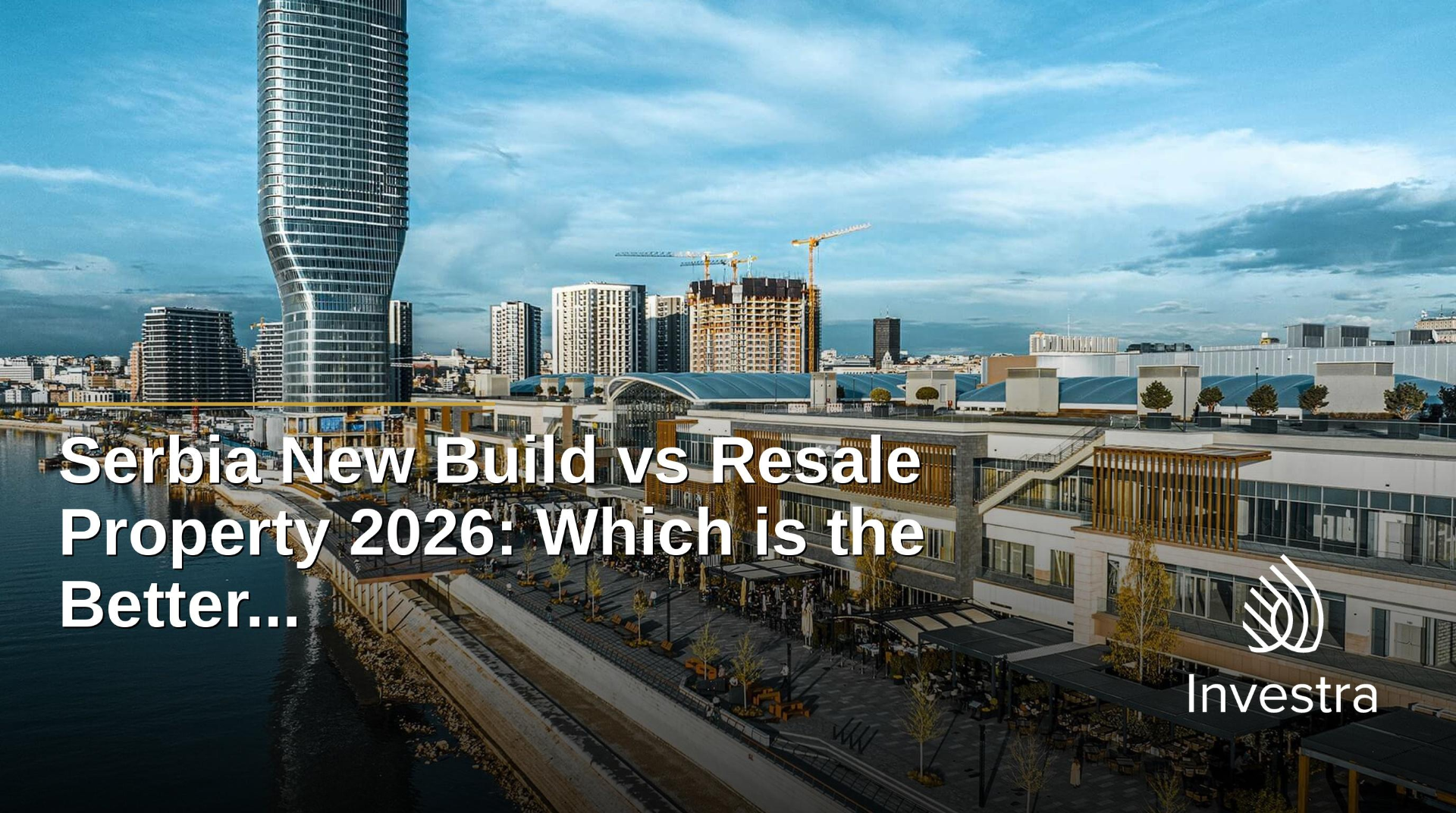
Serbia New Build vs Resale Property 2026: Which is the Better...
Serbia New Build vs Resale Property 2026: Which is the Better Investment?
Introduction to Serbia's Property Market in 2026
Serbia's real estate sector continues to draw attention from regional and international buyers as Belgrade and Novi Sad post steady price growth. Foreign investors now account for roughly 28% of transactions above 150,000 EUR, with many turning to platforms such as Investra.io to compare listings side by side. The choice between a newly completed apartment and an existing unit shapes both upfront costs and long-term performance.
Overview of New Build and Resale Options
New builds typically appear in master-planned districts on the outskirts of major cities or in regeneration zones along the Sava and Danube riverfronts. Resale stock concentrates in central districts where buildings date from the 1970s through the early 2000s. Each category carries distinct timelines: new projects require 12-24 months from reservation to handover, while resale transactions close in 30-60 days once financing clears.
Market Segments by City
Belgrade records the widest price spread. New apartments in Voždovac and Zvezdara reach 2650 EUR per square meter on average, while comparable resale units in the same municipalities trade at 1950 EUR. Novi Sad shows a narrower gap, with new builds at 2350 EUR and resales at 1750 EUR. Smaller cities such as Niš and Kragujevac list new units near 1900 EUR against 1350 EUR for older stock.
Key Facts and Data for 2026
National average prices rose 9.4% year-on-year through the first half of 2026. New residential supply reached 14,200 units, up from 11,800 the previous year, yet absorption rates remain above 82%. Resale inventory sits at 47,000 listed properties, with average days on market at 68 for units priced below 200,000 EUR. Rental yields hover between 5.1% and 6.8% gross, slightly higher for resale apartments in established micro-locations.
Price Trends and Construction Costs
Developers report construction costs climbing to 1450 EUR per square meter for mid-range finishes, pushing sales prices upward. Resale owners face fewer cost pressures and can adjust asking prices more flexibly. Over the past 24 months, new-build premiums have stabilized at 28-35% above resale equivalents in the same district.
Price Differences and Buyer Budgets
A 75-square-meter new apartment in Belgrade's New Belgrade municipality carries an asking price near 195,000 EUR before taxes and fees. The same floor area in a 1990s building sells for 142,000 EUR. Buyers who stretch their budget for a new unit often offset the difference through lower utility bills and included parking, while those choosing resale gain immediate cash flow from tenants already in place.
Financing and Payment Structures
Banks extend 70-80% loan-to-value ratios for completed new builds with full permits, yet only 60-65% for older resale properties that require energy-efficiency upgrades. Developers frequently offer staged payment plans tied to construction milestones, reducing the initial deposit to 15-20%. Resale purchases demand full funds at closing, though some sellers accept 10% deposits with 45-day completion.
Quality Standards and Long-Term Durability
New projects must meet 2025 energy-efficiency rules that mandate triple glazing and heat-pump readiness. Resale buildings often retain single-pane windows and outdated wiring, requiring 8,000-15,000 EUR in upgrades within the first three years of ownership. Developer reputation matters: firms with five or more completed projects in Serbia deliver fewer than 4% defect complaints within the first two years, compared with 12% for newer entrants.
Materials and After-Sales Service
Established developers provide two-year warranties on structural elements and one-year coverage on finishes. Resale owners rely on private contractors for repairs, with average response times of three to six weeks. Investra.io lists verified developer histories alongside each new-build project, helping buyers screen for track records before reservation.
Legal Risks and Developer Reputation
New-build contracts hinge on building permits and ownership of land, both of which foreign buyers can verify through the Serbian cadastre within ten days. Resale deals carry risks of unresolved inheritance claims or unpaid utility bills that surface after transfer. The Buying Property in Serbia as a Foreigner guide outlines the exact checks required in each scenario.
Common Pitfalls and Mitigation Steps
Investors report that 7% of new projects face six-month delays due to supply-chain issues. Resale transactions encounter title disputes in roughly 5% of cases. Using an escrow account and engaging a local notary reduces both exposures. The Serbia Real Estate Market 2026 overview provides updated permit databases and developer ratings updated quarterly.
Investment Returns and Five-Year Projections
Properties purchased new in 2021 and sold in early 2026 posted average capital gains of 47% in Belgrade core districts. Resale units from the same period returned 39%, though they generated 1.2 percentage points higher rental yields during the holding period. Total return, combining appreciation and net rent, favors new builds by a slim margin when location quality matches.
Exit Strategies and Liquidity
New units sell faster to owner-occupiers seeking modern layouts, averaging 42 days on market at asking price. Resale apartments appeal more to value-driven landlords and local families, sometimes requiring 10-15% price reductions to close within 90 days. The Serbia Property Taxes 2026 guide details capital-gains calculations that affect net proceeds for both categories.
Investra.io aggregates listings from both new developments and resale owners, allowing side-by-side comparison of price per square meter, completion dates, and projected yields. Cross-reference current offers with the data above to match investment goals and risk tolerance. Additional market commentary appears at Real Estate Investment Insights by Siniša Dagary.
Practical Steps to Evaluate New Build vs Resale Properties
Once you have compared the core differences between new builds and resale properties in Serbia, the next phase involves structured evaluation. Begin by identifying your investment goals, such as rental yield targets or long-term appreciation in Belgrade or Novi Sad. Create a shortlist of at least five properties in each category using platforms like Investra.io or local agencies. Schedule site visits during different times of day to assess noise levels, sunlight exposure, and neighborhood dynamics. For new builds, request detailed project timelines and phased completion schedules from developers. For resales, arrange professional inspections focusing on structural integrity, plumbing, and electrical systems that may date back decades.
Conduct Thorough Market Research
Analyze recent transaction data from the Serbian Real Estate Cadastre to understand price per square meter trends. New builds in emerging districts like Zemun or Karaburma often command 15-25% premiums over comparable resales, yet they deliver modern energy efficiency that reduces long-term ownership costs. Cross-reference listings with local economic reports to gauge demand from expatriates and young professionals.
Engage Local Experts Early
Partner with a licensed real estate agent familiar with both segments and a lawyer specializing in foreign investment. Request references from past clients who purchased in 2024 or 2025. This step helps uncover hidden risks, such as developer insolvency in new projects or unresolved inheritance disputes in resale units.
Legal Considerations When Buying New Build or Resale
Serbian property law handles new builds and resales differently when it comes to ownership transfer and buyer protections. Foreign investors face the same acquisition rules as locals, but new builds add extra steps involving construction permits and developer guarantees. Always check that the land registry entry matches the seller’s claims before signing any preliminary contract.
Developer Reputation and Contract Safeguards
For new builds, scrutinize the developer’s track record through completed projects and client reviews. Insist on escrow accounts for installment payments and penalty clauses for delays exceeding 90 days. Resale transactions require title searches covering at least 10 years to confirm no liens or disputes exist. Both scenarios benefit from notarized purchase agreements that explicitly state all inclusions, such as parking spaces or storage units.
Foreign Buyer Compliance
Ensure compliance with reciprocity rules if your home country restricts Serbian nationals. Obtain the necessary tax identification number early and prepare apostilled documents for any corporate structures used in the purchase. Legal due diligence typically takes 4-6 weeks for resales but can extend to 8-12 weeks for new builds awaiting final occupancy permits.
Costs and Timeline Breakdown
Budgeting accurately separates successful investments from costly mistakes. New builds generally involve higher upfront costs due to VAT at 10% on the purchase price, while resales attract lower transfer taxes around 0.5-3% depending on property value. Additional fees include notary costs averaging €300-600 and agency commissions of 2-3% split between parties.
Hidden Expenses and Financing Options
Factor in potential renovation costs for resales, which can reach €150-300 per square meter for modernizing older apartments. New builds may include parking and infrastructure fees paid directly to the developer. Mortgage availability remains strong for both, though banks often require higher down payments for off-plan new builds. Expect total closing costs of 4-7% for resales versus 6-9% for new builds including VAT.
Expected Timelines
Resale purchases typically close within 30-60 days after contract signing. New build timelines vary widely: completed units align with resale speed, while off-plan projects may require 18-36 months, exposing buyers to inflation and interest rate fluctuations. Monitor construction progress through monthly site reports to protect your deposit.
Expert Tips for Maximizing Returns
Seasoned investors recommend prioritizing location over build type when yields matter most. Properties near upcoming metro extensions or university campuses deliver consistent rental demand regardless of age. Diversify by acquiring one new build for modern appeal and one resale for immediate cash flow.
Due Diligence Checklist
Always commission independent valuations and energy performance certificates. For new builds, confirm the developer holds all necessary building permits and insurance against structural defects for at least five years post-completion. Negotiate price reductions of 5-10% on resales showing deferred maintenance. Track macroeconomic indicators such as Serbia’s GDP growth and foreign direct investment inflows to time your exit strategy effectively.
Long-Term Portfolio Strategy
Reinvest rental income into property upgrades that boost value, such as smart home systems in new builds or kitchen modernizations in resales. Review your holdings annually with a financial advisor to adjust for currency fluctuations between the euro and Serbian dinar.
Recommended Content
- Serbia Real Estate Market 2026: Complete Guide
- Buying Property in Serbia as a Foreigner 2026
- Serbia Property Taxes 2026
- Real Estate Investment Insights by Siniša Dagary
- Finds Group - Real Estate Investment Advisory
Odkrijte globalne investicijske priložnosti na Unifyr.space — vaš portal za pametne investicije.
📚 Recommended Content
Frequently Asked Questions
What is the typical price difference between new build and resale properties in Serbia?
New builds usually cost 15-25% more per square meter than resales in comparable locations due to modern finishes and warranties.
Are new build properties in Serbia higher quality than resales?
New builds generally feature better insulation, energy efficiency, and contemporary layouts, while quality varies widely among resales depending on prior maintenance.
What legal risks are unique to new build purchases in Serbia?
Key risks include developer delays, incomplete permits, and insolvency, mitigated by escrow payments and verified track records.
How long does it take to complete a resale purchase in Serbia?
Most resale transactions close within 30-60 days after signing the preliminary contract and completing due diligence.
Do foreign investors face different rules for new builds versus resales?
Foreign buyers follow identical acquisition rules for both, though new builds require extra verification of construction permits and occupancy certificates.
What additional costs apply to new build properties?
Expect 10% VAT plus possible infrastructure fees, increasing total closing costs to 6-9% compared to 4-7% for resales.
Which option offers better rental yields in Belgrade?
Resales often provide higher immediate yields due to lower purchase prices, while new builds attract premium tenants willing to pay more for modern amenities.
How can I verify a developer’s reputation in Serbia?
Review completed projects, client testimonials, and confirm all permits through the local cadastre and municipal records.
Are there financing differences between new builds and resales?
Banks typically require larger down payments for off-plan new builds and may impose stricter conditions until construction milestones are met.
What timeline risks exist with new build investments?
Off-plan projects can face 18-36 month delays, exposing buyers to inflation and changing market conditions before occupancy.
Related Posts
No related posts available.
