
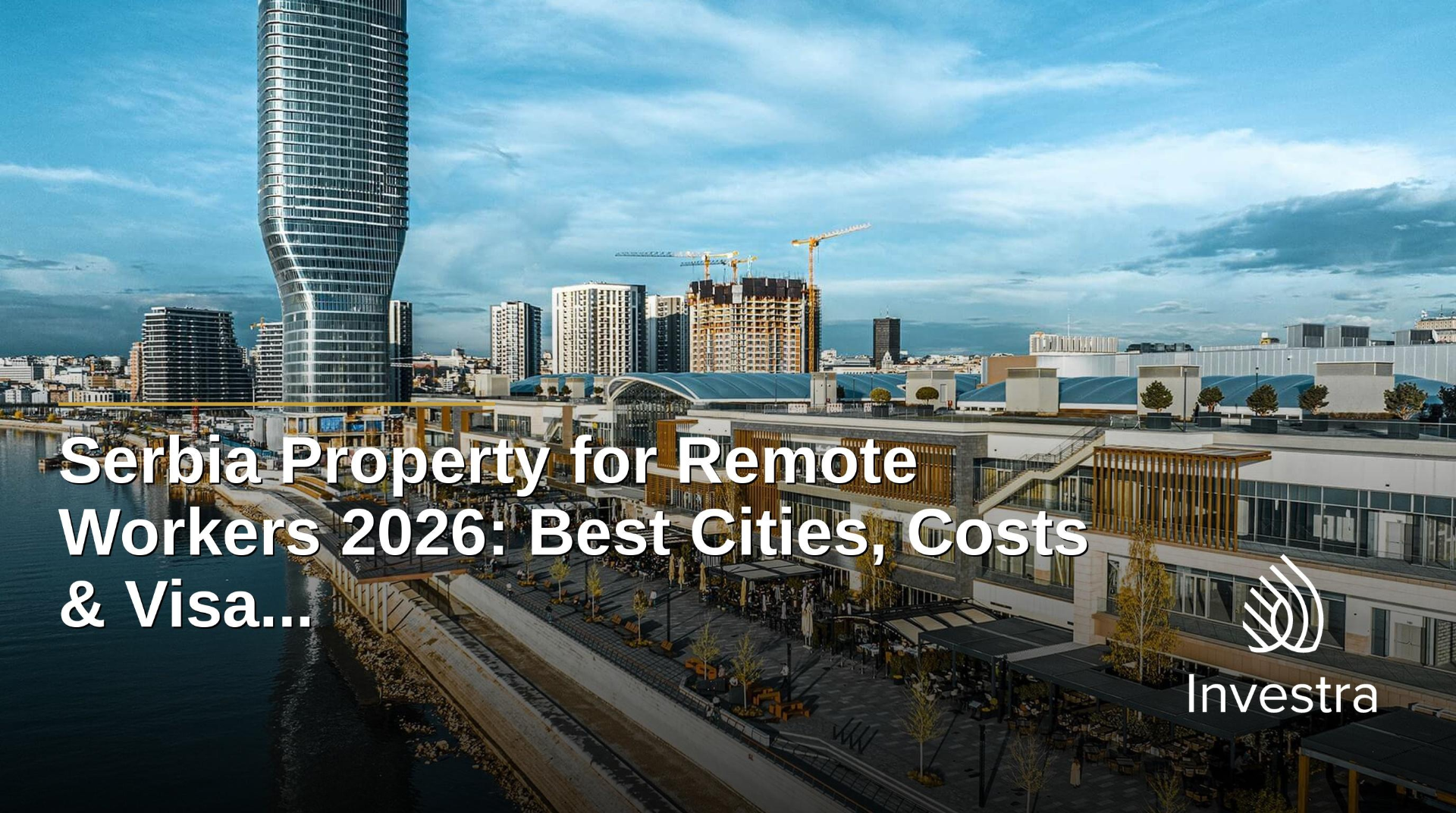
Serbia Property for Remote Workers 2026: Best Cities, Costs & Visa...
Serbia Property for Remote Workers 2026: Best Cities, Costs & Visa Options
Why Remote Workers Keep Choosing Serbia
Serbia has quietly become a go-to spot for people who work online. The country offers fast fiber connections in bigger towns, monthly rents that often stay under 700 euros for a decent one-bedroom, and a digital nomad visa introduced a few years back that lets freelancers and remote employees stay legally for up to 12 months without jumping through endless hoops.
Many arrive first on a short tourist stay, test the pace in Belgrade or Novi Sad, then apply for the visa once they line up local accommodation. The process runs through the Ministry of Interior and usually takes three to four weeks once the paperwork is complete. Internet providers like Telekom Srbija and SBB deliver speeds above 100 Mbps in most urban areas, which keeps video calls and file uploads smooth.
Market Overview for 2026
The local real estate scene has stayed steady even as other European markets cooled. Foreign buyers continue to show interest, especially those who plan to split time between their home country and Serbia. Prices have risen modestly since 2024, driven more by local demand and limited new supply than by any sudden boom. Investors looking for long-term holds often check listings on Investra.io to compare districts side by side.
One useful read on the bigger picture is the Serbia Real Estate Market 2026 overview, which tracks transaction volumes and new construction permits. Another helpful piece covers the capital in detail: Belgrade Real Estate Market 2026.
Digital Nomad Visa Basics
The visa requires proof of remote employment or freelance income above roughly 3,200 euros per month on average. Applicants also need private health insurance and a clean criminal record. Once approved, holders can rent or buy property without extra restrictions, though ownership rules differ slightly for non-residents. The Buying Property in Serbia as a Foreigner guide walks through the exact steps and required documents.
Property Prices and Trends Right Now
In central Belgrade, newer apartments sell for 3,100 to 3,400 EUR per square meter. Older buildings in Vračar or Dorćol trade closer to 2,600 EUR per square meter. Novi Sad averages 2,150 EUR per square meter for similar units, while smaller cities like Niš sit around 1,650 EUR per square meter. These figures come from recent transaction data reported by local agencies and the national cadastre.
Rental yields for one- and two-bedroom flats average 5.8 percent gross in Belgrade and 6.1 percent in Novi Sad when properties are listed on platforms popular with remote workers. Net returns after taxes and maintenance typically land between 4.4 and 4.9 percent. Investors who buy off-plan in emerging districts sometimes see capital growth of 8 to 12 percent over three years if the area gains new coworking spots or improved public transport.
Property taxes remain straightforward. Owners pay an annual levy based on property value, usually under 0.4 percent, plus a transfer tax of 1.5 to 3 percent at purchase. Details appear in the Serbia Property Taxes 2026 summary.
Best Cities and Neighborhoods for Remote Workers
Belgrade Districts That Work Well
Belgrade keeps the largest selection of coworking spaces, with places like Impact Hub, Nova Iskra, and Smart Office offering monthly passes from 120 to 180 euros. Vračar and Savski Venac attract many digital nomads because they sit within walking distance of cafes, gyms, and the riverfront promenade. A one-bedroom flat here rents for 550 to 750 euros furnished.
Further out in Zemun or New Belgrade, prices drop 15 to 20 percent while still providing solid internet and quick bus or tram links into the center. The Belgrade Waterfront development continues to add modern units aimed at higher-income buyers; more on that project appears in the Belgrade Waterfront Real Estate 2026 guide.
Novi Sad as a Strong Alternative
Novi Sad offers a slower rhythm and lower costs. A comfortable apartment near the city center or university area goes for 420 to 580 euros in rent. Coworking options such as Radionica and Co-working NS charge around 90 euros monthly. The city’s fiber network covers nearly every residential building, and the train to Belgrade takes just over an hour, which suits people who need occasional meetings in the capital.
Smaller Cities Worth a Look
Niš and Subotica draw freelancers who prefer even quieter surroundings. Monthly living costs can fall below 1,200 euros including rent, food, and utilities. Property prices remain the lowest among cities with decent broadband, though coworking spaces are fewer and usually smaller.
Investment Potential for Remote Buyers
People who buy while living in Serbia often choose units they can rent short-term when they travel. Platforms aimed at remote workers fill those flats easily during peak seasons, especially in Belgrade. Total returns combine the 5-plus percent yield with modest price growth that has averaged 4.7 percent annually over the past three years.
Buyers should budget for notary fees around 1 percent, agent commission of 2 to 3 percent, and minor renovation costs if targeting older stock. Those who purchase through Investra.io gain access to verified listings and local legal contacts that speed up the process. Over a five-year hold, many owners report combined income and appreciation near 9 percent per year after expenses.
Real estate decisions benefit from tracking local trends over time. Real Estate Investment Insights by Siniša Dagary provides ongoing commentary on Serbian market shifts that remote investors find practical.
Overall, Serbia continues to balance low entry prices with workable infrastructure for people who earn abroad. Those who spend time in the main cities before buying tend to make clearer choices about neighborhoods and building quality.
Rental Yields & ROI
Remote workers considering property investment in Serbia often prioritize consistent rental income alongside personal use. In 2026, average gross rental yields range from 5.8% in Belgrade to 7.2% in Novi Sad, driven by strong demand from digital nomads and expatriates seeking long-term leases. Net yields after maintenance and taxes typically settle between 4.5% and 6%, making Serbia competitive with other Eastern European destinations.
Belgrade District Analysis
Vračar and Dorćol continue to deliver the strongest returns for furnished apartments targeting remote professionals. A one-bedroom unit purchased at €2,200 per square meter can generate €850–950 monthly rent, translating to a 6.1% gross yield. Investors focusing on properties near coworking hubs report occupancy rates above 85% year-round.
Novi Sad and Niš Opportunities
Novi Sad offers slightly higher yields due to lower purchase prices. A modern two-bedroom apartment acquired for €1,650 per square meter commands €700–780 in monthly rent from remote workers. Niš remains the most affordable entry point, with yields approaching 7.5% for well-located studios popular among freelancers on extended stays.
Buying Process
Foreign remote workers follow a streamlined process when purchasing Serbian property. The first step involves obtaining a tax identification number (PIB) from the local tax authority, which can be completed in person or through a licensed attorney within five business days.
Step-by-Step Acquisition
After securing financing or proof of funds, buyers select a notary public to draft the preliminary contract. A 10% deposit is standard, held in escrow until the final deed is signed at the cadastre office. Full ownership transfer typically completes within 30–45 days when all documentation is in order.
Financing Options for Non-Residents
Local banks offer mortgage products to foreigners with Serbian income or strong international credit profiles. Interest rates in 2026 average 4.75% for euro-denominated loans with a maximum 70% loan-to-value ratio. Many remote workers opt for cash purchases to accelerate the process and avoid currency conversion fees.
Legal Considerations
Serbia permits foreign nationals to own apartments and houses outright, with the exception of agricultural land. Remote workers should verify that the property is registered as residential use before signing contracts.
Tax Obligations and Residency
Property tax rates remain low at 0.4% of market value annually. Capital gains tax applies at 15% if the property is sold within five years of purchase. Digital nomad visa holders must declare worldwide income if they spend more than 183 days in Serbia, triggering local tax residency rules.
Ownership Structures
Many investors establish a Serbian limited liability company to hold property, providing additional liability protection and simplified resale options. Company formation costs approximately €1,200 and requires a local registered address, which can be arranged through serviced office providers popular with remote workers.
Practical Tips
Successful remote workers combine property ownership with flexible visa strategies. The Serbia Digital Nomad Visa, valid for one year and renewable, allows property owners to maintain legal status while generating rental income.
Internet and Infrastructure Checks
Before finalizing any purchase, verify fiber-optic availability through local providers such as Telekom Srbija or Yettel. Most urban districts offer speeds exceeding 300 Mbps, sufficient for multiple video calls and cloud-based workflows common among digital professionals.
Community and Networking
Join established remote worker groups in Belgrade and Novi Sad to gain insights on building management and tenant screening. Platforms like InterNations and local Facebook communities frequently share updated lists of reliable property managers who handle maintenance for absentee owners.
Long-Term Strategy
Consider properties with short-term rental potential during peak tourist seasons while maintaining long-term leases for stable income. Hybrid use maximizes both yield and personal flexibility for remote workers who split time between Serbia and other destinations.
Recommended Content
- Serbia Real Estate Market 2026: Complete Guide
- Buying Property in Serbia as a Foreigner 2026
- Belgrade Real Estate Market 2026
- Real Estate Investment Insights by Siniša Dagary
- Finds Group - Real Estate Investment Advisory
Odkrijte globalne investicijske priložnosti na Unifyr.space — vaš portal za pametne investicije.
📚 Recommended Content
Frequently Asked Questions
Can remote workers buy property in Serbia?
Yes, foreign nationals including digital nomads can purchase apartments and houses in Serbia without restrictions, except for agricultural land.
What are typical rental yields in Belgrade for 2026?
Gross rental yields in Belgrade average 5.8% to 6.1% for properties targeting remote workers, with net yields around 4.5% after expenses.
How long does the property buying process take for foreigners?
The full process from contract to ownership transfer usually completes in 30 to 45 days when working with a notary and cadastre office.
Is the Serbia Digital Nomad Visa suitable for property owners?
The one-year renewable Digital Nomad Visa is ideal for remote workers who own or rent property and wish to maintain legal residency while earning foreign income.
What taxes apply to foreign property owners in Serbia?
Annual property tax is 0.4% of market value, with 15% capital gains tax if the property is sold within five years of purchase.
Can I get a mortgage as a non-resident in Serbia?
Local banks offer mortgages to foreigners at approximately 4.75% interest with up to 70% loan-to-value, subject to credit approval.
Which Serbian cities offer the best internet for remote work?
Belgrade, Novi Sad, and Niš all provide fiber-optic connections exceeding 300 Mbps, making them suitable for demanding remote work tasks.
Should I set up a company to buy property in Serbia?
Many investors form an LLC for liability protection and easier resale, with formation costs around €1,200 including a registered address.
What is the minimum stay required for tax residency in Serbia?
Spending more than 183 days in Serbia during a calendar year typically triggers local tax residency obligations for worldwide income.
Are there restrictions on short-term rentals for property owners?
Short-term rentals are permitted but may require registration with local authorities; many owners combine them with long-term leases for balanced income.
Related Posts
No related posts available.
