
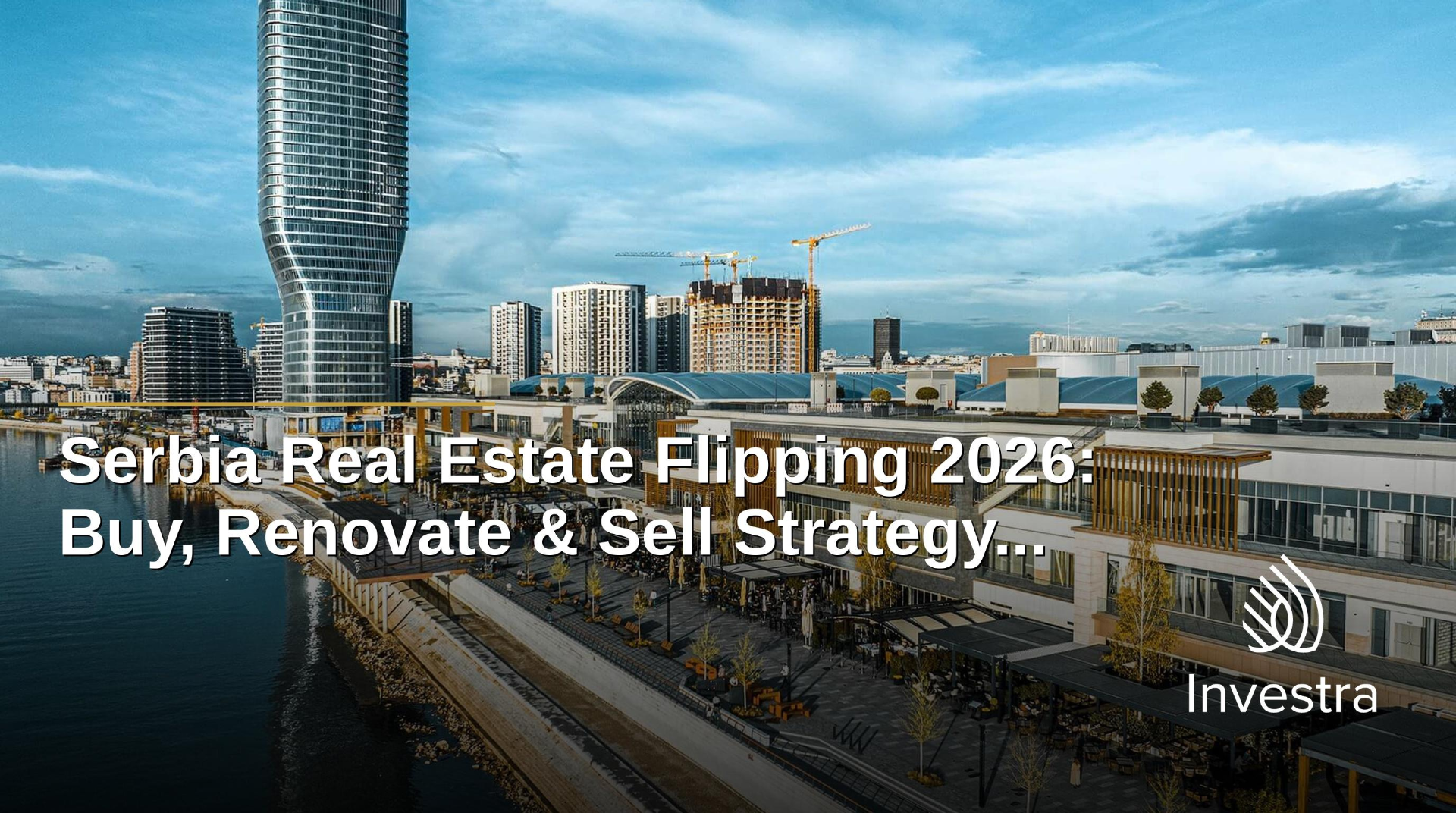
Serbia Real Estate Flipping 2026: Buy, Renovate & Sell Strategy...
Serbia Real Estate Flipping 2026: Buy, Renovate & Sell Strategy Guide
Why Serbia Stands Out for Property Flips in 2026
Serbia has drawn more attention from individual investors who want steady renovation plays rather than long-term rentals. Cities like Belgrade and Novi Sad still hold pockets of 1960s and 1970s buildings that sell below replacement cost, yet finish at prices that match new construction after updates. The gap between tired stock and upgraded units remains wide enough to support meaningful returns when the work stays focused on kitchens, bathrooms, and flooring.
Investra.io lists hundreds of off-market and listed apartments that fit this profile, giving buyers direct access to owners who prefer quick cash sales over agent listings. Many of these properties sit in districts where demand from young professionals and small families keeps resale times short.
Current Market Snapshot and Price Benchmarks
Average asking prices for resale apartments in central Belgrade reached 2,650 EUR per square meter in late 2025, while older units in need of work traded closer to 1,950 EUR per square meter. In Novi Sad the spread looks similar, with renovated flats near the Danube hitting 2,400 EUR per square meter against 1,700 EUR per square meter for properties that require full refreshes. These numbers create a workable entry point for flips that target 2,800-3,200 EUR per square meter exit prices.
Transaction volume for apartments under 80 square meters stayed above 9,000 units in 2025, and early indicators point to steady demand through 2026 as interest rates remain moderate. Investors who bought in 2024 and sold in 2025 reported average gross markups of 38% before costs, according to local agency records.
For a broader view of price trends and buyer activity, see the Serbia Real Estate Market 2026 report.
Best Districts for Renovation Flips
Belgrade – Dorćol and Vračar
Dorćol offers a mix of older residential buildings and converted commercial spaces. Two-bedroom units from the 1970s frequently appear on Investra.io between 1,800 and 2,100 EUR per square meter. After new electrical systems, modern bathrooms, and open-plan kitchens, the same flats reach 2,950 EUR per square meter within four months on the market. Vračar follows a similar pattern, though prices run 10-15% higher at both entry and exit stages.
Novi Sad – Stari Grad and Liman
Stari Grad keeps a steady flow of 60-75 square meter apartments built between 1965 and 1980. Purchase prices average 1,650 EUR per square meter, while post-renovation sales clear 2,550 EUR per square meter. Liman attracts families and shows slightly longer hold periods but still supports 28% net margins when finishes stay neutral and functional.
Niš – Centar and Medijana
Niš delivers lower entry prices around 1,150 EUR per square meter for apartments that need work. After 40,000-55,000 EUR in upgrades, owners can list at 1,650 EUR per square meter. The smaller buyer pool means marketing periods stretch to six weeks instead of three, yet overall returns remain attractive for investors willing to manage projects remotely.
Renovation Costs and Typical Timelines
Full interior renovations in Serbia run 350-550 EUR per square meter depending on material choices and contractor experience. A 70 square meter apartment therefore carries a 24,500-38,500 EUR budget line. Core items include new wiring and plumbing at 80 EUR per square meter, kitchen and bathroom replacements at 6,000-9,000 EUR total, and flooring plus painting at 45 EUR per square meter. Permits for non-structural work rarely exceed 300 EUR and clear in two weeks.
Most experienced flippers schedule four to five months from contract signing to completion. The first month covers design and permit filing, months two and three handle demolition and rough work, and the final six weeks focus on finishes and cleaning. Delays from material lead times average two weeks, so budgets should include a 15% contingency.
Projected Profit Margins and Real Examples
A typical Belgrade flip bought at 140,000 EUR, renovated for 32,000 EUR, and sold at 195,000 EUR produces a 23,000 EUR net profit after 4% agent fees, taxes, and holding costs. That equals roughly 16% on total capital deployed when financing covers 60% of the purchase. In Novi Sad the same math on a 105,000 EUR buy yields 18,500 EUR net, or 20% on equity.
Investors who keep projects under six months avoid most vacancy and interest drag. Those who stretch beyond eight months see margins compress by 4-6 percentage points because of extended holding costs.
Legal Steps for Foreign Buyers
Foreign nationals can purchase apartments in Serbia without special approval, though land and certain commercial assets carry restrictions. The process requires a notarized purchase contract, tax clearance from the seller, and registration at the cadastre, which takes 30-45 days. Full details appear in the Buying Property in Serbia as a Foreigner guide.
Power of attorney is common for investors outside the country and costs 150-250 EUR to set up. Title insurance remains optional but recommended for older buildings where ownership history can include multiple heirs.
Tax Implications to Factor Into Every Deal
Property transfer tax sits at 0.5-3% depending on the municipality and property value. Capital gains tax applies at 15% on the difference between purchase price plus documented renovation costs and the final sale price. Holding periods longer than five years reduce the rate, yet most flips fall under the standard rule. The Serbia Property Taxes 2026 overview walks through exact calculations and filing deadlines.
Investors should also reserve 2% of the sale price for agent commission and another 1% for notary and cadastre fees on exit. Accurate record-keeping of every renovation invoice lowers the taxable base and protects margins.
Getting Started on Investra.io
Investra.io filters listings by renovation potential, price per square meter, and district so users can shortlist candidates in minutes. Weekly updates include new off-market opportunities that never reach public portals. Users who register receive direct owner contact details and can schedule viewings within 48 hours in most cases.
Early planning around contractor teams and exit pricing keeps the timeline tight and the numbers predictable. Serbia’s flipping market rewards disciplined execution more than aggressive speculation, and platforms like Investra.io make the sourcing side straightforward.
Additional market commentary and case studies appear on Real Estate Investment Insights by Siniša Dagary.
Practical Steps
Identifying and Acquiring Flip Properties
After analyzing market trends in Part 1, the next phase involves systematic property sourcing. Focus on Belgrade districts like Zvezdara and Čukarica, where older residential buildings offer strong renovation upside. Use local real estate portals combined with municipal records to identify undervalued apartments priced 15-25% below current market averages. Engage a licensed real estate agent early to negotiate off-market deals, which often yield the best margins for foreign investors.
Conducting Due Diligence
Verify ownership through the Real Estate Cadastre and obtain an updated list of encumbrances. Commission a structural engineer to assess load-bearing walls, plumbing, and electrical systems before purchase. This step prevents costly surprises during renovation and ensures the property can achieve the target post-renovation value within 18 months.
Executing Renovations Efficiently
Partner with licensed contractors experienced in Serbian building codes. Prioritize high-impact upgrades such as modern kitchen installations, energy-efficient windows, and updated bathrooms. Track all expenses through itemized invoices to support future tax deductions and resale documentation.
Legal Considerations
Foreign Ownership Rules for Flipping
Foreign investors may purchase residential property directly, but commercial or land acquisitions require a Serbian company structure. Ensure the purchase contract includes a clear renovation clause and a defined timeline for resale to avoid disputes with co-owners or heirs. Register all ownership changes promptly with the cadastre to maintain clear title for the eventual sale.
Permits and Compliance
Renovations exceeding basic cosmetic work require building permits from the local municipality. Non-compliance can delay resale by several months and incur fines. Consult a property lawyer to confirm that planned changes do not violate zoning regulations, especially in protected historic districts of Novi Sad or Belgrade.
Contract and Resale Requirements
Draft purchase agreements with conditional clauses tied to renovation milestones. At the point of sale, prepare a full disclosure package including energy performance certificates and proof of permit compliance. This documentation accelerates buyer financing approvals and reduces negotiation friction.
Costs & Timeline
Breakdown of Renovation Expenses
Average renovation costs in Serbia range from €250 to €450 per square meter depending on quality level. Budget an additional 10-15% contingency for unexpected structural repairs. Material sourcing from local suppliers versus imports can reduce costs by up to 30%, while labor remains the largest variable expense.
Projected Timeline and Profit Margins
Typical flip projects complete within 9-14 months: 1-2 months for acquisition, 4-7 months for renovation, and 3-5 months for marketing and sale. Target gross profit margins of 18-28% after all costs, with net returns of 12-20% once taxes and agent fees are deducted. Properties in emerging suburbs like Surčin have shown faster turnover in 2025 data.
Financing and Cash Flow Management
Most flippers use a combination of personal equity and short-term bank loans. Serbian banks offer renovation-specific products with interest rates between 5.5% and 8.5%. Maintain at least six months of carrying costs in reserve to handle delays in permitting or contractor availability.
Expert Tips
Maximizing Return Through Strategic Upgrades
Focus on features that appeal to the growing expatriate and young professional buyer pool, such as smart home wiring and open-plan living spaces. Energy efficiency improvements not only increase sale price but also shorten time on market by an average of three weeks.
Risk Mitigation Strategies
Never exceed 70% of the projected after-repair value in total acquisition and renovation costs. Diversify across two to three smaller projects rather than one large renovation to reduce exposure. Maintain relationships with multiple contractors to avoid dependency on a single team.
Market Timing and Exit Planning
Monitor seasonal demand peaks in spring and early autumn. Engage a real estate photographer and stager early in the listing process. Pre-qualify buyers through local agencies to filter serious offers and maintain momentum toward closing.
Recommended Content
- Serbia Real Estate Market 2026: Complete Guide
- Buying Property in Serbia as a Foreigner 2026
- Serbia Property Taxes 2026
- Real Estate Investment Insights by Siniša Dagary
- Finds Group - Real Estate Investment Advisory
Odkrijte globalne investicijske priložnosti na Unifyr.space — vaš portal za pametne investicije.
📚 Recommended Content
Frequently Asked Questions
What are the best districts in Belgrade for property flipping in 2026?
Zvezdara, Čukarica, and parts of Novi Beograd remain top choices due to strong demand from young professionals and expatriates combined with aging housing stock suitable for renovation.
How much should I budget for renovation per square meter?
Expect €250–€450 per square meter for mid-to-high quality finishes, plus a 10-15% contingency for structural surprises.
Do foreign investors need a Serbian company to flip residential property?
No, foreign individuals can buy and sell residential apartments directly, but forming a local company is required for commercial properties or land.
What permits are required for major renovations?
Most structural, electrical, or plumbing work requires a municipal building permit. Cosmetic upgrades generally do not.
How long does a typical flip project take in Serbia?
From purchase to sale, plan on 9–14 months including acquisition, renovation, and marketing phases.
What profit margins can realistic flippers expect?
Gross margins of 18–28% are common, translating to net returns of 12–20% after taxes and fees.
Are there tax implications when selling a flipped property?
Capital gains tax applies if the property is sold within five years. Consult the Serbia Property Taxes 2026 guide for current rates.
How can I reduce renovation costs without sacrificing quality?
Source materials locally, obtain multiple contractor bids, and prioritize high-impact areas such as kitchens and bathrooms.
What financing options exist for flip projects?
Short-term bank loans and personal equity are most common. Some banks offer renovation-specific products at competitive rates.
How do I avoid legal issues during resale?
Maintain clear title, obtain all required permits, and provide complete disclosure documents including energy certificates.
Related Posts
No related posts available.
