
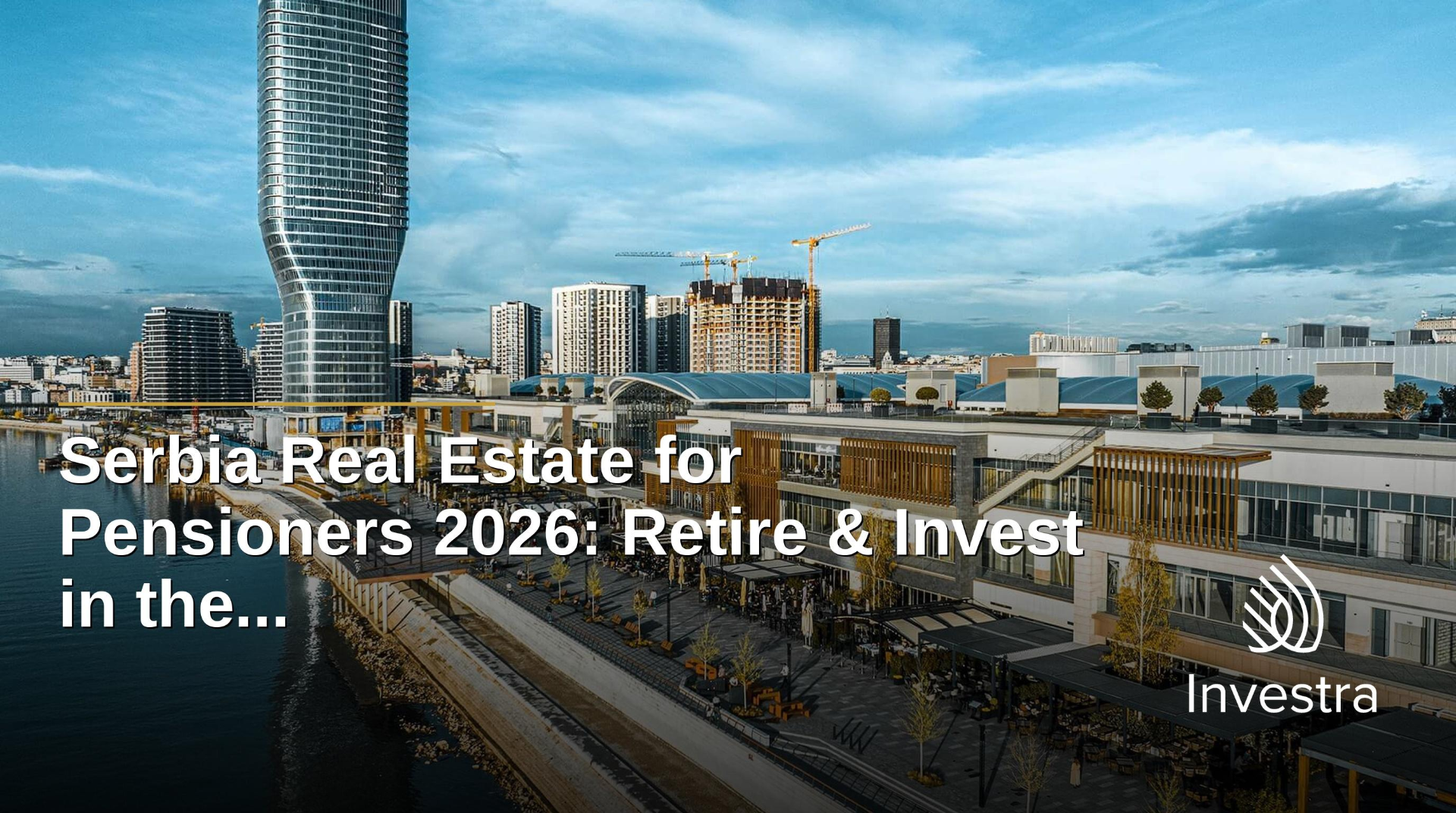
Serbia Real Estate for Pensioners 2026: Retire & Invest in the...
Serbia Real Estate for Pensioners 2026: Retire & Invest in the Balkans
Why Serbia Draws Pensioners Seeking a New Chapter
Serbia sits in the heart of the Balkans with a mild climate, four distinct seasons, and a pace of life that feels slower than most Western European capitals. Many retirees from Germany, the UK, and Scandinavia arrive looking for lower expenses without sacrificing modern comforts. The country has improved its infrastructure in recent years, with new highways linking Belgrade to Novi Sad and Niš, plus direct flights to major European hubs.
Healthcare stands out as another practical draw. Public hospitals provide basic care at very low cost, while private clinics in larger cities charge 30 to 50 euros for a specialist visit. Many doctors speak English, and pharmacies stock familiar medications. A couple can budget 150 euros monthly for private insurance that covers most routine needs.
Visa and residency options remain straightforward for non-EU citizens. Pensioners can apply for temporary residency by showing proof of income, typically a pension statement of at least 600 euros per month. After three years, permanent residency becomes possible. Property ownership itself does not grant residency, yet buying a home often strengthens the application when paired with a lease or proof of funds.
Real Estate Market Overview in 2026
The Serbian property market has shown consistent growth since 2022. Average prices in Belgrade now sit between 2,400 and 2,900 EUR per square meter for apartments in good condition. In Novi Sad, buyers pay 1,800 to 2,300 EUR per square meter, while Niš and smaller regional centers range from 1,350 to 1,800 EUR per square meter. New-build units with energy-efficient features command a 10 to 15 percent premium.
Rental demand stays solid, especially from students, young professionals, and digital nomads. Gross yields average 5.8 percent in Belgrade and climb to 6.5 to 7 percent in university towns like Novi Sad. A two-bedroom apartment purchased for 120,000 euros can generate 550 to 650 euros in monthly rent after basic expenses. Capital appreciation has averaged 6 percent annually over the past three years, supported by limited new supply and steady foreign interest.
Foreign buyers face few restrictions. Individuals can purchase apartments freely, while land or houses require a local company structure in most cases. Legal due diligence typically takes four to six weeks and costs around 1,500 euros including notary and registration fees. Investors looking for deeper market context can review the full picture in this Serbia Real Estate Market 2026 guide.
Best Cities and Neighborhoods for Retirees
Belgrade: Urban Convenience with Cultural Life
The capital offers the widest choice of medical specialists, international supermarkets, and cultural events. Popular districts for older buyers include Dedinje and Senjak for quiet streets and larger apartments, while Vračar provides walkable access to parks and cafes. Prices here sit at the higher end, yet many retirees value the airport connections and vibrant social scene. Those seeking more detail on the capital can read the Belgrade Real Estate Market 2026 overview.
Novi Sad: Balanced Lifestyle on the Danube
Novi Sad combines a university atmosphere with lower density than Belgrade. The city center and nearby Petrovaradin offer renovated apartments with river views at 1,900 to 2,200 EUR per square meter. Healthcare facilities are strong, and the surrounding countryside provides easy day trips. Summer festivals and a growing expat community add to the appeal.
Niš and Smaller Towns: Lower Costs, Simpler Living
Niš, Serbia’s third-largest city, keeps prices between 1,400 and 1,700 EUR per square meter. The local airport and university hospital make it practical for longer stays. Further afield, towns such as Kraljevo or Zlatibor attract those who prefer mountain air and lower monthly costs around 700 euros. These areas suit retirees who already own a car or enjoy seasonal travel.
Investment Potential for Pensioners
Property here serves dual purposes: a comfortable home and an income-producing asset. Many owners rent out their apartment for nine months of the year while traveling, then return for the milder winter. Over a five-year horizon, total returns combining yield and appreciation have reached 9 to 11 percent annually in prime locations.
Cost of living remains one of the strongest advantages. A comfortable monthly budget for a couple, including rent or mortgage, food, utilities, and leisure, lands between 850 and 1,100 euros outside Belgrade. Inside the capital the figure rises to 1,200 euros. Property taxes stay low at roughly 0.4 percent of assessed value each year.
Practical steps for buyers include working with a local lawyer early, verifying title through the cadastre, and budgeting 3 to 4 percent for closing costs. Platforms such as Investra.io list verified properties with photos, floor plans, and direct owner contact, helping retirees compare options across cities without multiple trips.
Those planning a purchase can also consult the step-by-step process outlined in this Buying Property in Serbia as a Foreigner resource. For additional perspectives on Balkan markets, see Real Estate Investment Insights by Siniša Dagary.
Legal Process for Purchasing Property as a Retiree
Foreign retirees interested in Serbia real estate must follow a structured legal framework that balances accessibility with regulatory safeguards. EU and non-EU citizens alike can acquire apartments and residential houses without major restrictions, though agricultural land remains subject to reciprocity rules. The process begins with obtaining a temporary residence permit tied to property ownership or pension income, typically valid for one year and renewable upon proof of financial self-sufficiency.
Key Documentation Requirements
Buyers need a valid passport, proof of pension income, and a police clearance certificate. A local lawyer drafts the preliminary contract, which includes a 10% deposit held in escrow. The final purchase agreement is notarized and submitted to the Real Estate Cadastre for title registration, a step that usually takes 30 to 60 days.
Role of the Notary and Cadastre
Every transaction requires notarization to confirm the seller’s ownership and absence of liens. The cadastre then updates the title deed, providing the buyer with full legal ownership. Retirees are advised to engage bilingual legal counsel to avoid translation errors that could delay the process.
Tax Implications for Pensioner Investors
Serbia maintains one of the most favorable tax regimes in the Balkans for retirees. Property tax rates range from 0.4% to 1.5% of the assessed value annually, with reductions available for primary residences occupied by pensioners. Capital gains tax applies only if the property is sold within five years of purchase, at a flat 15% rate after allowable deductions.
VAT and Transfer Taxes
New-build apartments carry 10% VAT, while resale properties are exempt. Transfer tax of 0.5% to 3% is levied on the higher of the purchase price or cadastral value. Double-taxation treaties with most European countries prevent duplicate taxation on pension income or rental yields.
Inheritance and Estate Planning
Foreign owners can bequeath Serbian property to heirs without residency requirements. Inheritance tax is progressive, starting at 1.5% for close relatives and rising to 3% for distant beneficiaries. Retirees often establish a Serbian limited liability company to streamline future transfers and reduce administrative burden.
Practical Tips for a Smooth Transition
Cost of living remains a primary draw, with monthly expenses for a couple averaging €1,200–1,600 outside Belgrade. Healthcare access through the public system is available after six months of residence, supplemented by affordable private clinics offering English-speaking staff. Winter heating costs in older buildings can be mitigated by choosing properties with district heating or modern insulation.
Banking and Currency Considerations
Opening a Serbian bank account requires a residence permit and tax ID. Pension transfers via SEPA are straightforward and fee-free from most EU banks. Currency risk is minimal due to the dinar’s relative stability against the euro.
Community and Lifestyle Integration
Retiree communities thrive in Novi Sad and Niš, where expat groups organize weekly language exchanges and cultural events. Public transport is inexpensive, and many cities offer senior discounts on utilities and cultural venues.
Step-by-Step Guide to Buying Property in Serbia
Follow this practical sequence to minimize risks and ensure compliance.
Step 1: Secure Visa and Residence Status
Apply for a temporary residence permit at the Serbian embassy in your home country using pension statements and a letter of intent to purchase property. Processing takes 30–45 days.
Step 2: Define Budget and Location Priorities
Align property prices with your pension income. One-bedroom apartments in Belgrade start at €85,000, while coastal or smaller-city options begin at €55,000.
Step 3: Engage Professional Advisors
Retain a licensed real estate agent and an independent lawyer. Verify the agent’s membership in the Serbian Chamber of Real Estate Agents.
Step 4: Conduct Due Diligence
Order a title search, building permit verification, and energy performance certificate. Confirm no outstanding utility debts or mortgage liens.
Step 5: Sign Contracts and Complete Payment
Execute the preliminary contract with a 10% deposit, then finalize via notary. Transfer funds through a lawyer’s escrow account for security.
Step 6: Register Ownership and Move In
Submit documents to the cadastre, pay transfer taxes, and obtain the new title deed. Arrange utility transfers and register with the local health center.
Recommended Content
- Serbia Real Estate Market 2026: Complete Guide
- Buying Property in Serbia as a Foreigner 2026
- Belgrade Real Estate Market 2026
- Real Estate Investment Insights by Siniša Dagary
- Finds Group - Real Estate Investment Advisory
Odkrijte globalne investicijske priložnosti na Unifyr.space — vaš portal za pametne investicije.
📚 Recommended Content
Frequently Asked Questions
Can retirees from outside the EU buy property in Serbia?
Yes, non-EU retirees face the same purchase rights as EU citizens for residential property, provided they obtain a temporary residence permit.
What is the average monthly cost of living for a pensioner couple in Serbia?
A comfortable lifestyle for two typically costs between €1,200 and €1,600 per month, including rent, utilities, food, and healthcare.
How long does the property purchase process take for foreigners?
From initial contract to final title registration, the process usually requires 45 to 90 days when all documents are in order.
Are there any restrictions on owning agricultural land?
Foreigners cannot purchase agricultural land unless their home country grants reciprocal rights to Serbian citizens.
What healthcare options exist for foreign retirees?
Public healthcare becomes accessible after six months of residence, while private clinics offer immediate care at low out-of-pocket costs.
Is rental income from Serbian property taxed for non-residents?
Non-residents pay a 15% flat tax on rental income after allowable deductions, reduced by applicable double-taxation treaties.
Which Serbian cities are most suitable for retirees?
Belgrade, Novi Sad, and Niš consistently rank highest due to healthcare access, lower living costs, and established expat communities.
Do I need to speak Serbian to complete the purchase?
No, but all official documents must be translated by a certified translator, and a bilingual lawyer is strongly recommended.
What visa options support long-term retirement in Serbia?
The temporary residence permit based on property ownership or sufficient pension income is the most common route for retirees.
Are there inheritance tax benefits for foreign owners?
Close family members pay only 1.5% inheritance tax, and forming a local company can further simplify estate transfers.
Related Posts
No related posts available.
