
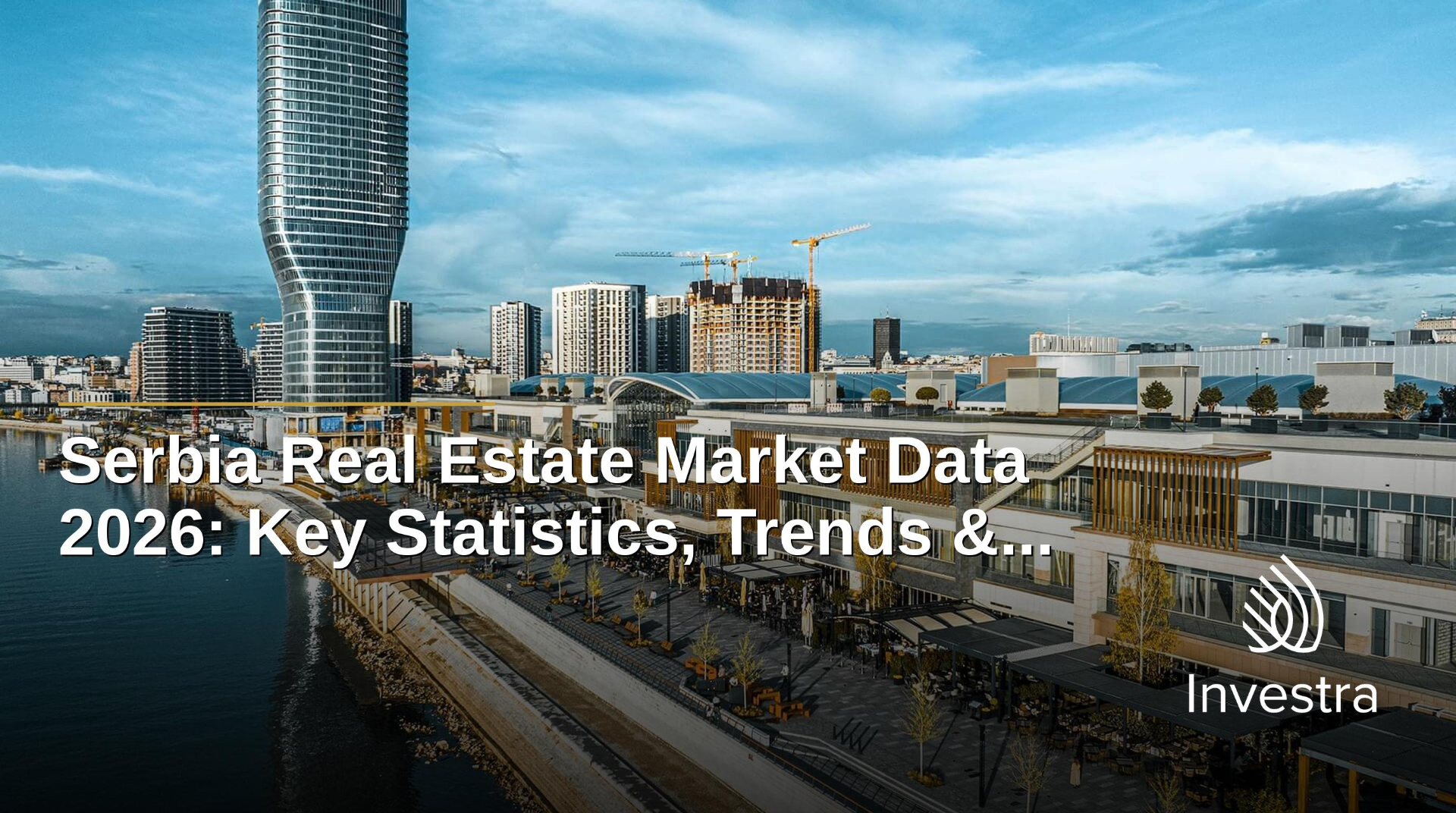
Serbia Real Estate Market Data 2026: Key Statistics, Trends &...
Serbia Real Estate Market Data 2026: Key Statistics, Trends & Price Indices
Introduction
Serbia continues to draw attention from property investors looking for accessible entry points in Europe. Data from 2025 into early 2026 points to consistent demand, supported by infrastructure upgrades and stable economic conditions. This overview examines price indices, transaction volumes, and buyer patterns to give a clear picture of where the market stands today.
Why Serbia Attracts Real Estate Buyers
Low purchase prices compared with Western Europe remain a primary draw. Average costs sit well below those in neighboring EU countries, yet rental demand stays firm in urban centers. Economic growth tied to manufacturing and tech sectors adds further support. For a deeper look at the broader picture, see this Serbia Real Estate Market 2026 overview.
Legal Access for Non-Residents
Foreign nationals can buy apartments without special restrictions. Land purchases require a local company structure in most cases. Recent updates have shortened approval times for ownership transfers. Details appear in the guide on Buying Property in Serbia as a Foreigner.
Market Overview for 2026
National residential prices reached €1,950 per square meter in the first quarter of 2026, up 7.4 percent from the prior year. Apartments in buildings completed after 2015 command a 12 percent premium. Transaction volumes totaled 48,200 units over the past twelve months, a modest rise from 2025 levels.
Price Indices by City
Belgrade recorded €2,850 per square meter on average. Novi Sad followed at €1,920 per square meter, while Niš stood at €1,450 per square meter. Smaller towns such as Kragujevac and Subotica ranged between €1,050 and €1,280 per square meter. These figures come from aggregated sales data collected by local registries and real estate portals.
Transaction Volumes and Buyer Mix
Belgrade accounted for 42 percent of all sales. Foreign buyers represented 18 percent of purchases nationwide, with buyers from Germany, Russia, and Turkey leading the group. Cash transactions made up 65 percent of deals, reflecting limited mortgage penetration among non-residents.
Best Areas for Investment
Belgrade districts such as Vračar and Savski Venac continue to post the strongest price growth. New developments near the waterfront attract both local professionals and international tenants. Novi Sad benefits from university-driven rental demand and improving rail links to the capital. For focused data on the capital, review the Belgrade Real Estate Market 2026 report.
Secondary Cities Showing Momentum
Niš has seen office conversions into residential units, lifting local prices by 9 percent year-over-year. Kragujevac benefits from automotive industry employment that supports steady occupancy rates. These locations offer lower entry prices and yields that often exceed those in Belgrade.
Investment Potential and Returns
Gross rental yields averaged 6.1 percent across major cities in 2026. Belgrade one-bedroom units returned around 5.4 percent, while Novi Sad two-bedroom apartments reached 6.8 percent. Net returns after taxes and maintenance typically fall between 4.2 and 5.5 percent. Capital appreciation added another 6 to 8 percent annually in top locations over the last three years.
Investors searching for current listings can browse verified properties on Investra.io, where filters allow sorting by price per square meter, yield estimates, and distance to transport hubs. Platform tools also provide historical price charts for individual buildings.
Market participants note that infrastructure projects, including highway expansions and airport upgrades, continue to support price stability. Regional price gaps remain wide enough to allow diversification across cities without excessive capital outlay.
Additional context on investment patterns appears in Real Estate Investment Insights by Siniša Dagary.
Legal Process for Foreign Buyers in Serbia
Buying property in Serbia as a foreigner means paying close attention to the rules on ownership. In 2026, non-residents can buy apartments and commercial buildings without restrictions, but land usually requires setting up a Serbian company or getting approval from the Ministry of Agriculture. Start by checking the title at the Real Estate Cadastre to confirm there are no liens. Hire a licensed notary to prepare the sales contract, then register it with the right court. Changes to the Law on Property and Legal Relations now allow digital filings, which cuts the average time for normal deals to 45 days.
Ownership Restrictions and Residency Requirements
Foreign investors from EU countries enjoy simplified procedures compared to those from non-EU nations. Residency permits are not mandatory for property purchases but become relevant if the buyer intends to stay longer than 90 days. Legal due diligence includes checking for any outstanding taxes or disputes via the Tax Administration database. Attorneys specializing in cross-border deals recommend obtaining an apostille on foreign documents to validate them under Serbian law.
Tax Implications of Real Estate Transactions
Understanding fiscal obligations is critical for accurate investment modeling in the Serbian market. Property transfer tax stands at 0.5% to 3% of the purchase price, depending on the property value and buyer status. Capital gains tax applies at 15% on profits from resale within five years, though exemptions exist for primary residences. Annual property tax rates range from 0.4% to 0.8% of assessed value, with Belgrade properties typically at the higher end due to municipal adjustments implemented in early 2026.
VAT and Additional Costs
New-build properties incur 10% VAT, while secondary market deals are generally exempt. Foreign buyers should also budget for notary fees averaging 0.5% and agent commissions between 2% and 3%. Double taxation treaties with over 60 countries help mitigate liabilities for international investors, making Serbia an increasingly attractive jurisdiction.
Practical Tips for Successful Investments
Buyers in 2026 can use local knowledge to steer clear of mistakes. Get an independent appraisal from a certified appraiser listed with the Serbian Chamber of Engineers. Look at fast-growing spots like Novi Sad and Niš, where new infrastructure is pushing prices up by 8-12% a year. Swings in the euro to dinar exchange rate call for protection via forward contracts from big banks.
Due Diligence and Risk Mitigation
Inspect properties thoroughly for seismic compliance and energy efficiency ratings, as new EU-aligned standards took effect this year. Engage bilingual legal counsel to review contracts and consider title insurance options now available through partnerships with European insurers. Networking through events organized by the Serbian Real Estate Association provides access to off-market opportunities.
Step-by-Step Guide to Purchasing Property
Follow this structured approach to complete a transaction efficiently. First, define investment criteria including budget, location preferences, and yield targets based on 2026 market data. Second, secure financing if needed through Serbian banks offering mortgage rates starting at 4.2% for foreign applicants with local income proof. Third, conduct preliminary searches via online portals and schedule viewings with licensed agents.
Execution and Closing
Fourth, sign a preliminary agreement and deposit 10% into an escrow account. Fifth, complete full legal checks and obtain notary authentication. Sixth, finalize payment and register the deed at the Cadastre Office. Seventh, update utility contracts and pay any prorated taxes. Throughout, maintain records for potential tax reporting in your home country.
Recommended Content
- Serbia Real Estate Market 2026: Complete Guide
- Buying Property in Serbia as a Foreigner 2026
- Belgrade Real Estate Market 2026
- Real Estate Investment Insights by Siniša Dagary
- Finds Group - Real Estate Investment Advisory
Odkrijte globalne investicijske priložnosti na Unifyr.space — vaš portal za pametne investicije.
📚 Recommended Content
Frequently Asked Questions
What are the main legal requirements for foreigners buying property in Serbia in 2026?
Foreigners can purchase apartments and commercial real estate directly, but land often requires forming a local company or obtaining ministerial approval. Title verification through the Cadastre and notary authentication are mandatory steps.
How much is the property transfer tax in Serbia?
Transfer tax ranges from 0.5% to 3% of the purchase price, varying by property value and buyer residency status. Additional costs include notary fees and potential VAT on new builds.
Do foreign buyers need a residency permit to purchase real estate?
No residency permit is required solely for buying property. However, longer stays beyond 90 days necessitate appropriate visa or permit arrangements.
What capital gains tax applies on Serbian property sales?
A 15% capital gains tax is levied on profits from resale within five years, with exemptions available for primary residences held over specified periods.
Which regions in Serbia offer the best investment returns in 2026?
Belgrade, Novi Sad, and Niš continue to lead with annual appreciation between 8% and 12%, driven by infrastructure development and foreign demand.
How long does the typical property purchase process take?
The whole process from signing the initial agreement to final registration takes about 45 days if the paperwork is complete and digital filings are used.
Are there double taxation treaties that benefit foreign real estate investors?
Yes, Serbia maintains treaties with over 60 countries, allowing investors to offset taxes paid locally against obligations in their home jurisdictions.
What due diligence steps are essential before signing a contract?
Independent valuation, title search for encumbrances, seismic compliance checks, and energy efficiency reviews are critical to mitigate risks.
Can foreigners buy agricultural land in Serbia?
Direct purchase of agricultural land is restricted. Foreigners typically establish a Serbian legal entity or seek special approvals from the Ministry of Agriculture.
What financing options exist for non-resident buyers?
Local banks offer mortgages starting at 4.2% interest for qualified foreign applicants, often requiring proof of income or collateral in Serbia.
Related Posts
No related posts available.
