
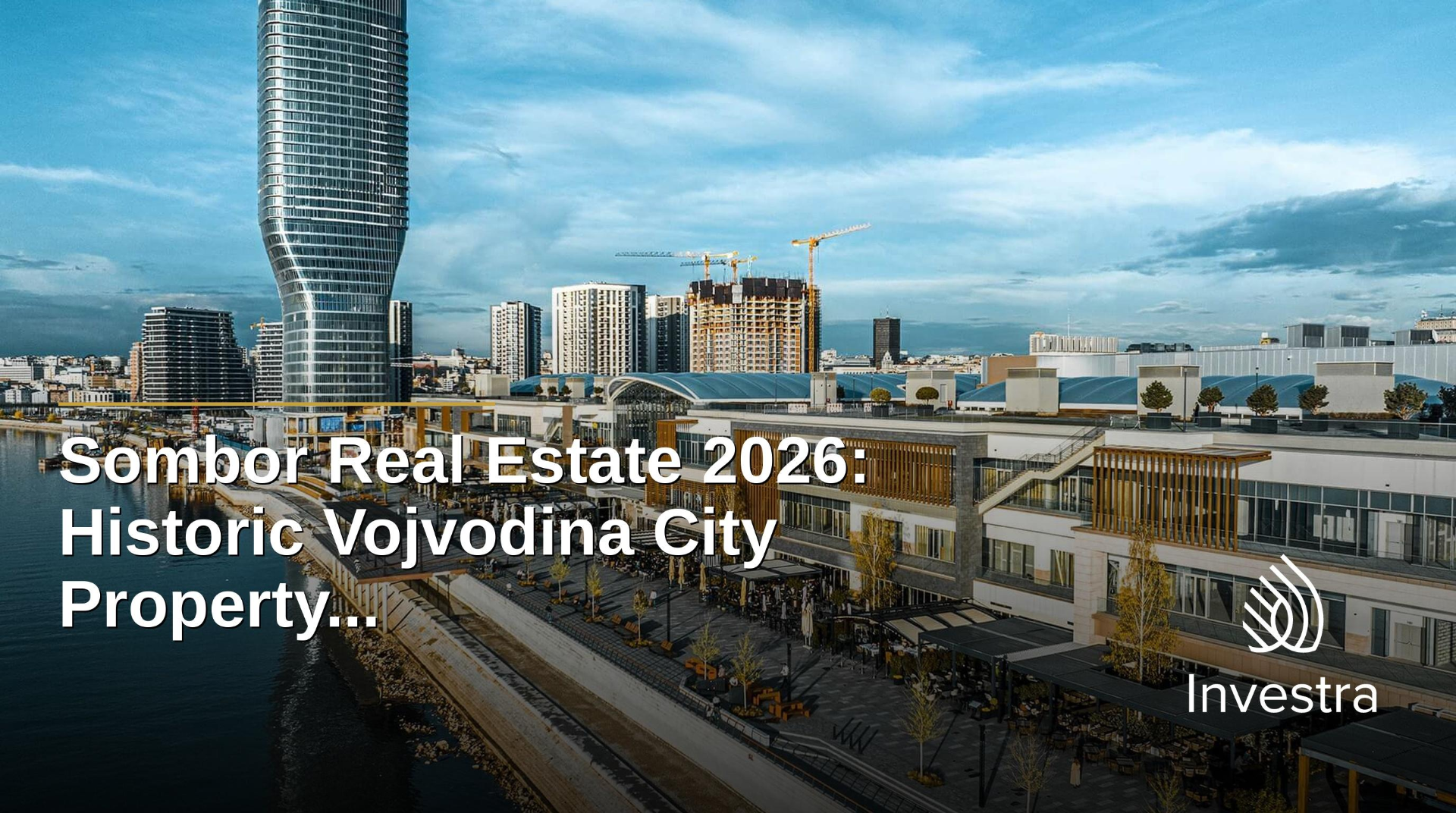
Sombor Real Estate 2026: Historic Vojvodina City Property...
Sombor Real Estate 2026: Historic Vojvodina City Property Investment Guide
Sombor real estate in 2026 stands out as one of Serbia’s more accessible secondary-city opportunities, with average apartment prices hovering around €1,050–€1,250 per square meter and gross rental yields typically between 6.2% and 7.8%. Foreign buyers are finding that this preserved Vojvodina city offers lower entry costs than Belgrade while still benefiting from steady demand from local professionals, cross-border commuters, and a growing tourism sector. Investors who move now are positioning themselves ahead of expected infrastructure upgrades and modest price appreciation projected through the end of the decade.
Introduction
```htmlWalk through the center of Sombor on a weekday morning and the city still feels like a slower, more deliberate version of Serbia. Tree-lined streets, Habsburg-era buildings, and quiet squares dominate the old town, while newer residential pockets have appeared on the edges near the university and hospital. For property investors scanning secondary cities in 2026, this balance between heritage character and everyday functionality is exactly what makes Sombor worth a closer look.
The broader Vojvodina region has seen gradual population stabilization after years of outflow, helped by returning diaspora families and a small but noticeable influx of remote workers priced out of Belgrade and Novi Sad. Sombor, sitting roughly 180 kilometers northwest of the capital and close to the Hungarian border, has captured part of that shift. Local agents report that inquiries from foreign buyers rose noticeably in 2025, particularly from Austria, Germany, and Hungary, as word spread about relatively low prices and straightforward purchase rules for EU and non-EU citizens alike.
That interest arrives at an interesting moment. Serbia’s ongoing EU accession talks continue to support infrastructure spending, and Sombor is slated for several road and rail improvements that should shorten travel times to Belgrade and the border. At the same time, the city’s protected historic core limits large-scale new construction, which keeps supply constrained and supports existing property values. Investors comparing this market with the faster-moving Belgrade Real Estate Market 2026 often note that Sombor trades higher yields for slower capital growth, a classic secondary-city trade-off.
Market Overview
Current transaction data compiled from local registries and agency reports show that average sale prices in Sombor proper reached €1,120 per square meter by late 2025, up roughly 4.8% year-on-year. That figure masks a clear split between the protected historic center, where well-maintained apartments trade between €1,350 and €1,650 per square meter, and the outer residential zones where prices still sit closer to €850–€1,050. Family houses with gardens on the city’s northern edge have moved even more modestly, averaging €950 per square meter for a typical 120-square-meter property.
Rental demand remains anchored by three groups: medical staff and university employees who prefer central locations, agricultural professionals tied to the surrounding plains, and a modest but growing number of short-term visitors during the summer festival season. Long-term gross yields on a standard two-bedroom apartment currently average 6.8%, comfortably above the national secondary-city average. Investors who buy, renovate, and list on platforms popular with regional travelers have reported net yields approaching 7.5% after modest management costs.
Compared with the Serbia Property Investment Guide 2026, which highlights Belgrade’s double-digit price growth in prime districts, Sombor’s trajectory looks steadier rather than explosive. The absence of large speculative developments and the city’s distance from major employment clusters keeps volatility low. That stability appeals to buyers who want exposure to Serbian real estate without the sharper swings seen in the capital.
Key Investment Factors
Heritage Protection and Supply Constraints
Strict zoning rules inside the historic core mean that new apartment blocks are essentially prohibited. Owners of protected buildings can renovate, but they must follow detailed guidelines on materials and façade work. This regulatory environment caps new supply and helps maintain values for existing stock. Buyers who understand the permitting process, or who work with local architects familiar with the rules, can acquire undervalued properties that appreciate once renovations are complete.
Connectivity and Daily Life
The E-75 highway upgrade between Sombor and Novi Sad, due for completion in 2027, is expected to cut driving time to roughly 45 minutes. That improvement matters for professionals who already commute or who want weekend access to larger-city amenities. Rail links to Subotica and the Hungarian border are also being modernized, supporting cross-border worker traffic. Daily life remains comfortable: the city has a solid hospital, a growing university campus, and regular cultural events that keep the center lively without the congestion of bigger cities.
Foreign Buyer Procedures
Non-residents can purchase apartments and houses under the same rules that apply elsewhere in Serbia. The Serbia Buying Process 2026 remains straightforward once the buyer obtains a tax number and opens a local bank account. Most transactions close within eight to twelve weeks when paperwork is in order. Investors should also review the Serbia Property Taxes 2026 guide for details on transfer taxes, annual property tax rates, and any withholding obligations on rental income.
Demographic and Economic Anchors
Sombor’s economy rests on agriculture, light manufacturing, and public-sector employment. These sectors provide steady rental demand rather than rapid income growth. The city’s population has held near 85,000 after earlier declines, supported by modest inflows of younger families priced out of Novi Sad. That stability translates into low vacancy rates for well-located apartments, particularly those within walking distance of schools and the main hospital.
Price Analysis Table
| Neighborhood / Area | Average Price (€/m²) | Typical Rental Yield (% gross) | Notes |
|---|---|---|---|
| Historic Center (Stari Grad) | 1,450 | 6.2 | Protected buildings, higher renovation costs |
| Venac / University Zone | 1,180 | 7.1 | Strong student and staff demand |
| Northern Residential (Gat) | 980 | 7.4 | Family houses with gardens |
| Industrial Edge (Kruševac) | 850 | 7.8 | Lower prices, longer commutes |
| Suburban Villages (within 10 km) | 720 | 6.5 | Land plots larger, infrastructure varies |
Prices reflect average asking and achieved figures from Q4 2025 transactions. Rental yields assume 85–90% occupancy and standard management fees. Investors should verify current listings on Investra.io before making offers.
Why Invest in 2026
Timing matters in secondary-city markets. Sombor enters 2026 with several tailwinds already visible: the highway project moving toward completion, a stable local economy, and continued interest from regional buyers who view the city as an affordable alternative to Novi Sad. Early movers can still secure properties before wider awareness pushes prices higher, particularly in the protected center where inventory is limited.
Another factor is the relatively low correlation with Belgrade’s cycle. When the capital experiences sharp corrections, secondary cities like Sombor tend to adjust more modestly. That decoupling provides a measure of portfolio diversification for investors who already hold assets in the larger Serbian cities. At the same time, the city’s cultural calendar and proximity to natural areas around the Danube and the Hungarian border continue to support seasonal tourism, adding a secondary income stream for owners willing to manage short-term rentals.
Finally, the overall cost of entry remains attractive. A well-located two-bedroom apartment can still be acquired for under €90,000, leaving room in most portfolios for renovation or furnishing costs. Those who buy through established platforms such as Investra.io gain access to local legal support and verified listings that reduce the typical friction of cross-border purchases. As with any investment, property in Serbia carries risks. Only invest capital you can afford to lose.
Practical Buying Guide
Buying property in Sombor requires patience and attention to local procedures. Foreign buyers follow the same process as Serbian citizens, but working with a local notary and verifying land registry entries remains essential. The steps below outline a typical purchase timeline from initial search to final registration.
Step 1: Initial Research and Property Selection
Begin by identifying neighborhoods that match your goals. The historic center offers older buildings with character and steady rental demand from students and professionals, while newer outskirts provide modern apartments with easier parking. Review recent sales data through municipal records and local agents to understand realistic pricing. Many buyers spend two to three weeks viewing properties in person before shortlisting three or four options.
Step 2: Due Diligence and Legal Checks
Once a property is selected, commission a full title search at the Real Estate Cadastre in Sombor. Confirm that the seller holds clear ownership and that no liens or unresolved disputes exist. A licensed notary will review the sales contract for compliance with Serbian law. Buyers should also request proof of paid utility bills and property tax for the previous five years to avoid inheriting debts.
Step 3: Contract Signing and Payment
The preliminary contract is usually signed first, with a 10 percent deposit held in escrow. The final contract follows within 30 to 60 days once financing is confirmed. Payment is made via bank transfer to the seller’s account; cash transactions above certain thresholds require additional reporting. The notary oversees the process and ensures both parties fulfill obligations before funds are released.
Step 4: Registration and Handover
After signing, the notary submits documents to the cadastre for ownership transfer. This step typically takes four to eight weeks. Once registered, the buyer receives the title deed and can take possession. Utility accounts are transferred in the buyer’s name at the local service providers.
Costs & Fees Breakdown
| Item | Percentage / Amount | Notes |
|---|---|---|
| Purchase price | 100% | Base apartment or house price |
| Notary fees | 0.5–1% | Contract drafting and authentication |
| Transfer tax | 0.5–3% | Varies by property age and value |
| Agent commission | 2–3% | Usually split between buyer and seller |
| Cadastre registration | €50–€150 | Fixed administrative fee |
| Legal due diligence | €300–€600 | Optional but recommended |
| Total additional costs | 3–7% | Typical range for foreign buyers |
Risks & Challenges
Sombor’s market moves slowly compared with Belgrade or Novi Sad, so liquidity can be limited if you need to sell quickly. Older properties sometimes hide structural issues such as outdated wiring or roof leaks that only appear after purchase. Currency fluctuations between the euro and Serbian dinar affect both purchase price and rental income for foreign owners. Local regulations on short-term rentals remain unclear and may tighten in coming years. Finally, language barriers and differing administrative habits can extend timelines if you do not have reliable local representation.
Expert Tips
- Visit during winter months to assess heating costs and insulation quality before committing.
- Request energy performance certificates even when not legally required; they reveal future running expenses.
- Negotiate payment in euros rather than dinars to avoid exchange-rate surprises at closing.
- Budget for at least six months of vacancy when calculating yields, especially for larger apartments.
- Partner with a local property manager from day one if you plan to rent remotely.
- Check flood risk maps; parts of Vojvodina experienced issues during heavy spring rains in recent years.
- Keep copies of every document in both Serbian and your native language for future reference.
Find Your Serbia Property on Investra.io
Investra.io brings together verified listings from Sombor and other Serbian cities in one searchable platform. Users can filter by price per square meter, rental yield estimates, and proximity to schools or transport, saving hours of manual research. The site also provides downloadable contract templates and connects buyers with licensed notaries and property managers who speak English.
Foreign investors appreciate the transparent fee structure and the ability to track entire portfolios in one dashboard. Regular market updates keep users informed about price movements and new regulations without requiring daily monitoring. Whether you are buying your first apartment or expanding an existing portfolio, the platform streamlines the process from search to closing.
Recommended Reading
- Serbia Legal Guide for Foreigners
- Serbia Rental Market 2026
- Serbia Property Price Forecast
- Novi Sad Real Estate 2026
- Sinisa Dagary Real Estate Blog
- Findes.si Property Portal
Follow Us
Stay updated on Serbian real estate trends through our social channels:
Odkrijte globalne investicijske priložnosti na Unifyr.space — vaš portal za pametne investicije.
Frequently Asked Questions
Q: Can foreigners buy property in Sombor without restrictions?
A: Yes, EU and non-EU citizens enjoy the same rights as Serbian nationals when purchasing residential real estate.
Q: What is the typical rental yield in Sombor?
A: Gross yields currently range between 6.5 and 8 percent depending on property size and location.
Q: How long does the purchase process take?
A: From offer acceptance to title registration, expect six to twelve weeks if financing is already arranged.
Q: Are there any taxes on rental income?
A: Rental income is taxed at a flat 15 percent after allowable deductions; annual tax returns must be filed.
Q: Do I need a local bank account?
A: Opening a Serbian account simplifies utility payments and rent collection, though it is not strictly mandatory.
Q: What happens if the property has unpaid utility bills?
A: Outstanding debts remain attached to the property; the buyer should verify all payments during due diligence.
Q: Is short-term rental via Airbnb allowed?
A: Current rules permit it, but local zoning changes could introduce new permitting requirements in 2027.
Q: How stable are property prices in Sombor?
A: Prices have risen modestly by 3–5 percent annually over the past three years with limited volatility.
Q: Can I finance the purchase with a Serbian mortgage?
A: Some banks offer mortgages to foreign residents with permanent residency or steady local income; non-residents usually pay cash.
Q: What documents do I need as a foreign buyer?
A: A valid passport, proof of address, and a tax identification number issued by Serbian authorities are required.
Related Posts
No related posts available.
