
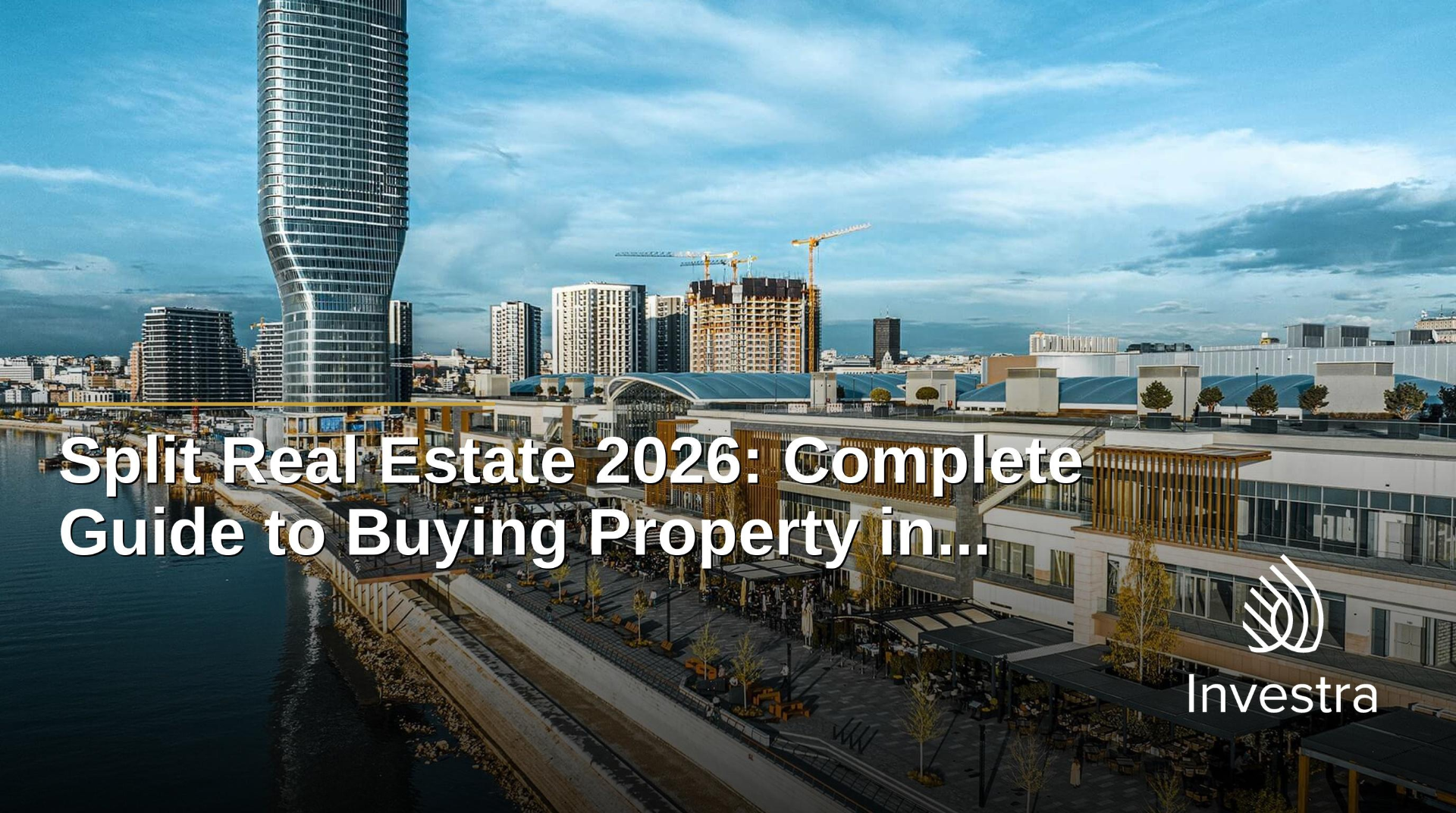
Split Real Estate 2026: Complete Guide to Buying Property in...
Meta Title: Split Real Estate 2026: Complete Guide to Buying Property in Croatia
Meta Description: Discover Split property prices, best neighborhoods, legal process & investment tips for 2026. Your complete guide to buying real estate in Croatia's Dalmatian capital.
Meta Keywords: Split real estate, buy property Split Croatia, Split apartments for sale, Split property prices 2026, buying property Split foreigners, Split neighborhoods investment, Croatia Dalmatia real estate, Split property guide, invest Split Croatia, Split housing market 2026, Dalmatia property buying, Split property investment, buy apartment Split, Split property market analysis, Croatia coastal real estate
Slug: split-real-estate-buying-guide-2026
Author: Investra Editorial Team
Category: Croatia - Real Estate & Investment
Cover Image: split-real-estate-buying-guide-2026-cover.jpg
Split Real Estate 2026: Complete Guide to Buying Property in Croatia's Dalmatian Capital
⚠️ Investment Disclaimer: Real estate investments involve risk. Past performance does not guarantee future results. Always conduct thorough due diligence and consult qualified financial and legal advisors before making investment decisions. Do not invest money you cannot afford to lose.
Quick Answer: Split is Croatia's second-largest city and the heart of the Dalmatian coast, offering property prices of €4,000–€8,000 per square meter in prime areas. The city combines UNESCO World Heritage status (Diocletian's Palace), year-round Mediterranean lifestyle, and one of Europe's fastest-growing tourism markets. For investors, Split offers short-term rental yields of 6–10% in central areas, though strong capital appreciation has compressed long-term rental yields to 3.5–5.0%. The city is best suited for investors combining lifestyle value with income-generating short-term rental strategies.
Split stands apart from every other Croatian city — and indeed from most European cities — by virtue of its extraordinary heritage. The city's historic core is built within and around the walls of the Roman Emperor Diocletian's 4th-century palace, a UNESCO World Heritage Site that draws millions of visitors annually and creates a property market unlike any other in the region. In 2026, Split's real estate market reflects this unique status: prices have risen dramatically over the past decade, driven by international recognition, tourism growth, and strong demand from both domestic and foreign buyers seeking a piece of Mediterranean paradise.
This comprehensive guide covers everything you need to know about buying property in Split in 2026 — from the historic Diocletian's Palace district to the emerging neighborhoods of Spinut and Trstenik, the legal process for foreign buyers, financing options, and the investment strategies that are generating the strongest returns in Croatia's most glamorous property market.
Why Split Is Croatia's Most Exciting Property Market in 2026
Quick Answer: Split's property market is driven by three converging forces: UNESCO heritage tourism (5+ million visitors annually), growing international recognition as a luxury lifestyle destination, and Croatia's EU membership providing legal certainty for foreign buyers. Property prices have appreciated 80–120% since 2018, with the strongest growth in the historic center and premium coastal neighborhoods.
Split's rise to international prominence has been remarkable. A decade ago, the city was known primarily to Adriatic sailors and Croatian domestic tourists. Today, it appears regularly on "best places to live in Europe" lists, attracts significant investment from American, British, German, and Scandinavian buyers, and has developed a sophisticated luxury property market that rivals Dubrovnik in prestige while offering significantly more inventory and better value.
The city's transformation has been driven by several converging factors. Croatia's EU accession in 2013 opened the market to European buyers. The Game of Thrones filming in Dubrovnik (and Split's own role as a filming location) dramatically raised the region's international profile. Low-cost airline connections from across Europe made Split accessible to a new generation of property buyers. And the COVID-19 pandemic accelerated the trend of remote workers seeking Mediterranean lifestyle at a fraction of Western European prices.
In 2026, Split's property market is mature but not exhausted. Prices in the historic center have reached levels that compress yields for long-term rental investors, but the city's expanding boundaries offer emerging neighborhoods where entry prices remain attractive. And for short-term rental investors, Split's extraordinary tourism appeal continues to generate returns that justify premium purchase prices.
For investors exploring Split's property opportunities, Investra.io provides comprehensive market data, vetted property listings, and professional support throughout the buying process.
Split Property Prices by Neighborhood: 2026 Benchmarks
Quick Answer: Split's most expensive properties are in the Diocletian's Palace historic center (€7,000–€12,000/m²) and Meje/Bačvice coastal neighborhoods (€5,500–€8,000/m²). Emerging investment neighborhoods like Spinut, Trstenik, and Solin offer entry points of €3,000–€4,500/m² with better yield potential.
Historic Center: Diocletian's Palace (€7,000–€12,000/m²)
The ultimate Split address — apartments within the walls of Diocletian's Palace command prices that reflect their extraordinary rarity and UNESCO heritage status. These properties, typically converted from ancient Roman structures, offer an unparalleled living experience and exceptional short-term rental potential. However, the combination of very high purchase prices, strict heritage protection regulations, and complex renovation requirements makes these properties suitable only for experienced investors with significant capital and a long-term perspective.
Short-term rental yields in the Palace area can reach 8–12% gross, driven by premium daily rates (€150–€300 for well-positioned apartments) and high occupancy during the extended Dalmatian tourist season (May–October). However, the very high purchase prices mean that even these exceptional yields translate to modest returns on capital.
Premium Coastal Neighborhoods (€5,500–€8,000/m²)
Meje, Bačvice, and Firule represent Split's premium residential neighborhoods — areas where wealthy Croatians and international buyers have traditionally chosen to live. These neighborhoods combine proximity to the city center with direct beach access, excellent restaurants and cafés, and a sophisticated residential atmosphere. Properties here are typically modern apartments or renovated villas in well-maintained buildings.
Mid-Market Investment Districts (€3,500–€5,500/m²)
Spinut, Trstenik, and Ravne Njive represent Split's most compelling investment opportunity in 2026. These neighborhoods offer modern apartments at prices significantly below the historic center and premium coastal areas, with good transport connections to the city center and improving local amenities. Rental yields of 5.0–6.5% are achievable, combining long-term residential demand with growing short-term rental potential.
Emerging Value Areas (€2,500–€3,500/m²)
Solin (a separate municipality adjacent to Split), Kaštel Stari, and the outer areas of Solin offer the lowest entry prices in the greater Split area. These locations are best suited for long-term investors who believe in the continued expansion of Split's urban area and are willing to accept lower current yields in exchange for greater capital appreciation potential.
| Neighborhood | Price/m² | Short-Term Yield | Long-Term Yield | Best For |
|---|---|---|---|---|
| Diocletian's Palace | €7,000–€12,000 | 8–12% | 3.0–3.5% | Premium short-term rental |
| Meje/Bačvice | €5,500–€8,000 | 6–9% | 3.5–4.0% | Luxury lifestyle + rental |
| Firule | €5,000–€7,000 | 5–8% | 3.5–4.5% | Balanced investment |
| Spinut | €3,500–€5,000 | 5–7% | 4.5–5.5% | Yield-focused investors |
| Trstenik | €3,500–€5,000 | 5–7% | 4.5–5.5% | Yield-focused investors |
| Ravne Njive | €3,000–€4,500 | 4–6% | 5.0–6.0% | Value investment |
| Solin | €2,500–€3,500 | 3–5% | 5.5–6.5% | Long-term appreciation |
The Legal Process for Buying Property in Split
Quick Answer: The legal process for buying property in Split is identical to Zagreb — EU citizens purchase under the same conditions as Croatian citizens. The process takes 6–12 weeks and involves preliminary contract, due diligence, notarized purchase agreement, and land registry registration. Total transaction costs are approximately 5–7% of the purchase price.
Croatia's property purchase process is standardized across the country, so the legal steps for buying in Split are identical to those in Zagreb. However, Split's property market has some specific characteristics that buyers should be aware of.
Heritage Protection Regulations: Properties within the historic center (Diocletian's Palace) are subject to strict heritage protection regulations administered by the Croatian Ministry of Culture. Any renovation or modification requires approval from heritage authorities, and certain types of changes are prohibited entirely. Buyers of historic center properties should engage specialists in Croatian heritage law to understand the full scope of restrictions before purchase.
Coastal Zone Regulations: Properties within 100 meters of the coastline are subject to Croatia's Maritime Domain and Seaports Act, which restricts certain types of development and use. Buyers of coastal properties should verify that the property's use complies with these regulations.
Short-Term Rental Licensing: Croatia has implemented a licensing system for short-term rentals (Airbnb-style). Properties used for short-term rental must be registered with the local tourism board and obtain appropriate licenses. The licensing process is straightforward for most properties, but buyers planning short-term rental strategies should verify compliance before purchase.
Notarization and Registration: As in Zagreb, all property purchases must be notarized and registered with the land registry. Split's notaries and land registry office are experienced with international buyers and the process is well-established.
Total Transaction Costs: Buyers should budget for approximately 5–7% of the purchase price in transaction costs, including 3% property transfer tax, notary fees (0.5–1.0%), attorney fees (€500–€1,500), and real estate agent commission (2–3%).
Split Rental Market: Tourism-Driven Investment Strategies
Quick Answer: Split's rental market is dominated by short-term tourism demand from May to October, with occupancy rates of 80–95% during peak season (July–August). Annual short-term rental revenues of €20,000–€50,000 are achievable for well-positioned properties. Long-term rentals offer lower yields (3.5–5.0%) but more stable income year-round.
Split's rental market is fundamentally different from Zagreb's. While Zagreb's market is driven by year-round residential demand, Split's is dominated by seasonal tourism — and this seasonality is both the market's greatest strength and its primary risk factor.
Short-Term Rental: The Dominant Strategy
For most Split investors, short-term rental is the primary income strategy. The city's extraordinary tourism appeal — UNESCO heritage, crystal-clear Adriatic waters, excellent restaurants, and superb connectivity — drives demand from May through October that far exceeds long-term rental income potential.
A well-positioned two-bedroom apartment near the Diocletian's Palace can generate:
- Peak season (July–August): €200–€350/night, 95% occupancy
- Shoulder season (May–June, September–October): €100–€180/night, 75% occupancy
- Low season (November–April): €50–€80/night, 30–40% occupancy
- Annual revenue: €25,000–€45,000
This compares to a long-term rental income of €800–€1,200/month (€9,600–€14,400 annually) for the same property — a significant premium for active short-term management.
Long-Term Rental: The Stable Alternative
Despite the appeal of short-term rentals, long-term residential rentals have a role in Split's market. The city has a significant permanent population of approximately 170,000, including university students, healthcare workers, and professionals who require year-round housing. Long-term rental yields of 3.5–5.0% are achievable in mid-market neighborhoods, offering more predictable income without the management intensity of short-term rentals.
Hybrid Strategy: Seasonal Optimization
Many experienced Split investors use a hybrid approach — short-term rentals during the peak tourist season (May–October) and long-term rentals during the winter months (November–April). This strategy maximizes income during the high-yield tourist season while ensuring some income during the off-season and reducing the management burden.
Split vs. Other Dalmatian Cities: Investment Comparison
Quick Answer: Split offers the best combination of scale, infrastructure, and investment opportunity among Dalmatian cities. Dubrovnik offers higher prices and yields but very limited inventory. Zadar offers better value with growing tourism. Šibenik is the emerging alternative with the strongest appreciation potential.
| City | Price/m² | Short-Term Yield | Tourism Appeal | Inventory | Best For |
|---|---|---|---|---|---|
| Split | €4,000–€8,000 | 6–10% | ⭐⭐⭐⭐⭐ | Large | Balanced investment |
| Dubrovnik | €6,000–€12,000 | 7–12% | ⭐⭐⭐⭐⭐ | Very limited | Premium, limited supply |
| Hvar | €5,000–€10,000 | 7–11% | ⭐⭐⭐⭐ | Limited | Luxury lifestyle |
| Zadar | €3,000–€4,500 | 5–8% | ⭐⭐⭐⭐ | Medium | Value + growth |
| Šibenik | €2,500–€4,000 | 5–8% | ⭐⭐⭐ | Medium | Emerging, appreciation |
| Brač | €3,500–€6,000 | 6–9% | ⭐⭐⭐⭐ | Limited | Island lifestyle |
Practical Guide: Steps to Buy Property in Split
Quick Answer: The buying process in Split follows the same legal framework as Zagreb. Key Split-specific considerations include heritage protection checks for historic center properties, short-term rental licensing verification, and coastal zone compliance for beachfront properties.
Step 1: Define Your Strategy
Split offers two fundamentally different investment strategies: short-term rental (higher yield, active management, seasonal income) and long-term residential rental (lower yield, passive management, year-round income). Your strategy will determine which neighborhoods and property types are appropriate.
Step 2: Engage Local Expertise
Split's property market is competitive and fast-moving. Engaging a reputable local real estate agent with experience in the investment market is essential. For historic center properties, also engage a specialist in Croatian heritage law.
Step 3: Obtain Croatian OIB
As with any Croatian property purchase, you will need a Croatian personal identification number (OIB), obtainable at any Croatian tax administration office.
Step 4: Conduct Due Diligence
In addition to standard due diligence (land registry, building permits, ownership), Split buyers should verify: heritage protection status (for historic center properties), short-term rental licensing eligibility, coastal zone compliance, and any existing tenancy agreements.
Step 5: Complete the Purchase
Sign the preliminary contract, pay the deposit, complete due diligence, sign the final notarized purchase agreement, and register the transfer with the land registry.
Step 6: Prepare for Rental
Furnish and equip the property to the standard expected by your target tenant profile. For short-term rentals, register with the local tourism board and obtain the required license. Consider engaging a professional property management company.
FAQ: Buying Property in Split, Croatia
Q: Can foreigners buy property in Split?
A: Yes. EU citizens can purchase property in Split under the same conditions as Croatian citizens. Non-EU citizens can purchase through a Croatian company or directly if their country has a bilateral agreement with Croatia.
Q: What is the average price per square meter in Split?
A: Split property prices range from approximately €2,500/m² in outer areas to €12,000/m² within Diocletian's Palace. The average for residential properties in established neighborhoods is €4,500–€6,000/m².
Q: Is Split good for short-term rental investment?
A: Yes — Split is one of Europe's best short-term rental markets. Well-positioned properties near the historic center can generate €25,000–€45,000 annually. However, this requires active management or a professional management company.
Q: What are the best neighborhoods for investment in Split?
A: For short-term rental, the historic center (Diocletian's Palace) and Meje/Bačvice offer the highest yields. For long-term rental with better value, Spinut and Trstenik are recommended. For budget-conscious investors, Solin offers the lowest entry prices.
Q: What are the total costs of buying property in Split?
A: Budget approximately 5–7% of the purchase price for transaction costs: 3% property transfer tax, 0.5–1.0% notary fees, attorney fees (€500–€1,500), and real estate agent commission (2–3%).
Q: What is the rental season in Split?
A: Split's peak tourist season runs from June to September, with July and August seeing the highest occupancy and rates. The shoulder season (May, October) is growing in importance. Winter occupancy is lower but improving as Split develops year-round appeal.
Q: How does Split compare to Zagreb for investment?
A: Split offers higher short-term rental yields and stronger capital appreciation potential, but lower long-term rental yields and more seasonal income. Zagreb offers more stable, year-round income and better value for yield-focused investors.
Q: Are there restrictions on short-term rentals in Split?
A: Short-term rental properties must be registered with the local tourism board and obtain appropriate licenses. The process is straightforward for most properties. Some areas within the historic center have additional restrictions.
Q: What is the outlook for Split property prices?
A: Split property prices are forecast to appreciate 5–8% annually through 2030, driven by growing international recognition, limited supply in premium areas, and Croatia's OECD accession.
Q: What is the minimum investment for Split property?
A: Entry-level investment properties in Split's outer areas start from approximately €150,000. For properties with significant short-term rental potential, budgets of €250,000–€400,000 are more realistic for well-positioned apartments.
Split Lifestyle: Why Buyers Choose Dalmatia's Capital
Quick Answer: Split offers a unique combination of UNESCO heritage, Mediterranean climate (300+ sunny days per year), world-class gastronomy, and excellent connectivity (Split Airport serves 50+ destinations). The city's permanent population of 170,000 provides year-round urban amenities, while the tourism infrastructure ensures exceptional quality of life for residents and visitors alike.
Beyond the investment numbers, Split offers a quality of life that is genuinely exceptional by any European standard. The city's Mediterranean climate — with over 300 sunny days per year, warm summers, and mild winters — creates an outdoor lifestyle that is difficult to replicate in Northern or Central Europe. The Adriatic Sea is clean, warm, and accessible from virtually every neighborhood. The city's restaurants, cafés, and nightlife are sophisticated and diverse, reflecting Split's growing status as a European cultural destination.
Connectivity and Accessibility
Split Airport (SPU) is one of Croatia's busiest airports, with direct connections to over 50 European destinations. Major airlines including Ryanair, easyJet, Eurowings, and Wizz Air operate regular low-cost services from London, Amsterdam, Frankfurt, Vienna, Stockholm, and dozens of other European cities. This connectivity is a key factor in Split's appeal to both lifestyle buyers and short-term rental investors — easy access drives tourism demand and makes the property accessible for personal use.
The city is also well-connected by ferry to the Dalmatian islands (Brač, Hvar, Vis, Šolta) and to Ancona in Italy, opening up the broader Adriatic region for residents and visitors.
Education and Healthcare
Split is home to the University of Split (Sveučilište u Splitu), with approximately 20,000 students across multiple faculties. The university creates year-round demand for student accommodation and contributes to the city's vibrant cultural life. The city's healthcare infrastructure includes the Clinical Hospital Centre Split (KBC Split), one of Croatia's leading medical facilities.
Property Management Services
For investors who will not be resident in Split, professional property management services are well-developed and competitively priced. Management companies typically charge 15–20% of short-term rental revenue (higher than Zagreb's 8–12% due to the more intensive management required for tourist properties) and handle everything from guest check-in to cleaning, maintenance, and regulatory compliance.
Key considerations when selecting a Split property management company:
- Experience with short-term rental platforms (Airbnb, Booking.com, Vrbo)
- Local knowledge of heritage protection regulations (for historic center properties)
- 24/7 guest support capability
- Transparent fee structures and monthly reporting
- References from existing clients
For investors seeking vetted property management recommendations in Split, Investra.io maintains a network of trusted local partners across Croatia's major property markets.
Split Real Estate 2026: Market Outlook
Quick Answer: Split's property market is forecast to appreciate 5–8% annually through 2030, driven by growing international recognition, limited supply in premium areas, and Croatia's OECD accession. The short-term rental market is expected to remain strong, with tourism numbers projected to grow 4–6% annually. Key risk factors include European economic slowdown and potential regulatory changes to short-term rentals.
Price Forecast 2026–2030
Split's property market has delivered exceptional returns over the past decade, and the fundamentals for continued appreciation remain strong. Key drivers of the 2026–2030 outlook:
- Tourism growth: Croatia's tourism authority projects 4–6% annual growth in visitor numbers through 2030, with Split's share expected to increase as the city develops year-round appeal
- Limited supply: Heritage protection regulations and coastal zone restrictions severely limit new construction in Split's most desirable areas, creating persistent supply constraints
- International recognition: Split's growing profile in international travel and lifestyle media is attracting a new generation of buyers who would previously not have considered Croatian coastal property
- Infrastructure investment: Planned improvements to Split Airport, the coastal highway, and urban transport infrastructure will improve connectivity and quality of life
| Scenario | 2030 Forecast Price/m² (Central) | Annual Growth |
|---|---|---|
| Bull case | €10,000–€12,000 | 7–9% |
| Base case | €8,500–€10,000 | 5–7% |
| Bear case | €7,000–€8,000 | 2–4% |
Regulatory Environment
Croatia's regulatory environment for property investment is generally stable and investor-friendly. The main regulatory risk for Split investors is potential changes to short-term rental regulations — following the pattern of other popular European tourist destinations (Barcelona, Amsterdam, Lisbon) where authorities have introduced restrictions on short-term rentals in response to housing affordability concerns.
Currently, Split's short-term rental regulations require registration with the local tourism board and payment of tourist tax, but do not impose significant restrictions on the number of rental days or properties. Investors should monitor regulatory developments and factor potential restrictions into their investment models.
Explore More Croatia Real Estate Guides
Expand your knowledge of Croatia's diverse property markets with these resources from Investra.io:
- Zagreb Real Estate 2026: Complete Buying Guide
- Zagreb Property Investment 2026: ROI & Yields
- Buying Property in Croatia as a Foreigner
For expert real estate investment insights, visit Siniša Dagary — Real Estate Investment Expert. For comprehensive real estate services across the region, explore Finds Group.
Follow Investra on Social Media
- Facebook: facebook.com/investra.io
- LinkedIn: linkedin.com/company/investra-international
- YouTube: youtube.com/@InvestraEnterprises
Odkrijte globalne investicijske priložnosti na Unifyr.space — vaš portal za pametne investicije.
References
- Croatian Bureau of Statistics — House Price Indices
- Global Property Guide — Croatia Rental Yields
- Investropa — Best Areas for Real Estate in Croatia 2026
- Nekretnine.hr — Split Property Market Data
- UNESCO World Heritage — Diocletian's Palace
© 2026 Investra.io — All rights reserved. This article is for informational purposes only and does not constitute financial or legal advice.
```json ```Related Posts
No related posts available.
