
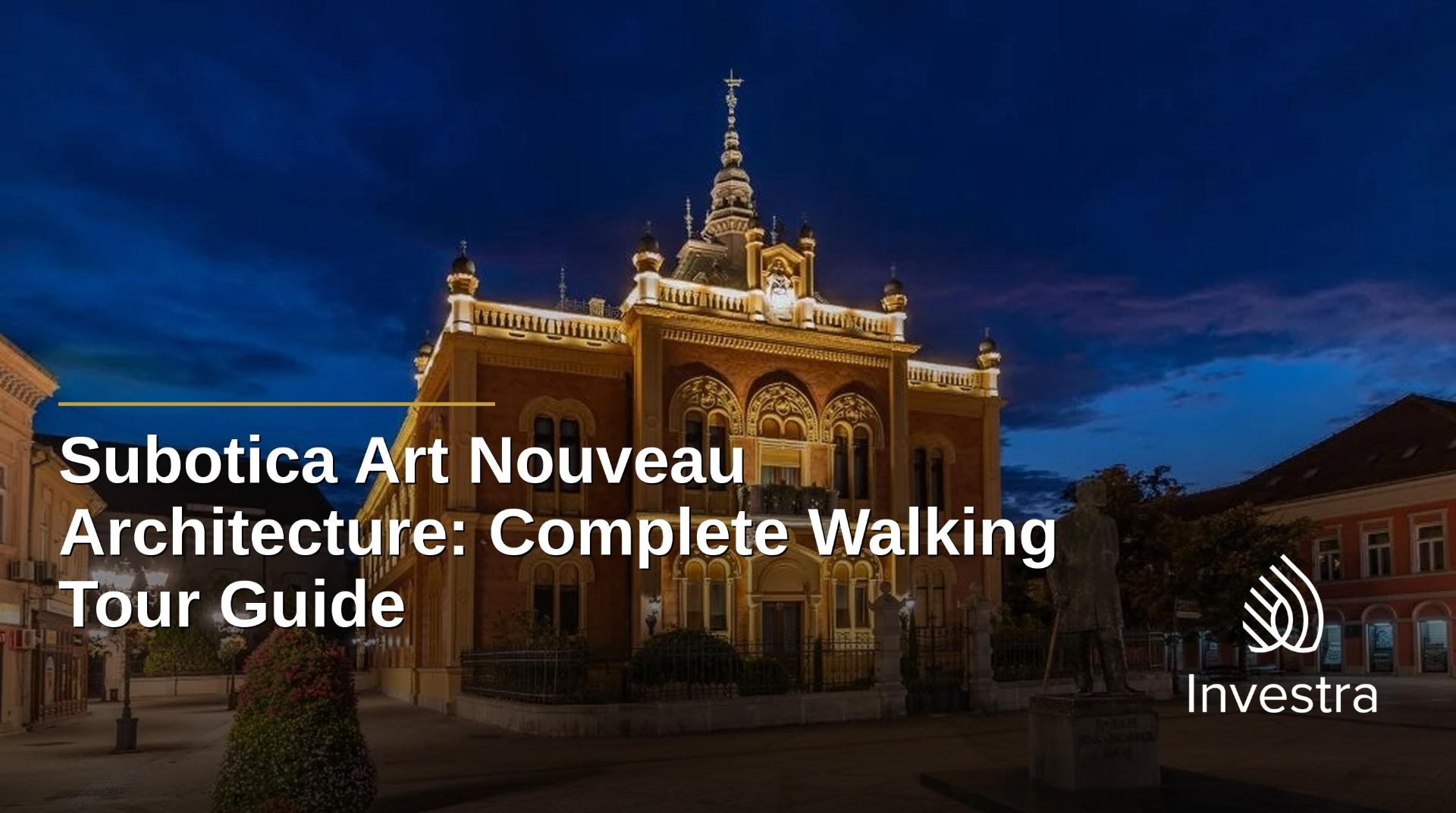
Subotica Art Nouveau Architecture: Complete Walking Tour Guide
Quick Answer: Subotica’s Art Nouveau walking tour covers the 1910 City Hall, 1902 Synagogue, 1904 Ferenc Raichle Palace and other gems in a relaxed 2-hour route. Restored facades, turquoise-gold details and historic streets make it ideal for architecture lovers exploring Serbia’s northernmost city.
Subotica Art Nouveau Architecture: Complete Walking Tour Guide
Subotica stands as one of Europe’s most enchanting yet under-the-radar Art Nouveau destinations. Located just 10 kilometres from the Hungarian border, this vibrant Serbian city boasts the highest concentration of Secession-style buildings outside Budapest. Its pastel-coloured facades, intricate floral motifs and sweeping curves tell a story of prosperity during the Austro-Hungarian era. Walking through the pedestrianised centre feels like stepping into a living museum where every corner reveals another ornate balcony or stained-glass window. The local climate of fertile plains and cross-border trade fuelled rapid growth in the late 19th century, allowing architects like Marcell Komor and Dezső Jakab to create masterpieces that still dominate the skyline today. Visitors who linger beyond the main squares discover quiet residential streets lined with private palaces and early cinemas, each preserving original craftsmanship. This architectural heritage not only delights tourists but also signals strong long-term value for those exploring Serbia real estate. Historic districts attract both cultural travellers and investors seeking properties with protected status and rising appeal. Whether you are planning a weekend escape or scouting investment opportunities, Subotica’s Art Nouveau legacy offers an unforgettable blend of beauty, history and future potential.
The Rich History of Art Nouveau in Subotica
Art Nouveau arrived in Subotica at the turn of the twentieth century during a period of economic expansion driven by agriculture and rail links. The style, known locally as Secession, replaced rigid historicism with organic forms inspired by nature. Local architects trained in Budapest brought fresh ideas that quickly found fertile ground among wealthy merchants and civic leaders. Between 1900 and 1914 more than 200 buildings were erected or renovated in the new aesthetic, ranging from public institutions to modest family homes. The movement peaked with the construction of the City Hall in 1910, which remains the largest and most flamboyant example. Turquoise ceramic tiles, gold accents and folk-motif Zsolnay ceramics created an instantly recognisable landmark visible from kilometres away. The style also reflected Subotica’s multicultural fabric, incorporating Hungarian, Jewish and Serbian decorative elements. After the First World War and subsequent border changes, many buildings fell into disrepair. A dedicated restoration programme launched in the 1990s and accelerated with EU pre-accession funds has returned dozens of facades to their original glory. Today the preserved ensemble serves as both tourist magnet and proof of successful heritage-led regeneration. Investors recognise that such protected districts command premium rents and attract long-term tenants who value character over generic new builds. Walking these streets reveals layers of social history: a synagogue built for the prosperous Jewish community, a theatre funded by industrialists, and private palaces commissioned by the city’s first generation of self-made entrepreneurs. This living archive continues to shape Subotica’s identity while opening doors for those considering invest in Serbia through culturally significant properties.
City Hall: The Turquoise Crown of Subotica
The City Hall towers over the main square as the undisputed centrepiece of any walking tour. Designed by Marcell Komor and Dezső Jakab and completed in 1910, the building combines civic grandeur with playful Secession ornament. Its 76-metre clock tower dominates the skyline, while the ground floor features a sweeping arcade supported by columns wrapped in ceramic vines. Inside, visitors can admire the council chamber decorated with original frescoes and Zsolnay tiles depicting local folklore. Public access is free on weekdays between 8 am and 4 pm; guided interior tours run at 11 am and 3 pm for €4. The surrounding square hosts seasonal markets and evening concerts, making it the perfect starting point for photographs. Locals recommend arriving at sunrise when the golden light catches the ceramic details. From here the route heads northeast along Korzo Street, passing smaller apartment blocks whose balconies still retain original ironwork. Preservation efforts have kept the building in excellent condition, demonstrating how heritage assets can generate tourism revenue while increasing surrounding property values. Several boutique offices now occupy restored wings, showing the commercial viability of historic real estate. For travellers interested in deeper context, the nearby tourist information centre offers free maps marked with all major Art Nouveau sites. The City Hall’s prominence makes it an ideal landmark for orientation and a powerful symbol of Subotica’s commitment to protecting its architectural soul.
Subotica Synagogue: A Restored Masterpiece
Just five minutes from City Hall stands the 1902 Synagogue, once the largest in the former Yugoslavia. Architects Komor and Jakab again delivered a soaring composition of domes, turrets and intricate brick patterns. The interior features a magnificent stained-glass dome and carved wooden ark that survived wartime damage. A full restoration completed in 2018 returned the building to its original splendour using traditional techniques and modern conservation science. Today it functions as both a place of worship and a cultural centre hosting concerts and exhibitions. Opening hours are Tuesday to Sunday, 9 am to 5 pm; entry costs €5 with guided tours available in English and Serbian. Photography is permitted in the main hall but flash is prohibited. The synagogue’s location within the pedestrian zone makes it easy to combine with neighbouring landmarks. Its restoration has become a model project cited by urban planners across the Balkans. The surrounding Jewish quarter contains several smaller Art Nouveau residences that once belonged to community leaders, many now available for sensitive conversion. This blend of cultural significance and investment potential attracts visitors who later explore real estate platform listings for similar heritage properties. The synagogue remains one of the most photographed buildings in Serbia and a must-see stop on every architectural itinerary.
Ferenc Raichle Palace and Rajhl Palace
Two private palaces illustrate how Subotica’s wealthy citizens embraced the new style for residential use. The Ferenc Raichle Palace, completed in 1904, served as the architect’s own home and studio. Its wildly ornate façade features sculpted female figures, swirling iron balconies and a dramatic corner tower. Although still privately owned, the ground floor occasionally opens for special exhibitions. Visitors can admire the exterior from the quiet street at any time; best light occurs in late afternoon. A short walk away stands the Rajhl Palace, built for a local industrialist family. Its more restrained design incorporates floral ceramic panels and a grand entrance portal. Both buildings demonstrate the range of Art Nouveau expression from exuberant to elegant. Preservation regulations protect their original features, ensuring they retain character that modern developments cannot replicate. Several nearby apartments have been converted into holiday rentals that command higher nightly rates precisely because of their historic surroundings. Travellers who appreciate this level of detail often extend their stay to explore quieter residential streets where similar treasures await discovery. The palaces also serve as tangible proof that Subotica’s built heritage can deliver both cultural prestige and solid returns for those seeking business consultant Siniša Dagary guidance on regional investments.
Subotica Theater, Franciscan Church and Lifka Cinema
Continuing the route, the neoclassical Subotica Theater (1854, later remodelled) sits beside the National Theatre square. Although its façade is earlier, the 1910 interior redesign introduced Art Nouveau plasterwork and lighting fixtures still visible today. Evening performances provide an authentic way to experience the space. Adjacent stands the Franciscan Church with its distinctive twin towers and colourful ceramic decoration added during an early twentieth-century renovation. The church remains open daily for quiet reflection. Further along, the 1913 Lifka Cinema represents one of the earliest purpose-built movie theatres in the region. Its elegant corner entrance and decorative friezes have been carefully maintained. Tickets cost €3–5 depending on the film, and the café inside offers excellent local pastries. These three buildings show how Art Nouveau integrated into everyday civic and religious life rather than remaining reserved for elite residences. Their continued use ensures they stay relevant to residents while delighting visitors. The compact cluster allows easy pacing; most travellers complete this segment within forty minutes. The area also contains several cafés housed in restored ground-floor premises, perfect for resting while absorbing the architectural details. Such mixed-use heritage buildings frequently appear on real estate platform searches as investors recognise their stable income potential from tourism and local patronage alike.
Photography Tips, Best Spots and Walking Route Map
Light and composition matter greatly when photographing Subotica’s colourful buildings. Golden hour just after sunrise or before sunset produces the richest tones on ceramic tiles. The City Hall square offers wide-angle views, while narrower streets around the synagogue provide intimate details of ironwork and reliefs. A recommended 2-hour loop starts at City Hall, proceeds to the synagogue, continues to Ferenc Raichle Palace, then returns via the theater and Lifka Cinema. Carry a lightweight tripod for low-light shots inside the synagogue dome. Drone photography is restricted in the centre; permission must be obtained from city authorities. Many visitors share images on social media, inadvertently boosting Subotica’s profile and indirectly supporting property values in the historic core. Local photographers recommend the rooftop terrace of the recently opened Art Café for elevated perspectives overlooking multiple landmarks. Seasonal changes also affect mood: spring blossoms frame pastel façades beautifully, while winter snow highlights architectural lines. Those planning extended visits can join organised photo walks led by members of the Subotica Photographic Society for €25 including refreshments. The compact scale of the centre means even casual walkers capture professional-quality images without specialised equipment.
Guided Tours, Costs and Insider Experiences
While independent exploration works well, guided tours add layers of historical context and access to private spaces. Standard 90-minute walking tours cost €10–15 per person and depart daily at 10 am from the tourist information centre. English-speaking guides are readily available; advance booking is advised during summer. Private tours for couples or small groups start at €60 and can include interior access to the Raichle Palace. Several operators also offer combined experiences pairing the walking tour with a traditional lunch featuring local paprika dishes. Evening tours during the summer months incorporate illuminated buildings and cost €18. These experiences consistently receive five-star reviews for knowledgeable guides and pacing. Participants often mention discovering lesser-known courtyards and hidden courtyards that independent travellers miss. The revenue from tours supports ongoing conservation, creating a virtuous cycle that benefits both residents and visitors. For those combining travel with investment research, guides can point out buildings currently on the market or recently renovated, providing real-time market insights.
Practical Information
Subotica lies 175 km north of Belgrade and is easily reached by direct train (2 hours 15 minutes, €8–12) or bus (€9). The central station sits within a 10-minute walk of the Art Nouveau core. Local buses and taxis (€3–5) serve the centre; most sites are pedestrian-friendly. Best visiting months are April–June and September–October when temperatures range 18–25 °C. July and August bring crowds and occasional heatwaves. Entry fees remain modest: City Hall tower €3, Synagogue €5, guided tours €10–15. Currency is Serbian dinar (RSD); cards are widely accepted. Several 4-star hotels occupy restored buildings near the square with double rooms from €70. Public toilets and free Wi-Fi are available at the main square information centre. Spring and autumn festivals often feature open-door events at otherwise private palaces. Always check current opening times as some venues adjust schedules seasonally.
📚
Q1: How long does a typical walking tour of Subotica's Art Nouveau architecture take?
A comprehensive self-guided walking tour of Subotica's main Art Nouveau sites takes approximately 2-3 hours at a leisurely pace, covering around 3-4 kilometers through the city center. If you join a guided tour with a local expert, expect 2.5-3.5 hours with detailed historical commentary and photo stops.
Q2: What is the best time of year to visit Subotica for photographing Art Nouveau buildings?
Late spring (May) and early autumn (September) offer the best conditions with mild weather, longer daylight hours, and fewer crowds for photography. Winter months provide dramatic lighting but require warm clothing, while summer can be extremely hot (30°C+) and crowded with tourists.
Q3: How much does a professional guided Art Nouveau tour cost in Subotica?
Professional guided tours typically cost between €15-25 per person for a 2-3 hour tour, with group discounts available for parties of 5 or more. Private tours for small groups range from €60-100 total depending on the tour operator and included services.
Q4: Which specific Art Nouveau buildings in Subotica are must-see during a walking tour?
The top five essential stops are the Raichle Palace (Palata Raichle), City Hall (Gradska Kuća), the Reichstag building, the Gerersdorfer Palace, and the Jovanović Palace, all located within a 15-minute walk of each other in the city center. These represent the finest examples of local Art Nouveau style from the early 1900s.
Q5: Are there entrance fees to visit the interior of Subotica's Art Nouveau buildings?
Most Art Nouveau buildings can be viewed from the exterior for free, though some like City Hall charge €3-5 for interior tours during specific hours. The Raichle Palace occasionally opens for cultural events; check with the local tourism office for current opening schedules and admission prices.
Q6: What is the closest airport to Subotica, and how do I get to the city center?
The nearest major airport is Belgrade Nikola Tesla Airport (130 kilometers away), with connections to Subotica taking 1.5-2 hours by car or bus for €10-15. Alternatively, Temerin Airport (50 kilometers) offers regional flights, or you can take a direct bus from Budapest airport (170 kilometers) in about 3 hours.
Q7: Can I rent an apartment in Subotica's Art Nouveau district as an expat?
Yes, short-term and long-term apartment rentals in central Subotica range from €400-800 per month for furnished apartments, with restored Art Nouveau units commanding premium prices of €600-1,200 monthly. The historic district is highly walkable with excellent access to cafes, restaurants, and cultural venues.
Q8: Is it worth buying a property in Subotica's historic Art Nouveau district as an investment?
Historic Art Nouveau properties in central Subotica typically cost €2,000-4,000 per square meter, offering strong appreciation potential as renovation standards improve, though restoration costs can range from €1,500-3,000 per square meter. The tourism boom and cultural investment make it an attractive market for long-term real estate investors seeking European properties at reasonable entry prices.
Q9: What language should I speak during a walking tour in Subotica, and are English guides available?
English-speaking guides are available through the Subotica Tourism Office and private tour operators, though availability may require 24-48 hours advance booking. Many locals in the city center speak English, German, or Hungarian, making self-guided exploration feasible with a smartphone translation app.
Q10: Are there accessible walking routes through Subotica's Art Nouveau architecture for people with mobility issues?
The main Art Nouveau district has mixed accessibility—some central streets have been modernized with flat surfaces and ramps, but many buildings feature steep stairs and uneven sidewalks typical of early-1900s construction. Consider joining a guided tour that can navigate the most accessible routes or hiring a private driver to view buildings from street level with minimal walking.
Recommended ContentFrequently Asked Questions
How long does the complete Art Nouveau walking tour take?
The core route covering City Hall, Synagogue, Ferenc Raichle Palace, Theater, Franciscan Church, Rajhl Palace and Lifka Cinema comfortably fits into two hours at a relaxed pace. Adding time for photography, interior visits and coffee breaks extends the experience to three or four hours. Visitors who join a guided tour should allow an extra thirty minutes for introductions and questions. The compact historic centre means no long transfers are needed, making it ideal for half-day itineraries or as part of a longer Serbia real estate research trip. Early morning starts avoid both heat and tour groups, while evening walks benefit from dramatic lighting on the ceramic façades. Families with children or mobility considerations can shorten the loop by focusing on the main square and synagogue area alone.
Are guided tours worth booking in advance?
Yes, especially during peak season from May to September when English-language tours can sell out. Advance booking guarantees a spot and often includes small discounts when purchased online. Private tours allow customisation such as extended time inside the synagogue or visits to lesser-known residential streets. Guides frequently share stories about original owners and restoration challenges that enrich the experience beyond what signs or apps provide. The modest €10–15 fee also contributes directly to heritage maintenance. Travellers combining cultural exploration with investment scouting find that guides can highlight properties with development potential, offering practical insights alongside architectural commentary.
What is the best time of year to photograph the buildings?
Golden hour light in spring and autumn produces the most vibrant colours on the ceramic tiles and gold detailing. April and October offer fewer crowds and comfortable temperatures around 20 °C. Winter visits can yield striking contrast against snow but require warm clothing and earlier indoor stops. Summer evenings provide long daylight for extended shooting, though midday sun can wash out pastel tones. Local photographers suggest checking weather forecasts for clear skies and planning shoots around the synagogue dome when light angles are optimal. These conditions also make for pleasant walking weather when exploring potential property in Serbia in the surrounding districts.
Can visitors enter the interiors of most Art Nouveau buildings?
Public buildings like the City Hall and Synagogue welcome visitors during published hours, while many private palaces allow only exterior viewing. The Ferenc Raichle Palace occasionally opens ground-floor spaces for exhibitions. The Lifka Cinema and Theater offer interior access through ticketed performances or special tours. Restoration work sometimes restricts access, so checking current schedules via the tourist office is recommended. Where interiors remain closed, the richly decorated façades still deliver outstanding visual impact. Several restored buildings now house cafés or small museums, providing rare opportunities to experience original decorative details up close.
How does heritage tourism support real estate investment in Subotica?
Successful preservation increases the desirability and market value of surrounding properties. Tourists drawn by Art Nouveau architecture fill hotels, restaurants and shops, creating steady demand for commercial and residential space. Protected status brings tax incentives and grants for sensitive renovations, lowering entry costs for investors. Many buyers seek exactly the character features preserved in these districts. Working with experienced advisors such as business consultant Siniša Dagary helps navigate regulations and identify buildings with strong income potential. The result is a virtuous cycle where tourism success and real estate appreciation reinforce each other.
Subotica’s Art Nouveau treasures offer far more than beautiful photographs; they represent a living heritage that continues to shape the city’s future. Whether you visit for a single day of architectural discovery or to explore long-term opportunities, the experience leaves a lasting impression. Begin planning your journey today and discover why so many return to this remarkable Serbian city. Learn more about investment possibilities at Serbia real estate and connect with local experts who understand both the cultural and commercial value of these historic streets.
Nearby Destinations in Serbia
Invest in Subotica Real Estate
Looking to invest in Subotica? Explore verified properties and investment opportunities on Investra.io — Subotica Real Estate.
Odkrijte globalne investicijske priložnosti na Unifyr.space — vaš portal za pametne investicije.
Related Posts
No related posts available.
