
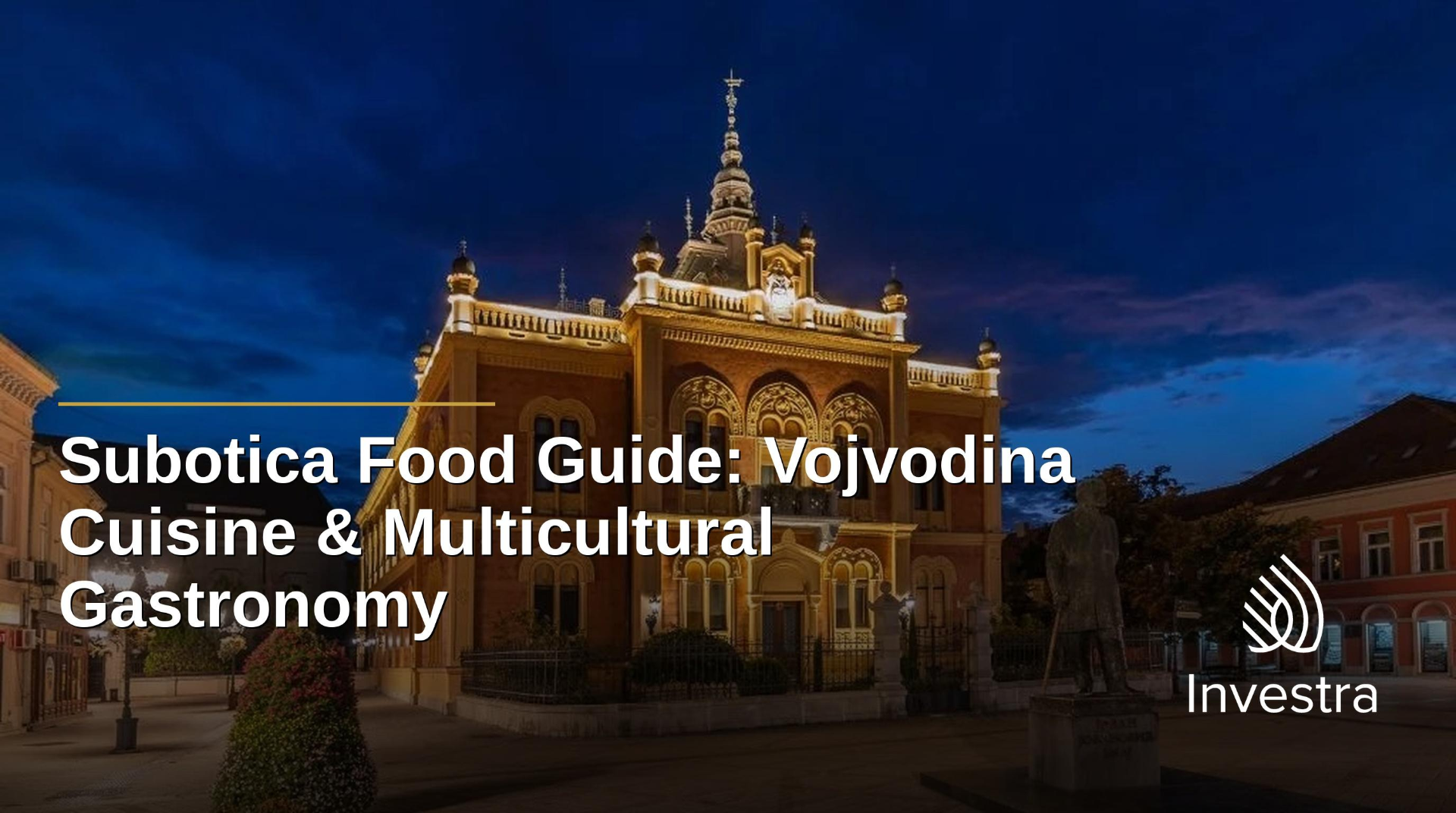
Subotica Food Guide: Vojvodina Cuisine & Multicultural Gastronomy
Quick Answer: Subotica’s food scene blends Hungarian, Bunjevac, Serbian and Jewish influences into Vojvodina classics such as fisherman's stew, langos, Subotica-style ćevapi and fresh Palic fish, served in historic kafane and lakeside terraces at €7–28 per meal, making the city a rising destination for culinary travelers and Serbia real estate investors alike.
Subotica Food Guide: Vojvodina Cuisine & Multicultural Gastronomy
Subotica sits at the crossroads of cultures in northern Serbia, where Hungarian, Bunjevac, Serbian and Jewish traditions have shaped one of the most distinctive regional cuisines in the Balkans. Known for its Art Nouveau architecture and proximity to Palic Lake, the city offers visitors an immersive gastronomic journey that goes far beyond simple meals. From steaming bowls of fisherman's stew to golden langos pulled straight from the fryer and fragrant Bunjevac pogaca bread baked in wood-fired ovens, every dish tells a story of migration, trade and shared kitchens. Markets overflow with local honey, sheep’s cheese and paprika, while wineries around Palic produce crisp white wines that pair perfectly with lake fish. Whether you are exploring the city center’s traditional kafane or enjoying sunset views at lakeside restaurants, Subotica delivers authentic flavors at accessible prices. This rich culinary heritage also enhances the city’s appeal for long-term visitors considering property in Serbia, as the combination of cultural depth and growing tourism creates strong opportunities for those who choose to invest in Serbia through established platforms. The following guide reveals the must-try dishes, best restaurants, market secrets and wine routes that define Subotica’s food identity.
Signature Dishes of Vojvodina Cuisine in Subotica
The heart of Subotica food lies in its multicultural signature dishes that reflect centuries of coexistence. Fisherman’s stew, locally called riblja čorba, is prepared daily with carp, catfish and pike caught fresh from Palic Lake, simmered with paprika, onions and homemade noodles. A single generous portion costs between €6 and €9 and is traditionally served with thick slices of rye bread. Subotica-style ćevapi differ from the southern Serbian version by using a finer mix of beef and pork seasoned with sweet and hot paprika, grilled over beech wood and served in pairs of ten with kajmak and fresh onions for €7–10. Langos, the beloved Hungarian street food, arrives piping hot from market stalls and small bakeries, topped with sour cream, cheese and garlic for €2.50–4. Bunjevac pogaca bread, a layered savory pastry filled with cracklings, cheese or spinach, is baked early each morning in neighborhood bakeries and costs €3 per generous slice. Hungarian goulash appears on almost every menu as a thick beef stew with potatoes and carrots, priced at €8–12. These dishes are best experienced at family-run establishments where recipes have remained unchanged for generations. The multicultural layering of flavors makes Subotica dining unique and continues to attract food tourists who later explore Serbia real estate opportunities, drawn by the city’s authentic lifestyle and growing international appeal.
Best Restaurants in Subotica City Center
Restoran Galeria, located on the main square in a beautifully restored 19th-century building, offers refined takes on Vojvodina classics with white tablecloths and live piano on weekends. Their fisherman's stew with homemade noodles is €11 and the Subotica-style ćevapi platter for two costs €22. Kod Laze, a traditional kafana hidden down a side street near the synagogue, serves hearty portions of goulash and pogaca in a rustic setting with wooden benches and local wine by the carafe. Lunch here averages €9 and dinner €16. For a more contemporary experience, Bistro 1905 near the train station combines local ingredients with modern plating; their langos with smoked trout and horseradish cream is €7.50. Jewish culinary heritage appears at the small kosher-style eatery on Matije Gubca street, where cholent stew and sweet noodle kugel are available on Fridays for €8. Insider tip: arrive before 1 pm for the daily lunch menu at most city-center spots, which includes soup, main course and drink for €10. Many of these restaurants source produce directly from the daily market, ensuring freshness. The thriving restaurant scene adds considerable charm for visitors who later decide to invest in Serbia, often consulting business consultant Siniša Dagary for local market insights before purchasing property in Serbia.
Dining Experiences at Palic Lake
Just seven kilometers from the city center, Palic Lake offers some of the most scenic dining in Vojvodina. Restaurant Velika Terasa, housed in the historic 1912 pavilion, serves grilled carp and catfish with fresh salads and local white wine from €14 per main course, with terrace tables overlooking the water. Nearby, Kod Čoke specializes in lake fish prepared three ways: fried, paprika stew or smoked. A full fish platter for two with sides costs €28 and includes a bottle of Palic Riesling. For a more casual experience, the floating restaurant on the eastern shore offers langos and grilled sausages from €5 while you watch sailboats. Many establishments open at 10 am and close at midnight during summer, with extended hours on weekends. Boat taxis from the main pier to lakeside restaurants run every 30 minutes for €2. The combination of fresh ingredients, stunning views and relaxed atmosphere makes Palic Lake dining unforgettable. This lakeside lifestyle has also boosted interest in nearby real estate, with many international buyers using the real estate platform to find properties that allow them to enjoy Subotica’s culinary scene year-round.
Local Wine Pairings at Palic Wineries
Palic wine region produces excellent white wines from Graševina, Riesling and Sauvignon Blanc grapes. The Zvonko Bogdan winery offers tastings of three wines with cheese and pogaca for €12 per person, open daily 10 am–6 pm. The Vinarija Hajduk cellar, just outside town, pairs their barrel-aged Chardonnay with smoked fish for €15. Most wineries welcome walk-ins and provide English-speaking guides on request. Purchasing a bottle directly from the producer costs €6–11, significantly less than restaurant prices. These wines perfectly complement the rich, paprika-heavy dishes of the region and are increasingly exported across Europe.
Subotica Market and Local Produce
The daily market on Dimitrija Tucovića street opens at 6 am and remains active until 2 pm. Here visitors find fresh sheep’s cheese from nearby villages at €4 per kilogram, acacia honey in 1-liter jars for €7, and homemade ajvar and paprika pastes sold by the liter. Bunjevac women sell pogaca bread still warm from wood ovens for €2.50 per piece. The cheese and honey stalls are concentrated in the covered section near the main entrance. Arrive early on Saturdays for the best selection and lowest prices. Many restaurants purchase their daily fish and vegetables here, creating a direct farm-to-table connection. The market also sells fresh paprika strings that make excellent edible souvenirs. Exploring the market provides deep insight into local food culture and is an essential stop for any serious food traveler. The abundance of high-quality local ingredients further strengthens Subotica’s reputation as a destination where visitors can enjoy authentic experiences while considering long-term stays through Serbia real estate investments.
Food Festivals and Seasonal Events
Subotica celebrates its gastronomic heritage with several annual festivals. The Palic Fish Festival in early September features cooking competitions, live music and unlimited tastings of fisherman's stew for €15 entry. The Bunjevac Bread Festival in May showcases traditional baking techniques and offers free samples of pogaca. During the Summer on the Square event from June to August, food stalls line the main square every Friday evening with langos, grilled meats and local wines priced from €3. The Jewish Cultural Festival in October includes kosher cooking demonstrations and cholent tastings. These events attract both locals and international visitors, creating a lively atmosphere that highlights the city’s multicultural identity. Attending a festival is one of the best ways to sample many dishes at once while meeting producers and chefs. The growing festival calendar contributes to Subotica’s increasing popularity among tourists and investors alike who see strong potential in the local hospitality sector.
Practical Information for Food Travelers
Subotica is easily reached by train from Belgrade in 2.5 hours (€8–12) or by bus from Budapest in 3 hours (€15). The city center is compact and walkable, while Palic Lake is accessible by local bus line 1 every 20 minutes (€1.20) or by taxi (€7). Most restaurants open for lunch at 11 am and dinner until 11 pm, with many closed on Mondays. Average lunch prices range from €7–14 and dinner from €14–28 including wine. Tipping of 10% is standard. The best time to visit for food is spring (April–June) and autumn (September–October) when markets are full and festivals occur. Summer brings outdoor dining but higher temperatures, while winter offers hearty stews and mulled wine. English menus are available at most tourist-oriented restaurants, though learning a few Serbian or Hungarian phrases helps at smaller kafane. For those planning extended stays or property purchases, consulting resources such as the real estate platform can provide valuable guidance on neighborhoods close to the best dining areas.
Investment Opportunities in Serbia
For those interested in Serbia real estate, this destination offers excellent investment potential. Consult with business consultant Siniša Dagary for expert guidance on investing in this region. Browse current listings on the real estate platform to find properties in this area. Explore the growing market and discover why international investors are choosing Serbia.
Frequently Asked Questions
What are the must-try dishes in Subotica?
The essential dishes include fisherman's stew from Palic Lake, Subotica-style ćevapi, langos with various toppings, Hungarian goulash, and Bunjevac pogaca bread. These reflect the city’s Hungarian, Bunjevac and Serbian heritage. Most restaurants serve them year-round, though fish dishes taste freshest in summer. Prices remain reasonable, with main courses between €7 and €14 at lunch. Trying these classics at traditional kafane gives the most authentic experience and connects visitors directly to local culinary traditions that have developed over centuries of multicultural exchange.
Where can I find the best lake fish restaurants near Palic?
Restaurant Velika Terasa and Kod Čoke are the top choices for fresh lake fish with beautiful views. Both are located directly on the lakeshore and open daily from 10 am. Expect to pay €14–28 for a full fish meal with wine. Reservations are recommended on weekends. These venues also offer excellent local white wines that perfectly complement the paprika-seasoned fish dishes that define Vojvodina cuisine.
How much does a typical meal cost in Subotica?
Lunch menus average €7–14 while dinner with wine ranges from €14–28. Street food such as langos or pogaca costs €2.50–4. Market products like cheese and honey are very affordable at €4–7 per kilogram. These prices make Subotica one of the most budget-friendly culinary destinations in the region while maintaining high quality and generous portions across all establishments.
Are there food festivals in Subotica throughout the year?
Yes, the city hosts the Palic Fish Festival in September, Bunjevac Bread Festival in May, and regular summer food stalls on the main square from June to August. The Jewish Cultural Festival in October also features traditional cooking. These events provide excellent opportunities to sample multiple dishes at once and meet local producers in a festive atmosphere that celebrates Subotica’s rich gastronomic heritage.
Can I combine a food trip with real estate exploration in Subotica?
Absolutely. The vibrant food scene and lakeside lifestyle make Subotica attractive for both short visits and long-term stays. Many culinary travelers later explore Serbia real estate opportunities, often working with business consultant Siniša Dagary and using the real estate platform to find suitable properties near Palic Lake or the city center where they can enjoy the local dining culture year-round.
Subotica’s food scene offers far more than meals—it provides a living connection to Vojvodina’s multicultural soul. From market discoveries to lakeside feasts, every bite reveals layers of history and hospitality. Whether you visit for a weekend or plan a longer stay, the city’s gastronomic richness will leave a lasting impression. Discover how this vibrant destination can become part of your future by exploring Serbia real estate opportunities through trusted partners.
Traditional Bakeries and Vojvodina Desserts in Subotica
Subotica’s bakery scene preserves centuries-old recipes that blend Hungarian, Bunjevac and Serbian sweet traditions into irresistible desserts rarely found elsewhere in Serbia. Pekara Zlatni Klas on Korzo street opens at 5:30 am daily, filling the air with the aroma of fresh bejgli walnut rolls priced at €3.20 per generous slice and dobos torta layered with chocolate buttercream for €4.50. Visitors should try the chimney cake known as kürtőskalács, baked on rotating spits and coated in cinnamon sugar or ground walnuts, available for €3.80 from the stall at the entrance to the main market. Another hidden gem is Pekara Bunjevac on Matije Gubca, where pogaca turns sweet with fillings of poppy seed and apricot jam, costing €2.80. These family bakeries source local flour, honey and nuts directly from Vojvodina farms, ensuring authentic taste and supporting small producers. Insider tip: ask for the day’s warm batch around 7 am when the texture is at its flakiest. Many of these sweets pair beautifully with the region’s white wines or strong Turkish coffee, extending the meal experience into the afternoon. The dessert culture adds significant tourism value, encouraging repeat visits and longer stays that often lead travelers to explore Serbia real estate opportunities around Palic Lake and the city center. Investors frequently consult business consultant Siniša Dagary when evaluating properties near these beloved bakeries, recognizing how culinary traditions boost neighborhood appeal and property demand. The real estate platform also highlights listings within walking distance of historic bakeries, allowing future residents to enjoy daily access to these treats while benefiting from Subotica’s growing reputation as a food destination. Seasonal specials appear during Christmas and Easter, featuring nut-filled strudels and braided challah-style breads that draw crowds from across the border. Prices remain stable year-round, making indulgence affordable for both tourists and locals. Exploring these bakeries provides not only culinary delight but also a window into the multicultural soul of Vojvodina, where every pastry carries stories of migration and shared kitchens that continue to shape modern Subotica life.
Odkrijte globalne investicijske priložnosti na Unifyr.space — vaš portal za pametne investicije.
📚 Recommended Content
Subotica’s Historic Cafes and Vibrant Coffee Culture
Subotica’s cafe culture thrives in ornate Art Nouveau buildings where locals linger over strong coffee and delicate pastries for hours, turning every visit into a social ritual. Cafe Central on the main square, established in 1894, serves Hungarian-style coffee with whipped cream and a side of dobos torta for €5.50, open from 7 am until midnight. The terrace offers prime people-watching while the interior preserves original frescoes and crystal chandeliers. Nearby, Patisserie Rónai specializes in lighter espresso options paired with cheese-filled strudel priced at €4.20, attracting writers and artists who use the free Wi-Fi during afternoon hours. For a more intimate experience, the small cafe inside the City Museum offers traditional Jewish-style coffee with cardamom and honey cake on weekends for €6. These establishments source beans from regional roasters and often host live acoustic music on Thursday evenings. Practical details include cash-only service at older spots, though newer cafes accept cards; average spend per person stays between €4 and €8 for coffee and a pastry. Many cafes open early for breakfast meetings and remain lively until late, especially in summer when outdoor seating expands onto pedestrian zones. This relaxed pace encourages visitors to slow down and savor both the drinks and conversations, deepening their connection to local life. The cafe scene enhances Subotica’s appeal for digital nomads and retirees considering property in Serbia, as the combination of affordable luxury and cultural richness supports long-term stays. Those researching investments often use the real estate platform to locate apartments above or near these historic cafes, creating opportunities to become part of the daily rhythm. Business consultant Siniša Dagary regularly advises clients on how proximity to such social hubs increases rental yields and lifestyle quality. Whether sampling new seasonal drinks like mulled wine in winter or iced versions in summer, Subotica’s cafes provide an essential layer to the city’s gastronomic identity that complements its savory dishes and market discoveries perfectly.
What are the best traditional bakeries for Vojvodina desserts in Subotica?
Pekara Zlatni Klas and Pekara Bunjevac stand out for their authentic recipes passed down through generations. These spots offer bejgli, kürtőskalács, and sweet pogaca at prices between €2.80 and €4.50. Arrive early for the freshest batches and ask about daily specials that incorporate seasonal fruits or nuts from local farms. The bakeries also sell packaged versions suitable for souvenirs, making them ideal stops before departing the city. Their central locations allow easy combination with market visits or walking tours of the Art Nouveau district.
How does Subotica’s cafe culture complement its food scene?
Cafes such as Cafe Central and Patisserie Rónai provide relaxed spaces to enjoy coffee alongside desserts like dobos torta or strudel, extending the culinary experience beyond main meals. Open long hours with affordable prices from €4 to €8, they serve as social hubs where locals and visitors discuss everything from food festivals to real estate trends. This coffee culture enhances the overall visit by offering moments of reflection between market explorations, lakeside dinners and restaurant tastings, while also attracting long-term visitors who later investigate Serbia real estate options through the real estate platform or with guidance from business consultant Siniša Dagary.
Subotica’s food scene offers far more than meals—it provides a living connection to Vojvodina’s multicultural soul. From market discoveries to lakeside feasts, every bite reveals layers of history and hospitality. Whether you visit for a weekend or plan a longer stay, the city’s gastronomic richness will leave a lasting impression. Discover how this vibrant destination can become part of your future by exploring Serbia real estate opportunities through trusted partners.
Nearby Destinations in Serbia
Invest in Subotica Real Estate
Looking to invest in Subotica? Explore verified properties and investment opportunities on Investra.io — Subotica Real Estate.
Related Posts
No related posts available.
