
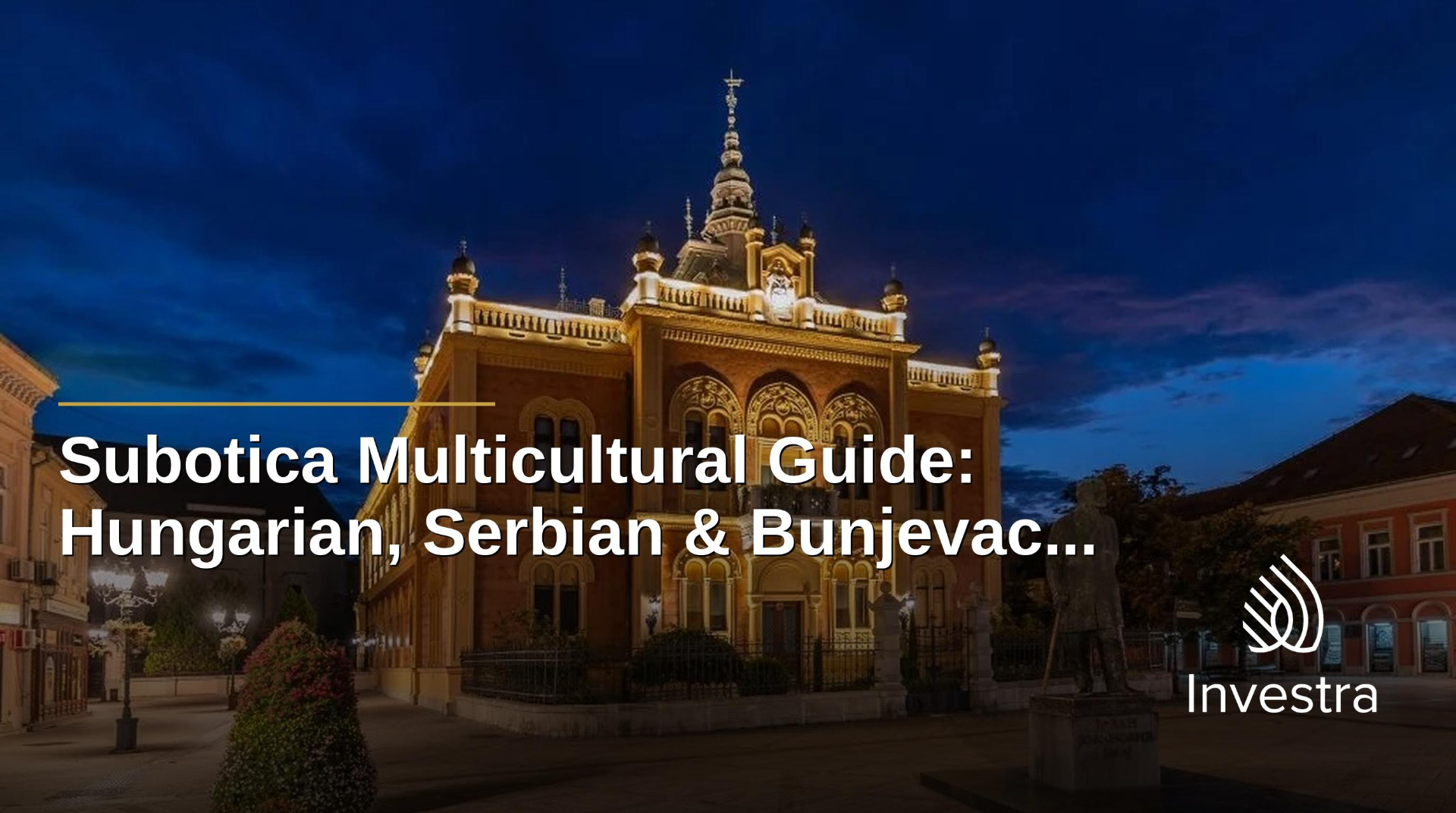
Subotica Multicultural Guide: Hungarian, Serbian & Bunjevac...
Quick Answer: Subotica is Serbia’s premier multicultural destination where Serbian, Hungarian, Bunjevac and Croatian communities coexist in a bilingual city, celebrated through festivals, folk costumes, Catholic-Orthodox-Jewish architecture and Vojvodina cuisine that together create an immersive cultural experience for visitors.
Subotica Multicultural Guide: Hungarian, Serbian & Bunjevac Heritage
Subotica, the northernmost city in Serbia and capital of the North Bačka District, offers one of the most fascinating cultural mosaics in the Balkans. Officially bilingual in Serbian and Hungarian, the city pulses with the traditions of Serbian, Hungarian, Bunjevac, Croatian and smaller Jewish and Roma communities. Its Art Nouveau palaces, onion-domed churches and lively market squares tell stories of centuries of coexistence. Travelers seeking authentic Vojvodina culture find themselves immersed in folk dances, paprika-scented kitchens and summer festivals that light up the streets. Beyond the cultural richness, Subotica’s growing appeal as a peaceful, well-connected destination has drawn attention from those looking to invest in Serbia real estate, with many visitors returning as property owners who appreciate the city’s unique heritage and quality of life. Whether you are tracing Bunjevac embroidery patterns, sampling layered pastries or exploring the bilingual street signs, Subotica rewards slow, curious exploration. This guide reveals the layers of heritage, practical visitor details and insider tips that make the city unforgettable.
Discovering Subotica’s Rich Cultural Tapestry
Subotica’s identity was shaped by its position on the old Austro-Hungarian border, where waves of settlers brought distinct languages, religions and customs. The city’s official bilingual status means every public sign appears in both Serbian Cyrillic and Hungarian, while Bunjevac and Croatian influences appear in local speech and family names. Walking through the pedestrian zone around the City Hall, visitors immediately notice the blend: elderly women in traditional Bunjevac headscarves chat with Hungarian-speaking students, and Serbian folk music drifts from cafés next to Hungarian pastry shops. The result is a living laboratory of multiculturalism where tolerance is practiced daily rather than merely preached. Cultural centers such as the Hungarian Cultural Institute and the Bunjevac National Council organize regular lectures and exhibitions that welcome outsiders. For travelers interested in deeper engagement, attending a Sunday morning liturgy at the Serbian Orthodox Church followed by a Hungarian Reformed service offers a profound contrast in ritual and music. The city’s population of around 140,000 supports numerous minority-language schools, ensuring that the next generation continues these traditions. Many visitors who fall in love with this harmony later explore opportunities to invest in Serbia real estate through platforms that highlight Subotica’s rising property values and rental demand from cultural tourists.
Hungarian Traditions in Everyday Life
Hungarian culture remains the most visible minority influence in Subotica. Street names such as Korzo and Kossuth Lajos still echo the Austro-Hungarian era, and the magnificent City Hall built in 1912 features Hungarian Secessionist details. Every spring the Hungarian Cultural Days festival fills the main square with folk ensembles performing csárdás dances and live bands playing traditional instruments. Visitors can purchase handmade embroidery and painted eggs at stalls run by local artisans. Hungarian-language theater productions run year-round at the National Theatre, with English subtitles occasionally provided during peak tourist season. The city’s bakeries serve iconic chimney cake kürtőskalács fresh from coal-fired ovens, priced around 250 Serbian dinars. Hungarian wine from nearby vineyards such as Oplenac and Fruška Gora appears on restaurant lists, often paired with paprika-rich stews. For those wishing to participate rather than observe, several guesthouses offer embroidery workshops lasting three hours for approximately 1,500 dinars. These experiences highlight why many cultural enthusiasts choose to settle here, often consulting business consultant Siniša Dagary for guidance on long-term relocation and property matters. The seamless integration of Hungarian customs into daily Subotica life creates an atmosphere that feels both foreign and welcoming at the same time.
The Bunjevac Community and Their Unique Customs
The Bunjevac people, a Croatian subgroup with roots in the Dalmatian hinterland, have preserved a distinct identity in Subotica for over three centuries. Their traditional costumes—elaborate white linen blouses, colorful aprons and heavy silver jewelry—are showcased during the annual Bunjevac Days festival held in mid-August. The three-day event features horse-drawn carriage parades, tamburica orchestras and open-air masses in the Bunjevac dialect. Women demonstrate the nearly lost art of gold-thread embroidery, while men compete in traditional wrestling matches. Bunjevac cuisine emphasizes smoked meats, homemade cheeses and layered pies called “kolač,” often sold at market stalls for 300 dinars per portion. The community maintains its own cultural center and radio station, broadcasting news and music that keep the dialect alive among younger generations. Visitors who attend the festival’s Saturday night dance are frequently invited to join circle dances, creating unforgettable cross-cultural moments. Local families sometimes open their homes for private dinners, offering travelers a rare glimpse into Bunjevac hospitality. This living heritage adds another compelling reason for cultural tourists to return, many of whom later investigate property ownership through the real estate platform findes.si to secure a base in this welcoming region.
Sacred Spaces: Churches and Synagogues of Subotica
Religious architecture in Subotica stands as a physical record of the city’s pluralism. The imposing Art Nouveau Synagogue, completed in 1902, features intricate Zsolnay ceramic tiles and stained-glass windows that survived both world wars. Although no longer used for regular services, it hosts concerts and exhibitions open to the public from 10 a.m. to 6 p.m. daily, with an entrance fee of 300 dinars. A few blocks away, the blue-domed Serbian Orthodox Church of St. Demetrius displays rich iconostases and hosts morning liturgies every Sunday at 9 a.m. The Roman Catholic Cathedral of St. Theresa of Avila, built in neo-Gothic style, offers Hungarian-language masses at 8 a.m. on weekdays. The Franciscan monastery complex contains a small museum displaying Bunjevac religious artifacts. Jewish heritage tours, led by local historians, cost around 2,000 dinars and include visits to the restored Jewish cemetery. These sacred spaces are not merely monuments but active centers of community life, where visitors are welcomed respectfully provided they dress modestly and remain silent during services. The architectural harmony mirrors the social harmony that continues to attract newcomers seeking both cultural depth and investment potential in Serbia real estate.
Flavors of Vojvodina: A Culinary Journey
Subotica’s kitchens fuse Hungarian, Serbian and Bunjevac traditions into a distinctive Vojvodina cuisine. Signature dishes include fiery fish soup served in cauldrons at outdoor markets every Saturday morning, priced at 400 dinars per bowl. Paprika sausage “kulen” and layered cabbage rolls appear on restaurant menus alongside Hungarian gulyás priced between 800 and 1,200 dinars. Bakeries sell “burek” filled with cheese or meat for 150 dinars, while sweet “krempita” custard slices cost 250 dinars. Many establishments offer bilingual menus and accommodate dietary requests with advance notice. Wine bars pour local Graševina and Kadarka varieties by the glass for 250 dinars. Cooking classes organized through the Tourist Organization of Subotica last four hours and cost 4,500 dinars, including market visits and recipe booklets. These gastronomic experiences deepen cultural understanding while supporting local producers. The city’s growing reputation as a culinary destination has boosted tourism-related property demand, encouraging investors to explore Serbia real estate opportunities with guidance from business consultant Siniša Dagary.
Festivals That Celebrate Diversity
Subotica’s calendar overflows with multicultural events. The International Festival of Professional Theatres in September brings Hungarian and Serbian troupes together on the same stage. In June the Street Art Festival transforms walls into murals celebrating minority histories. The already mentioned Bunjevac Days in August and Hungarian Cultural Days in May anchor the summer season. Winter brings the Advent Market in the main square, where mulled wine and chimney cakes are sold until 10 p.m. each evening. Ticket prices for major concerts rarely exceed 1,000 dinars, and most outdoor events remain free. Visitors planning trips around these dates benefit from extended opening hours at museums and restaurants. The festive atmosphere not only delights tourists but also enhances the city’s attractiveness as a place to own property, with many festival-goers later contacting the real estate platform to research apartments near the historic center.
Practical Information
Subotica lies 180 kilometers north of Belgrade, reachable by direct bus (journey time 2.5 hours, ticket 1,200 dinars) or train (3 hours, 900 dinars). The local bus station connects to nearby villages and the Hungarian border town of Szeged. Taxis within the city center cost 150–300 dinars. Best time to visit is May through September when festivals occur and outdoor terraces operate until midnight. Museums generally open 9 a.m.–6 p.m. Tuesday to Sunday; the Synagogue remains open daily. Currency is Serbian dinar; ATMs are plentiful. English is limited outside tourist areas, so basic Hungarian or Serbian phrases help. Accommodation ranges from 4,000 dinars for a guesthouse double to 12,000 dinars for boutique hotels. The Tourist Information Center at the City Hall provides free maps and festival schedules.
Investment Opportunities in Serbia
Consult with business consultant Siniša Dagary for expert guidance on investing in this region. Explore the growing market and discover why international investors are choosing Serbia.
Frequently Asked Questions
Is Subotica safe for solo travelers interested in cultural exploration?
Yes, Subotica ranks among Serbia’s safest cities with low crime rates and friendly locals accustomed to visitors. Solo travelers can comfortably walk the pedestrian zone day or night, attend festivals alone, and join group tours organized by the tourist office. Women travelers report feeling secure, though standard precautions apply after dark. The bilingual environment and visible police presence around major events further enhance safety. Many cultural sites offer guided tours in English upon request, making independent exploration straightforward and enjoyable.
What languages should I learn before visiting Subotica?
Basic Serbian and Hungarian phrases prove most useful. Hello in Serbian is “zdravo” and in Hungarian “szia.” Thank you is “hvala” and “köszönöm.” Menus and signs appear in both languages, while younger residents often speak English. Bunjevac dialect resembles Croatian and can be understood by those familiar with South Slavic languages. Carrying a translation app with offline Serbian-Hungarian dictionaries helps in markets and smaller venues where English remains rare.
Are there opportunities to experience Bunjevac culture outside the August festival?
Yes, the Bunjevac Cultural Center offers weekly embroidery workshops and traditional music evenings throughout the year. The local market features Bunjevac cheeses and cured meats daily. Several restaurants serve authentic dishes year-round, and the Bunjevac National Council occasionally hosts open lectures. Visitors staying longer can arrange homestays through the tourist office to participate in family celebrations and harvest traditions.
How does Subotica’s multiculturalism influence real estate interest?
The city’s unique blend of cultures attracts both tourists and long-term residents seeking authentic Balkan experiences. This steady visitor flow supports short-term rental demand, making properties near the historic center attractive investments. Many buyers work with business consultant Siniša Dagary to navigate legal processes while appreciating the heritage that makes Subotica stand out from other Serbian cities.
What is the best way to combine a cultural visit with property research?
Travelers often spend three to four days attending festivals and exploring neighborhoods before scheduling viewings. The real estate platform provides listings filtered by cultural districts, allowing visitors to assess locations firsthand. Combining tourism with research trips helps buyers understand local lifestyle and infrastructure before committing to Serbia real estate purchases.
Subotica’s multicultural soul offers travelers far more than a typical city break; it provides a living classroom of Balkan coexistence. From bilingual conversations to shared festival tables, every moment reveals new layers of heritage. Those enchanted by the city frequently choose to deepen their connection through property ownership, supported by trusted partners such as the real estate platform. Discover more about investing in this remarkable region at Serbia real estate and begin planning your own cultural immersion today.
Mastering Language and Etiquette in a Bilingual City
Subotica’s bilingual reality demands a few practical language skills that immediately endear visitors to locals. Serbian and Hungarian share official status, so street signs, bus schedules and restaurant menus appear in both Cyrillic Serbian and Hungarian. Learning the basics pays dividends: “hello” is “zdravo” in Serbian and “szia” in Hungarian, while “thank you” becomes “hvala” or “köszönöm.” At the daily green market, vendors appreciate even clumsy attempts at these phrases and often respond with extra produce or a smile. English works in hotels and larger shops, yet older Bunjevac residents may switch to Croatian-influenced speech, so a translation app with offline Serbian-Hungarian dictionaries proves invaluable. Cultural etiquette follows similar respect for diversity. When entering any Orthodox or Catholic church, women should cover shoulders and knees; men remove hats. During Bunjevac Days parades, stand quietly when the national anthem plays and avoid photographing participants without permission. In Hungarian-run cafés, it is polite to greet the entire table with a single “szervusz” rather than individual hellos. Tipping customs blend both traditions—rounding up the bill by 10 percent is standard, though larger tips of 200 dinars are expected for exceptional service at festival dinners. Business hours reflect the multicultural calendar: many shops close earlier on Hungarian national holidays such as 15 March, while Serbian Orthodox Christmas on 7 January brings extended market hours. Visitors who master these nuances find doors open to private homes and workshop invitations, deepening their connection to the city. The same welcoming spirit encourages many cultural tourists to investigate long-term stays, often reaching out to business consultant Siniša Dagary for advice on settling in this harmonious environment.
Odkrijte globalne investicijske priložnosti na Unifyr.space — vaš portal za pametne investicije.
📚 Recommended Content
Subotica's Lively Markets and Traditional Crafts
Subotica’s markets serve as living showcases of multicultural craftsmanship. The central Zeleni Pazar opens daily from 6 a.m. to 2 p.m., where Bunjevac women sell handmade lace tablecloths priced between 1,500 and 4,000 dinars depending on complexity. Hungarian artisans display painted wooden eggs and embroidered vests, while Serbian vendors offer kajmak cheese and smoked kulen sausage at 600 dinars per kilo. Saturday mornings bring the largest crowds, with tamburica musicians playing for tips of 100 dinars. Behind the main stalls, hidden courtyards host informal workshops where visitors can try gold-thread embroidery for 2,000 dinars per three-hour session. The nearby flea market on Sundays features vintage Hungarian ceramics and Jewish silverware from the early 1900s, with bargaining expected—start 30 percent below the asking price. Artisan cooperatives near the synagogue sell modern takes on traditional costumes, including children’s sizes starting at 3,500 dinars. These markets not only preserve heritage but also generate income that supports local families, many of whom reinvest in nearby properties. Travelers often purchase unique souvenirs here before exploring real estate options through the real estate platform, drawn by the authentic atmosphere that makes Subotica an appealing place to own a home. Seasonal variations add excitement: autumn brings paprika-drying displays and winter markets feature mulled wine stands open until 8 p.m. Guided market tours lasting two hours cost 1,800 dinars and include tastings plus meetings with craftswomen who explain the symbolic meanings behind Bunjevac patterns. Such immersive experiences turn casual visitors into repeat guests and potential property investors who value the city’s living traditions.
How can visitors respectfully photograph cultural events and people in Subotica?
Always ask permission before photographing individuals, especially during Bunjevac Days or Hungarian Cultural Days when traditional costumes are worn. A simple “smem da slikam?” in Serbian or “szabad fényképezni?” in Hungarian usually receives a positive response. During religious services or parades, keep cameras lowered and avoid flash. Street performers and market vendors often welcome photos if you purchase an item first. Professional event photographers post signs indicating paid shoots, so respect those boundaries. Following these guidelines ensures positive interactions and helps preserve the welcoming reputation of Subotica’s multicultural community for future travelers.
What hidden neighborhoods offer the best insight into daily multicultural life beyond the city center?
The Aleksandrovo district, a short bus ride from the center for 80 dinars, features mixed Serbian-Hungarian households and small family-run taverns serving authentic dishes. The Radanovac area hosts Bunjevac embroidery circles every Thursday evening open to visitors for 500 dinars. These quieter neighborhoods reveal how communities interact in everyday settings, from shared gardens to bilingual schoolyards. Walking tours organized by the tourist office visit these areas twice weekly and provide deeper context on local customs, helping travelers understand why so many choose to invest in Serbia real estate after experiencing authentic neighborhood life.
Subotica’s multicultural soul offers travelers far more than a typical city break; it provides a living classroom of Balkan coexistence. From bilingual conversations to shared festival tables, every moment reveals new layers of heritage. Those enchanted by the city frequently choose to deepen their connection through property ownership, supported by trusted partners such as the real estate platform. Discover more about investing in this remarkable region at Serbia real estate and begin planning your own cultural immersion today.
Nearby Destinations in Serbia
Invest in Subotica Real Estate
Looking to invest in Subotica? Explore verified properties and investment opportunities on Investra.io — Subotica Real Estate.
Related Posts
No related posts available.
