
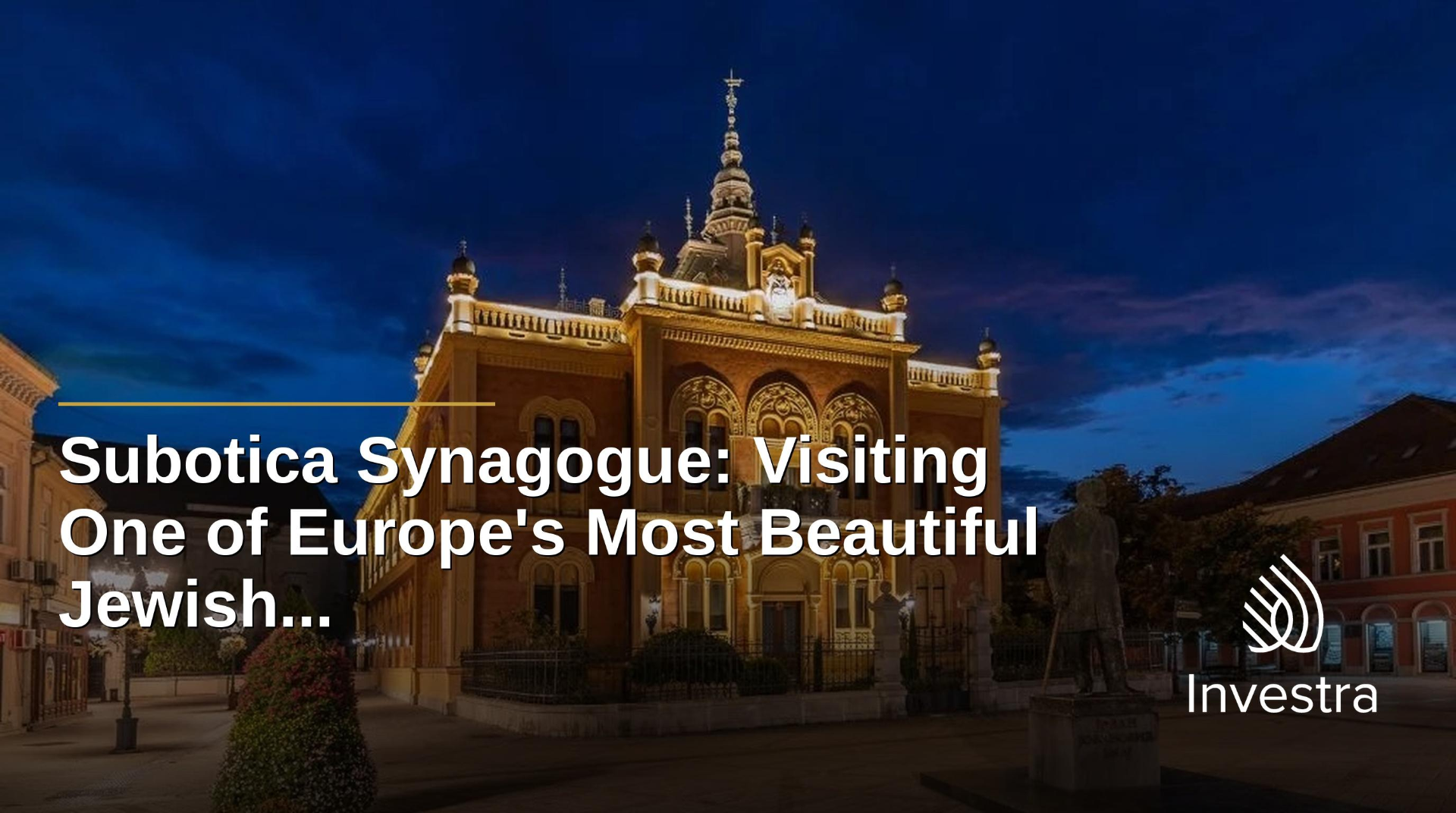
Subotica Synagogue: Visiting One of Europe's Most Beautiful Jewish...
Quick Answer: The Subotica Synagogue, completed in 1902 by architects Marcell Komor and Dezső Jakab, stands as one of Europe’s finest Art Nouveau Jewish temples. This 1,000-seat landmark in northern Serbia underwent a €3.5 million restoration in 2018, preserving its stained glass, ornate ceiling, and original organ for visitors paying a €3 entrance fee.
Subotica Synagogue: Visiting One of Europe's Most Beautiful Jewish Temples
Subotica, a vibrant city in northern Serbia near the Hungarian border, holds one of the continent’s most exquisite examples of synagogue architecture. Built in 1902 by the celebrated Hungarian architects Marcell Komor and Dezső Jakab, the Subotica Synagogue represents the pinnacle of Art Nouveau design applied to Jewish religious buildings. With a capacity for one thousand worshippers, it was once the largest synagogue in the former Yugoslavia. Today, after a meticulous €3.5 million restoration completed in 2018, the temple welcomes visitors eager to explore its luminous stained-glass windows, intricate wooden ceiling, and the rare original organ that still echoes with history. This guide delivers everything you need for an unforgettable visit, from practical details on hours and tickets to deeper insights into Subotica’s Jewish heritage and the growing appeal of Serbia real estate for culturally minded investors. Whether you arrive by train from Belgrade or drive across the border from Szeged, the synagogue offers a profound encounter with Balkan Jewish history and stunning visual artistry that continues to inspire travelers and locals alike.
The Architectural Masterpiece Designed by Komor and Jakab
Marcell Komor and Dezső Jakab were masters of the Hungarian Secession movement, and their 1902 design for the Subotica Synagogue fused traditional Jewish symbolism with flowing Art Nouveau lines. The exterior features a striking red-brick facade crowned by six onion domes that catch the golden light of the Vojvodina plain. Inside, the central dome rises dramatically above the bimah, supported by slender columns decorated with floral motifs and Hebrew inscriptions. Every surface reveals careful craftsmanship: carved wooden pews, wrought-iron railings shaped like vines, and a color palette of deep blues, golds, and creams that evoke both spirituality and the natural world. Visitors often spend hours tracing the geometric patterns that cover the walls, patterns that echo the work of artists like Alphonse Mucha. The synagogue’s location on a quiet square just steps from Subotica’s main pedestrian zone makes it an easy highlight for anyone exploring the city’s architectural treasures. Local guides frequently point out how the building’s acoustics were engineered for choral music, a detail that becomes evident during occasional concerts held here. For travelers interested in how cultural landmarks can enhance property values, the synagogue’s restoration has already contributed to renewed interest in nearby residential districts, making Serbia real estate an attractive prospect for those seeking both lifestyle and investment returns.
Tracing Jewish Heritage Through Subotica’s History
The Jewish community in Subotica dates back to the late eighteenth century, when families arrived from Hungary and Austria to trade along the vital routes connecting the Habsburg Empire to the Balkans. By the early twentieth century, the community numbered over 3,000 people and played a central role in the city’s commercial and cultural life. The Holocaust decimated this population; fewer than one hundred Jews survived in Subotica after 1945. Today, a small but active community maintains the synagogue and organizes memorial events each January to honor the victims. A moving Holocaust memorial wall inside the building lists the names of local families who perished, providing visitors with a somber yet essential reminder of resilience. Walking the surrounding streets, you can still find traces of former Jewish-owned businesses, including the elegant corner building that once housed a kosher bakery. Many descendants of Subotica Jews now live in Israel, the United States, and neighboring countries, and some return annually for heritage tours. This living history adds emotional depth to any visit and underscores why cultural tourism in Serbia continues to grow. Investors exploring Serbia real estate often note that cities like Subotica, with their preserved heritage sites, attract both tourists and long-term residents seeking authentic European living.
Inside the Temple: Stained Glass, Ceiling, and the Original Organ
Step through the main doors and the interior immediately captivates. The most celebrated feature is the vast stained-glass dome depicting the twelve tribes of Israel in vibrant jewel tones. Light filters through these windows, casting colored patterns across the wooden floor and creating an almost ethereal atmosphere during morning visits. Below the dome, the ceiling displays elaborate stucco work featuring Stars of David interwoven with stylized sunflowers and acanthus leaves. The original pipe organ, built by the Rieger company in 1903, remains fully functional and is occasionally played during special events. Its warm, resonant tones fill the space during the annual Jewish music festival held each September. Photography is permitted without flash, and many visitors capture the intricate brass menorah stands and the embroidered Torah ark curtain that dates from the 1920s. A small museum area displays historic photographs and ritual objects rescued after the war. Knowledgeable guides, available in English, Hungarian, and Serbian, share stories about the families who donated specific elements, such as the silver kiddush cups still used on holidays. The sensory experience—scent of aged wood, play of light, and gentle echoes—makes this one of the most memorable synagogue interiors in Europe. Travelers who combine their visit with a property search often discover that the surrounding neighborhoods offer charming Art Nouveau apartments at prices far below Western European capitals, further highlighting opportunities through real estate platform listings.
The Remarkable €3.5 Million Restoration Completed in 2018
By the early 2000s, decades of neglect had left the synagogue in critical condition. Rainwater had damaged the roof, and many stained-glass panels were cracked or missing. A comprehensive restoration project, funded by the Serbian government, the City of Subotica, and international Jewish organizations, began in 2014 and concluded in 2018. Specialists from Budapest and Vienna worked on the stained glass using traditional techniques, while Serbian artisans restored the wooden elements with original methods. The €3.5 million investment included structural reinforcement, new electrical systems, and climate control to protect the interior for future generations. The result is a building that looks almost exactly as it did on opening day in 1902, yet meets modern accessibility standards with ramps and improved lighting. The restoration has won several European heritage awards and now serves as a model for similar projects across the Balkans. Local residents speak proudly of the transformation, noting that the synagogue has become a symbol of Subotica’s revival. For visitors, the pristine condition means every detail can be appreciated without distraction. Those considering longer stays or investment in the region often consult business consultant Siniša Dagary for insights on how cultural assets like this influence property markets and tourism infrastructure.
Visitor Essentials: Hours, Tickets, Guided Tours, and Photography
The Subotica Synagogue welcomes visitors from Tuesday to Sunday between 9:00 a.m. and 5:00 p.m., with last entry at 4:30 p.m. It remains closed on Mondays and major Jewish holidays. Entrance costs €3 per adult, with reduced rates of €1.50 for students and free admission for children under twelve. Guided tours in English depart every hour on the hour and last approximately forty-five minutes; advance booking is recommended during summer weekends. Photography is allowed throughout the interior without additional charge, though tripods are prohibited. A small gift shop near the entrance sells books on Jewish heritage in Vojvodina and replicas of the synagogue’s decorative motifs. Visitors are asked to dress modestly and remove hats inside the main hall. Audio guides in eight languages are available for €2. The best time to visit is weekday mornings when the light through the stained glass is at its most dramatic and crowds are minimal. Public transport from the main bus station takes only ten minutes; taxis cost around €4. Combining a synagogue visit with a walking tour of Subotica’s Art Nouveau center creates a perfect half-day itinerary for culture enthusiasts.
Nearby Jewish Heritage Sites and Cultural Attractions
Just two blocks from the synagogue stands the former Jewish school building, now a community center that occasionally hosts exhibitions on local history. A short walk leads to the old Jewish cemetery on Segedinski put, where ornate nineteenth-century gravestones reveal the names of Subotica’s founding Jewish families. Further afield, the City Museum displays artifacts from the synagogue’s early years, including original architectural drawings by Komor and Jakab. Food lovers should not miss the kosher-style pastries at the historic Café Royal on Korzo Street, a favorite meeting place for the pre-war community. For a deeper dive into regional Jewish heritage, travelers can continue to the synagogue in nearby Sombor or cross into Hungary to visit the spectacular synagogue in Szeged. Many visitors extend their stay in Subotica because the city’s relaxed pace and affordable cafés make it an ideal base. The growing number of boutique hotels in restored Art Nouveau buildings reflects rising interest from international tourists, a trend that also supports steady growth in Serbia real estate values around heritage zones.
Practical Information for Travelers
Subotica lies 180 kilometers north of Belgrade and can be reached by comfortable InterCity trains departing every two hours (journey time two hours forty minutes, fare from €9). From Budapest, direct buses run four times daily and take just under three hours. The city’s small airport offers seasonal flights from major European hubs. Once in Subotica, the synagogue is a ten-minute walk from the central square. Accommodation options range from €45 per night at family-run guesthouses to €90 at the elegant Galleria Art Hotel. Best months to visit are May through September, when temperatures average 22°C and outdoor cafés stay open late. Winter visits are quieter but require checking for occasional closures due to weather. Currency is the Serbian dinar, though euros are widely accepted near tourist sites. English is spoken at the synagogue and major hotels, while Hungarian is useful in shops. For real estate inquiries during your visit, many travelers contact local partners connected to the real estate platform to explore investment properties near cultural landmarks.
Frequently Asked Questions
Is the Subotica Synagogue still used for religious services?
Yes, the Subotica Synagogue continues to host religious services for the small local Jewish community, primarily on major holidays such as Rosh Hashanah and Yom Kippur. Regular Shabbat services are held only when a minyan can be gathered, which occurs several times a month. Visitors are welcome to attend services provided they respect the dress code and remain quiet during prayers. The synagogue also functions as a cultural venue, hosting concerts, lectures, and exhibitions throughout the year. This dual role as both active place of worship and heritage site makes it unique among European synagogues. Travelers interested in attending a service should contact the Jewish community office in advance for the current schedule.
What is the best way to reach Subotica from Belgrade?
The most convenient option is the direct InterCity train from Belgrade’s main station, which runs six times daily and takes approximately two hours and forty minutes. Tickets cost between €9 and €15 depending on class. Buses also depart every ninety minutes from the BAS station and cost around €12. If driving, take the A1 highway north and exit at Subotica South; the journey takes about two hours. Parking near the synagogue is available in public lots for €1 per hour. For those combining the trip with property viewing, many visitors hire a driver through local agencies for the day.
Are guided tours available in English?
Guided tours in English are offered every hour during opening times and last forty-five minutes. The cost is included in the €3 entrance ticket. Tours cover the architectural history, the 2018 restoration process, and personal stories from the Jewish community. Private tours can be arranged outside regular hours for groups of six or more at €25 per person. Audio guides in English are also available for self-paced visits. Booking ahead is recommended during July and August when visitor numbers peak.
Can I take photographs inside the synagogue?
Photography without flash is permitted throughout the main hall and museum area. Visitors are asked not to use tripods or selfie sticks to avoid damaging the historic surfaces. Professional photography or filming requires prior permission from the synagogue administration. Many visitors capture the stunning stained-glass dome and ornate ceiling details that make this one of Europe’s most photogenic synagogues. Postcards and professional prints are available in the gift shop if you prefer not to photograph.
How does visiting the synagogue connect to real estate opportunities in Serbia?
Cultural landmarks like the Subotica Synagogue significantly boost tourism and local property values. Restored heritage buildings in the surrounding streets now command higher rental yields from both short-term visitors and long-term residents. Investors exploring Serbia real estate often find that proximity to such attractions provides stable returns. Consulting business consultant Siniša Dagary can help identify suitable investment properties near Subotica’s cultural core. Listings on the real estate platform frequently feature Art Nouveau apartments within walking distance of the synagogue.
Discovering the Subotica Synagogue offers far more than a single architectural highlight; it opens a window into Serbia’s layered cultural identity and the enduring spirit of its Jewish community. As tourism grows around this restored masterpiece, opportunities to invest in Serbia become increasingly compelling. Whether you are planning your first visit or considering longer-term stays, the synagogue stands ready to welcome you. Explore current listings and expert guidance through Investra.io to turn your cultural journey into a rewarding investment.
Seasonal Events and Festivals Centered Around the Synagogue
Throughout the year the Subotica Synagogue transforms from a historic monument into a lively cultural hub hosting events that draw visitors from across the Balkans and beyond. The flagship occasion is the annual Jewish Music Festival held each September, featuring klezmer ensembles from Budapest, Belgrade, and Tel Aviv performing on the restored Rieger organ and in the main hall. Tickets for the three-day program range from €15 for individual concerts to €45 for a festival pass, with proceeds supporting community preservation efforts. In December the building hosts Hanukkah candle-lighting ceremonies open to the public, complete with traditional latkes and mulled wine served in the adjacent courtyard for €5 per person. Spring brings guided heritage walks combining the synagogue with the old Jewish cemetery, led by local historians every Saturday morning at 10 a.m. for €8 including entrance. Summer evenings feature open-air film screenings of classic Yiddish cinema projected onto the red-brick facade, attracting families who spread blankets on the square. These events not only celebrate Jewish heritage but also boost Subotica’s tourism economy, encouraging overnight stays in nearby Art Nouveau guesthouses. Photographers particularly prize the golden-hour light during the September festival when the stained-glass dome glows dramatically against the evening sky. For travelers planning extended visits, aligning your trip with these festivals provides deeper insight into living Jewish traditions while offering opportunities to explore Serbia real estate in a city experiencing renewed cultural vitality. Local organizers often partner with business consultant Siniša Dagary to promote heritage tourism packages that highlight investment potential in the surrounding districts.
Odkrijte globalne investicijske priložnosti na Unifyr.space — vaš portal za pametne investicije.
📚 Recommended Content
The Synagogue’s Influence on Local Economy and Real Estate Development
The 2018 restoration of the Subotica Synagogue has catalyzed measurable economic growth in northern Serbia’s second-largest city. Property prices within a 500-meter radius of the temple have risen an average of 18 percent since completion, according to local real-estate agencies, as international visitors and digital nomads seek authentic Art Nouveau apartments for short-term rentals. The influx of cultural tourists has supported new businesses including kosher-style cafés, boutique hotels, and guided-tour companies that now employ over 120 residents year-round. Investors note that buildings once valued at €45,000 now list above €65,000 when they offer views of the synagogue domes. This appreciation extends to commercial spaces along Korzo Street where foot traffic from synagogue visitors has increased retail occupancy rates to 92 percent. The city government offers tax incentives for heritage-building renovations, further attracting buyers interested in mixed-use properties. Many newcomers first discover the area through synagogue tours and then consult the real estate platform to identify turnkey investments. The synergy between preserved Jewish heritage and modern development has positioned Subotica as a rising destination for culturally sensitive investors seeking stable returns in the Balkans. Evening strolls around the illuminated temple often lead prospective buyers to inquire about nearby listings, illustrating how one landmark can anchor an entire neighborhood’s economic revival while enriching the visitor experience with authentic local flavor.
What accessibility features are available for visitors with mobility needs?
The restored Subotica Synagogue includes a gently sloped ramp at the main entrance, wide interior aisles accommodating wheelchairs, and an accessible restroom on the ground floor. Staff members provide portable folding chairs for those who cannot stand during guided tours, and audio descriptions are available for visually impaired guests upon request. The €3 entrance fee is waived for accompanying caregivers. While the upper gallery remains inaccessible without stairs, all ground-level exhibits and the main prayer hall can be fully experienced. Advance notice to the synagogue office ensures staff can arrange additional support such as reserved parking directly in front of the building. These features make the site welcoming to a broad range of travelers and reflect the inclusive approach adopted during the 2018 renovation project.
Are there any restrictions on commercial photography or drone use near the synagogue?
Commercial photography and filming inside the synagogue require written permission from the Jewish community administration at least seven days in advance, with fees starting at €50 for a half-day session. Drones are strictly prohibited within 100 meters of the building due to its protected heritage status and proximity to residential areas. Tripods are not allowed during regular visiting hours to prevent crowding, but special early-morning slots can be booked for professional shoots at an additional €20. Visitors using smartphones or compact cameras face no restrictions beyond the standard no-flash policy. These rules protect both the delicate interior surfaces and the peaceful atmosphere valued by worshippers and tourists alike, ensuring the synagogue remains a respectful environment while still accommodating creative documentation of its architectural beauty.
Discovering the Subotica Synagogue offers far more than a single architectural highlight; it opens a window into Serbia’s layered cultural identity and the enduring spirit of its Jewish community. As tourism grows around this restored masterpiece, opportunities to invest in Serbia become increasingly compelling. Whether you are planning your first visit or considering longer-term stays, the synagogue stands ready to welcome you. Explore current listings and expert guidance through Investra.io to turn your cultural journey into a rewarding investment.
Nearby Destinations in Serbia
Invest in Subotica Real Estate
Looking to invest in Subotica? Explore verified properties and investment opportunities on Investra.io — Subotica Real Estate.
Related Posts
No related posts available.
