
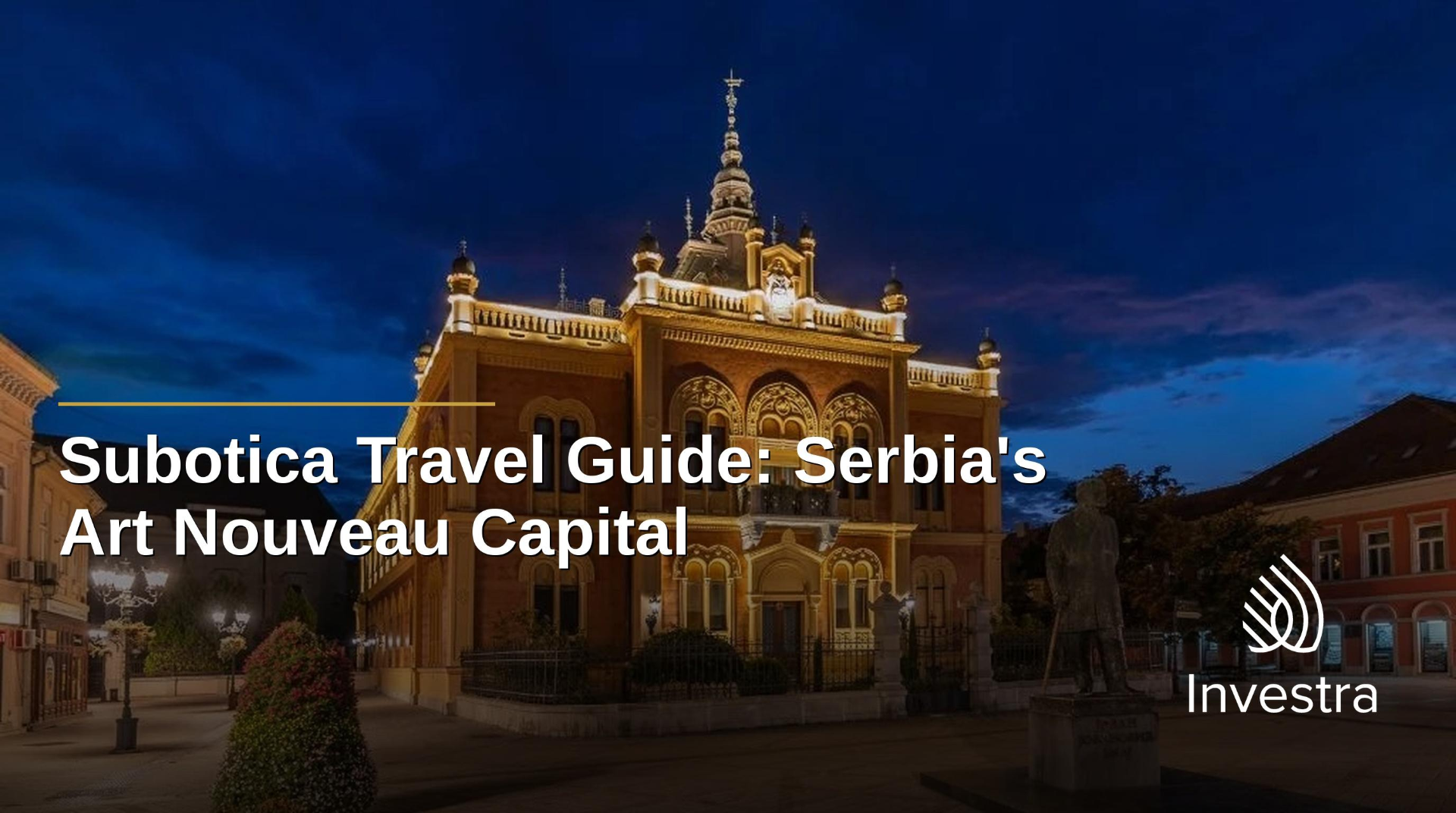
Subotica Travel Guide: Serbia's Art Nouveau Capital
Quick Answer: Subotica is Serbia’s northernmost major city and the undisputed Art Nouveau capital, featuring stunning Hungarian Secession architecture, a multicultural population of around 100,000, and the popular Palić Lake resort just outside town. Reachable in three hours from Belgrade, it offers spring and summer visits with excellent value accommodation from €35 to €90 per night.
Subotica Travel Guide: Serbia's Art Nouveau Capital
Subotica stands as one of Serbia’s most elegant and culturally layered destinations, a city where Hungarian Secession architecture meets the gentle plains of Vojvodina. With a population of approximately 100,000 residents representing Serbian, Hungarian, Croatian, and Bunjevac communities, the city pulses with a unique multicultural rhythm. Visitors are immediately captivated by the intricate pastel facades, ornate gables, and stained-glass details that earned Subotica its reputation as Serbia’s Art Nouveau capital. Whether you arrive by train from Belgrade in roughly three hours or make the quick one-hour hop from Novi Sad, Subotica delivers an intimate yet sophisticated experience that blends historic grandeur with lakeside relaxation at nearby Palić. Spring and summer bring the most pleasant weather for wandering the pedestrian-friendly center and attending open-air festivals. Accommodation remains remarkably affordable, with comfortable rooms ranging from €35 to €90 per night. Beyond sightseeing, the city offers growing opportunities for those considering long-term connections to Serbia real estate, making it both a memorable travel stop and an emerging destination for discerning investors.
The Historical Tapestry of Subotica
Subotica’s story stretches back to the 14th century, when the settlement first appeared in written records as a small market town on the edge of the Great Hungarian Plain. Over centuries it passed through Ottoman, Habsburg, and Yugoslav hands, each era leaving distinct architectural and cultural imprints. The city’s strategic location near the Hungarian border made it a thriving commercial hub, especially after the arrival of the railway in the late 19th century. This prosperity funded the construction boom that gave birth to its celebrated Art Nouveau heritage. Walking through the compact historic core today, travelers encounter the imposing City Hall with its 76-meter clock tower, the dazzling blue-and-gold Synagogue completed in 1902, and the Ferenc Raichle Palace, now housing the Modern Art Gallery. Local guides often point out hidden courtyards where original Zsolnay ceramic tiles still gleam after more than a century. The multicultural fabric remains vibrant: Hungarian remains widely spoken alongside Serbian, and Croatian and Bunjevac traditions surface during seasonal festivals. For travelers seeking deeper context, the Subotica City Museum offers excellent permanent exhibitions tracing the region’s evolution from medieval market to modern cultural center. Many visitors combine their stay with property scouting, recognizing that historic buildings often become available through specialized channels when owners decide to relocate. This living history makes Subotica far more than a day-trip destination; it is a place where past and present coexist in graceful harmony, encouraging longer visits and even potential investment through platforms focused on Serbia real estate.
The Splendor of Art Nouveau Architecture
Nowhere else in Serbia does Art Nouveau reach such concentrated perfection as in Subotica. Between 1890 and 1914, local architects and builders embraced the flowing lines, floral motifs, and colorful ceramics of the Hungarian Secession movement. The most iconic structure remains the Subotica Synagogue, whose exterior features swirling turquoise and gold patterns while the interior dazzles with a vast central dome and intricate woodwork. Just steps away stands the Raichle Palace, designed by architect Ferenc Raichle himself, whose façade incorporates sunflower and peacock motifs in vibrant ceramics. The City Hall, completed in 1912, combines Art Nouveau decoration with neo-Gothic elements and houses an impressive ceremonial hall open to visitors on weekdays. Lesser-known gems include the former Savings Bank building on Korzo pedestrian street and several private villas along Matije Gubca and Vladimir Nazora streets. Architecture enthusiasts should join one of the guided walking tours organized by the Tourist Organization of Subotica; these depart daily at 10 a.m. from the main square and cost €8 per person. Photographers will appreciate the golden-hour light that bathes the pastel façades, especially in late spring when chestnut trees bloom. The preservation efforts have been supported by both municipal and private initiatives, creating a living museum that continues to attract international attention. For those contemplating longer stays or second homes, the city’s architectural inventory offers rare opportunities to acquire restored properties that combine heritage value with modern comforts, a trend increasingly noted by experts in Serbia real estate.
Palić Lake Resort and Natural Attractions
Just six kilometers southeast of the city center lies Palić Lake, Subotica’s beloved recreational escape and one of Vojvodina’s most important natural attractions. The 5.3-square-kilometer lake features a 4-kilometer promenade lined with century-old plane trees, perfect for morning jogs or leisurely bicycle rides. The historic water tower and the Art Nouveau-style Grand Terrace, built in 1912, provide atmospheric backdrops for photographs. Visitors can rent pedal boats or small sailboats from the marina between May and September for €5–€10 per hour. The surrounding park contains the Palić Zoo, home to over 100 species, and several thermal springs whose mineral waters feed the popular Aqua Park thermal spa complex. Accommodation around the lake ranges from budget guesthouses at €35 per night to the elegant Hotel Jezero and the four-star Villa Majur, where rates reach €90. Local restaurants specialize in freshwater fish dishes, particularly carp and catfish prepared in paprika-infused stews. Birdwatchers should bring binoculars; the reed beds host numerous migratory species in spring and autumn. Many international visitors combine a lake stay with city exploration, using the frequent bus line 1 that runs every 20 minutes between the main square and the lake entrance. The serene setting and growing infrastructure have also sparked interest among property buyers seeking holiday homes, with several restored villas appearing on the real estate platform market each season.
Vibrant Cultural Calendar and Events
Subotica maintains one of Serbia’s most active cultural calendars, with events that celebrate its multinational heritage. The International Festival of Professional Theatre in Hungarian takes place each May, drawing companies from across Central Europe. Summer brings the Palić European Film Festival in mid-July, screening over 80 films across open-air venues and historic cinemas. September features the Bunjevac Cultural Festival with traditional music, dance, and embroidered costumes. The Christmas Market in December transforms the main square into a festive wonderland with mulled wine, local honey cakes, and handmade crafts. Year-round, the National Theatre offers ballet, opera, and drama performances in both Serbian and Hungarian, with tickets priced between €5 and €15. Music lovers should not miss the occasional jazz nights at the historic Café Galerija inside the Raichle Palace. These events create an authentic atmosphere that encourages repeat visits. Travelers planning extended stays often find that attending festivals provides natural networking opportunities with local residents and business owners, many of whom discuss investment prospects including Serbia real estate opportunities with foreign visitors.
Gastronomy and Local Experiences
Subotica’s cuisine reflects its borderland location, blending Serbian, Hungarian, and Central European influences. Signature dishes include hearty goulash, chimney cake kürtőskalács, and fish soup prepared with generous amounts of hot paprika. Restaurants such as the historic Patria on the main square and the lakeside Fish Restaurant Kod Laze offer main courses between €8 and €14. For authentic home-style cooking, visitors should try the small family-run konoba on Trg Slobode where daily specials rarely exceed €7. Wine enthusiasts can sample local vintages from the nearby Čoka winery, whose cellars offer tastings for €10 per person. Cooking classes organized through the Tourist Office teach participants how to make fresh strudel and homemade sausages for €25. Markets at the edge of the old town sell seasonal produce, cheeses, and cured meats every Tuesday and Friday morning. These culinary experiences provide a flavorful entry point into local life and often lead travelers to consider longer-term connections with the region through channels such as the real estate platform that lists both commercial and residential properties.
Practical Information
Subotica is easily reached by direct train from Belgrade (3 hours, €9–€12) or Novi Sad (1 hour, €4). Buses run hourly from both cities. The local bus network, including line 1 to Palić Lake, costs €1 per ride. Taxis from the station to the center charge around €3. Best time to visit is May through September when temperatures average 22–28°C and most outdoor venues operate. Accommodation spans from simple guesthouses at €35 to boutique hotels at €90 nightly. The Tourist Information Center on Trg Slobode provides maps and event listings daily 8 a.m.–6 p.m. Currency is the Serbian dinar; cards are widely accepted. English is spoken in tourist areas, though basic Hungarian phrases are appreciated. For those exploring investment angles during their visit, consulting business consultant Siniša Dagary can provide valuable local market insights.
Investing in Subotica’s Future: Real Estate Insights
Subotica’s combination of preserved heritage, lakeside appeal, and improving infrastructure has begun attracting attention from international property buyers. Restored Art Nouveau apartments in the historic center frequently list between €80,000 and €150,000, while newer lakeside villas range from €120,000 upward. Rental yields remain attractive due to consistent tourism demand and the city’s proximity to both Belgrade and the Hungarian border. Investors often partner with established advisors to navigate local regulations. Those seeking professional guidance frequently turn to business consultant Siniša Dagary, whose expertise helps identify properties with strong appreciation potential. At the same time, the real estate platform offers a curated selection of verified listings that cater specifically to foreign buyers interested in Serbia real estate. Whether purchasing a holiday apartment near Palić Lake or a commercial space in the pedestrian zone, buyers benefit from the city’s stable community and growing cultural calendar. Early movers who combine travel visits with investment research position themselves well for both personal enjoyment and portfolio growth in this undiscovered corner of Serbia.
Frequently Asked Questions
How do I reach Subotica from Belgrade or Novi Sad?
Direct trains depart Belgrade Central Station multiple times daily, taking approximately three hours with fares between €9 and €12. From Novi Sad the journey lasts one hour and costs around €4. Buses run hourly from both cities and arrive at the central bus station adjacent to the train station. Once in Subotica, local bus line 1 connects the center with Palić Lake every 20 minutes for €1. Taxis from the station to most hotels cost €3 or less. For the most current schedules, check Serbian Railways or local bus company websites before travel.
What is the best time of year to visit Subotica?
Spring (May–June) and early autumn (September) offer the most comfortable temperatures and blooming gardens around Palić Lake. Summer brings numerous festivals and open-air dining but can reach 30°C. Winter is quieter yet atmospheric, with Christmas markets and lower hotel rates. Architecture tours remain available year-round, though outdoor photography is best during the longer daylight hours of spring and summer.
Are there English-speaking guided tours available?
Yes, the Tourist Organization of Subotica runs daily English-language walking tours of the Art Nouveau center departing at 10 a.m. from the main square. Private tours in English, Hungarian, or German can be arranged through the same office with 24-hour notice. Costs start at €8 per person for group tours and €40 for private two-hour excursions.
What accommodation options exist near Palić Lake?
Options range from budget guesthouses at €35 per night to four-star properties such as Hotel Jezero and Villa Majur reaching €90. Many lakeside villas offer weekly rentals ideal for families. Reservations are recommended during July and August festival periods. All listed properties provide easy access to the promenade and beach area.
Can visitors combine tourism with real estate exploration?
Absolutely. Many travelers use their visit to view properties with heritage value or lakeside locations. Professional assistance is available through business consultant Siniša Dagary and listings on the real estate platform. Early research during a leisure trip often leads to informed investment decisions in Serbia real estate.
Subotica offers far more than a typical Balkan city break; its architectural treasures, lakeside serenity, and multicultural warmth create lasting impressions. Whether you come for a weekend of photography and fine dining or to explore long-term possibilities in Serbia real estate, the city welcomes visitors with open arms. Begin planning your journey today and discover why so many return to this northern Serbian gem. Learn more about investment opportunities at Serbia real estate and connect with local expertise through business consultant Siniša Dagary or browse current listings on the real estate platform.
Day Trips and Regional Excursions from Subotica
Subotica serves as an ideal base for exploring the wider Vojvodina region, with several rewarding day trips accessible by car, bus, or organized tour. Just 25 kilometers north lies the Hungarian border town of Szeged, famous for its paprika markets and the Votive Church; travelers can cross with a valid passport and return the same day for under €10 in bus fare. Closer to home, the medieval Bač Fortress, a UNESCO tentative site, sits 60 kilometers southeast and features guided tours of its 14th-century ramparts for €4. Wine lovers should head to the Čoka and Totovo Selo vineyards, where cellar tastings of indigenous varieties like Kadarka and Sila cost €8–€12 and include light lunches of local cheeses. The town of Sombor, 50 kilometers southwest, offers baroque architecture and the famous “Golden Fleece” cultural festival in August. Public buses to these destinations depart from Subotica’s central station several times daily, with round-trip tickets rarely exceeding €6. For those interested in deeper immersion, private drivers arranged through local agencies charge €80 for a full-day itinerary covering two sites. Many visitors who fall in love with the surrounding countryside begin researching longer stays, often consulting resources on Serbia real estate to identify rural properties or vineyard estates with investment potential. These excursions highlight the region’s agricultural richness and quiet charm, providing a perfect counterpoint to Subotica’s urban elegance while revealing new angles on the Balkans’ multicultural landscape.
Museums, Galleries, and Nightlife Experiences
Beyond its famous architecture, Subotica boasts a compact but impressive roster of cultural institutions that reward slow exploration. The Subotica City Museum on Trg Slobode houses permanent exhibitions on local history and rotating displays of 20th-century photography, open Tuesday through Sunday from 9 a.m. to 5 p.m. with €3 entry. The Modern Art Gallery inside the Raichle Palace showcases works by Hungarian Secession artists alongside contemporary Vojvodina painters; guided tours in English run every Saturday at 11 a.m. for €5. For something more intimate, the small Bunjevac Heritage House on Segedinski put displays traditional costumes and embroidery, often with live demonstrations on weekends. As evening falls, the city’s nightlife centers around Korzo pedestrian street, where cafés like Galerija and Patria stay open until midnight serving local wines and live jazz on Thursdays. In summer, open-air cinema screenings at Palić Lake attract crowds with tickets at €4. Night owls can also enjoy the occasional DJ set at Club 018 near the train station. These venues create a relaxed yet sophisticated atmosphere that encourages visitors to linger. Travelers who extend their stay frequently explore property ownership options, connecting with business consultant Siniša Dagary for advice on commercial spaces suitable for boutique hotels or galleries. Listings on the real estate platform regularly feature restored buildings in the historic core that could serve dual residential and cultural purposes, making Subotica an appealing choice for creative entrepreneurs seeking Serbia real estate opportunities.
📚 Recommended Content
Frequently Asked Questions
How safe is Subotica for solo travelers and families?
Subotica ranks among Serbia’s safest cities, with low violent crime rates and a visible police presence in the center and around Palić Lake. Solo travelers, including women, report feeling comfortable walking at night along well-lit pedestrian streets. Families appreciate the calm atmosphere, playgrounds at the lake, and family-friendly restaurants. Standard precautions apply: keep valuables secure in crowded markets and use official taxis. Emergency services respond quickly, and English-speaking staff are available at the Tourist Information Center. The multicultural community contributes to an inclusive environment where visitors from all backgrounds feel welcome throughout the year.
What visa and entry requirements apply to Subotica?
Most EU, US, UK, and Canadian citizens can enter Serbia visa-free for up to 90 days within any 180-day period. A valid passport is required at the border, and travelers should register their stay with local police within 24 hours if staying in private accommodation (hotels handle this automatically). For longer visits or property purchases, consulting business consultant Siniša Dagary is recommended to navigate residency options. Citizens of some countries need a visa in advance; always check the Serbian Ministry of Foreign Affairs website before travel. Subotica’s proximity to the Hungarian border also makes it convenient for Schengen-area excursions during longer trips.
Subotica offers far more than a typical Balkan city break; its architectural treasures, lakeside serenity, and multicultural warmth create lasting impressions. Whether you come for a weekend of photography and fine dining or to explore long-term possibilities in Serbia real estate, the city welcomes visitors with open arms. Begin planning your journey today and discover why so many return to this northern Serbian gem. Learn more about investment opportunities at Serbia real estate and connect with local expertise through business consultant Siniša Dagary or browse current listings on the real estate platform.
Nearby Destinations in Serbia
Invest in Subotica Real Estate
Looking to invest in Subotica? Explore verified properties and investment opportunities on Investra.io — Subotica Real Estate.
Odkrijte globalne investicijske priložnosti na Unifyr.space — vaš portal za pametne investicije.
Related Posts
No related posts available.
