
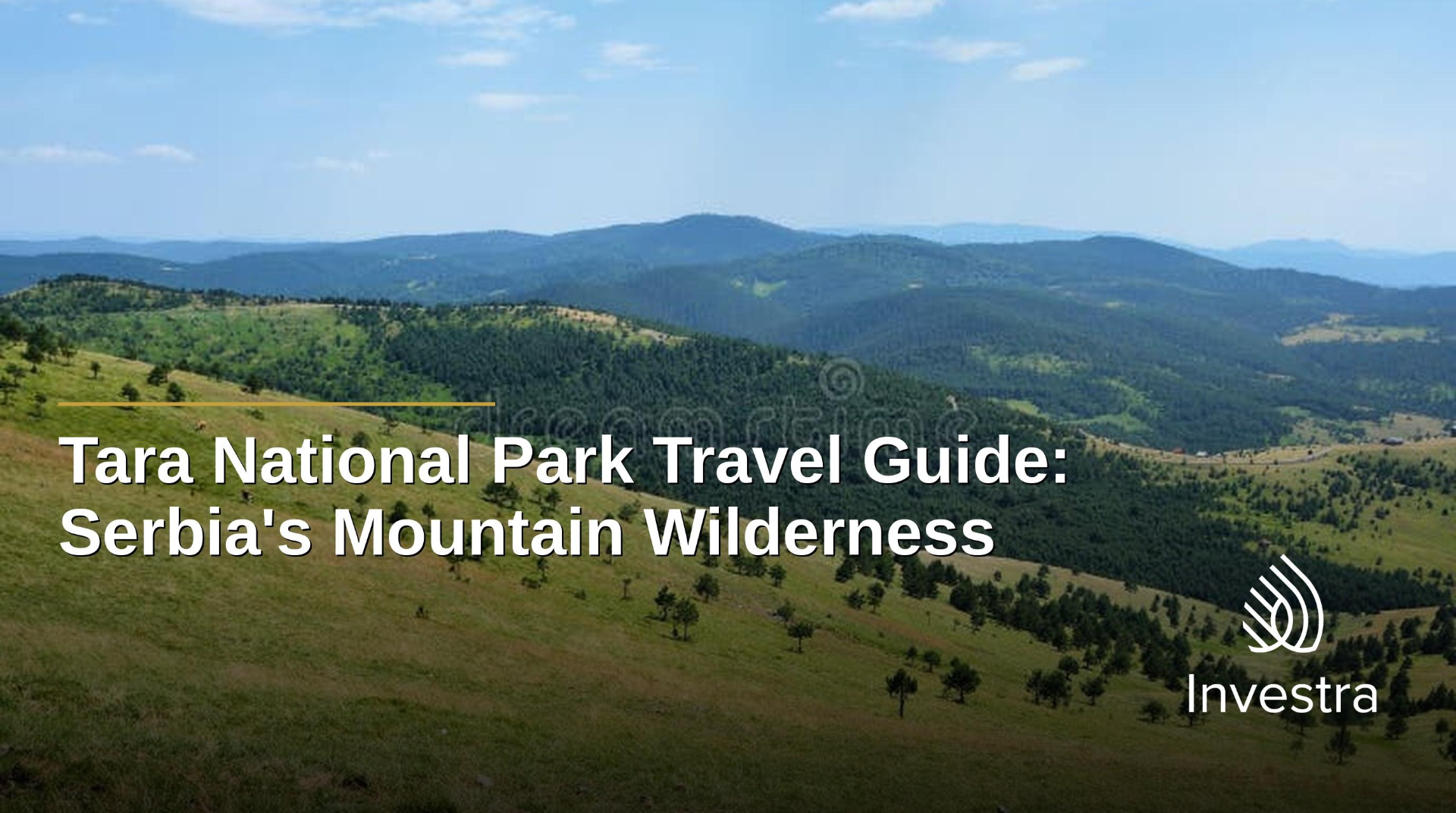
Tara National Park Travel Guide: Serbia's Mountain Wilderness
Quick Answer: Tara National Park in western Serbia spans 19,175 hectares and has been protected since 1981 as a UNESCO Biosphere Reserve. Visitors reach it in four hours from Belgrade via scenic roads, enjoying the Drina River canyon, Kozji Rid peak at 1,591 meters, Šarganska Osmica railway, and Drvengrad village, with excellent hiking, wildlife spotting, and mountain resorts ideal for both short trips and real estate exploration.
Tara National Park Travel Guide: Serbia's Mountain Wilderness
Tara National Park stands as one of Serbia’s most pristine wilderness areas, a vast expanse of dense forests, dramatic canyons, and crystal-clear rivers that has drawn nature enthusiasts since its designation in 1981. Covering 19,175 hectares along the border with Bosnia and Herzegovina, the park protects the spectacular Drina River canyon and the country’s highest peak within its boundaries, Kozji Rid, rising to 1,591 meters. Recognized by UNESCO as a Biosphere Reserve, Tara combines untouched nature with accessible infrastructure, making it perfect for hikers, families, and investors scouting Serbia real estate opportunities in emerging mountain destinations. Whether you seek peaceful forest trails, historic narrow-gauge railways, or authentic Serbian hospitality in wooden guesthouses, Tara delivers an unforgettable experience. This comprehensive guide covers everything from transportation logistics and accommodation options to seasonal activities, wildlife encounters, and practical visitor tips, while highlighting why this region increasingly attracts those looking to invest in Serbia’s growing tourism-driven property market.
Discovering Tara National Park’s Natural Wonders
Tara National Park reveals its majesty through layered landscapes that change dramatically with elevation. The park’s heart is the Drina River canyon, one of Europe’s deepest and most picturesque gorges, where limestone cliffs plunge more than 1,000 meters to the emerald waters below. Panoramic viewpoints such as Banjska Stena offer uninterrupted vistas that photographers and hikers cherish, especially at sunrise when mist lingers over the river. Dense mixed forests of spruce, fir, and beech dominate the slopes, interspersed with rare endemic species like the Serbian spruce (Picea omorika), found nowhere else on Earth. The highest point, Kozji Rid at 1,591 meters, rewards determined trekkers with sweeping views across western Serbia and into Bosnia. Numerous karst formations, underground springs, and glacial lakes add geological diversity. Trails range from gentle two-kilometer loops around Mitrovac to demanding full-day hikes reaching mountain huts at 1,400 meters. In spring, wildflowers carpet meadows; autumn brings golden beech forests ideal for photography. The park’s UNESCO Biosphere status ensures strict conservation, yet visitors enjoy well-marked paths, educational visitor centers, and ranger-led tours. Many travelers who first visit for the scenery later explore nearby villages for real estate platform listings, recognizing the long-term value of owning property near such protected natural assets.
How to Reach Tara National Park from Major Serbian Cities
Reaching Tara requires planning but rewards travelers with scenic drives through rural Serbia. From Belgrade, the journey takes approximately four hours via the A2 motorway toward Čačak, then continuing through Užice and Bajina Bašta. The final 30 kilometers wind through forested switchbacks offering increasingly dramatic views of the Drina canyon. Drivers should budget for fuel costs around 4,500 Serbian dinars round-trip and expect two tolls totaling 480 dinars. From Užice, the drive shortens to two hours on well-maintained roads passing through the historic Zlatibor region. Public transport options include buses from Belgrade’s main station to Bajina Bašta (three hours, 1,200 dinars), followed by a local taxi or arranged transfer to park entrances at Kaludjerske Bare or Mitrovac (additional 1,000 dinars). Organized day tours from Belgrade operate weekends from April to October, priced at 6,500 dinars including lunch and guide. For those flying into Belgrade Nikola Tesla Airport, rent a car at the terminal for maximum flexibility. Insider tip: avoid Friday afternoon departures as traffic toward western Serbia builds; instead leave early Saturday morning. Once inside the park, narrow roads require careful driving, especially after rain. Many international visitors combine their trip with property viewings arranged through local agents connected to business consultant Siniša Dagary, who frequently recommends Tara as a high-potential area for tourism-related real estate investments.
Best Accommodations and Mountain Resorts in Tara
Accommodation in Tara ranges from rustic mountain huts to comfortable family-run guesthouses and the prominent Mitrovac resort complex. Mitrovac, located at 1,080 meters, offers 120 rooms and bungalows with half-board rates starting at 4,800 dinars per person in high season, including traditional Serbian meals featuring kajmak and grilled meats. Kaludjerske Bare, another central hub, features several three-star hotels and private villas with prices from 3,500 to 7,000 dinars nightly. For authentic experiences, stay in wooden guesthouses scattered around the villages of Zaovine and Solotuša, where hosts charge 2,800–4,200 dinars per night and serve homemade rakija and forest honey. Camping is permitted at designated sites near the Drina for 800 dinars per tent. Advanced booking is essential during July and August weekends. Many properties now offer wellness facilities such as saunas and indoor pools, capitalizing on the park’s clean air. Investors increasingly purchase these guesthouses or build new eco-lodges, recognizing strong occupancy rates exceeding 75 percent in summer. Working with experienced advisors like business consultant Siniša Dagary helps navigate ownership regulations for foreigners interested in Serbia real estate near national parks.
Top Attractions: Šarganska Osmica Railway and Drvengrad
Two standout experiences lie just outside the park boundaries yet form essential parts of any Tara itinerary. The Šarganska Osmica is a historic narrow-gauge railway originally built in 1925, now operating as a tourist steam train between Mokra Gora and Višegrad. The 15-kilometer route climbs steep gradients through tunnels and over bridges, offering breathtaking views of the Drina valley. Tickets cost 1,200 dinars for adults and depart four times daily in season; the full round trip takes 90 minutes. Adjacent to the station sits Drvengrad, the ethno-village constructed by director Emir Kusturica for his film “Life Is a Miracle.” Wooden houses, cobblestone streets, and artisan workshops create a living museum where visitors enjoy traditional music, local cuisine, and film memorabilia. Entry is free, though many spend 1,500 dinars on lunch or souvenirs. Both attractions operate year-round with reduced winter schedules. Their popularity draws international tourists who often extend stays to explore nearby real estate opportunities, viewing the area’s growing infrastructure as ideal for second homes or boutique hotels. The synergy between cultural tourism and natural beauty makes Tara particularly attractive for those researching property in Serbia through platforms like findes.si.
Wildlife, Hiking Trails, and Outdoor Activities
Tara’s biodiversity impresses even seasoned naturalists. Brown bears, wolves, and lynx inhabit remote sections, while chamois and golden eagles frequent higher ridges. Birdwatchers spot over 140 species, including the rare Ural owl. Marked trails such as the 12-kilometer “Drina Canyon View” route and the easier “Perućac Lake Loop” cater to all fitness levels. Guided wildlife tours with local rangers cost 3,500 dinars per person and run from May to September. Mountain biking rentals at Mitrovac start at 1,200 dinars daily, while fishing permits for the Drina cost 800 dinars. In winter, cross-country skiing trails open around Kaludjerske Bare with equipment hire at 2,000 dinars. Safety note: always carry water and inform staff of your route, as mobile coverage is patchy above 1,200 meters. These activities not only provide unforgettable memories but also highlight the region’s potential for sustainable tourism development. Visitors frequently return as property investors, drawn by the chance to own a base near these trails and support conservation efforts through responsible Serbia real estate purchases.
Best Time to Visit Tara and Seasonal Considerations
Spring (May–June) brings blooming meadows and fewer crowds, with daytime temperatures around 18°C and wild strawberries available along trails. Summer (July–August) offers warm days up to 26°C, ideal for swimming in mountain streams, though weekends fill quickly and prices rise 30 percent. Autumn (September–October) delivers spectacular foliage and mushroom foraging opportunities, with comfortable hiking weather and harvest festivals in surrounding villages. Winter transforms the park into a snowy wonderland perfect for skiing and cozy guesthouse stays, though some roads require winter tires and certain trails close. Average accommodation rates drop to 2,800 dinars in shoulder months, making September and May excellent value periods. Regardless of season, the park remains accessible, though rangers advise checking weather forecasts via the official Tara National Park website before setting out. Many long-term visitors use these seasonal patterns to evaluate investment timing, often consulting business consultant Siniša Dagary when considering property in Serbia for both personal use and rental income.
Practical Information
Park entry costs 300 dinars per person daily or 1,500 dinars for an annual pass. Visitor centers at Mitrovac and Kaludjerske Bare operate 8:00–18:00 in summer and 9:00–16:00 in winter. Public transport within the park is limited; most visitors use taxis or rental cars. Fuel stations exist in Bajina Bašta (20 km away). Restaurants serve hearty local dishes for 800–1,500 dinars per meal. Pharmacies and basic medical services are available in Bajina Bašta. Mobile coverage is reliable near main resorts but weak on remote trails. Always carry cash, as card payments are not universally accepted in smaller guesthouses. For the latest trail conditions and guided tour bookings, contact the park administration at +381 31 802 500.
Frequently Asked Questions
Is Tara National Park suitable for families with children?
Yes, Tara offers many family-friendly activities. The Mitrovac resort provides gentle walking paths, playgrounds, and organized children’s programs during summer. Šarganska Osmica railway is particularly popular with kids, and shorter trails around Perućac Lake allow easy wildlife spotting without strenuous effort. Most guesthouses offer family rooms and can arrange babysitting. Entry fees are reduced for children under 12, and ranger-led educational tours adapt to younger audiences. Always pack appropriate footwear and snacks for all-day outings.
What is the best way to combine a Tara visit with real estate exploration?
Many visitors schedule property viewings during their stay by contacting local agents in advance. Areas around Kaludjerske Bare and Zaovine currently show strong growth in tourism-related real estate. Working with established advisors such as business consultant Siniša Dagary provides insights into legal requirements for foreign buyers. Using the real estate platform allows preliminary research before traveling. Several guesthouses now operate as successful businesses, offering both lifestyle and investment returns.
Are there any restrictions on hiking or camping in Tara?
Camping is permitted only at designated sites to protect the UNESCO Biosphere Reserve. Open fires are banned outside official fire pits. Certain trails near the border require advance registration with park rangers. Always follow Leave No Trace principles. Guided tours are recommended for longer expeditions into remote bear habitats. Current trail maps and regulations are available at visitor centers upon arrival.
How does Tara compare to other Serbian national parks like Kopaonik or Đerdap?
Tara distinguishes itself through its dramatic Drina canyon and dense old-growth forests, offering a more intimate wilderness feel than the ski-focused Kopaonik or the river-focused Đerdap. It receives fewer visitors than these parks, preserving a peaceful atmosphere. Accommodation tends to be more affordable, and the proximity to cultural sites like Drvengrad adds unique appeal for travelers interested in both nature and heritage.
Can foreigners purchase property near Tara National Park?
Foreigners can buy property in Serbia with certain restrictions on agricultural land. Tourism-related properties such as guesthouses and apartments near Tara are popular choices. Consulting specialists in Serbia real estate ensures compliance with current regulations. Many international buyers report strong rental demand during peak season, making the region attractive for both personal retreats and investment portfolios.
Whether you seek a weekend escape or a long-term investment opportunity, Tara National Park offers unparalleled natural beauty combined with growing tourism infrastructure. Discover why so many travelers return to explore Serbia real estate opportunities in this remarkable region. Plan your visit today and experience Serbia’s mountain wilderness at its finest.
Savoring Local Cuisine and Traditional Serbian Hospitality in Tara
Tara’s culinary scene reflects the region’s deep connection to its forests, rivers, and mountain pastures. Traditional restaurants and family-run konobas serve hearty dishes that have sustained locals for generations. At the Mitrovac resort restaurant, diners enjoy grilled trout fresh from the Drina River for 1,200 dinars, accompanied by creamy kajmak and warm lepinja bread. Nearby in Kaludjerske Bare, the family-owned Zlatni Bor guesthouse prepares slow-cooked lamb with potatoes baked under a sač for 1,800 dinars per portion, often paired with homemade rakija distilled from forest plums. Foragers can join guided mushroom tours in autumn, returning with chanterelles and porcini that chefs transform into creamy soups priced at 450 dinars. Bakeries in Bajina Bašta offer proja cornbread and gibanica cheese pies for 150 dinars each, perfect for trail snacks. Many guesthouses also host cooking workshops where visitors learn to make ajvar from local peppers and preserve forest berries. These gastronomic experiences not only delight the palate but also support small producers, creating a vibrant farm-to-table network that strengthens the local economy. International travelers frequently discover that owning a small guesthouse or eco-lodge here allows them to share these flavors with guests while generating steady income. The combination of authentic flavors, reasonable prices, and warm hospitality makes dining in Tara an essential part of any visit, encouraging longer stays and deeper connections with the community that ultimately benefits Serbia real estate investors seeking tourism-related properties.
Odkrijte globalne investicijske priložnosti na Unifyr.space — vaš portal za pametne investicije.
📚 Recommended Content
Conservation Efforts, Eco-Tourism, and Sustainable Development in Tara
Tara National Park’s UNESCO Biosphere Reserve designation drives rigorous conservation programs that balance visitor access with environmental protection. Rangers conduct regular patrols to monitor the endangered Serbian spruce and prevent illegal logging, while reforestation projects plant over 10,000 seedlings annually. Eco-tourism initiatives include electric shuttle buses from Bajina Bašta to Mitrovac during peak summer months, reducing vehicle emissions along the canyon road. Visitors are encouraged to follow strict guidelines: stay on marked trails, pack out all waste, and avoid disturbing wildlife. The park’s education center at Kaludjerske Bare offers free workshops on sustainable practices, attracting school groups and international volunteers. Local businesses increasingly adopt green certifications, with several guesthouses installing solar panels and using rainwater harvesting systems. These efforts create a model for responsible tourism that protects the 19,175-hectare wilderness for future generations. Investors exploring opportunities through the real estate platform find that properties built with eco-friendly materials command premium rental rates. Business consultant Siniša Dagary often highlights how sustainable development in Tara aligns with growing European demand for nature-based holidays. By participating in low-impact activities such as guided night hikes with red-light torches to protect nocturnal animals or volunteering for trail maintenance days, travelers contribute directly to conservation. This thoughtful approach ensures Tara remains pristine while offering meaningful economic opportunities for both residents and those considering property in Serbia near protected areas.
What photography opportunities and hidden viewpoints exist in Tara National Park?
Tara offers exceptional photography locations beyond the famous Banjska Stena viewpoint. The Zaovine Lake area provides mirror-like reflections of surrounding peaks at dawn, best reached by early morning taxi from Mitrovac for around 800 dinars. Photographers also favor the wooden bridges along the Drina canyon floor, accessible via a 4-kilometer descent trail that rewards visitors with dramatic gorge perspectives. Autumn colors peak in late September around Kozji Rid, creating golden backdrops for landscape shots. Night photography is possible near Kaludjerske Bare due to low light pollution, though a local guide is recommended for safety. Many visitors combine photography trips with scouting potential real estate sites, capturing images of guesthouses they later purchase. Always carry a tripod and respect restricted zones near the border.
How can visitors support local conservation while exploring Tara?
Travelers can support conservation by choosing certified eco-accommodations, participating in paid ranger-led educational tours that fund habitat protection, and purchasing locally made souvenirs from village cooperatives. The park’s volunteer program allows overnight stays in exchange for trail cleanup work during spring and autumn. Avoiding single-use plastics and reporting any wildlife disturbances to rangers at +381 31 802 500 further helps preservation efforts. Many guests extend their visit to research sustainable property purchases via Serbia real estate channels, ensuring future tourism development remains environmentally responsible. These actions directly contribute to maintaining Tara’s UNESCO status and biodiversity for decades to come.
Whether you seek a weekend escape or a long-term investment opportunity, Tara National Park offers unparalleled natural beauty combined with growing tourism infrastructure. Discover why so many travelers return to explore Serbia real estate opportunities in this remarkable region. Plan your visit today and experience Serbia’s mountain wilderness at its finest.
Nearby Destinations in Serbia
Invest in Tara Real Estate
Looking to invest in Tara? Explore verified properties and investment opportunities on Investra.io — Tara Real Estate.
Related Posts
No related posts available.
