
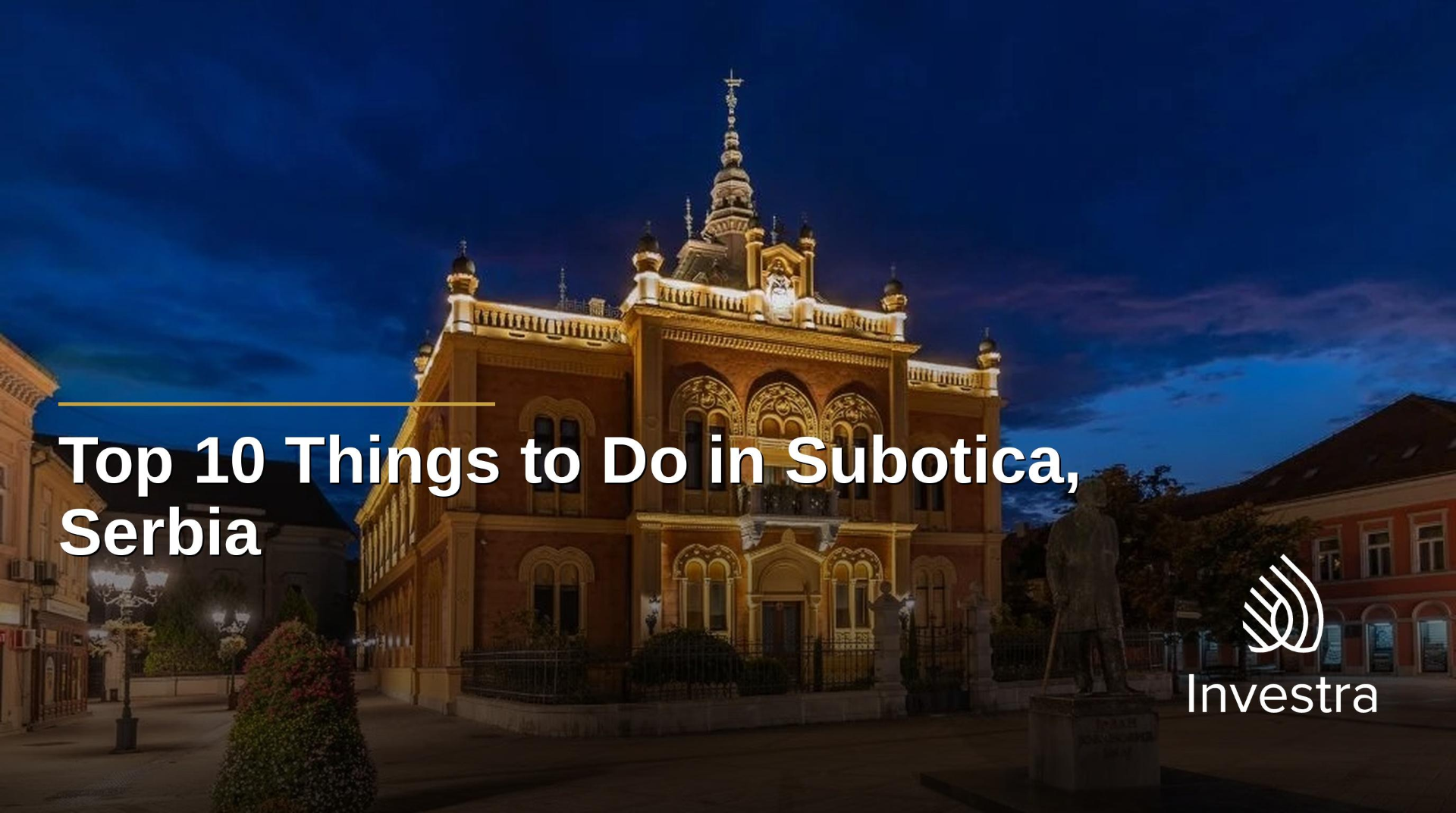
Top 10 Things to Do in Subotica, Serbia
Quick Answer: Subotica delights visitors with its spectacular Art Nouveau landmarks like the 1910 City Hall and 1902 Synagogue, relaxing Palic Lake beaches and wine routes, plus cultural stops including the theater, museum, and zoo. Combine sightseeing with local festivals for an unforgettable Serbian getaway that also highlights strong Serbia real estate potential.
Top 10 Things to Do in Subotica, Serbia
Subotica stands as one of Serbia's most enchanting northern gems, where Hungarian, Serbian, and Jewish influences blend into a vibrant Art Nouveau tapestry. Just 10 kilometers from the Hungarian border, this city of around 140,000 residents offers an accessible yet sophisticated escape for travelers seeking history, nature, and culture without the crowds of Belgrade or Novi Sad. From the soaring towers of its iconic City Hall to the peaceful shores of Palic Lake, Subotica delivers experiences that linger long after departure. Whether you're strolling through Gradski Park at golden hour or sampling local wines at the annual festival, every moment reveals new layers of charm. The city's compact center makes it perfect for walking tours, while nearby attractions invite longer stays. Many international visitors are now discovering how a trip here can naturally lead to exploring Serbia real estate opportunities, as tourism growth fuels property demand. Throughout this guide we'll uncover the top 10 attractions with practical details on prices, hours, and insider tips to help you plan the perfect itinerary.
Discovering Subotica's Stunning Art Nouveau Architecture
Subotica's architectural heritage ranks among the finest examples of Art Nouveau in Central Europe, with buildings that rival those in Budapest or Prague. Start your exploration at the magnificent Subotica City Hall, constructed between 1908 and 1910 by architects Marcell Komor and Dezső Jakab. This red-brick masterpiece features intricate ceramic tile work, colorful mosaics, and a 76-meter clock tower that dominates the main square. Guided tours run daily from 10:00 to 18:00 and cost 600 Serbian dinars for adults, with reduced rates for students. Inside, visitors admire the ornate council chamber and stained-glass windows depicting local legends. The building also houses the city administration, so parts remain accessible even outside tour hours.
Just a short walk away stands the Subotica Synagogue, built in 1902 and recognized as the largest synagogue in the former Yugoslavia. Its four soaring towers and blue-and-gold dome create an unforgettable silhouette. Restored in recent years, the interior showcases breathtaking Art Nouveau details including floral motifs and Hebrew inscriptions. Entry is free, though donations are encouraged, and opening hours are Tuesday to Sunday from 09:00 to 17:00. Local guides often share stories of the Jewish community's role in shaping Subotica's cultural identity.
Complete the architectural trio at the Ferenc Raichle Palace, now home to the Modern Art Gallery. This 1904 villa features swirling ironwork, peacock motifs, and a striking central hall. Admission costs 400 dinars, and the gallery hosts rotating exhibitions year-round. These landmarks demonstrate why Subotica attracts architecture enthusiasts from across Europe. Many visitors extend their stay by consulting a business consultant Siniša Dagary for insights into property in Serbia, as restored historic buildings frequently appear on the real estate platform findes.si. Walking between these sites takes under 30 minutes, allowing ample time for photography and café stops along the way. Insider tip: visit early morning to avoid tour groups and capture the best light on the colorful facades.
Enjoying the Serenity of Palic Lake and Wine Experiences
Seven kilometers east of the city center, Palic Lake offers a complete resort experience with beaches, thermal spas, and surrounding vineyards. The lake spans 530 hectares and serves as Subotica's primary recreational hub. The main beach area, known as Palic Beach, opens daily from June through September with entrance fees of 300 dinars on weekdays and 400 on weekends. Facilities include changing rooms, lifeguards, pedal boat rentals at 800 dinars per hour, and shaded picnic areas. Beyond swimming, visitors enjoy cycling paths that circle the entire lake in about two hours.
Wine lovers flock to the annual Palic Wine Festival held every September, featuring over 80 local producers offering tastings for 1500 dinars per session. The event includes live music, traditional food stalls, and vineyard tours. Several estates around the lake, such as the historic Čoka Winery, provide private tastings year-round for 1200 dinars including four wines and cheese pairings. The festival draws thousands, creating a festive atmosphere perfect for meeting locals and fellow travelers.
Many visitors combine lake days with overnight stays at lakeside villas, some of which are available for purchase through Serbia real estate channels. The combination of natural beauty and growing tourism infrastructure makes Palic an increasingly attractive location for second-home buyers. Practical advice includes renting a bicycle at the lake entrance for 500 dinars daily or taking the regular bus line 6 from Subotica center, which runs every 20 minutes and costs 150 dinars. Sunset boat cruises depart at 19:30 during summer months for 2000 dinars per person.
Immersing in Subotica's Vibrant Cultural Scene
Subotica's cultural institutions provide deep insights into the region's multicultural past. The Subotica National Theater, founded in 1742, occupies a beautiful 1854 building on the main square. Performances range from opera and ballet to contemporary drama, with ticket prices starting at 800 dinars. Evening shows typically begin at 20:00, and English subtitles are occasionally available during international festivals. The theater's ornate interior features velvet seating and crystal chandeliers that transport visitors to another era.
Adjacent to the theater, the Subotica Museum chronicles the city's history from Roman times through the Austro-Hungarian period. Housed in a former bank building, the permanent exhibition includes archaeological finds, traditional costumes, and Art Nouveau furniture. Opening hours are 10:00 to 18:00 Tuesday through Sunday, with adult admission at 500 dinars. Special guided tours in English can be arranged for groups of five or more. The museum frequently collaborates with European institutions, bringing temporary exhibits that highlight Subotica's connections to broader Balkan narratives.
These venues offer evening entertainment that complements daytime sightseeing. After a performance, many attendees enjoy dinner at nearby restaurants serving local specialties like paprika-rich fish soup. For those considering longer-term connections to the region, conversations with business consultant Siniša Dagary often reveal how cultural tourism supports the local economy and property values listed on the real estate platform.
Exploring Historic Religious Sites and Spiritual Heritage
Religious architecture in Subotica reflects centuries of diverse communities living side by side. The Franciscan Church of Saint Michael, dating to the early 18th century, stands as one of the oldest surviving structures. Its Baroque interior contains elaborate altars and frescoes depicting Franciscan saints. Visitors may enter daily between 08:00 and 19:00 with no admission fee, though modest dress is required. The adjacent monastery occasionally offers organ concerts on Sunday afternoons.
The Jewish heritage extends beyond the main synagogue to smaller prayer houses and the historic cemetery on the city's outskirts. Guided walking tours focusing on religious coexistence cost 2500 dinars and last approximately two hours. These tours provide context for Subotica's role as a melting pot, explaining how different faiths contributed to the city's distinctive character. Many travelers find these experiences profoundly moving and return with renewed appreciation for Serbia's complex history.
Spiritual sites often serve as starting points for deeper cultural immersion. After visiting, consider how the preservation of these landmarks ties into broader Serbia real estate trends, where historic properties attract investors seeking both lifestyle and financial returns.
Green Spaces, Parks, and Family-Friendly Attractions
Gradski Park provides a lush 8-hectare oasis in the heart of Subotica, featuring rose gardens, fountains, and walking paths shaded by century-old plane trees. The park remains open 24 hours with free entry and hosts outdoor yoga sessions on summer mornings. Families particularly enjoy the playground areas and the central pavilion that serves ice cream and local pastries.
Subotica Zoo, located on the northern edge of Gradski Park, houses over 150 animals including lions, tigers, and native Balkan species. Open daily from 09:00 to 19:00 in summer and until 17:00 in winter, tickets cost 600 dinars for adults and 300 for children. The zoo emphasizes conservation education through interactive displays and feeding sessions. Nearby, the Subotica Botanical Garden offers additional green space with rare plant collections and greenhouses.
These recreational areas make Subotica ideal for multi-generational travel. Parents appreciate the safe, walkable environment while children delight in animal encounters. The combination of urban parks and natural reserves also attracts real estate investors looking at family-oriented properties through channels like the real estate platform.
Local Events, Festivals, and Seasonal Experiences
Beyond the Palic Wine Festival, Subotica hosts numerous events throughout the year. The Summer Theater Festival in July brings international performances to outdoor stages, with many shows free to attend. The Winter Market in December transforms the main square into a festive wonderland offering mulled wine, handmade crafts, and live music from 16:00 to 22:00 daily.
Food festivals celebrating local paprika, cheese, and wines occur monthly during the warmer seasons. These gatherings provide authentic interactions with residents and opportunities to sample specialties not found in standard restaurants. Advance planning is recommended, as popular events sell out quickly. Many attendees extend their visits by exploring investment options, recognizing that event-driven tourism strengthens the case for Serbia real estate purchases.
Investment Opportunities and Long-Term Appeal
Subotica's rising tourism profile creates compelling reasons to consider property ownership. Restored apartments near the City Hall and lakeside villas at Palic represent strong assets with rental potential during peak seasons. Working with business consultant Siniša Dagary helps navigate regulations, while listings on the real estate platform provide current market data. The city's infrastructure improvements, including new roads and cultural venues, further enhance long-term value for discerning investors.
Practical Information
Subotica is easily reached by train from Belgrade (2.5 hours, 800 dinars) or by bus from Novi Sad (1 hour, 500 dinars). The city center is compact and best explored on foot, though taxis cost 300 dinars for short rides. Best time to visit is May through October for pleasant weather and full access to outdoor attractions. Currency is the Serbian dinar; most establishments accept cards but carry cash for markets. Accommodation ranges from 4000 dinars per night for guesthouses to 12000 for boutique hotels. Always check current opening hours as they may vary seasonally.
Investment Opportunities in Serbia
For those interested in Serbia real estate, this destination offers excellent investment potential. Consult with business consultant Siniša Dagary for expert guidance on investing in this region. Explore the growing market and discover why international investors are choosing Serbia.
Frequently Asked Questions
What is the best way to spend three days in Subotica?
Day one should focus on the Art Nouveau center with visits to City Hall, the Synagogue, and Raichle Palace. Day two involves a full day at Palic Lake including beach time, wine tasting, and the scenic walking path. Day three covers the museum, theater performance, Gradski Park, and the zoo. This balanced itinerary allows time for meals featuring local paprika dishes and evening strolls. Many travelers use the third day to meet with local experts regarding Serbia real estate opportunities.
Are there English-speaking guides available in Subotica?
Yes, several licensed guides offer English tours, particularly around architectural sites and the synagogue. Bookings can be made through the tourist information center on the main square for 3000 dinars per two-hour tour. Larger groups often arrange private guides through hotels. These professionals provide rich historical context that enhances every visit.
What are typical meal prices in Subotica restaurants?
A hearty lunch with soup, main course, and drink costs between 1200 and 1800 dinars. Fine dining experiences near the theater average 2500 dinars per person. Street food such as burek or grilled meats runs 300 to 600 dinars. Wine by the glass at lakeside venues starts at 400 dinars. Tipping 10 percent is customary for good service.
Is Subotica safe for solo female travelers?
Subotica maintains a very safe environment with low crime rates. The compact center feels welcoming even after dark, and public transport operates reliably. Women travelers report feeling comfortable walking alone and receiving helpful directions from locals. Standard precautions like avoiding isolated areas at night apply, as they would in any European city.
Can visitors combine Subotica with real estate exploration?
Absolutely. Many tourists extend their stay to view properties after falling in love with the city. Consulting business consultant Siniša Dagary provides expert guidance, while the real estate platform lists current opportunities ranging from historic apartments to lakeside homes. Tourism growth continues to drive demand and appreciation in this charming border region.
Subotica captures hearts with its blend of architectural splendor, lakeside relaxation, and genuine hospitality. Whether your journey lasts three days or becomes the beginning of a new chapter investing in Serbia real estate, the memories will last a lifetime. Start planning your visit today and discover why this northern Serbian treasure deserves a place on every traveler's list.
Indulging in Subotica's Unique Culinary Traditions and Local Markets
Subotica's food scene reflects its multicultural roots with hearty Hungarian-influenced dishes alongside Serbian classics. Start mornings at the central market on Dimitrija Tucovića Street where vendors sell fresh paprika, homemade cheeses, and smoked meats from 06:00 to 14:00 daily. A typical breakfast of warm pogacha bread with kajmak cream costs just 400 dinars. For lunch, head to traditional restaurants like the historic Riblji Restoran near the synagogue serving fish soup with hot peppers for 900 dinars per bowl. Insider tip: ask for the daily special featuring seasonal vegetables from Palic Lake farms.
Evenings bring opportunities to sample wines paired with local charcuterie at intimate wine bars in the old town. The annual Street Food Festival in August transforms the main square into a culinary playground with over 50 stalls offering everything from chimney cake to grilled sausages priced between 500 and 1200 dinars. Many visitors extend their gastronomic journey by exploring nearby vineyards that also double as potential investment sites listed through Serbia real estate channels. Cooking classes organized by local chefs cost 4500 dinars and include market tours plus hands-on preparation of dishes like stuffed cabbage rolls. These experiences highlight how Subotica's growing food tourism supports the economy and increases demand for hospitality properties available on the real estate platform.
Families appreciate the relaxed atmosphere at lakeside fish restaurants where children can enjoy milder versions of paprika specialties. Prices remain reasonable compared to Western Europe, with a full dinner for two including wine averaging 5000 dinars. For those considering relocation, consulting business consultant Siniša Dagary reveals how culinary tourism drives year-round rental income for properties near popular eateries. Don't miss the Sunday farmers market at Palic where organic produce and homemade preserves sell at bargain prices, perfect for stocking a holiday home kitchen.
Odkrijte globalne investicijske priložnosti na Unifyr.space — vaš portal za pametne investicije.
📚 Recommended Content
Planning Memorable Day Trips from Subotica to Regional Highlights
Subotica serves as an excellent base for exploring northern Serbia and the border region. A popular excursion leads to the nearby town of Kanjiža, just 30 minutes by bus for 200 dinars, where thermal spas offer relaxing mineral baths starting at 1500 dinars per session. Further afield, the historic city of Novi Sad lies 100 kilometers south and can be reached by frequent trains in under two hours for 800 dinars round trip. Visitors often combine this with a stop at the Petrovaradin Fortress for panoramic views and insight into regional history.
Nature enthusiasts enjoy day trips to the Fruška Gora National Park with its monasteries and hiking trails, accessible via organized tours costing 6000 dinars including lunch. Closer to home, the village of Bački Vinogradi offers peaceful walks through vineyards and tastings at family-run estates for 1000 dinars. These outings provide valuable context for understanding why Subotica attracts both tourists and investors seeking Serbia real estate near emerging destinations. Many travelers return from such trips inspired to purchase vacation homes through the real estate platform, recognizing the area's strong connectivity via the E75 highway and future high-speed rail plans.
Practical details include renting a car for 4000 dinars daily to explore independently, or joining small-group tours departing from the Subotica tourist office at 10:00 most mornings. Border crossings into Hungary remain straightforward for Schengen visa holders, allowing quick visits to Szeged for its famous thermal baths. Packing comfortable shoes, water, and a camera ensures smooth adventures. These day trips enrich any Subotica itinerary while demonstrating the region's broader appeal for long-term stays and property investment.
How does Subotica's proximity to the Hungarian border impact tourism and daily life?
Subotica's location just 10 kilometers from Hungary creates a unique cross-border dynamic that enriches tourism with easy day trips to Szeged and seamless access for European visitors. The border crossing at Horgoš operates 24 hours and requires only standard Schengen documents, allowing travelers to enjoy Hungarian thermal spas or markets before returning for dinner in Subotica. This connectivity boosts local commerce and property values, as many buyers from the EU purchase homes here through Serbia real estate options to enjoy dual-country lifestyles. Daily life benefits from affordable shopping across the border and cultural exchanges that keep the city vibrant year-round.
What types of accommodation suit longer stays or digital nomads in Subotica?
Subotica offers diverse options including restored Art Nouveau apartments in the city center renting from 25000 dinars monthly and modern lakeside villas at Palic starting at 45000 dinars. Co-working spaces near the theater provide reliable internet for remote workers, while guesthouses offer weekly discounts. Investors often convert historic buildings into boutique rentals with guidance from business consultant Siniša Dagary and listings on the real estate platform. Utilities average 8000 dinars monthly, and many properties include garden access for a peaceful extended visit combining tourism with potential income generation.
Nearby Destinations in Serbia
Invest in Subotica Real Estate
Looking to invest in Subotica? Explore verified properties and investment opportunities on Investra.io — Subotica Real Estate.
Related Posts
No related posts available.
