
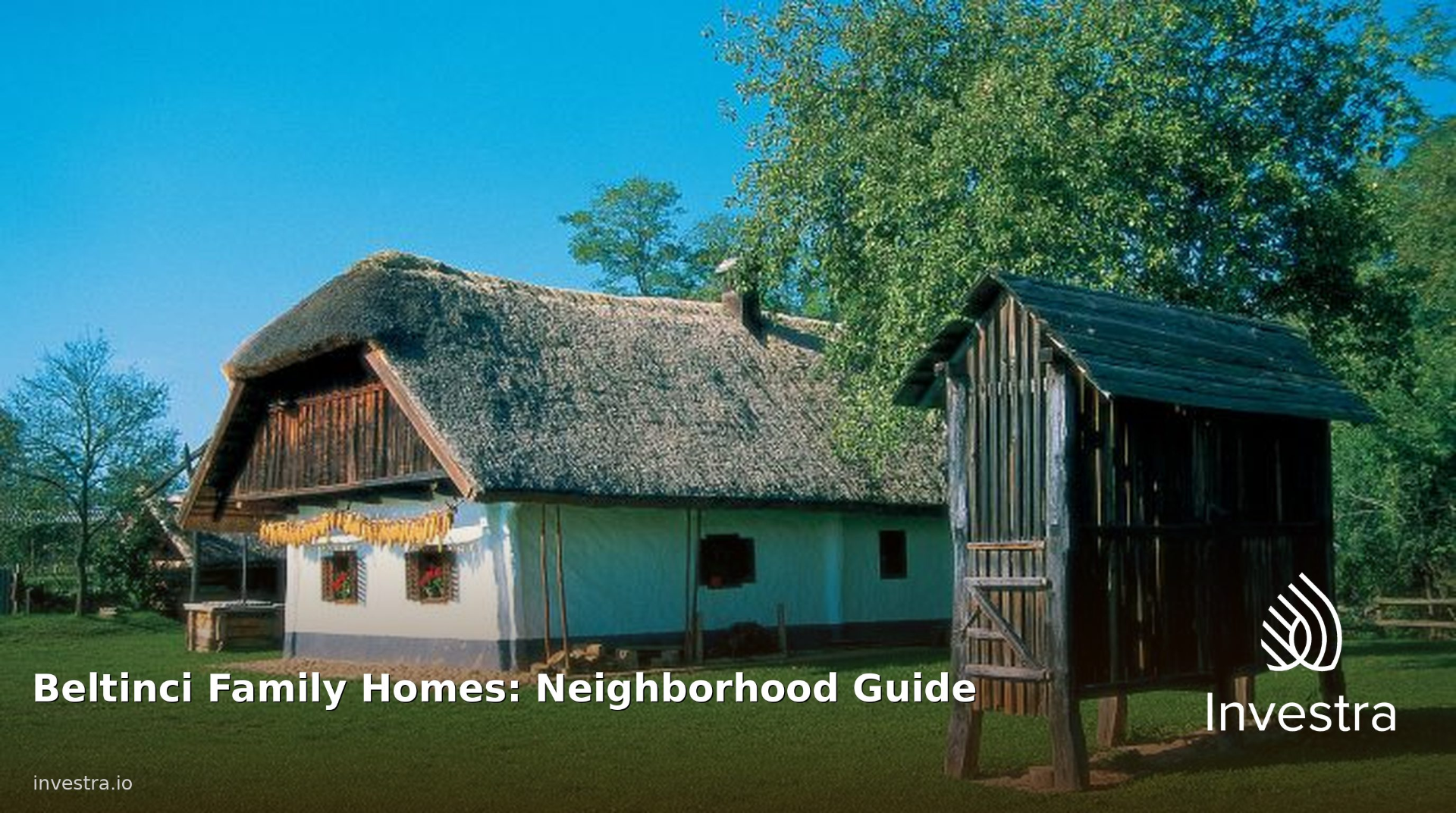
Beltinci Family Homes: Neighborhood Guide
Beltinci Family Homes: Neighborhood Guide
Beltinci at a glance: where Prekmurje family life meets value
Quick Answer: Beltinci is a small town in Prekmurje that offers a calm, regional lifestyle attractive to families and buyers seeking lower-density living near nature and essential services; local market context can be compared to more urban Slovenian markets via Investra.io market guides.
Beltinci sits in northeastern Slovenia’s Prekmurje region, a part of the country that feels distinct from the Alpine and Adriatic belts. The town combines agricultural landscapes, low-rise neighbourhoods, and a sense of close community. For buyers searching specifically for beltinci family homes, this is the kind of place where properties tend to be owner-occupied, plot sizes can favour gardens, and neighbourhood rhythms follow school and seasonal agricultural schedules. In my experience with regional buyers, many are drawn to Prekmurje not because of headline returns but for lifestyle, lower turnover and predictability.
If you’re researching how Beltinci compares with larger cities, Investra.io’s city guides provide useful context—see the Ljubljana real estate market guide and the Maribor real estate market guide to contrast urban demand, housing types and development pressures. What surprised many buyers I’ve worked with is how different infrastructure priorities are here—road links, local schools and small-business services matter more than proximity to a metro center. That shapes buyer decisions: are you prioritising commute time, a bigger garden, or proximity to local amenities?
What buyers should know about beltinci family homes
Quick Answer: Buyers should focus on local land-use rules, title and ownership checks, and suitability for family living—schools, plot layouts and potential renovation needs—and verify up-to-date data with local registries and expert advisors.
When someone asks me "What should buyers know about beltinci family homes?", I start with a quick checklist: confirm legal title, check municipal planning constraints, assess proximity to schools and medical services, and build a realistic renovation or maintenance plan. The reality is that a house that looks move-in ready may still need roof, insulation or heating upgrades to meet modern family standards; conversely, a smaller property with good plot size can be extended if local zoning allows.
Because municipal rules and national tax codes change, I always tell buyers not to rely on memory or hearsay for things like transfer taxes, VAT applicability on new builds, or concessions for owner-occupiers. Instead, consult the land registry (grounded in Slovenia’s real estate cadastre), request up-to-date extracts from the local land cadastre office, and speak to local legal advisors. For guidance on buying in Slovenian cities to see how process varies, review the Investra guides such as Buying property in Ljubljana or Buying property in Maribor—they underline how local differences shape the transaction.
Types of family homes you'll find in Beltinci
Quick Answer: Beltinci offers a mix of traditional detached houses, semi-detached homes and occasional new-builds or renovated farmhouses; confirm construction type and service connections before committing.
Walk around Beltinci and you’ll see different building eras and types. Traditional single-family houses often include cellars and outbuildings, while newer infills and small-scale residential developments offer lower-maintenance living. In my experience, many buyers value the simple layouts and the potential for extensions or garden space—especially families wanting outdoor areas for children. But you should ask practical questions: how old are heating systems, is there central sewerage or septic, and what’s the insulation like?
If you’re considering a property advertised as "new build" or "renovated", check planning records and building permits. That’s where the Investra new-build guides give useful frameworks you can adapt—see the Ljubljana new-build guide and the Maribor new-build guide for the kinds of documents and construction warranties you should request. For local specifics in Prekmurje, a planning check at the Municipality of Beltinci will confirm whether extensions, second dwellings or subdivision are permitted on a given plot.
Neighbourhoods and micro-locations within Beltinci and surroundings
Quick Answer: Within Beltinci and nearby settlements, micro-locations vary by proximity to schools, transport links and agricultural land; visit at different times of day and consult local maps and municipal plans to verify details.
Neighborhood matters more than many buyers expect. In Beltinci you’ll find streets close to the town center with easy access to shops and services, and quieter lanes near agricultural land that offer more privacy and space. Proximity to the local primary school or a bus stop can make daily family life far easier. In my experience, buyers who don’t spend time in the area across a weekday and a weekend often miss community rhythms—when markets operate, where children play, and traffic patterns during school runs.
Rather than rely on agents’ descriptions, go and observe: check walking routes to kindergarten, measure the school commute, and look at noise sources (farm equipment, road traffic). If you’re comparing with other Slovenian locations, Investra’s neighbourhood guides for Ljubljana, Maribor, Bled and Koper offer a model for the kinds of micro-location questions you should ask: Ljubljana neighbourhood guide, Maribor neighbourhood guide, Bled neighbourhood guide. They’ll help you frame questions when you compare Beltinci streets to those in larger towns.
Local infrastructure, services and what families need to check
Quick Answer: Families should verify school capacity, healthcare access, public transport frequency and utility connections in Beltinci; check municipal websites and local providers for current service information.
For family buyers, infrastructure is more than a convenience—it's a quality-of-life issue. In Beltinci you should confirm the location and catchment of primary and pre-schools, the nearest secondary education options, and pediatric services. Ask about emergency medical access and how long ambulances typically take to reach the town from regional hospitals. In my experience, first-hand conversations with neighbours and local parents reveal practical details you won't find on brochures.
Utility connections deserve attention: find out whether a property is on a municipal sewer or uses a septic tank, whether natural gas is available on the street, and who supplies electricity and broadband. If you need high-speed internet for hybrid work, test connections on site at different times. For a broader view of how local service levels compare across Slovenia, consult Investra’s city guides—see the Bled guide and Koper market guide to help frame service expectations in different regions.
The buying process for Beltinci family homes: practical steps and local checks
Quick Answer: The buying process in Beltinci follows Slovenia’s standard property transaction steps—title checks, purchase contract, notarisation and registration—so arrange a local solicitor and confirm up-to-date procedures with municipal and land registry offices.
Buying property in Beltinci is not mysterious, but local steps and documentation matter. From experience, sellers often present older cadastral plans or informal agreements; you want up-to-date land registry extracts (izpis iz zemljiške knjige) and a verified building permit history. Begin by asking the seller for the OR/ID of the property in the land cadastre and a recent extract from the land register. Then instruct a solicitor or notary to perform a title search and encumbrance check. If you’re not based in Slovenia, appoint a local representative to handle viewings and documents.
Foreign buyers should particularly note that residency and nationality can affect permissibility of land purchases—confirm current rules with a Slovenian lawyer. For a structured overview of buying in Slovenian cities, the Investra guides offer step-by-step examples: Buying property in Maribor and Buying property in Bled. If you want advisory help, consider contacting local consultants such as advisory services from Siniša Dagary or the Findes Group & Partners advisory team to coordinate searches and due diligence.
Taxes, fees and ownership basics: how to verify what applies in 2026 and beyond
Quick Answer: Slovenian purchase taxes and ongoing ownership costs can change; always verify current rates and exemptions with Slovenia’s tax authority, a local notary, or a qualified tax advisor before you sign anything.
Questions about transfer taxes, VAT on new builds, property taxes and inheritance rules are common. I avoid stating fixed percentages or thresholds because laws and rates update frequently. Instead, here’s how to verify what applies to your beltinci family homes purchase: request a written tax opinion from a Slovenian tax lawyer or certified accountant; ask a notary to confirm the tax treatment for your specific transaction; and consult Slovenia’s Financial Administration (FURS) website for the latest published rules. If the property is part of a new development, ask the developer for a fiscal statement on whether VAT applies and whether any reduced rates are available.
Ownership forms matter too. Will you hold property in personal name, through a Slovenian company, or via an international structure? Each option has implications for taxation, disclosure and ease of future sales. For a higher level of advisory support, Siniša Dagary’s consultancy practice provides strategy input—see Siniša Dagary profile and investment consultation options. Professional local firms like Findes Group & Partners can also prepare tax memos tailored to your circumstances.
Renovation, new build and planning considerations in Beltinci
Quick Answer: Before renovating or building on a Beltinci plot, check municipal planning plans, building permits, and utility connections, then obtain written confirmation from the municipality and local authorities.
Many buyers choose Beltinci because plots and older houses offer scope for improvement. But opening a renovation or extension project without proper checks can lead to costly delays. Start with a planning zoning check at the Municipality of Beltinci to confirm permitted uses. Then request the property's building permit history and any as-built plans. If you plan to convert an agricultural outbuilding or build an extension, the municipality will tell you what’s required—statements I’ve seen from local planners often include conditions about floor area ratios and permitted building lines.
When assessing new-build opportunities, ask developers for construction documentation, warranties and energy performance certificates. For a benchmarking approach to renovation and new-build standards in Slovenia’s regional cities, consult the Investra new-build guides, such as the Bled new-build guide and Maribor new-build guide. Then get local contractor quotations and verify subcontractor licences in the national registry before signing construction contracts.
Rental and short-term let considerations for family homes in Beltinci
Quick Answer: Beltinci offers potential for steady long-term rental demand from local families and workers, but verify local short-term rental rules with the municipality and check demand using local listings and property managers.
Some buyers ask whether beltinci family homes make good rental assets. The short answer is that demand patterns are different here than in tourist hotspots. Long-term rentals for local workers, teachers and families are the most common market. If you consider short-term lets, check municipal regulations and national rules governing short-term rentals; cities like Bled have tight short-term rental regimes—see the Bled rental market guide for an illustration of local regulation impacts.
Practical steps I recommend: monitor local listings to see what similar properties rent for and how quickly they re-let; speak to local property managers about tenant profiles; and confirm tax reporting obligations with your accountant. If you’re comparing regional rental behaviour, Investra’s rental guides for Ljubljana and Maribor help frame the differences: Ljubljana rental market guide and Maribor rental market guide. For management and legal compliance, consider using local agents who handle contracts, deposits and background checks on tenants.
Practical buying checklist and negotiation tips for beltinci family homes
Quick Answer: Use a practical checklist—title and encumbrances, permits, utilities, defects, and community factors—and prepare negotiation points based on repair costs and timing rather than speculative market claims.
When negotiating in Beltinci, preparation beats price speculation. Gather a full dossier before making an offer: land registry extract, building permit history, utility connection confirmations, energy performance certificate if available, and documented statements of any easements. Get a survey or condition report so you can quantify likely repair costs. In negotiations, referencing verified repair estimates rather than quoting general market trends tends to be more persuasive. From my experience, sellers react better to specific, documented arguments about what needs doing and how that affects timelines.
Also prepare non-price negotiation levers: flexible completion dates, deposit conditions, or taking on small repairs yourself. Work with a local notary to ensure the deposit and pre-contract agreements reflect the agreed conditions. If you want negotiation templates and a step-by-step purchase roadmap, Investra’s guides on buying in Ljubljana, Maribor, Bled and Koper provide useful approaches—see Buying property in Koper and Buying property in Bled for comparable procedure outlines.
Where to get trusted local help: agents, lawyers and consultants
Quick Answer: Use locally experienced agents, a Slovenian notary or property lawyer, and an accountant; verify credentials and ask for references and recent local deal examples before engaging.
No matter how confident you are, local professionals are essential. A reputable estate agent who knows Beltinci will show you hidden pitfalls and comparable sales; a notary will verify title and formalise the contract; and a tax advisor will explain your ongoing obligations. In my practice, I’ve seen foreign buyers saved from costly issues by an early legal review. Always ask professionals for proof of registration, client references, and recent transactions in Prekmurje.
If you want a consultant to coordinate technical, legal and tax checks, consider established advisors such as Siniša Dagary—his site lists investment insights and services—and consult teams like Findes Group & Partners for corporate or tax structuring. Siniša’s investment insights and company profile (Siniša Dagary profile) are useful starting points; you can contact him via investment consultation for project-specific advice.
Investment Disclaimer
Quick Answer: This section explains that the article is informational and not financial advice; consult qualified advisors before making investments.
The information provided in this article is for educational and informational purposes only and should not be construed as financial, legal, or investment advice. Real estate investments carry inherent risks, and past performance does not guarantee future results. Investors should not invest money they cannot afford to lose. Always conduct thorough due diligence and consult with qualified financial and legal advisors before making any investment decisions. Investra.io does not guarantee returns on any investment.
To expand that point practically: if you plan to act on anything discussed here, get a written opinion from a local lawyer and a tax accountant, and ask for references from any agent or developer you engage. Verify property titles and taxes via Slovenia’s land registry and the Financial Administration. We’ve seen buyers who assumed informal seller statements were sufficient—don’t assume; document every assurance in writing.
Frequently Asked Questions
Quick Answer: This FAQ section answers common questions about beltinci family homes, local procedures, taxes and practical next steps; use the answers as guidance and confirm details with local authorities.
What should I check first when viewing a family home in Beltinci?
Start with title and encumbrance: ask the seller for the land registry extract and verify it with a notary. Then inspect the basic services—water, sewer, heating and electricity—and ask for paperwork showing connections. Look for signs of structural issues, damp, roof condition and insulation. Finally, visit at different times (weekday vs weekend, daytime vs evening) to assess noise and traffic. If you’re serious, commission a technical survey to quantify necessary repairs.
Can foreigners buy property in Beltinci and Prekmurje?
Foreign buyers can purchase property in Slovenia, but rules vary depending on nationality and type of land. The most reliable way to know your position is to consult a Slovenian property lawyer or notary who will confirm whether special permissions are required. You can also check the Ministry of Justice or the land registry guidance for current conditions. Don’t rely solely on agent statements; get written confirmation before committing funds.
How do I verify current property taxes and transfer fees?
Tax rates and transfer fees change over time. Verify current figures through Slovenia’s Financial Administration (FURS) website or get a written tax opinion from a licensed accountant in Slovenia. Notaries also provide up-to-date calculations for transfer taxes when preparing contracts. This prevents surprises at closing and ensures your financial modelling is accurate.
What municipal checks are essential before buying?
Ask the municipality for the zoning map, building permit history and any planned infrastructure projects that could affect the property. Confirm whether the plot is classified as buildable land or agricultural land and whether there are restrictions on extensions or subdivisions. Municipal offices can issue official extracts and statements you should keep with your purchase records.
How can I assess rental potential for a Beltinci home?
Research local listings to see what similar homes rent for and how often they become available. Speak to local property managers about tenant demand and lease terms. Remember that Prekmurje’s rental profile differs from tourist areas, so focus on long-term rental demand from workers, educators and families. For broader comparisons, review rental guides in Investra’s city guides to see how regional markets differ.
Is it better to buy a renovated home or a fixer-upper in Beltinci?
That depends on your skills, budget and time frame. A renovated home offers immediate comfort but usually a higher upfront price; a fixer-upper lets you add value through renovation but carries unpredictable costs and time. Always commission a detailed condition survey and get contractor quotes before choosing. Then weigh renovation timelines against your personal plans—family moves, school year starts, or rental availability.
Who should I hire to handle the legal side of a purchase?
Use a Slovenian notary to formalise the purchase contract and register title changes. Retain a property lawyer to perform a comprehensive due diligence including title searches, encumbrance checks and contract drafting. Verify their credentials, request client references and ask for recent examples of similar transactions in Prekmurje.
What utility checks are most important in rural Prekmurje locations?
Confirm whether the property has municipal sewer or uses a private septic system, whether natural gas is available, the quality and speed of broadband, and the condition of water supply. If you rely on a private well, request water quality and yield tests. These checks affect both living comfort and future renovation costs.
Where can I get local assistance for a property search in Beltinci?
Start with local estate agents with proven activity in Prekmurje and ask for references. For coordinated advice across legal, tax and project planning, consult firms like Siniša Dagary advisory services or Findes Group & Partners advisory team. They can manage searches, due diligence and negotiation on your behalf.
Recommended Reading
Quick Answer: These curated guides provide deeper context on Slovenian city markets and buying procedures to help compare Beltinci with larger regional centres.
- Ljubljana real estate market guide
- Buying property in Ljubljana
- Ljubljana rental market guide
- Ljubljana neighbourhood guide
- Ljubljana new-build guide
- Maribor real estate market guide
- Siniša Dagary — Investment Consultant
- Business Strategy Blog
Connect With Investra
Quick Answer: Follow Investra.io on social media to get updates and new market guides; links to Facebook, LinkedIn and YouTube are provided below.
Stay connected with Investra for market updates, property guides and new listings relevant to Slovenia and wider Europe. Facebook: https://www.facebook.com/investraio. LinkedIn: https://www.linkedin.com/company/investra-io. YouTube: https://www.youtube.com/@investraio.
If you want tailored support, contact local consultants mentioned earlier—Siniša Dagary for investment strategy and Findes Group & Partners for legal and tax advice. Their details are included in the article and the recommended reading list for easy reference.
Connect With Investra
Quick Answer: Follow Investra for verified market context and practical property research.
Related Posts
No related posts available.
