
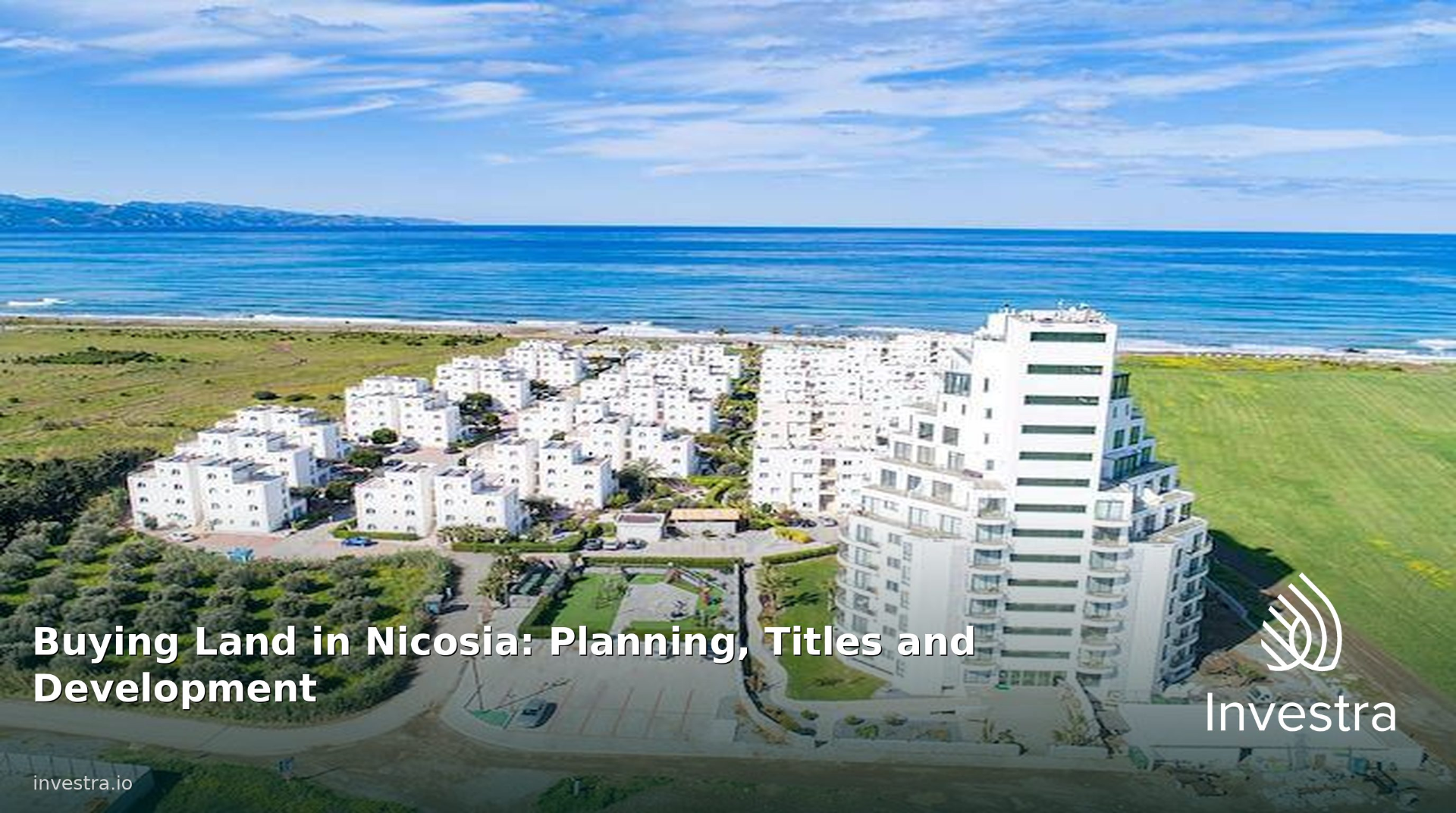
Buying Land in Nicosia: Planning, Titles and Development
Buying Land in Nicosia: Planning, Titles and Development
Why buy land in Nicosia, North Cyprus?
Quick Answer: Buying land in Nicosia gives buyers access to the island's administrative heart and a broad range of development options, but success depends on careful local research and planning. Use local sources and professional advisors to confirm current market context before committing.
Nicosia is different from coastal hotspots. It's the island's capital and administrative centre, with municipal services, universities, hospitals and commercial activity concentrated in and around it. That changes what you can do with land—residential plots close to amenities will attract different interest from commercial or mixed-use sites nearer transport corridors. In my experience, buyers who treat Nicosia as a functioning urban market rather than a holiday playground make stronger decisions.
But what should buyers know about buy land Nicosia? Start by identifying your objective: are you planning to hold the parcel, build to sell, create rentals, or develop commercial space? Each purpose triggers different zoning rules and cost profiles. The reality is that land in the city or in peri-urban areas can provide flexible options, yet it also carries nuances such as municipal master plans and access to utilities that you'll need to verify.
We’ve seen many buyers consult regional guides to compare districts. For an urban-focused perspective, check Investra’s Nicosia market overview, which outlines area characteristics and practical buyer guidance: Nicosia Real Estate Market 2026. If you’re considering development, also review Investra’s practical guides on new builds and renovations for local insights: Nicosia New Build and Property Renovation Guide 2026.
Types of land ownership and what they mean
Quick Answer: Land ownership categories and rights can vary; confirm the parcel's title type, any encumbrances and whether foreign ownership rules apply by checking the Land Registry and engaging a local lawyer.
Understanding ownership frameworks is foundational. Titles on the island may have histories that include transfers, mortgages, easements and historical disputes. Don’t assume a parcel labeled “available” is free of restrictions. In my experience, buyers who ask early about title history save time and legal fees later.
There are several commonly encountered situations: clear Land Registry title, properties with historical claims, and parcels with pending permissions or mortgages. The only reliable way to know which applies is to obtain certified title searches at the Land Registry and to request encumbrance and restriction certificates from the relevant office. A local solicitor can explain how the title was created and whether any outstanding rights affect your plans.
If you want to explore concrete buyer guidance for Nicosia, Investra’s “How to Buy Property in Nicosia as a Foreign Buyer” is a practical reference for procedural steps and recommended checks: How to Buy Property in Nicosia as a Foreign Buyer in 2026. And if you have questions about development feasibility tied to ownership, the new build guide above will also help you frame those discussions.
Title verification and due diligence: the documents you must check
Quick Answer: Verify title through official Land Registry documents, cadastral plans and a local solicitor’s search; commission an independent survey and check for encumbrances, rights of way and municipal notices.
Due diligence isn't optional. You need multiple layers of verification: legal title, physical boundaries, and planning history. Start by requesting the title deed and any mortgage or restriction entries at the Land Registry. Next, commission a licensed surveyor to confirm boundaries against the official cadastral map. In my experience, discrepancies between the physical parcel and registry records create the most delays.
Ask for planning records: prior permit applications, refusal letters and any municipal planning decisions affecting the site. Request a utilities report that confirms availability of mains water, sewage, electricity and telecoms. If the site is near heritage structures or environmental protection zones, you must check with the municipality and relevant agencies to understand limitations.
To get step-by-step assistance specific to Nicosia, review Investra's "How to Buy Property in Nicosia" guide which explains local checks and documentation requirements: How to Buy Property in Nicosia as a Foreign Buyer in 2026. If you’re comparing due diligence standards across regions, these guides from other towns provide helpful contrasts: Kyrenia guide and Famagusta guide.
Zoning, planning permissions and local master plans
Quick Answer: Zoning determines what you can build; check municipal master plans and recent planning decisions at Nicosia municipality and confirm permit procedures with the local planning department.
Zoning will decide whether you can construct homes, commercial units or mixed-use developments on a parcel. Regulations can be granular: plot ratios, permitted building height, setback rules and green space requirements are all part of the equation. The only reliable way to know is to access the municipal master plan and speak directly with planning officers.
What surprised many buyers is how quickly zoning contexts can change near expanding infrastructure projects. A road, university expansion or public investment can shift a perimeter from rural to development-ready over a short period. That potential upside exists, but the reality is that planning permission remains an administrative process that may take months or longer—especially for new subdivisions or large-scale developments.
We recommend obtaining a pre-application meeting with the municipality to outline your concept and learn procedural timelines. For concrete examples and tips on translating planning permissions into buildable projects, Investra’s new-build guide for Nicosia is a useful starting point: Nicosia New Build and Property Renovation Guide 2026. And if your project borders other districts, compare planning constraints by looking at Investra’s regional guides for Kyrenia, Famagusta and Iskele.
Step-by-step buying process for land in Nicosia
Quick Answer: The process typically includes identifying the parcel, instructing professionals, conducting title and technical checks, negotiating terms, signing a sale contract and completing registration; follow an agreed timeline with your lawyer and the seller.
Buying land is a transaction with many moving parts. First, define the parcel and your objective. Then engage a local lawyer and surveyor before signing anything substantial. In my experience, buyers who get legal eyes on the documentation early avoid surprise demands and costly contract amendments later.
Next, negotiate conditional terms that allow for due diligence—title searches, drainage and soil tests, planning pre-checks. A deposit is often paid under escrow or a solicitor’s trust pending clearances. When checks are complete, a formal sale contract is signed and the transfer documented at the Land Registry. Registration is critical: without it, your legal position can be weak if disputes arise.
If you’re unfamiliar with the practical steps in Nicosia, Investra’s “How to Buy Property in Nicosia as a Foreign Buyer” walks through procedural stages and documentation you’ll encounter: How to Buy Property in Nicosia as a Foreign Buyer in 2026. We’ve also posted regional buying guides for Kyrenia, Famagusta and Iskele which usefully compare processes across jurisdictions: Kyrenia, Famagusta, Iskele.
Taxes, fees and ongoing costs: what to check and how to verify
Quick Answer: Tax and fee obligations include transfer duties, registration fees and ongoing municipal charges; verify current rates and thresholds with the local tax office, a licensed lawyer and official government sources before budgeting.
Taxation and fee schedules change and differ by parcel use and buyer residency status. Because rates, bands and deductions shift with policy, I never recommend relying on published numbers from older guides. Instead, contact the municipal tax office and the national tax authority for the latest details. Your solicitor can also provide an up-to-date tax memo tailored to your situation.
Typical items to check include transfer tax, registry fees, stamp duties, local municipal charges and any special assessments for utilities or infrastructure. For development projects, you should also estimate permit and inspection fees, compliance costs and potential contributions to local infrastructure. To confirm specifics, ask for written fee schedules from the authorities and request an itemised estimate from your lawyer or conveyancer.
Investra’s practical buyer guides often explain the categories of taxes and customary fees relevant to Nicosia and other districts—review the Nicosia tax/fee guidance here: Nicosia Real Estate Market 2026. For comparative context on carrying costs during renovations or conversions, look at the new-build and renovation guides for Nicosia and other towns: Nicosia New Build Guide, Kyrenia New Build Guide.
Financing land purchases in Nicosia: options and lender checks
Quick Answer: Lenders treat land finance differently from building mortgages; check with local banks, request current lending policies and pre-approval terms, and confirm how they value raw land versus improved plots.
Financing land can be more constrained than financing completed homes. Banks typically prefer income-producing assets or plots with approved building permits. In my experience, some lenders offer loans specifically for purchase plus construction when a validated build plan exists, but terms vary widely. The prudent approach is to speak to several banks and obtain written pre-approval that reflects your project stage.
Ask lenders how they value land, whether they require additional collateral, and how they release funds during construction. Some banks demand staged releases tied to permit milestones or construction inspections. If you plan to self-finance, document your liquidity and contingency plan because development often involves cost overruns and timing uncertainty.
You can find practical lender-related guidance and valuations in Investra’s Nicosia finance and rental-returns content: Nicosia Rental Yield and Short-Term Let Investment Guide 2026. Also review financing notes in neighbouring-region guides to see how banks treat land across the island: Iskele Market Guide.
Development considerations: utilities, access, environment and delivery
Quick Answer: Confirm mains infrastructure, legal access and environmental constraints early; commission soil, drainage and utility capacity reports and align your concept with planning conditions before buying.
There’s a difference between a beautiful piece of land and a buildable one. Technical viability hinges on things like groundwater, soil bearing capacity, drainage, connection to mains services and road access. I remember a project where the buyer discovered after purchase that gravity-fed drainage was impossible without major works—an expensive surprise. These technical checks are why pre-contract surveys and utilities confirmations are non-negotiable.
Environmental constraints—protected trees, flood risk zones or archaeological overlays—can alter or prohibit development. Obtain environmental and archaeological reports where relevant and consult municipal heritage officers if the site borders protected areas. If you're planning an energy-efficient or sustainable project, check local incentives and grid capacity for solar or battery tie-ins.
Investra’s area guides highlight practical aspects of site delivery in Nicosia and neighbouring districts. For engineering and permit examples, see the Nicosia new build guide and compare with coastal town guides where infrastructure situations can differ: Nicosia New Build Guide, Famagusta New Build Guide.
Working with professionals: lawyers, surveyors, architects and advisors
Quick Answer: Assemble a small, trusted team: a local solicitor for title work, a licensed surveyor for boundaries, an architect for planning feasibility and an advisor for finance and market strategy.
Don’t try to manage every technical check yourself. A local lawyer will liaise with the Land Registry and ensure contracts protect you. A surveyor verifies boundaries and provides cadastral-confirmed maps. Architects and planning consultants translate zoning into buildable designs and advise on permit timelines. In my experience, projects that appoint these specialists early avoid sequential delays and reduce cost surprises.
If you want external advisory services beyond local practitioners, consider engaging recognised consultants. Siniša Dagary provides investment and advisory insights that can help frame strategy and evaluate developer proposals—see his site and services here: Siniša Dagary, Siniša Dagary investment insights, advisory services, and investment consultation.
For coordinated project management or cross-border advisory, the Findes Group & Partners advisory team can also assist with feasibility and structuring: Findes Group & Partners, Findes Group & Partners advisory team. Of course, Investra can help connect buyers with vetted professionals and market insights for Nicosia: Best Neighbourhoods in Nicosia for Property Buyers in 2026.
Investment strategies: hold, develop, subdivide or spec-sell
Quick Answer: Choose an exit strategy before buying: holding for appreciation, developing to create value, subdividing plots, or building to sell each require different permissions, timelines and capital plans.
Strategy matters more than aspiration. Do you want predictable rental income, a one-time development gain, or a long-term land-banking play? Each path affects what you should buy and how you finance it. For example, land-banking may tolerate longer waits but demands confidence in local master plan trajectories. Development requires construction financing, experienced contractors and a clear route through planning controls.
What surprised many investors is how much the permitting timeline and market absorption influence returns. A great project plan can be delayed if the market's ready buyers aren't there when construction finishes. We’ve seen buyers combine strategies: subdivide a larger plot and sell serviced lots while retaining a portion for future income-producing buildings.
Review Investra’s guides on rental yield and market demand to model potential outcomes for developments in Nicosia and similar urban markets: Nicosia Rental Yield and Short-Term Let Investment Guide 2026. For comparative neighborhood insights, see Investra’s best-neighbourhoods content for Nicosia and other cities: Nicosia neighbourhoods, Kyrenia neighbourhoods.
Common pitfalls, disputes and how to minimise risk
Quick Answer: Common issues include unclear boundaries, hidden encumbrances, planning refusals and contractor disputes—mitigate risk with thorough checks, contract protections and staged payments.
Land transactions can turn contentious quickly. Boundary disputes, undisclosed lodgements, or seller’s failure to deliver clear title are frequent sources of conflict. In my experience, the single most effective prevention is insisting on clean, certified title and a written clearance of encumbrances before finalising the transfer.
Contractual safeguards help: conditional completion clauses linked to successful searches, escrowed deposits, insurance for development risks and clear dispute-resolution mechanisms in the sale agreement. When contractors are involved, use phased contracts with retention provisions and independent inspection milestones rather than lump-sum payments.
When you need external support for dispute prevention or resolution, experienced legal advisors such as those recommended via Investra can help. For strategic advisory or complex negotiation support, consider consulting Siniša Dagary or the Findes advisory group to structure protections at purchase and development stages: Siniša Dagary profile, Findes Group contact.
How to verify current local data and costs (prices, taxes, yields)
Quick Answer: Never rely on static guides for numeric figures—verify prices, tax rates and rental yields by consulting the Land Registry, municipal tax office, local banks, licensed valuers and recent market reports.
For rental and market trends, request up-to-date market reports from reputable brokers and platforms. Investra’s region-specific guides are a useful starting point, but treat those as contextual rather than definitive for numbers: Nicosia Market Guide, Nicosia Rental Yield Guide. For neighbouring markets and comparative studies, consult Investra analyses for Kyrenia, Famagusta and Iskele to see differing dynamics: Kyrenia, Famagusta, Iskele.
Investment Disclaimer
Quick Answer: This section outlines that information is educational and not personalised financial advice; always consult qualified advisors before investing.
The information provided in this article is for educational and informational purposes only and should not be construed as financial, legal, or investment advice. Real estate investments carry inherent risks, and past performance does not guarantee future results. Investors should not invest money they cannot afford to lose. Always conduct thorough due diligence and consult with qualified financial and legal advisors before making any investment decisions. Investra.io does not guarantee returns on any investment.
Frequently Asked Questions
Quick Answer: The FAQ below answers common queries about buying land in Nicosia, from title checks to development permissions and professional support.
What should buyers know about buy land Nicosia?
Buyers should prioritise clarity of title, zoning and planning permissions, and technical feasibility. That means getting certified Land Registry searches, a professional survey, and a pre-application discussion with the municipal planning office. Also, verify tax and fee obligations directly with official sources and obtain legal advice tailored to your transaction.
Can foreigners buy land in Nicosia?
Foreign ownership rules vary over time and may depend on nationality and intended use. To confirm current eligibility and any restrictions, contact a local lawyer and check official government channels. Investra’s “How to Buy Property in Nicosia” guide provides procedural context, but you must verify legal eligibility with authorities and your legal counsel.
How do I check whether a plot has clear title?
Request certified title documents and an encumbrance certificate from the Land Registry. Your solicitor should run a full title search and check for mortgages, liens, or pending legal actions. Commissioning an independent land survey ensures the physical boundaries match the registered plan.
What planning permissions are typically required for building?
Permissions depend on intended use, scale and local zoning rules. Residential replacements, extensions or new builds all require different permits. A pre-application meeting with Nicosia’s planning department clarifies the required submissions, timelines and technical reports needed for approval.
How can I verify utility availability?
Ask the seller for recent utility bills and request written confirmation from utility providers about supply connections and capacity. For major works, obtain a utilities capacity report from the municipality or a licensed engineer to confirm whether additional infrastructure investment will be needed.
What taxes and fees should I budget for when buying land?
Potential items include transfer tax, registration fees and municipal charges. Rates change periodically, so obtain written fee schedules from the municipal tax office and the national tax authority. Your solicitor can prepare a tailored estimate for the transaction’s likely tax liability.
Is financing available for raw land purchases?
Some lenders provide loans for land, but terms are usually more restrictive than for developed properties. Pre-approval from local banks should be obtained in writing and should state the lender’s valuation approach and whether construction-stage financing is available.
What due diligence should I conduct for environmental risks?
Commission environmental and geotechnical reports as necessary—especially if the land is near watercourses, floodplains or protected areas. Check municipal records for previous environmental assessments and consult heritage authorities if the site is in a historically sensitive zone.
How do I choose reliable local professionals?
Seek referrals from other recent buyers, check professional licensing bodies, and ask candidates for references and examples of similar projects. For strategic advisory and cross-border structuring, consider consulting firms like Siniša Dagary and Findes Group, which offer advisory and investment insight services: advisory services, Findes Group & Partners.
What are realistic timelines for getting planning permission?
Timelines vary widely. Simple renovations may be processed quickly, while larger subdivisions or commercial projects can take months or longer. A pre-application meeting with planning officials helps estimate realistic timelines for your specific project. Your architect or planning consultant can also advise based on recent local practice.
When should I consider subdividing a plot?
Subdividing can unlock value but requires approvals, infrastructure and often higher upfront costs. Consider subdivision if local demand for serviced plots exists and if the municipality supports parceling for residential or mixed-use development. A feasibility study by a planner or developer will show whether subdivision is viable.
How can I protect my deposit while due diligence is carried out?
Use escrow arrangements, solicitor-held trust accounts, or conditional clauses in the sale contract that return deposits if key searches or permits fail. Insist on staged payments tied to clear milestones and include contractual protections for unforeseen legal defects.
Who do I contact for tailored investment strategy advice?
For tailored strategy, combine a local solicitor, a chartered surveyor, an architect and an investment advisor. Siniša Dagary offers investment consultations, market insight and strategic planning support—see his profile and contact options: Siniša Dagary profile, investment consultation. For advisory team coordination and structuring, Findes Group can assist: Findes Group contact.
Recommended Reading
Quick Answer: These items offer practical context for Nicosia buyers and recommended background reading to support decision-making.
- Kyrenia Real Estate Market 2026: Prices, Areas & Buyer Guide
- How to Buy Property in Kyrenia as a Foreign Buyer in 2026
- Kyrenia Rental Yield and Short-Term Let Investment Guide 2026
- Best Neighbourhoods in Kyrenia for Property Buyers in 2026
- Kyrenia New Build and Property Renovation Guide 2026
- Famagusta Real Estate Market 2026: Prices, Areas & Buyer Guide
- Siniša Dagary — Investment Consultant
- Business Strategy Blog
Connect With Investra
Quick Answer: Follow Investra on social media to get market updates, property listings and video content about North Cyprus real estate.
Facebook: https://www.facebook.com/investraio
LinkedIn: https://www.linkedin.com/company/investra-io
YouTube: https://www.youtube.com/@InvestraIO
Connect With Investra
Quick Answer: Follow Investra for verified market context and practical property research.
Related Posts
No related posts available.
