
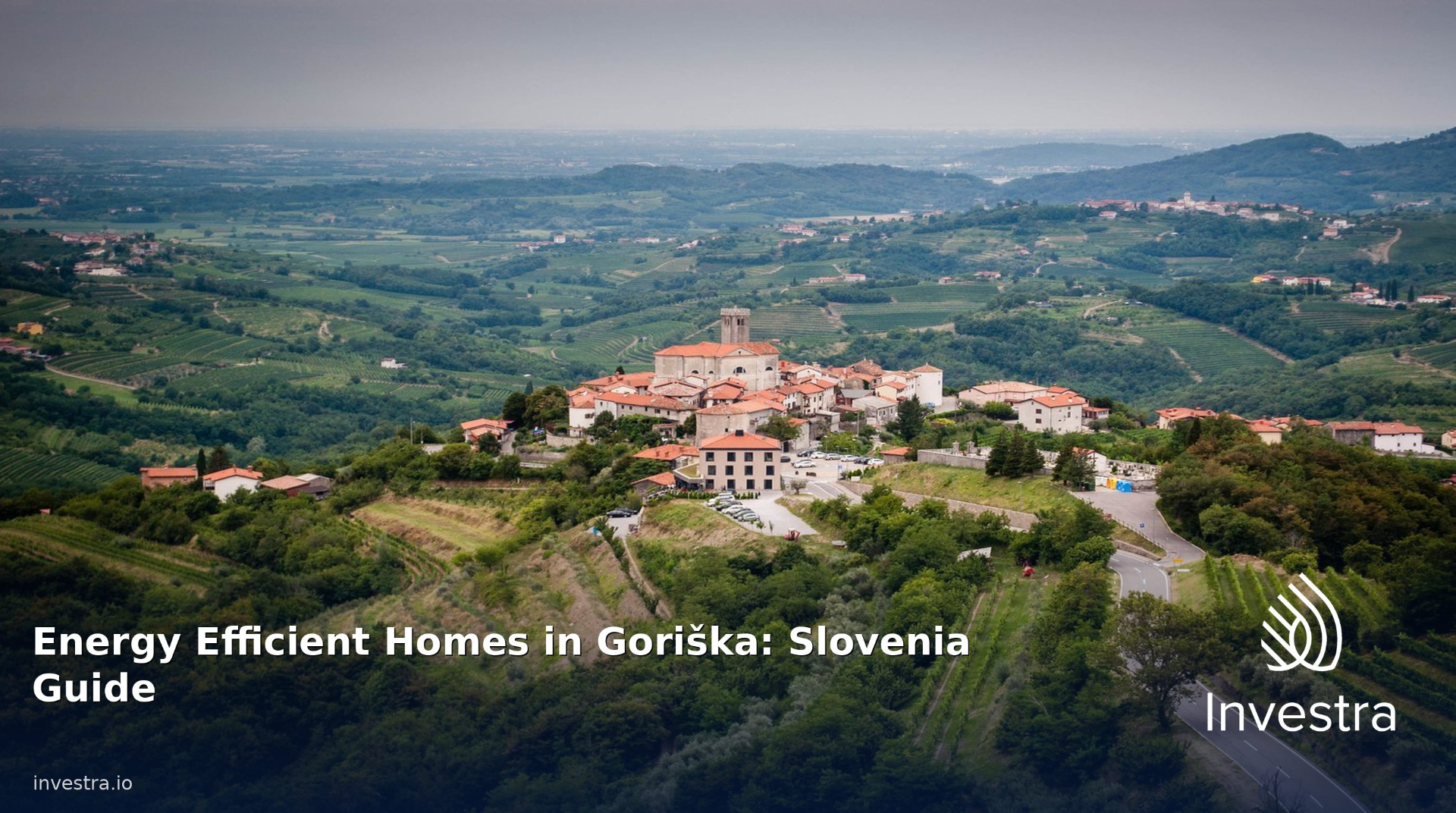
Energy Efficient Homes in Goriška: Slovenia Guide
Energy Efficient Homes in Goriška: Slovenia Guide
Goriška at a glance: Why energy efficient homes in Goriška Slovenia matter
Quick Answer: Goriška's mix of Alpine and Mediterranean influences makes energy performance in homes a practical and financial consideration for owners and investors; buyers should focus on insulation, heating systems and orientation when assessing properties.
Goriška sits in western Slovenia where mountain breezes and Adriatic influences meet. That variety in climate changes how energy efficiency plays out from one municipality to another. In my experience, buyers who treat energy performance as a primary filter—rather than an afterthought—save money on running costs and avoid surprises during renovation. What surprised many buyers is how much potential older stone houses have when retrofitted correctly, and how straightforward some new-build projects are when developers pursue modern standards.
But what does this mean for investors? It means you need to ask specific questions during viewings: what is the insulation specification, when was the boiler replaced, is there local district heating nearby, and does the property have an energy performance certificate? If you’re comparing urban apartments with rural villages or tourist hotspots near the Soča valley, the relative importance of cooling versus heating will differ. For practical, city-specific market context consult the Ljubljana real estate market guide and other local guides on Investra; they won’t replace an on-the-ground inspection, but they help frame expectations.
Quick answer: assessing energy performance legally and practically in Goriška
Quick Answer: Energy performance in Slovenia is documented with an energy performance certificate (EPC) and practical checks involve inspections of thermal envelope, heating systems and ventilation; verify details with the seller and local authorities.
Assessing energy performance in Goriška requires both paperwork and hands-on inspection. Legally, sellers often must provide an energy performance certificate (EPC) that indicates the building’s current rating. Practically, you want a thermal-imaging inspection, a check of window U-values, and a look at the distribution and type of heating—gas, heat pump, biomass or district systems. In my experience, an EPC gives a good starting point but doesn’t always capture issues like thermal bridges or moisture problems.
How can you verify the EPC and technical claims? Ask for the original certificate and the identity of the certified assessor, then contact the issuing body or municipality for confirmation. For deeper technical checks, hire a local energy auditor or architect familiar with Slovenian building regulations. You can also cross-reference regional guidance; for example, developers and buyers in urban centres consult guides like Ljubljana new-build guide to understand modern standards, which are increasingly relevant outside Ljubljana as well.
New builds in Goriška: standards, certifications and what buyers should ask
Quick Answer: New builds in Goriška typically aim to meet or exceed national building regulations and often pursue energy certifications; buyers should request technical folders, insulation specs and certifications from developers.
When you look at new builds in Goriška, the conversation should be technical from the start. Developers usually provide documentation: project permits, technical descriptions and sometimes third-party green certifications. In my experience, the most transparent projects hand over full technical folders during the viewing stage. Don’t shy away from asking for wall section details, the type of ventilation (mechanical balanced vs. natural), and whether the project uses heat pumps or prepares for solar PV.
What surprised a few buyers I’ve worked with is how many mid-size projects prepare for future electrification by installing oversized electrical panels or pre-wiring for EV chargers. If you want to verify claims about certification, ask for the certifier’s contact details and cross-check with the company that issued the certificate. For comparative context across Slovenian cities, Investra’s regional analyses—like the Bled new-build guide and the Maribor new-build guide—show how developer practices differ by location and project scale.
Quick answer: renovating older Goriška properties for energy efficiency
Quick Answer: Renovating in Goriška often delivers the best value when you target the thermal envelope, ventilation and heating system upgrades; start with a professional energy audit and priority list.
Renovation is where Goriška’s character houses and small villages shine. The reality is many older buildings were built to last but not to modern energy standards. A phased, conservative approach tends to work best: begin with an energy audit to prioritize interventions—roof and wall insulation, window replacement or secondary glazing, and improving airtightness. In my experience, buyers who sequence work and keep an eye on moisture management avoid expensive mistakes.
How do you choose between internal and external insulation? External insulation preserves interior space and thermal mass, but local heritage rules can restrict façade changes. Internal systems are often cheaper but require careful detailing to avoid condensation. Verify conservation rules with the municipal heritage office and consult local contractors familiar with Goriška’s building types. For renovation case studies and contractor sourcing practices, the Bled renovation guide and Maribor renovation guide provide templates of typical interventions and permit workflows.
Quick answer: financing, grants and how to verify incentives in Goriška
Quick Answer: Slovenia and EU programmes sometimes offer grants or low-interest loans for energy upgrades, but availability and conditions change—verify current incentives through municipal offices, national energy agencies and your bank.
Financing energy upgrades in Goriška can combine personal loans, mortgage top-ups, and public support schemes. What we know is that national and EU-level incentives have been active across Slovenia, but the details—eligibility, amounts and application windows—change frequently. In my experience, the best route is to identify your specific project scope, then approach three sources: your bank for financing options, the local municipality to learn about municipal grants, and the national energy agency for broader schemes.
How do you verify grant eligibility? Start with the municipal administration in Goriška for local programmes; they will also direct you to the relevant forms and timelines. For national-level schemes, check the official site of the Slovenian Ministry responsible for energy and the national energy agency. When in doubt, an accredited energy auditor or a local architect can prepare the necessary documentation and liaise with authorities. For practical buying-flow examples and financing discussions, read buyer-focused pages such as Buying property in Koper for process parallels.
Quick answer: legal and permitting steps for energy upgrades and new builds in Goriška
Quick Answer: Major energy upgrades and new builds require building permits and compliance with national regulations; always consult the municipal planning office and a local licensed architect or engineer to ensure correct permits.
Major interventions—structural changes, external insulation that alters façades, or installing new heating systems—often trigger permit requirements. The municipality is the first authority you’ll interact with. In my experience, buyers who engage a local architect early avoid costly redesigns and delays. Permit timeframes and documentation lists differ by project size, so don’t assume a small job won’t need approvals.
How should foreign buyers approach permits? If you’re not resident, work through a local representative—an architect, lawyer or a trusted consultant such as those at Findes Group & Partners who understand regional practice. Contact the municipal planning department in the specific Goriška municipality for precise lists and submission formats. For broader process reading and examples of legal/administrative flows, Investra articles like Buying property in Ljubljana and Buying property in Maribor provide useful analogies.
Quick answer: taxes, ownership and verifying fiscal responsibilities in Goriška
Quick Answer: Ownership carries municipal and national tax implications; because rules change, verify property transfer taxes, annual property taxes and potential tax incentives with a Slovenian notary, tax consultant or municipality.
Taxes and ownership structure are topics that provoke many questions. I often hear buyers assume tax rates or exemptions from other countries apply here—they don’t. The only safe approach is verification: speak to a Slovenian notary for transfer tax details, consult a certified tax advisor for annual liabilities, and confirm any local property charges at the municipality. Sellers and agents may provide estimates, but these should be cross-checked.
What about ownership forms for foreigners? The specifics depend on nationality, reciprocity agreements and the property type; we’ve seen that foreign buyers often use legal advisors to confirm whether full ownership, leasehold or a company structure makes more sense. For trustworthy advisory firms in the region, consider contacting the Findes Group & Partners team for an initial orientation. Also consult the purchase guides on Investra, such as Buying property in Bled and the Buying property in Koper piece for process comparisons.
Quick answer: rental and short-term let potential for energy efficient homes in Goriška
Quick Answer: Energy efficient homes can be more attractive to long-term tenants and short-stay guests due to lower running costs and comfort; verify local demand and seasonality with municipal tourism boards and professional lettings agents.
Energy performance can be a competitive differentiator in the Goriška rental market. Lower utility costs, consistent indoor climate and modern systems are selling points for both longer lets and holiday rentals. In my experience, properties marketed with clear energy credentials often achieve stronger enquiry rates—but you should validate demand by contacting local letting agents and checking municipal tourism statistics for seasonality patterns.
How do you check the short-term rental legality and requirements? Rules for short-term lets vary by municipality and are sometimes updated in response to tourism pressures. Ask the local municipality about registration, tourist taxes and any restrictions. For market context and performance indicators in other Slovenian destinations, read rental-focused Investra guides such as the Ljubljana rental market guide, the Maribor rental market guide and the Bled rental market guide.
Quick answer: choosing contractors, architects and suppliers in Goriška
Quick Answer: Select local contractors and certified energy auditors with regional experience; verify references, licensing and previous projects and ask for detailed written quotes and material specifications.
Hiring the right team matters more in renovation projects than in many new builds. Local contractors understand climatic specifics—like proper detailing for alpine rain and valley breezes—and can advise on the best local suppliers. In my experience, a trusted local architect or energy auditor is the single best investment during the design and tender stage because they prevent scope creep and technical mistakes.
How do you vet contractors? Ask for recent project references and visit at least one finished job. Verify professional credentials and membership in local trade associations. When comparing quotes, insist on material specifications rather than vague phrases like “modern insulation.” Also consider using services offered by advisory firms such as Findes Group & Partners to shortlist vetted contractors and to support contract negotiation. For further consultant profiles, see independent advisors like Siniša Dagary and his advisory pages.
Quick answer: materials, technologies and practical retrofit choices for Goriška houses
Quick Answer: Prioritize the thermal envelope, controlled ventilation with heat recovery, efficient heating systems and solar-ready electrical infrastructure; validate material performance with manufacturers and independent test reports.
Material choice is a long list of trade-offs. Insulation type, window frames, and the decision between biomass or heat pump heating all depend on building type and local fuel availability. In my experience, passive improvements—improving insulation, sealing drafts and upgrading windows—deliver the most predictable comfort gains. Mechanical ventilation with heat recovery often makes the biggest difference in airtight retrofits.
Where should buyers verify technical claims? Ask suppliers for product datasheets, independent test certificates and warranty details. For solar PV and battery systems, request performance models for your specific roof orientation and local irradiation data; municipal or national renewable energy portals can offer baseline figures. When comparing technology and whole-house strategies, consult real-world examples and regional new-build guides on Investra, including the Koper market guide for coastal considerations and Bled market guide for mountain-edge contexts.
Quick answer: creating a buyer decision framework for energy efficient homes in Goriška
Quick Answer: Build a decision framework that weighs purchase price, expected retrofit scope, regulatory constraints, and local demand; verify cost assumptions with local contractors and financial advisors.
Buying an energy efficient property—or buying to make it efficient—is a strategic decision. In my experience, the smartest buyers create a checklist that includes: regulatory constraints (heritage and permits), technical condition (EPC, audit), contractor availability and cost, financing/grant prospects, and rental or resale demand. A weighted scoring system helps compare options objectively rather than emotionally.
How do you reduce uncertainty? Obtain a professional audit and at least three firm renovation quotes before finalising an offer. When numerical figures are needed—expected renovation costs, tax liabilities or rental income projections—ask for written quotes and consult a Slovenian notary or certified tax advisor to verify fiscal implications. Use regional guides on Investra to benchmark timelines and processes; the Maribor market guide and Ljubljana market guide can provide comparative context for decision-weighting.
Quick answer: practical on-site checklist for viewings and pre-purchase inspections in Goriška
Quick Answer: During viewings, check for airtightness, insulation details, heating system age and maintenance records, ventilation type, and the presence of an EPC; follow up with an energy auditor before signing.
When you arrive for viewings in Goriška, don’t rely on glossy brochures. I recommend a simple checklist: inspect wall thickness and visible insulation, look at window frames and seals, ask about the last boiler or heat pump service, and test for damp smells or staining. Note orientation, roof condition and shading from neighbouring buildings or trees. Ask to see utility bills if available—they provide real historic running cost signals—but remember bills are only one part of the story.
What’s the practical next step after a promising viewing? Commission a local energy audit and an independent structural inspection. The auditor can produce a prioritized retrofit plan with estimated savings and compliance notes. To find credible auditors and contractors, consult local advisory services such as Findes Group & Partners advisory team or trusted consultants like Siniša Dagary advisory services who can coordinate procurement and technical checks.
Quick answer: resale and long-term considerations for energy efficient properties in Goriška
Quick Answer: Energy efficient features can improve marketability over time but you should validate longevity, maintenance costs and the transferability of warranties; consult notaries and technical advisors for warranty and contract checks.
Thinking long-term changes how you value interventions. Some buyers focus on quick wins that improve marketability today, such as updated heating systems and windows. Others invest in whole-house approaches with higher up-front costs but potentially lower long-term maintenance. The reality is that warranties, maintenance regimes and the availability of qualified service providers are as important as the initial performance metric.
How do you proof your investment for resale? Keep meticulous documentation: installation certificates, maintenance logs, warranty paperwork and the energy audit. At sale, present a compact technical dossier to prospective buyers to distinguish your listing. To understand how energy credentials affect resale in Slovenian cities, review market commentary in regional Investra resources such as the Bled market guide and the Koper market guide, which highlight buyer preferences across different types of destinations.
Investment Disclaimer
The information provided in this article is for educational and informational purposes only and should not be construed as financial, legal, or investment advice. Real estate investments carry inherent risks, and past performance does not guarantee future results. Investors should not invest money they cannot afford to lose. Always conduct thorough due diligence and consult with qualified financial and legal advisors before making any investment decisions. Investra.io does not guarantee returns on any investment.
Frequently Asked Questions
What should buyers know about energy efficient homes Goriška Slovenia?
Buyers should prioritise documented energy performance, an independent energy audit, and a clear understanding of permit and heritage constraints. In practice this means asking for the energy performance certificate (EPC), verifying it with the issuing body, commissioning a thermal imaging or energy audit, and requesting maintenance records for heating and ventilation systems. For foreign buyers, engage local advisors early—architects, notaries and tax consultants—to confirm ownership rules and local nuances. Use municipal offices to confirm any planning restrictions that can affect insulation or façade upgrades.
How do I verify current incentives or grants for energy renovations in Goriška?
Verify incentives by contacting the municipality where the property sits, the national energy agency, and your bank or mortgage provider. Many programmes require specific documents prepared by certified auditors, so get a professional opinion first. Always ask for official programme links and current application deadlines, and confirm whether the incentive is a direct grant, a tax credit, or a loan with preferential terms.
Are energy performance certificates mandatory in Slovenia and how do I check one?
Energy performance certificates are commonly used in Slovenia to indicate building efficiency; however, legal requirements and formats can evolve. To check a certificate, request the original from the seller, note the assessor’s details, and ask the municipal office or the issuing organisation to confirm validity. If the certificate is old, commission a fresh audit because technical conditions may have changed since it was issued.
What renovation interventions give the best value in Goriška homes?
Commonly effective interventions are improving the thermal envelope (insulation in roofs and walls), upgrading windows, and installing efficient ventilation systems with heat recovery. The specific priority depends on building typology: stone village homes need different approaches than post-war concrete blocks. An energy audit will rank interventions by cost-effectiveness for your specific property and climate exposure.
How should foreign buyers approach permits and local regulations?
Foreign buyers should rely on a local representative—an architect, lawyer or consultant—to interact with municipal planning and building authorities. Confirm whether external works require heritage approval or neighbour notifications, and obtain a clear list of required documents before submitting permit applications. Local advisors often accelerate permit timelines because they understand submission formats and local expectations.
Can energy efficient homes command higher rents in Goriška?
Energy efficient homes often attract tenants who value lower utility costs and comfort, which can improve occupancy and tenant retention. To assess rental potential, contact local letting agents, examine seasonal tourism statistics if you plan short-term lets, and weigh the property’s location and amenities. Verify legal conditions for short-term lets with municipal tourism or housing offices before committing to that strategy.
How do I find reliable contractors and validate their work?
Ask for recent references and visit completed projects if possible. Verify professional licences, look for membership in trade associations, and request detailed written quotes with material specifications. Consider engaging a project manager or technical advisor who can conduct periodic site checks and validate compliance with technical standards during execution.
What are the ongoing maintenance considerations for energy systems?
Energy systems—heat pumps, ventilation units, solar arrays—require periodic servicing, filter changes and occasional component replacement. Before buying, ask for maintenance logs and warranty terms, and confirm the availability of local service technicians. Where warranties are transferable, ensure proper handover documentation is included in the sale contract.
How can I verify tax or transfer costs for a Goriška property?
Do not rely solely on online estimates. Consult a Slovenian notary for precise transfer tax obligations, and a certified tax advisor for annual property taxation and potential tax benefits tied to energy upgrades. Municipal finance offices can confirm local charges. Obtain written cost estimates from the notary and tax advisor before making an offer.
Who can help coordinate cross-border buyers in Goriška?
Cross-border buyers benefit from advisory teams that combine legal, tax and technical expertise. Firms such as Findes Group & Partners offer advisory support, and independent consultants like Siniša Dagary provide strategy and coordination services. Always check references and ask for a clear scope of services before engagement.
Recommended Reading
- Ljubljana real estate market guide
- Buying property in Ljubljana
- Ljubljana rental market guide
- Ljubljana neighbourhood guide
- Ljubljana new-build guide
- Maribor real estate market guide
- Siniša Dagary — Investment Consultant
- Business Strategy Blog
Connect With Investra
Facebook: https://www.facebook.com/investra.io
LinkedIn: https://www.linkedin.com/company/investra-io
YouTube: https://www.youtube.com/@InvestraIO
Connect With Investra
Quick Answer: Follow Investra for verified market context and practical property research.
Related Posts
No related posts available.
