
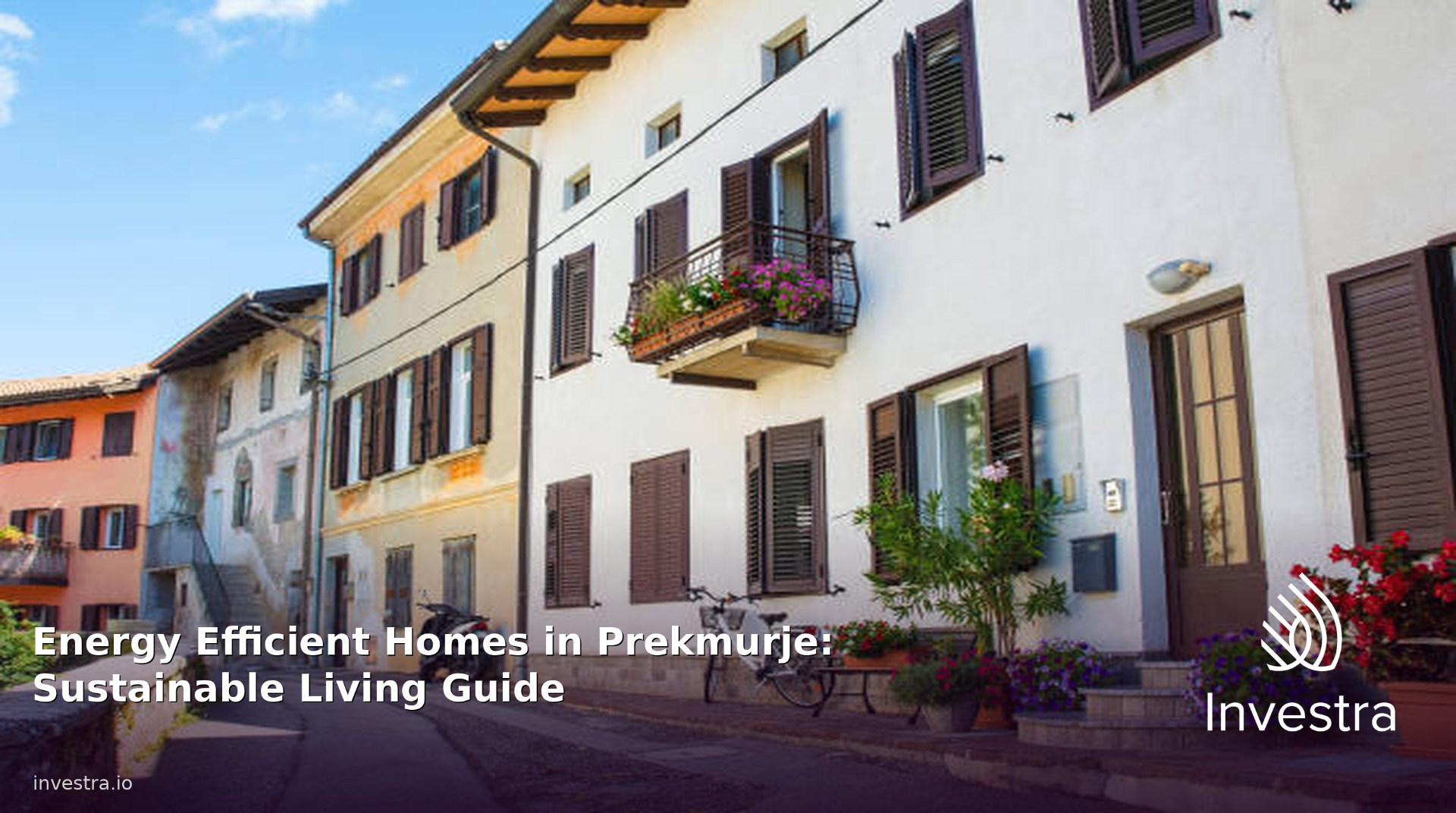
Energy Efficient Homes in Prekmurje: Sustainable Living Guide
Energy Efficient Homes in Prekmurje: Sustainable Living Guide
Energy Efficient Homes Prekmurje: Why This Region Matters for Sustainable Living
Quick Answer: Prekmurje offers unique opportunities for energy efficient homes thanks to its rural setting, traditional building stock and growing interest in sustainable renovation and new builds; buyers should view it through the lens of regional context and long-term utility savings.
Prekmurje is a quieter corner of Slovenia with a different pace from Ljubljana or the coastal towns. That difference is central to the appeal of energy efficient homes Prekmurje buyers seek: older farmhouses ready for thoughtful retrofits, plots with space for solar arrays, and new-build projects that can integrate passive design from the start. In my experience, what surprises many buyers is how regional character shapes technical choices — vernacular stone or timber walls, local wind patterns and microclimates that affect insulation and heating strategies.
When considering a sustainable purchase in Prekmurje, it's useful to compare markets. For example, our guides about Ljubljana and other cities show contrasting buyer expectations and construction norms — see the Ljubljana real estate market guide and the Koper real estate market guide for context. Prekmurje's strengths are space, local materials and an emerging interest in low-energy retrofits among homeowners and developers.
The reality is buyers aren't just choosing a house; they're choosing an energy profile. That affects decisions about insulation, heating systems, renewables and permits. If you're comparing Prekmurje to Maribor or Bled, read the Maribor real estate market guide and the Bled real estate market guide so you can weigh climate, market liquidity and renovation culture. In short: Prekmurje is a region where energy efficient homes can be created affordably and thoughtfully, but the path varies a lot from urban Slovenia.
What should buyers know about energy efficient homes Prekmurje?
Quick Answer: Buyers should understand local building types, the permit and inspection process, potential incentives, and how to verify current costs and technical standards through local authorities and trusted advisers.
That question is the one I hear most. Energy efficient homes Prekmurje require a practical checklist: appraisal of the building fabric (walls, windows, roof), heating system condition, potential for renewable integration (solar, heat pumps), and access to local trades who can handle thermal upgrades. What many buyers don't realize is how much local administrative detail affects choices — municipal rules, protected landscapes and utility connection points can determine whether you can add a ground-source heat pump or install a larger photovoltaic system.
When you need current figures — for example, subsidy amounts, local permit fees or energy prices — don't rely on old articles. Verify by contacting the municipality where the property sits, the national energy agency or Eko sklad, and by requesting quotes from at least three qualified contractors. Our guides about buying in Slovenian cities can help explain procedures elsewhere; see Buying property in Ljubljana, Buying property in Maribor, and Buying property in Bled to compare processes.
In my experience, the smartest buyers combine an upfront building survey with a staged renovation plan: immediate fixes for airtightness, medium-term heating upgrades, and longer-term renewable investments when finance or incentives align. Ask for references and sample energy audits from local firms, and cross-check any financial figures with government portals and banks so you know exactly what you'll pay and what you can claim back.
Energy Efficiency Standards and Certifications in Slovenia
Quick Answer: Slovenia uses national building codes and energy performance certificates to rate buildings; verify a property's current energy certificate and consult municipal building departments for compliance details.
Energy efficient homes Prekmurje are judged against Slovenia's national building regulations and the EU's energy directives. A formal energy performance certificate (EPC) will tell you a home's current rating — always request this during negotiations. The certificate will list recommended improvement measures, but remember it’s a snapshot rather than a renovation plan. For detailed technical advice you need an independent energy audit; engineers and certified assessors can turn the EPC's recommendations into a project scope.
Certification matters for resale and rental appeal. An efficient rating reduces operating costs and can make a home more attractive to tenants and buyers. However, legal and technical standards evolve; for current compliance thresholds consult the relevant municipal office and national building codes. If you want to see how urban markets treat efficiency upgrades, check the Ljubljana new-build guide or the Maribor new-build guide. These resources won't replace local regulation checks in Prekmurje but will help you ask the right questions of inspectors and contractors.
What surprised me is how much variance there is between an EPC’s suggestions and what a skilled renovator will prioritize. A targeted retrofit that focuses on airtightness and heating can sometimes deliver the biggest practical benefits before pursuing full certification upgrades. Always get multiple specialist opinions to form a balanced plan.
New Builds in Prekmurje: Designs, Materials and Technologies
Quick Answer: New builds in Prekmurje can be tailored to high energy performance with passive design, local materials and renewable systems; discuss specific designs with architects and inspect pilot projects in the region.
Building new gives you the most control over energy performance. In Prekmurje you can combine modern techniques — thick insulation, triple-glazed windows, heat-recovery ventilation systems — with locally available materials that suit the climate. I've seen contemporary designs that respect rural aesthetics while delivering low energy demand, which helps when you're trying to preserve the local character of towns and villages.
Start with a clear brief: target performance level (e.g., near-zero energy), preferred heating technology, and whether you want on-site electricity generation. Architects and contractors will map those goals to budgets, but don’t expect standardised answers: terrain, soil type and local water tables influence foundation and heating choices. If you want examples of market expectations elsewhere in Slovenia, compare the Bled new-build guide and the Ljubljana new-build guide. They show how architects pair aesthetic and environmental goals in different contexts.
What we’ve seen is that buyers who visit completed projects feel far more confident. Ask local developers for case studies and request references. Also consider seasonality when assessing occupant comfort; Prekmurje’s winter performance will tell you whether the building details were implemented properly.
Renovating Traditional Prekmurje Houses for Efficiency
Quick Answer: Retrofitting traditional homes in Prekmurje often yields strong comfort improvements; prioritize fabric upgrades, ventilation, and sympathetic design to protect heritage features.
Prekmurje has many older houses with thick walls, timber frames and charming details. Renovation is rarely just technical work; it’s an exercise in balancing heritage and performance. In my experience, homeowners get the most value by following a prioritized plan: begin with airtightness, then insulation in roofs and walls where possible, upgrade windows carefully, and add mechanical ventilation with heat recovery if airtightness increases significantly.
Treat old plaster, wooden beams and stonework with respect. Some insulating systems can damage traditional materials if installed incorrectly; use specialists familiar with historic renovations. For large projects, ask for a conservation plan integrated with the energy retrofit. You can learn from renovation case studies in urban centers, like those discussed in the Maribor new-build guide and the Bled new-build guide.
One practical tip: stage the work so you live in the house during less invasive phases, then move out for major envelope upgrades. That reduces error, speeds timelines and can reduce costs. Lastly, always get at least three written quotes for any specialist retrofit: comparing methodologies is as important as comparing prices, especially when heritage materials are involved.
Buying Process in Prekmurje for Energy-Savvy Buyers
Quick Answer: The buying process in Prekmurje follows Slovenian property law and local municipal procedures; energy-savvy buyers should add technical due diligence and verify certificates before committing.
Buying energy efficient homes Prekmurje follows the national procedures you'll see across Slovenia. You’ll start with a sales agreement, due diligence at the land registry, and checks for encumbrances or protected status. But if energy performance is a priority, there are extra steps I always recommend: request the energy performance certificate, commission an independent building survey, and ask for utility bills to understand actual energy consumption.
Foreign buyers sometimes ask if rules in Prekmurje differ from Ljubljana or Koper. They don't in fundamental ways, but municipal practices vary so contact the local municipality early. If you're unfamiliar with Slovenian processes, compare advice in our city guides: Buying property in Ljubljana, Buying property in Maribor, and Buying property in Bled.
What many buyers underestimate is the time needed for technical checks. An energy audit can uncover hidden costs like required foundation repairs for installing ground-source systems. To verify current legal steps and timelines, visit the land registry and municipal planning page, and consider hiring a local lawyer and a consultant — for instance, advisors like investment consultation from experienced consultants can clarify cross-border issues if you're buying from abroad.
Taxes, Fees and Ownership Issues Related to Energy Upgrades
Quick Answer: Energy upgrades influence ownership decisions through potential property tax implications, permit fees and resale value considerations; confirm current rules with tax authorities and municipal offices.
Energy efficiency can affect more than utility bills. In Slovenia, property taxes, property transfer processes and local fees are handled at municipal and national levels. While specific tax treatments for energy upgrades can change, the practical pathway for buyers is consistent: document all energy upgrade works, keep invoices and permits, and consult a tax adviser to understand deductibility, cost basis adjustments and how improvements affect taxable events when you sell.
What I advise clients is to treat energy investments as capital improvements and to keep detailed records. That means permits, contractor contracts and energy performance results. For policy or tax changes, check official sources — municipal tax offices or national tax authority websites — since up-to-date tax rates and eligible deductions can vary. If you need hands-on advisory, firms like Findes Group & Partners and their advisory team can help interpret local tax rules and compliance.
Don't assume incentives are automatic. Some grant programs require works to be approved in advance. Confirm with the grant provider and municipality before starting. That way you won't miss out on reimbursements because paperwork wasn't submitted correctly.
Financing, Grants and How to Verify Incentives
Quick Answer: Financing and grants can make energy improvements affordable, but confirm eligibility, documentation and current amounts directly with lenders and the issuing agencies before relying on them.
Financing energy efficient homes Prekmurje projects often involves a mix of personal finance, mortgage top-ups and public grants. A lot of buyers assume national incentives are standard year to year; they’re not. The useful approach is to identify potential funding streams early and verify them directly: check government portals, national energy agency announcements and local municipal web pages for current programs. For Slovenia-specific financing options, start with the national energy-saving programmes and banks that offer green mortgage products.
Always ask grant agencies what documentation they need and whether pre-approval is required. That prevents situations where you complete work and later discover it wasn't eligible. If you're unsure where to start, advisors such as those featured on advisory services can help package grant applications and work with your contractor. Also consult local financial institutions for bespoke building loans and compare terms carefully.
How can you verify current incentives? Visit the official agency websites, call the grant program hotline, and request written confirmation of eligibility and timelines. Don’t rely on a single quote; plan with conservative assumptions and update as you get formal approvals.
Rental and Income Considerations for Energy Efficient Homes Prekmurje
Quick Answer: Energy efficient homes Prekmurje can attract longer-term tenants and reduce operating costs, but rental performance depends on local demand and how energy savings are communicated to tenants.
Owners often ask whether energy performance improves rental returns. The short answer is yes, it can, but context matters. Prekmurje's rental market is different from Ljubljana, Maribor or Bled; demand patterns are localized and seasonal influences can be significant. Presenting a property as energy efficient — with an EPC and documented running costs — can be a competitive advantage, especially for longer-term rentals or buyers targeting eco-conscious tenants.
When considering rentals, ask for local market intelligence. Read the Ljubljana rental market guide, Maribor rental market guide and the Bled rental market guide to understand how rental expectations vary across Slovenia. For Prekmurje, check local listings and ask regional agents about tenant profiles — remote workers, retirees, local families — and how much they value low running costs.
I’ve watched landlords win trust with tenants simply by sharing real energy bills and explaining the heating system. Tenants appreciate predictable bills and comfortable indoor climates. If you plan short-term lets, document energy efficiencies on your listing; guests like quiet, warm properties with low bills. Always verify local regulations on short-term rentals with the municipality before starting a commercial rental activity.
Choosing Local Contractors, Architects and Project Teams
Quick Answer: Choose contractors and architects with proven experience in energy retrofits or passive new builds, verify credentials and references, and use a formal contract that outlines energy performance targets.
The team you hire will determine how successfully an energy project in Prekmurje turns out. Look for builders who can show completed low-energy projects and architects who understand local building traditions. In my experience, the best outcomes come from teams who plan together from the start, not from ad hoc additions mid-project. Ask potential team members for case studies, references and guarantees tied to energy targets.
Consultancy and legal help are useful too. For advisory services, consider professionals like Siniša Dagary whose investment insights and profile explain client work. If you need direct contact for project coordination, use the investment consultation page to start a dialogue. For wider advisory and compliance questions, firms such as Findes Group & Partners and their advisory team can help source qualified local professionals.
Two practical rules I recommend: contractually define deliverables tied to measurable energy outcomes, and include a commissioning and handover phase where the contractor demonstrates systems working to design specs. That reduces disputes and gives you confidence in long-term performance.
Lifestyle, Community and Long-Term Considerations in Prekmurje
Quick Answer: Energy efficient homes Prekmurje influence lifestyle choices around transport, community engagement and resource use; consider local services, connectivity and long-term regional plans when buying.
Energy efficiency is not just about insulation and heat pumps; it's part of a lifestyle. In Prekmurje that might mean investing in a home that supports electric vehicle charging, garden space for seasonal food, or community-level renewable schemes. What I’ve observed is buyers who think holistically — about commuting, broadband for remote work, and local services — make more resilient long-term choices.
Ask the municipality about long-term planning: are there nearby infrastructure projects, protected areas or zoning changes that could affect your home's energy options? Compare with urban contexts using our guides — Ljubljana neighbourhood guide, Maribor neighbourhood guide, and Bled neighbourhood guide — because lifestyle trade-offs differ between city and countryside.
Investment Disclaimer
Quick Answer: Investment Disclaimer — Expert analysis and investment guidance from Investra.io, your trusted SI real estate platform.
The information provided in this article is for educational and informational purposes only and should not be construed as financial, legal, or investment advice. Real estate investments carry inherent risks, and past performance does not guarantee future results. Investors should not invest money they cannot afford to lose. Always conduct thorough due diligence and consult with qualified financial and legal advisors before making any investment decisions. Investra.io does not guarantee returns on any investment.
Frequently Asked Questions
Quick Answer: Frequently Asked Questions — Expert analysis and investment guidance from Investra.io, your trusted SI real estate platform.
What should buyers know about energy efficient homes in Prekmurje?
Buyers should know that energy performance is determined by building fabric, heating systems and occupant behaviour. Always request an energy performance certificate and commission an independent energy audit before purchase. Check municipal rules for permits on renewable installations and verify current incentives with government portals or energy agencies. If you're buying from abroad, engage a local lawyer and a technical consultant to avoid surprises in documentation, zoning and utility access.
How can I verify current grants or subsidies for energy upgrades?
Verify grants and subsidies by visiting the official government and energy agency websites, calling program hotlines, and getting written pre-approval where required. Ask lenders and contractors what documentation is needed for claims. Never rely solely on informal promises; formal, dated confirmations from the grant issuer protect you during project planning and execution.
Are there special permits for installing renewable systems in Prekmurje?
Local permits depend on the municipality and the scale of the installation. Small rooftop solar might have fewer requirements than a ground-mounted array or a large heat-pump system. Contact the local municipal planning office to confirm permitted works and any protected-area constraints. Use an architect or planner to prepare permit documentation to avoid delays.
How do I find reliable contractors for energy retrofits?
Seek contractors with verifiable experience in low-energy projects, ask for case studies and client references, and request detailed proposals that include materials, methods and performance targets. Consider consultants like Siniša Dagary for procurement and project advice via advisory services. Use firms such as Findes Group & Partners to assist with sourcing and vetting if you prefer a managed process.
Will energy-efficient upgrades increase my property's resale value in Prekmurje?
Energy-efficient upgrades often improve desirability, but resale value depends on market preferences at the time of sale. Maintain documentation — EPCs, invoices, test reports — to demonstrate improved performance to future buyers. Local market trends vary; compare with regional guides like those for Ljubljana, Maribor and Bled to understand buyer priorities in different parts of Slovenia.
How long do typical energy retrofit projects take in rural Slovenia?
Project durations vary widely by scope. Minor upgrades can take weeks, while full-envelope retrofits or heating system replacements may take months. Seasonal factors, local contractor availability and permit lead times also influence schedules. Plan conservatively and ensure contracts specify milestones and commissioning tests for systems like heat pumps and ventilation.
Can I rent an energy-efficient home in Prekmurje as a short-term let?
Yes, but check municipal regulations and tax rules for short-term rentals. Energy-efficient homes can be attractive to guests, especially if you can show transparent energy costs and comfort benefits. Market your property with clear information on heating systems and energy features, and ensure local compliance for any hospitality business operations.
What documentation should I request from the seller when buying an energy-efficient property?
Request the energy performance certificate, recent utility bills, invoices and permits for any upgrades, warranties for installed systems, and the results of any recent energy audits. These documents help you verify claims and plan future works. If documentation is missing, consider adjusting your offer or requiring the seller to obtain an independent audit as a condition of sale.
How do local climate conditions in Prekmurje affect energy choices?
Local climate affects insulation needs, heating system design and the viability of renewable technologies. Ground-source heat may perform differently depending on soil conditions, and solar yield varies with regional sunshine patterns. Request climate data from local meteorological sources and ask contractors to tailor designs to Prekmurje’s conditions rather than using one-size-fits-all approaches.
Who can help me with cross-border buying and project management?
For cross-border purchases and managing renovation projects remotely, engage a multidisciplinary team: a local lawyer, a technical consultant, and a project manager. Consultants like Siniša Dagary and advisory firms such as Findes Group & Partners provide services that include documentation, vendor selection and compliance checks. Ensure all agreements are in writing and include clear communication protocols.
Recommended Reading
Quick Answer: Recommended Reading — Expert analysis and investment guidance from Investra.io, your trusted SI real estate platform.
- Ljubljana real estate market guide
- Buying property in Ljubljana
- Ljubljana rental market guide
- Ljubljana neighbourhood guide
- Ljubljana new-build guide
- Maribor real estate market guide
- Siniša Dagary — Investment Consultant
- Business Strategy Blog
Connect With Investra
Quick Answer: Connect With Investra — Expert analysis and investment guidance from Investra.io, your trusted SI real estate platform.
Follow Investra.io on social media for updates and market guides:
Connect With Investra
Quick Answer: Follow Investra for verified market context and practical property research.
Related Posts
No related posts available.
