
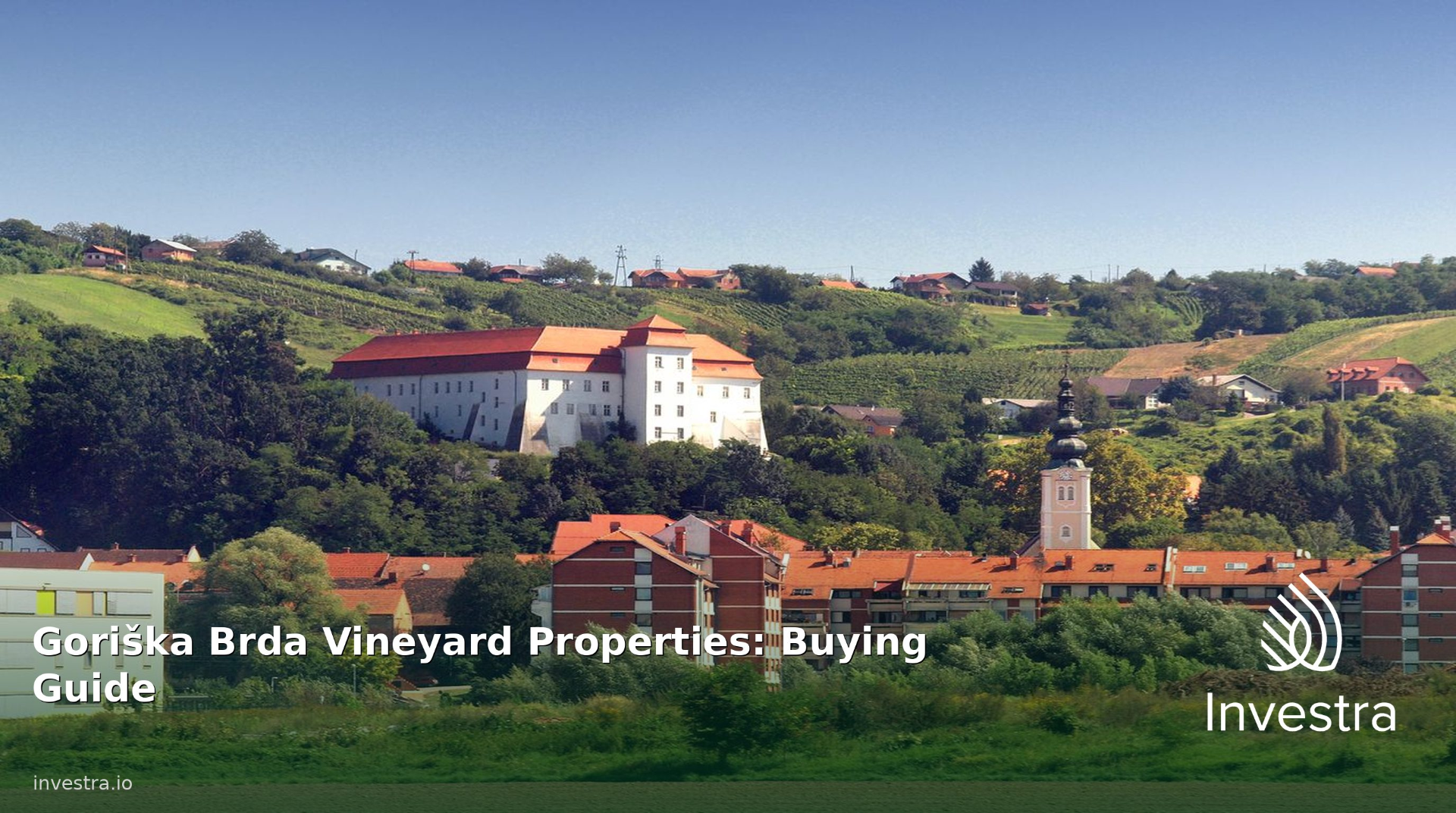
Goriška Brda Vineyard Properties: Buying Guide
Goriška Brda Vineyard Properties: Buying Guide
Overview: Goriška Brda vineyard properties for sale
Quick Answer: Goriška Brda vineyard properties for sale attract buyers who want wine-country living, a mix of agricultural land and historic houses, and proximity to the Italian border; if you're considering a purchase, you'll need to balance agricultural obligations with lifestyle goals and verify legal details locally.
Goriška Brda sits in Slovenia’s sunniest corner, a ribbon of hill-country planted with vines and olive trees that many international buyers picture as the perfect countryside escape. In my experience, properties here are rarely pure suburban lots; they’re parcels of land tied to vineyard cultivation, stone farmhouses, cellars and, often, centuries of local family history. What surprised many buyers I've worked with is how frequently a sale is as much about the land-use legacy as it is about the building: you buy a piece of an agricultural ecosystem, not just four walls.
If you search for "goriska brda vineyard properties for sale," you'll find listings that range from small plots to estate-like holdings. But the practical reality is that buying a vineyard property requires more than liking the view. You must consider zoning, classification of agricultural land, access routes for machinery, water rights and the condition of terraces and walls. The landscape can be rugged; some parcels require substantial maintenance or restoration to be useful for commercial viticulture.
Practical resources help. For a general comparison with Slovenia's urban markets and how rural properties differ, our readers often consult guides about Ljubljana and other regional markets such as the Ljubljana real estate market guide and the Maribor real estate market guide. Those pieces won't tell you Goriška Brda specifics, but they highlight how rural agricultural purchases differ from buying an apartment in the city.
Where to begin? First, define your purpose: do you want a hands-on vineyard, a holiday bolthole with some vines, or a tourism-oriented property (like agritourism)? Each goal means different due diligence and different professionals to consult — agronomists, local municipality planners, notaries and, often, specialised brokers familiar with Goriška Brda listings. We've linked specialists throughout this guide to help you find the right expertise.
What should buyers know about goriska brda vineyard properties for sale?
Quick Answer: Buyers should know that these properties combine agricultural land rules, heritage buildings and tourism potential, so thorough checks on land classification, permitted uses, and local market conditions are essential before you commit.
So, what should buyers know about goriska brda vineyard properties for sale? The short answer: prepare for complexity. In my work advising buyers, the common thread is this — vineyards are part property and part business. You’re buying land with agricultural regulations attached. That means ownership comes with both opportunities and constraints. Questions that matter include: is the parcel classified as prime agricultural land? Are there protected buildings? What permits are required to change use or to build visitor accommodation?
The reality is that many buyers are drawn by the romance of wine-country life but then face practical hurdles when they try to develop accommodation, subdivide a parcel, or expand production. You’ll want to verify current zoning and permitted uses with the local municipality. Likewise, confirm cadastral boundaries and whether any easements, communal access roads or water-sharing agreements exist. For legal and transactional clarity, expert help is essential: local notaries, an agricultural lawyer or a firm such as Findes Group & Partners can provide due diligence and explain regional rules.
Another practical tip: check local tourism and short-stay regulations before planning holiday rentals. Regional rules differ and can change. For context on how short-term renting works in Slovenian cities — which helps frame host expectations — review the Ljubljana rental market guide or similar Investra guides for Maribor and Bled to compare regulatory processes and tourist demand patterns. If you’re unsure what’s currently allowed or how taxes apply, consult a local tax advisor and the municipal authority: they’ll give you the current, actionable figures and interpretation.
Neighbourhoods & Location: micro-regions inside Goriška Brda
Quick Answer: Location matters in Goriška Brda — proximity to main roads, villages, wine-cellar cooperatives and cross-border infrastructure affects usability and marketability; inspect access, services and microclimate before you buy.
Goriška Brda is made of small hamlets and steep, terraced slopes; neighbourhoods vary in accessibility and infrastructure. When buyers ask me where they should focus, I always recommend first mapping practical access: how far is the property from the nearest paved road, from the municipal centre, and from cross-border links to Italy? Those distances shape daily life — whether you can bring in harvest machinery, whether tourists can reach your guest rooms, and whether public services are within a reasonable drive.
Microclimates are another deciding factor. Even within a single valley, aspects (which way a slope faces), elevation and soil types create different conditions for grape varieties. If you aim to run a commercial vineyard, hire a local viticultural consultant to sample soils and assess sun exposure. If your aim is leisure — a private countryside home — the scenic view and privacy may matter more than soil depth.
Local amenities also influence value. Proximity to cellar cooperatives, wine routes, tasting rooms and seasonal markets increases the property's potential for tourism income. If you're planning visitor stays, check municipal regulations for guest accommodation and whether the area is on official wine-tourism trails. For insights into how neighbourhoods shape buyer preferences in Slovenian cities — useful for comparative thinking — our Bled neighbourhood guide and Maribor neighbourhood guide are helpful.
Legal process and ownership for vineyard properties
Quick Answer: Ownership of vineyard properties involves civil transfer procedures, land-register checks and agricultural-specific rules; confirm legal status, encumbrances and owner obligations with a Slovenian notary or specialist legal adviser.
Buying agricultural land in Slovenia is a legal process with important formalities. From my experience guiding buyers, the first legal steps are simple to list but require expert support: verify the land registry (cadastre), confirm the seller's title, and check for mortgages, easements and communal rights. Don’t assume the ad reflects the legal parcel boundaries — always obtain official cadastral extracts and recent land registry certificates.
For foreign buyers, there are additional considerations. Some transactions require permits or notifications to agricultural authorities; others may have restrictions based on land classification or if the land was under previous family ownership schemes. The concrete rules change, so the correct approach is to consult a local notary and a lawyer who specialises in real estate and agricultural law. Firms such as Findes Group & Partners advisory team and independent consultants like Siniša Dagary profile can explain current restrictions and prepare the paperwork for you.
You'll also need to plan for the transaction steps typical in Slovenia: an offer, a preliminary contract, deposit arrangements, notarial deed and registration. Ask your notary whether the property is listed as cultural heritage — protections can limit renovations. If your purchase includes vineyards marketed as part of an active business, request recent production records, leases and contracts with cooperatives to verify the income and obligations you may inherit.
Due diligence checklist for goriska brda vineyard properties for sale
Quick Answer: A practical due diligence checklist for Goriška Brda should include land and building title checks, zoning and water rights verification, soil and vine condition surveys, and a review of local tourism and agriculture permits.
Due diligence on a vineyard property is broader than for a standard house. In practice, I advise buyers to assemble a team: a notary for title work, an agronomist for soil and vine health, a structural engineer for buildings, and a local planner to verify permitted uses. Each specialist will answer a critical question. The notary confirms who legally owns the parcel and whether there are outstanding encumbrances. The agronomist tells you if the vines are healthy and what replanting, if any, is needed. The structural engineer evaluates the stability of rural buildings and traditional dry-stone terraces that many Goriška Brda plots have.
Other checklist items include checking irrigation rights and historic water sources, seasonal access issues (some tracks are impassable after heavy rain), and potential environmental constraints such as protected habitats. If you plan to host tourists, check the municipality for tourism registration rules and whether you need fire-safety upgrades.
Because local practices can be informal, I recommend obtaining written confirmations for everything: a cadastral extract, a municipal zoning certificate, and any agreements with neighbours. Where financial history matters — for example, if you're buying an established winery operation — request financial statements, production volumes and sales contracts. If you need help coordinating the process, advisors like advisory services can help manage due diligence across the relevant disciplines.
Vineyard operations: what to expect running a property in Goriška Brda
Quick Answer: Running a vineyard in Goriška Brda demands agricultural planning, seasonal labour, equipment access and knowledge of local wine routes; buyers should assess operational needs and consult local agronomists before purchase.
Owning a vineyard isn't a passive hobby unless you plan to outsource everything. Vineyard operations are cyclical: pruning, canopy management, pest control, harvest and post-harvest processing. What surprised many newcomers was the rhythm of the seasons; you can't postpone key tasks. If you intend to produce commercially, study local labour availability for harvest season and the practicalities of bringing machinery up narrow access roads.
Another operational reality: many small owners collaborate through cooperatives for crushing and bottling. Ask whether the property has established cooperative relationships or if you'll need to find processing capacity. Also evaluate storage and cellar space: traditional stone cellars are excellent for wine ageing but may need upgrades for modern bottling or hygiene standards.
If your plan is part-tourism, build flexibility into operational plans. Guests expect experiences: tasting, vineyard walks, and local cuisine. That means having secure paths, safe terraces and clear signage. For guidance on renovating or building for visitor use, compare practices in Slovenia’s other popular destinations — our Bled new-build guide and Maribor new-build guide discuss permitting and renovation priorities that translate well to rural contexts.
Renovation and new-build considerations for vineyard estates
Quick Answer: Renovations must respect local planning and heritage rules; before you start work, verify permitted interventions, obtain required permits and budget for rural infrastructure improvements like septic systems and access roads.
Many Goriška Brda buyers fall in love with stone houses that need renovation. In my experience, renovations in this region are rewarding but take longer than buyers expect. Why? Rural building permits often require architectural plans that preserve the external character, especially if the building is listed or in a conservation zone. Also, modern comforts like reliable sewage, insulation and broadband can be expensive to install in remote locations.
Before signing, request a survey that outlines structural issues, roof condition, damp problems and the state of foundations. If you plan a new-build, identify whether local planning authorities allow extensions or additional units and whether such works require environmental impact assessments. For practical examples of how renovation and new builds are managed in Slovenia’s housing markets, see our Ljubljana new-build guide and the Bled and Maribor new-build guides, which highlight permit procedures and contractor selection tips.
One often overlooked cost is improving access: driveways, culvert repairs and road surfacing may fall to the buyer. If you plan to host customers, ensure fire safety and disability access meet current rules. Always ask the municipality for a list of required permits and for contacts of local builders experienced with stonework and traditional terracing.
Financing, taxes and transaction costs for Goriška Brda properties
Quick Answer: Financing and tax treatment for vineyard properties depend on the buyer's situation and property classification; confirm current interest, tax rates and transaction fees with banks, tax advisors and the local land registry before proceeding.
Financing an agricultural property can differ significantly from a residential mortgage. Some lenders offer loans tailored for agricultural or rural properties, but terms depend on the property’s classification and the borrower’s plans. From my experience advising buyers, the first question banks will ask is whether the land is classified for agriculture or construction, since that affects collateral and loan-to-value assessments.
Local taxation and transaction costs change over time. I always tell buyers: never accept an oral estimate. Instead, get written cost breakdowns from a notary for registration fees, ask your bank for current mortgage costs and consult a local tax advisor for property and income tax implications if you plan to rent or sell wine commercially. If you’re planning to run a business, discuss corporate structures and VAT matters with an accountant who specialises in agri-tourism and rural businesses.
If you want professional assistance on financial structuring and regulatory compliance, consider contacting advisors such as Findes Group & Partners or independent consultants like Siniša Dagary, who provide services for international investors looking at Slovenian rural properties. They can help verify current rates and offer written estimates for all likely transaction costs so there are no surprises.
Marketing and rental potential: short-term lets and agritourism
Quick Answer: Goriška Brda vineyard properties can perform well as agritourism venues if you can meet local accommodation rules and build a genuine visitor experience; check local licensing and market demand before committing.
If you're thinking of renting your property — partial or whole — to tourists, remember: running a successful agritourism business combines hospitality, wine experience and marketing. The key question is demand: who will visit and when? We’ve seen international visitors attracted to wine routes, seasonal events and culinary tourism. Yet rural seasonality matters; off-season occupancy can be low unless you diversify offerings.
Don't assume that listing on a global platform guarantees bookings. In my experience, properties that succeed do three things well: a compelling guest experience (tastings, vineyard walks), clear transport and access instructions, and quality photography and listing descriptions. Also important is ensuring compliance with local tourism rules: registration, safety certifications and possibly environmental assessments for larger developments.
If you want benchmarks or examples of how rental markets operate in Slovenia’s urban areas, read the Ljubljana rental market guide or the similar guides for Maribor and Bled. They show how regulatory frameworks and demand patterns shape returns and management models. For operational support — guest management, cleaning and bookings — many buyers partner with local property managers who understand the region’s tourist flows.
How to find, negotiate and close a sale in Goriška Brda
Quick Answer: Finding the right vineyard property means combining local broker outreach, on-the-ground inspections and structured offers; close with a notary and ensure all permits and registrations are in order before transferring funds.
Start with a clear search brief: acreage, proximity to services, desired level of renovation, and intended use. Local agents and niche brokers often hold off-market opportunities, so cultivate relationships with them. In my experience, the best properties are sold locally first, often via word-of-mouth, so visiting the region and talking to municipal offices and wine producers pays off.
After signing, the sale is registered with the land registry; that’s when ownership transfers officially. If you require help with the buying mechanics or with representing you locally, consultants like investment consultation and Investra’s country-specific buying guides — for example Buying property in Bled — walk through comparable procedural steps and documentation needed.
Investment Disclaimer
Quick Answer: This section explains that the article is informational and not financial advice; always consult qualified professionals before investing.
The information provided in this article is for educational and informational purposes only and should not be construed as financial, legal, or investment advice. Real estate investments carry inherent risks, and past performance does not guarantee future results. Investors should not invest money they cannot afford to lose. Always conduct thorough due diligence and consult with qualified financial and legal advisors before making any investment decisions. Investra.io does not guarantee returns on any investment.
Frequently Asked Questions
Quick Answer: The FAQ section answers common buyer questions on permits, ownership, taxes and practical steps for purchasing vineyard properties in Goriška Brda.
What is the first step when looking for goriska brda vineyard properties for sale?
Begin by clarifying your objectives: do you want a working vineyard, a holiday home or a tourist business? This determines the types of parcels you’ll consider. Then arrange an on-site visit to see access, microclimate and local services in person. Simultaneously, contact a local notary to obtain a cadastral extract and title history for any property you consider. A local agricultural consultant will also help you assess soil, vine health and land use restrictions.
Can foreigners buy vineyard land in Goriška Brda?
Many foreign buyers purchase property in Slovenia, but agricultural land and rural holdings can involve additional requirements. The best way to confirm current rules is to consult a Slovenian notary or lawyer and municipal authorities. Professional advisors like Findes Group & Partners or local legal specialists can provide up-to-date guidance on eligibility and any permits required.
How do I verify the legal boundaries and ownership of a vineyard?
Request official cadastral extracts (zemljiška knjiga) and land registry documents from the notary or the Surveying and Mapping Authority. These records show the legal boundaries, ownership history and any encumbrances. If the estate includes multiple plots, confirm whether they’re under single ownership or subject to shared rights with neighbours.
What should I check about vines and soil before buying?
Hire an agronomist to perform soil tests, evaluate vine age and health, and recommend necessary interventions. Ask for cultivation records, pesticide logs and recent yield reports if available. These assessments will influence future capital needs and inform whether the land suits your intended grape varieties.
Are there restrictions on renovating historic farmhouses or building guest units?
Yes. Renovations often require municipal permits, and heritage protections can limit visible changes. Before buying, request a municipal confirmation of permitted interventions and consult with an architect who has experience with traditional buildings. This clarifies what changes are realistic and how long approval processes may take.
How do I find financing for a vineyard purchase?
Approach banks that offer agricultural or rural mortgages and prepare a detailed business plan if you seek financing for a working vineyard or agritourism project. Lenders will assess land classification and viability. For bespoke financing solutions and advisory services, contact professional firms such as advisory services and regional specialists who understand local lending practices.
What taxes apply when buying and owning a vineyard in Slovenia?
Tax treatment depends on transaction type and how you operate the property (personal use, rental or business). Purchase taxes, income tax on any commercial activity and municipal fees can apply. Because tax law changes, get written estimates from a Slovenian tax advisor and verify current rates with the tax authority and your accountant prior to purchase.
Can I run short-term rentals from a vineyard property?
Potentially yes, but rules differ by municipality. You must register the accommodation, meet safety and hygiene requirements, and comply with local zoning. Check the municipality's tourism office for registration steps and any local restrictions. For ideas on structuring rentals and understanding urban short-let contexts, see the Ljubljana rental market guide and similar Investra resources.
Who should I hire to help with buying a vineyard property?
A notary, a local real estate agent or broker experienced in rural properties, an agronomist for soil and vine assessments, a structural surveyor for buildings, and a lawyer for contract review. If you need end-to-end advisory, consultants like Siniša Dagary and teams at Findes Group & Partners can coordinate specialist inputs and ensure compliance throughout the purchase.
Recommended Reading
Quick Answer: These guides give focused information on Slovenian property markets and buying procedures that complement this Goriška Brda-specific article.
- Ljubljana real estate market guide
- Buying property in Ljubljana
- Ljubljana rental market guide
- Ljubljana neighbourhood guide
- Ljubljana new-build guide
- Maribor real estate market guide
- Siniša Dagary — Investment Consultant
- Business Strategy Blog
Connect With Investra
Quick Answer: Use Investra’s social channels to follow market news, listings and expert content related to Slovenia and wider European real estate topics.
Stay connected to Investra for the latest market insights and new listings via our social channels:
Facebook: https://www.facebook.com/investra.io
LinkedIn: https://www.linkedin.com/company/investra-io
YouTube: https://www.youtube.com/@investraio
If you want tailored assistance with a Goriška Brda search, our country experts and partner advisors — including specialist consultants linked throughout this article — can arrange property scouting, due diligence coordination and introductions to local legal and agricultural professionals.
Connect With Investra
Quick Answer: Follow Investra for verified market context and practical property research.
Related Posts
No related posts available.
