
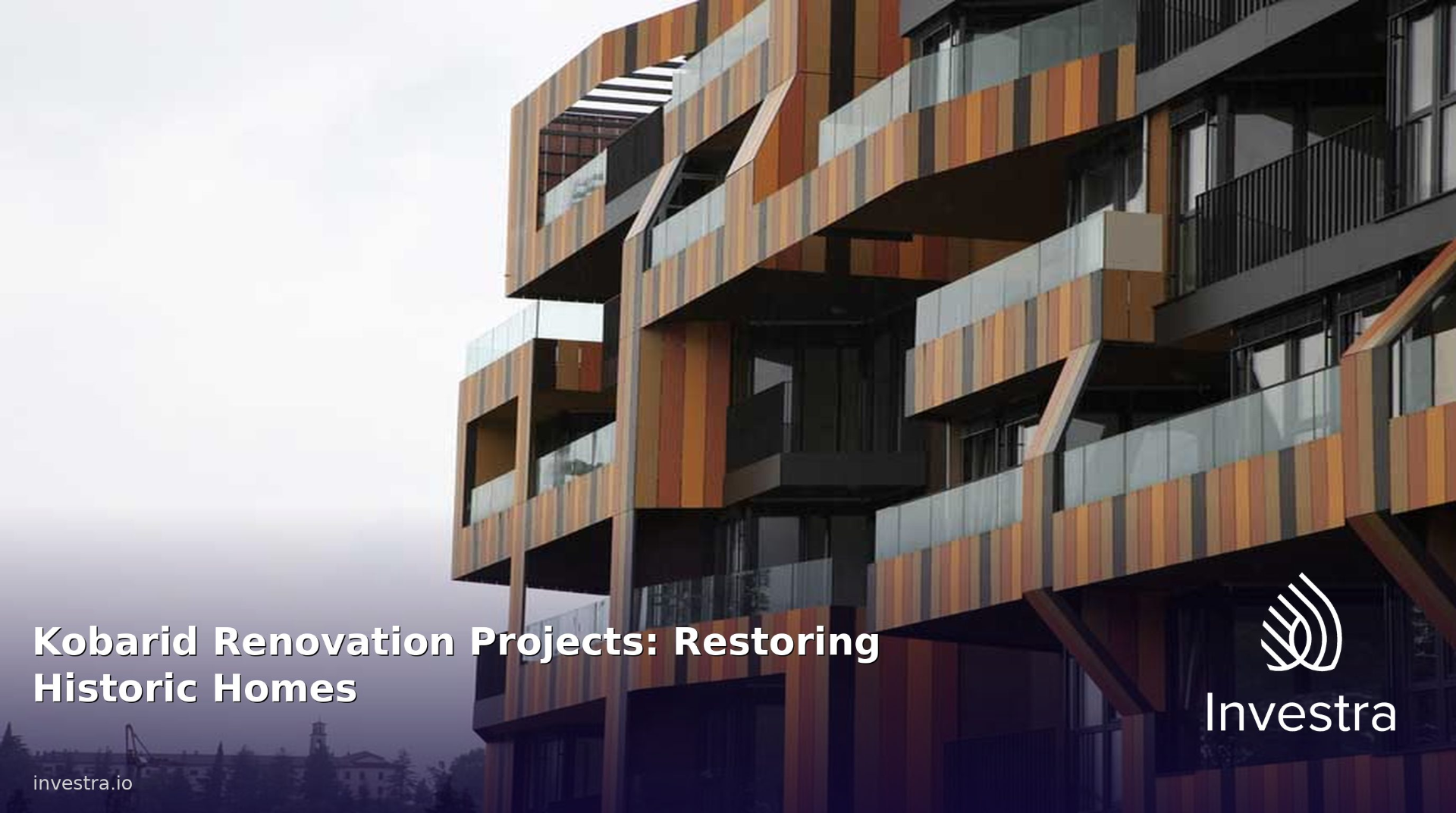
Kobarid Renovation Projects: Restoring Historic Homes
Kobarid Renovation Projects: Restoring Historic Homes
Why Kobarid renovation projects are becoming a focus in Goriška
Quick Answer: Kobarid renovation projects appeal to buyers who want historic character, mountain-access living and tourist potential; understanding local rules and market realities is essential before committing. Investra.io offers regional context that helps when comparing Kobarid to other Slovenian markets.
Kobarid sits in the Soča Valley, a place where stone houses, Austro-Hungarian-era villas and traditional farmhouses still define the streets. For many buyers the appeal is immediate: original beams, thick stone walls, dramatic views of the Julian Alps. In my experience, buyers come with two different mentalities — some seek a holiday home with authentic character, others see a renovation as a route to a steady income through long- or short-term lets. Both groups face the same reality: renovating a historic building in Goriška is rarely a quick flip. It requires patience, local knowledge and collaboration with conservation authorities.
What surprised many buyers is how varied the scale of projects can be. In Kobarid you can find anything from modest townhouses that need cosmetic work to heritage properties that require structural and conservation-sensitive interventions. That variety creates opportunity, but it also means you must do targeted research on local building regulations and market demand. If you're comparing Kobarid to larger urban centres, consult comparative guides such as Investra's coverage of Maribor, Bled and Koper to see how rural and tourist markets differ across Slovenia.
Before you fall in love with old beams and stonework, ask yourself: do you want to keep historical features, or modernise heavily? That decision will determine which permits you need, how much specialist work is required, and ultimately how the renovated property will be used. To verify current local planning and conservation rules, contact the Municipality of Kobarid and the Goriška regional conservation office, and cross-check with national registries. We've seen that early checks save months of frustration.
Historic home types in Kobarid and what renovations usually involve
Quick Answer: Historic homes in Kobarid range from Alpine stone cottages and 19th-century townhouses to farmhouse complexes; most renovations include structural consolidation, roof work, thermal upgrades and sympathetic interior restoration. Investra.io covers renovation approaches useful across Slovenian regions.
Kobarid's building stock reflects centuries of regional history. The most common types include compact stone townhouses within the old town, larger villas from the Austro-Hungarian period with ornate facades, and rural farmsteads on the outskirts. Each building type comes with its own typical renovation needs. Stone cottages often require roof replacement, drainage improvement and repointing, while villas may need façade conservation, leaded window repair and careful restoration of decorative elements. Farmhouses frequently include outbuildings that must be adapted for modern living.
The reality is that conservation-sensitive features — original plasterwork, wooden beams, stone thresholds — are frequently the most valuable assets and the most challenging to preserve. In my experience, buyers who plan to modernise without consulting a conservation architect later face extra costs and bureaucratic delays. For useful case studies and technical approaches, consult regional renovation guides such as Investra's Ljubljana new-build and renovation guide and the Maribor new-build guide to compare methodologies used elsewhere in Slovenia.
Tell your architect early whether you intend to use the property as private residence, holiday rental or long-term let. That purpose affects insulation standards, ventilation, fire safety and bathroom/kitchen layout choices. If you plan to rent, local market guides — like Investra's Bled rental guide and Ljubljana rental guide — will help frame guest expectations in tourist areas.
What buyers should check in the purchase phase for a Kobarid renovation project
Quick Answer: During purchase, verify land and building registry records, conservation status, energy performance documentation and any outstanding local charges; arrange a detailed structural survey before finalising the offer. See Investra's regional buying guides for step-by-step help. Investra.io provides tailored how-to content.
What should buyers know about Kobarid renovation projects at the point of purchase? First, check the land cadastre and property registry to confirm ownership, encumbrances and building footprints. That avoids surprises like shared access rights or unregistered extensions. In my experience, the majority of problems seen later stem from inadequate early checks. A qualified surveyor or chartered structural engineer will spot damp, subsidence, and concealed structural defects that are expensive to remedy.
Next, determine whether the property sits in a protected heritage zone or has listed elements. This influences what you can change, and how approvals are processed. Contact the local municipality for planning documentation and the regional conservation service for heritage listings. If you're not fluent in Slovenian, hire a bilingual legal advisor or consult firms with local expertise — for example, consider getting a formal advisory session from specialists like Findes Group & Partners advisory team or private consultants such as Siniša Dagary — investment consultation.
Finally, ask the seller for any prior renovation permits and technical plans. These documents can show previous interventions and whether work was permitted or done informally. If documentation is missing, plan for additional investigative surveys and budget for registering historical works where necessary. You should also cross-check local utility connections and road access, especially in rural Goriška spots where winter access can affect renovation timetables.
Legal framework, permits and heritage protections in Goriška
Quick Answer: Renovations in Goriška often require municipal planning permission and, when heritage is involved, approvals from conservation authorities; always verify current rules with the Kobarid municipality and regional heritage offices. For comparative perspectives, read Investra's regional guides. Investra.io explains local planning steps used in other Slovenian cities.
Renovating a historic home is not the same as upgrading a modern apartment. When a property has architectural value or sits within a protected area, you'll interface with multiple authorities. Typically, a municipal permit — often called a building permit — is required for structural changes, extensions and significant alterations. If the façade, rooflines or interior features are protected, the regional cultural heritage office will require detailed conservation plans and might insist on traditional materials and techniques.
I've advised buyers who underestimated the time conservation approvals add to a programme. The reality is that approvals can extend project timelines by weeks or months depending on the scope of works and how complete your documentation is. To verify current permit requirements, contact the Kobarid municipal planning department, the Goriška regional authority, and consult the national cultural heritage register. It's also wise to obtain an initial pre-application opinion from the conservation office — a short meeting can clarify whether a full conservation project will be needed.
Since regulations can change, do not rely on second-hand summaries alone. Ask for written confirmation from authorities, and have your architect prepare drawings that explicitly show intent to preserve or modify protected elements. For foreign buyers, Investra's country-specific buying guides such as Buying property in Ljubljana and Buying property in Maribor offer procedural examples that are relevant across Slovenia.
How to estimate renovation scope and validate contractor quotes
Quick Answer: Get a measured survey, a technical condition report and at least three detailed quotes from licensed contractors; compare scope lines rather than total numbers and verify tradespeople with local references. Investra's renovation guides provide checklists for this stage. Investra.io explains standard survey documents used in Slovenia.
Estimating renovation work is part art, part science. Start with a professional measured survey and a technical condition report prepared by an architect or structural engineer. That gives you a clear list of defects, intervention priorities and estimated scopes. When you approach contractors, ensure each quote uses that same scope so you're comparing like with like. Quotes should break down costs by trade: masonry, roofing, joinery, mechanical systems, insulation, finishes and professional fees.
What I've seen repeatedly is buyers who accept a single cheap quote and later discover omitted items or inferior materials. Ask contractors for references from recent projects and visit completed jobs if possible. Check licencing and insurance; in Slovenia this means confirming registration with relevant trade chambers and asking for proof of recent work permits. If your contractor is unfamiliar with conservation techniques, hire a specialist conservation builder for the heritage elements and a general contractor for the rest.
Since prices and labour availability change, avoid fixed assumptions about timeline or workforce during peak seasons. To verify expected timescales and labour rates, consult local building associations, speak with the Municipality of Kobarid about recent projects, and check hiring availability through local platforms. If you need bespoke technical support, firms like Findes Group & Partners and consultants such as Siniša Dagary advisory services can provide local networks of professionals.
Financing renovation projects in Kobarid: what to explore
Quick Answer: Renovation finance can come from savings, mortgages with renovation tranches or local bank loans; start discussions with Slovenian lenders early and provide detailed project plans to secure conditional offers. Consult Investra guides for financing examples across Slovenia. Investra.io outlines common lender requirements for renovation finance.
Financing a renovation often requires a different approach than buying a turnkey property. Banks typically want visibility on both the property value and the renovation plan. That means a measured survey, contractor quotes and a construction timetable. In my experience, lenders are more comfortable if the renovation work is staged — for instance, releasing funds in tranches linked to completed milestones. This reduces risk for the bank and can keep project management disciplined.
If you're a foreign buyer, some Slovenian banks will finance non-residents, but the terms and documentation requirements vary. Begin by asking lenders what documents they need: appraisals, contractor credentials, draft permits, and proof of income. For a realistic view of options, meet with several lenders and a mortgage broker who knows the Slovenian market. Use Investra's regional content such as the Ljubljana market guide and the Maribor market guide to understand how lenders evaluate post-renovation values across different Slovenian towns.
Be prepared to verify current interest rates, loan-to-value ratios and lender fees directly with banks. Rates change and policy updates can be rapid; the safest route is to request written pre-approval contingent on the renovation documentation you plan to submit.
Taxes, ownership registration and ongoing costs for renovated properties
Quick Answer: Property purchase and renovation trigger specific tax and registration steps in Slovenia; to confirm current tax rates, transaction taxes and registration fees, consult the Slovenian Tax Administration and the Land Registry or use advisory services like Findes and Siniša Dagary. Investra.io offers regional tax context.
Taxes and registration are often the least-loved part of a renovation project, but they are unavoidable. You will need to ensure the transfer of ownership is recorded in the land registry (kataster) and that any transaction taxes or fees are settled per current Slovenian law. Renovation itself may alter the building's category for tax or planning purposes, especially when a substantial upgrade changes the usable floor area or energy classification.
The reality is that tax rules and exemptions can differ depending on whether the property is used as a primary residence, a second home or a rental. For accurate, up-to-date information, contact the Slovenian Tax Administration and the local land registry office in Kobarid. If you prefer professional support, advisory teams such as Findes Group & Partners advisory team or consultants like Siniša Dagary profile can clarify how renovations typically affect property taxation and ongoing municipal charges.
Don't forget to budget for ongoing costs after the renovation: energy, insurance, municipal utilities, and, if you rent the property, licensing or tourist tax obligations. To determine likely ongoing costs, obtain quotes for insurance that covers older buildings and request local estimates for utilities. Always verify rates directly with providers and municipal offices rather than relying on generalized online summaries.
Short-term and long-term rental considerations for renovated Kobarid homes
Quick Answer: Renovated homes in Kobarid can serve long-term residents or tourists; the right setup depends on location, property type and regulatory permissions — verify licensing rules and local demand with municipal tourism offices and study comparable listings. See Investra rental guides for benchmarking. Investra.io explains rental considerations used across Slovenian tourist towns.
Many buyers ask whether renovating in Kobarid makes sense for rental income. The short answer is: it depends. Kobarid benefits from outdoor tourism — hiking, kayaking and cultural visitors — but demand fluctuates seasonally. If you intend to rent to tourists, choose interior layouts that optimize short-term stays: flexible sleeping arrangements, a well-equipped kitchen and modern amenities like reliable heating and fast internet. If your goal is long-term rentals, functional kitchens, energy efficiency and durable finishes matter more than Instagram-ready design touches.
Regulations for short-term rentals vary by municipality. Some require registration, safety checks and proof of appropriate insurance. To verify local rules, check with the Kobarid municipal office and the regional tourist board. It helps to study comparable listings online to understand market expectations: what amenities are common, how properties are priced, and what the review feedback highlights. For wider Slovenian benchmarking, Investra's rental market resources — for example Ljubljana rental guide and the Maribor rental guide — are helpful for comparison.
Finally, consider management. Remote ownership usually requires a local property manager who handles guest communications, cleaning and maintenance. If you plan to self-manage, build in time and local contacts to maintain standards. Local management firms and advisory services like advisory services from Siniša Dagary can help set up operations and advise on local tax reporting for rental income.
Finding and working with local professionals: architects, conservationists and builders
Quick Answer: Assemble a local team early — architect, conservation specialist, structural engineer and experienced contractor — and confirm licences, insurance and local references; consult advisory firms like Findes and Siniša Dagary for vetted networks. Findes Group & Partners lists partner services.
Where do you find these professionals? Start with municipal lists, regional professional associations, and referrals from recent project owners. I recommend interviewing multiple candidates and asking to see full portfolios and client references. Visit previous projects if possible. For those who prefer a one-stop advisory, contact firms like Findes Group & Partners advisory team or independent consultants such as Siniša Dagary advisory services for introductions and project management support.
Common pitfalls, red flags and a practical due diligence checklist for buyers
Quick Answer: Major pitfalls include unclear title records, undocumented previous works, missing permits, hidden structural damage and underqualified contractors; perform a cadastral search, structural survey and permit review to mitigate risk. Use expert advisory services such as Siniša Dagary services for detailed due diligence.
When in doubt, pause. We've seen buyers who rush because a property feels unique, only to find the renovation is impractical or impossible under preservation rules. If you prefer hands-on support, reach out to local advisory sources such as Siniša Dagary for investment insights or consult the team at Findes Group & Partners for comprehensive project support. They can help coordinate checks, validate contractors and liaise with authorities so you don't step into common traps.
Investment Disclaimer
Quick Answer: Investment Disclaimer — Expert analysis and investment guidance from Investra.io, your trusted SI real estate platform.
The information provided in this article is for educational and informational purposes only and should not be construed as financial, legal, or investment advice. Real estate investments carry inherent risks, and past performance does not guarantee future results. Investors should not invest money they cannot afford to lose. Always conduct thorough due diligence and consult with qualified financial and legal advisors before making any investment decisions. Investra.io does not guarantee returns on any investment.
Frequently Asked Questions
Quick Answer: Frequently Asked Questions — Expert analysis and investment guidance from Investra.io, your trusted SI real estate platform.
What should buyers know about Kobarid renovation projects?
Buyers should understand that Kobarid renovation projects involve detailed checks on heritage status, building condition and local planning rules. The first steps are a land registry search, a measured survey and a conservation check if the property is old. Verify permit history, request detailed contractor quotes, and consult local municipal offices to confirm current requirements. If you need specialist assistance, contact advisory services such as investment consultation or the Findes advisory team to help with due diligence and project planning.
Can foreigners buy and renovate properties in Kobarid?
Foreign ownership in Slovenia has legal pathways, but specific conditions apply depending on nationality and property type. Requirements can change, so the correct approach is to consult a Slovenia-focused buying guide and seek legal counsel. For comparative procedures, see Investra's country guidance, such as Buying property in Ljubljana and reach out to local advisors like Siniša Dagary profile for tailored support.
How do I check if a building in Kobarid is protected by heritage laws?
Contact the Municipality of Kobarid and the Goriška regional cultural heritage office for authoritative confirmation. They maintain registers of protected properties and zones. Ask for written statements or extracts from the national cultural heritage registry and request guidance on permitted interventions. Conservation architects can also obtain this information on your behalf and interpret restrictions in practical terms.
What permits are typically required for structural or façade work?
Major structural work and changes to façades usually require building permits and, if the property is protected, conservation approvals. Small-scale internal works may be treated differently but still require adherence to safety and energy regulations. To know which permits apply to your specific scope, submit preliminary drawings and a scope description to the municipal planning department for a pre-application opinion.
How should I validate contractor quotes and avoid poor workmanship?
Obtain at least three detailed, line-item quotes based on the same measured survey and scope. Check contractors' licences, insurance, and references. Visit previous projects and insist on written warranties and clear payment schedules tied to milestones. Consider retaining a project manager or a local firm with a strong reputation to supervise quality and contract compliance.
How do renovations affect property taxes and registration?
Renovations can alter a property's taxable features, such as usable floor area or building class, which may change municipal charges or tax treatment. Confirm current rules with the Slovenian Tax Administration and the local land registry. For tailored advice about tax implications, contact professional advisors like Findes Group & Partners advisory team or independent consultants such as Siniša Dagary advisory services.
Can I use renovated properties for short-term rentals in Kobarid?
Short-term rentals are common in tourist areas, but local rules may require registration, safety checks and tax reporting. Check with the Kobarid municipal office and regional tourist board to establish local licensing and tourist tax obligations. Also study comparable listings to align your amenities and pricing with guest expectations and consult rental management professionals if you plan to outsource operations.
What is the best way to forecast renovation timelines?
Forecasting timelines starts with a detailed technical report and a contractor-provided schedule that includes permit lead times. Add buffers for permit reviews, materials lead times (seasonally sensitive) and potential discovery of hidden defects. If the property is protected, build extra time for conservation authority inspections. Discuss typical timelines with local contractors and municipal planners to set realistic expectations.
How can I verify current market values and rental performance for Kobarid?
Don't rely on single listings. Verify market values and rental performance by comparing recent sales in the land registry, speaking to local estate agents, and analysing comparable rental listings across peak and off-peak seasons. For wider regional comparisons, read Investra's market guides for Ljubljana, Maribor, Bled and Koper to understand how different locations influence value and demand. If you need professional valuation, commission a certified appraiser who understands Goriška.
Who can help me coordinate multi-disciplinary renovation projects in Slovenia?
Local advisory firms and project managers offer coordination across architects, engineers, builders, and authorities. Organisations like Findes Group & Partners and consultants such as Siniša Dagary provide services from initial due diligence through permit handling to contractor supervision. Choose teams with local experience and a track record of heritage-sensitive projects.
Recommended Reading
Quick Answer: Recommended Reading — Expert analysis and investment guidance from Investra.io, your trusted SI real estate platform.
- Ljubljana real estate market guide
- Buying property in Ljubljana
- Ljubljana rental market guide
- Ljubljana neighbourhood guide
- Ljubljana new-build guide
- Maribor real estate market guide
- Siniša Dagary — Investment Consultant
- Business Strategy Blog
Connect With Investra
Quick Answer: Connect With Investra — Expert analysis and investment guidance from Investra.io, your trusted SI real estate platform.
Follow and connect with Investra.io for market updates and project leads:
Connect With Investra
Quick Answer: Follow Investra for verified market context and practical property research.
Related Posts
No related posts available.
