
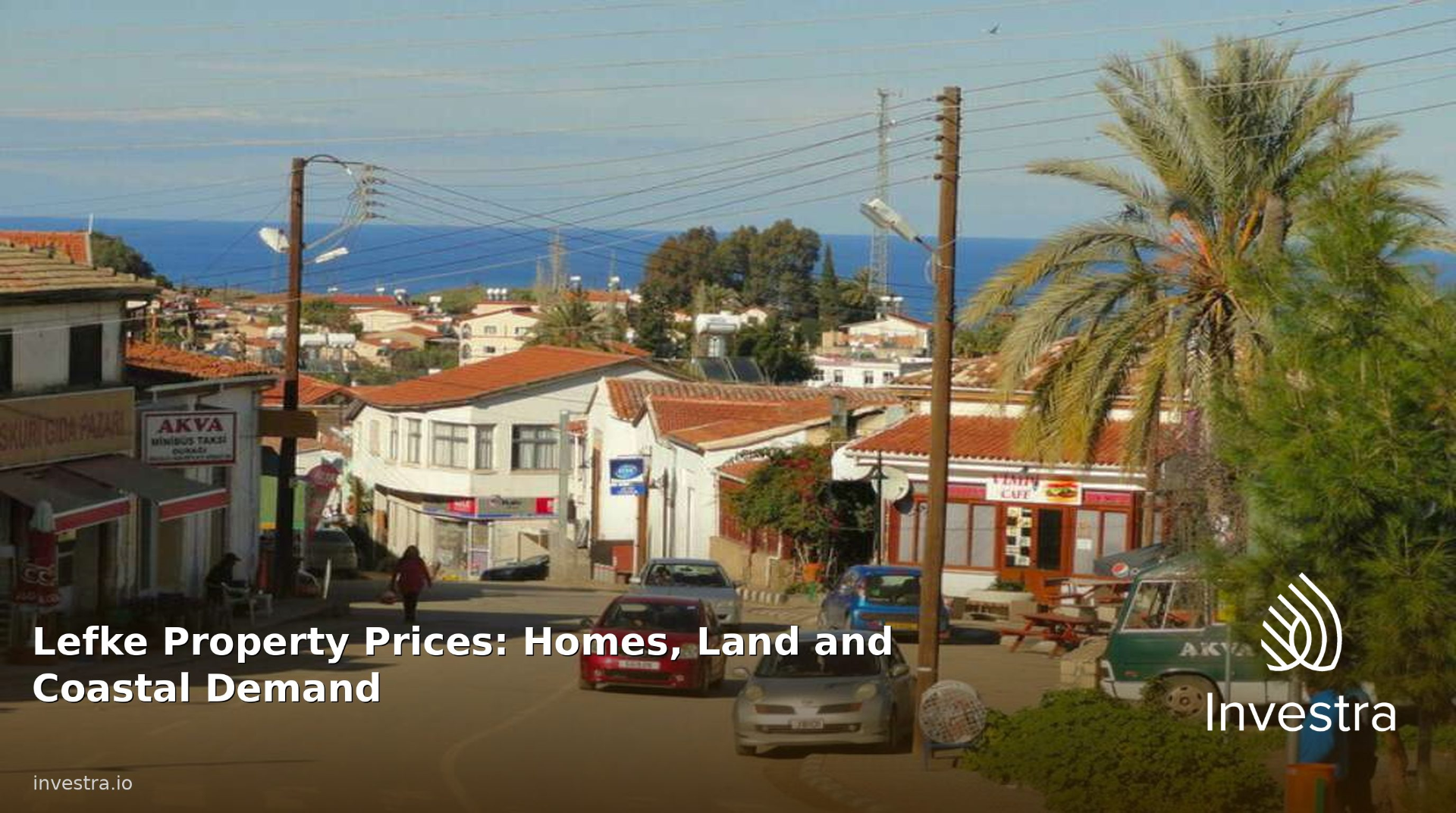
Lefke Property Prices: Homes, Land and Coastal Demand
Lefke Property Prices: Homes, Land and Coastal Demand
Lefke Property Prices: Market Snapshot and Context
Quick Answer: Lefke property prices reflect a unique North Cyprus micro-market shaped by agriculture, coastal pockets and university influence; use local market reports and property comparables to see current values. Iskele market context and other regional reports help situate Lefke within the island’s landscape.
Lefke sits on the western edge of North Cyprus and has always had a quieter, more rural character than Kyrenia or Famagusta. That character feeds directly into how buyers, developers and locals think about property values. In my experience, what attracts people here is the mix: coastal sections with small beaches, inland agricultural land, and a town centre that feels less built-up than the island’s popular tourist hubs. The reality is that Lefke’s value drivers differ from those of big resort towns. Demand can be seasonal and hyper-local—some buyers want a sea view; others want farmland or a fixer-upper in town.
Comparative context is crucial. We’ve seen buyers consult reports for Kyrenia, Nicosia, Famagusta and Iskele to understand broader trends; those reports can be found on platforms like Investra’s Kyrenia guide and the Famagusta market review. But Lefke is not identical to those markets—expect more variance between properties, including differences in title clarity and planning permissions. If you’re asking which way Lefke moves relative to coastal resort towns, the short answer is it follows island-wide sentiment but with its own micro-market fluctuations.
What Should Buyers Know About Lefke Property Prices?
Quick Answer: Buyers should know that Lefke prices depend on location (town, coast, farmland), legal status of title, and local demand; verify every numeric claim through official registers and current market listings. See practical checks in our buying guides for nearby cities like Nicosia and Kyrenia. How to buy in Kyrenia and similar guides show verification steps you can adapt for Lefke.
If you ask me, the most common surprise for new buyers is how varied “price” can be in a small area. A plot two streets inland can have completely different legal paperwork and planning permission than a coastal parcel just a few hundred metres away. What does this mean for you as a buyer? It means you can’t rely on headline figures or secondhand estimates. Instead, you should gather current sales comparables, request copies of title deeds, and get a local lawyer or surveyor to confirm boundaries and permitted uses.
What we’ve learned advising clients is practical: demand for coastal slices or renovated traditional houses often outstrips that for basic town apartments, but coastal demand also brings extra checks—access, erosion risk, and road connectivity. If you’re planning to rent a home seasonally or aim for long-term capital appreciation, ask local agents for recent contracts, visit municipal planning offices to see zoning maps, and cross-check holdings with private market platforms. Reports such as the Nicosia market guide and Iskele review provide methodologies you can replicate for Lefke research.
How to Verify Current Lefke Property Prices (Data Sources & Methods)
Quick Answer: Verify Lefke property prices by combining local listings, land registry searches, recent sale records, independent valuations and professional advice. Use city-specific guides such as Investra’s market reports to learn verification steps and adapt them to Lefke. How to buy in Famagusta offers a model for procedural checks.
Numbers change fast. Instead of trusting a single claimed figure, assemble evidence. Start with local real estate portals and Investra market reports to understand asking prices; then look for recorded sale deeds or notarised contracts that show completed transactions. In North Cyprus, municipal offices and the Land Registry can be asked for title information and past transfers—your lawyer should obtain these documents on your behalf.
Commission an independent valuation. Banks and certified valuer reports are practical because they evaluate title, building condition and market comparables. If you plan renovations, also get a contractor’s estimate. Speak with the seller’s agent and at least two independent local agents to compare recent offers and sale prices. For a research template, consult Investra’s guides on rental and sale analysis like the Kyrenia rental guide and the Famagusta rental guide, which outline comparable search techniques you can apply locally.
Property Types in Lefke: Homes, Villas and Apartments — How They Affect Prices
Quick Answer: Lefke property prices vary by type—traditional townhouses, modern apartments, detached villas—and by condition, legal clarity and proximity to amenities; compare type-specific guides from nearby markets to understand buyer expectations. See Investra’s neighbourhood guides for frameworks you can adapt. Kyrenia neighbourhood guide offers comparable analysis methods.
Homes in Lefke range from older two-storey traditional houses to newer low-rise apartment blocks and standalone villas. Each has different implications for cost and risk. Traditional houses may require structural or mains-services upgrades; apartments usually offer simpler maintenance but can have strata or communal issues that affect resale. Villas normally command interest for privacy and sea proximity but often come with larger plots and potential planning constraints.
What surprised many buyers is how much condition and title status influence transaction speed. Two superficially similar apartments can differ greatly if one has a clear deed and recent building approvals while the other requires retrospective permissions. In my experience, buyer decisions should be informed by on-site inspections, building documentation checks, and a clear plan for any refurbishment. For an approach to assessing neighbourhood appeal and amenities, the Investra guides for Nicosia, Kyrenia and Famagusta—like the Nicosia renovation guide and the Kyrenia new build guide—outline helpful checklists you can use in Lefke.
Land in Lefke: Agricultural Plots, Building Plots and Title Considerations
Quick Answer: Land values in Lefke depend on zoning, permitted use, availability of services and title security; always confirm planning status and deeds with municipal offices and a qualified lawyer before committing. For step-by-step legal checks, see Investra’s city buying guides. How to buy in Nicosia illustrates title verification practices you can adapt for Lefke.
Buying land requires more caution than buying a finished home. In Lefke, many buyers search for agricultural land for hobby farming or coastal plots for development. The central questions are simple but essential: what is the zoning classification, does the plot have a registered title, are services like water and electricity available, and are there rights of way or easements?
The practical steps I always recommend include: obtaining a copy of the title deed and a plan from the Land Registry, asking the municipality for zoning maps and permitted building density, and hiring a surveyor to confirm boundaries. If a parcel was used historically for agriculture, you must confirm whether conversion to buildable land is possible—this can require a planning application and possibly an environmental assessment. For buyers who prefer a checklist approach, Investra’s regional “how to buy” guides—for example, Famagusta, Kyrenia and Iskele—explain the document trail you should expect.
Coastal Demand: Beaches, Views and How Proximity Shapes Value
Quick Answer: Coastal demand in Lefke tends to focus on access, exposure to weather, and infrastructure; buyers should evaluate legal beachfront status and coastal protection rules through municipal and environmental authorities. Use nearby coastal market reports to benchmark expectations. Famagusta new build guide offers parallels for coastal checks.
People often imagine the coast as an automatic value booster, but the truth is more nuanced. In Lefke, proximity to the sea can increase appeal—especially for holiday rental or lifestyle buyers—but it also introduces specific questions about road access, coastal erosion, and regulations protecting shorelines. Is a strip of “beachfront” public domain? Are there restrictions that limit construction or require set-back distances? These affect both use and resale.
In my experience, buyers attracted to coastal plots should do a route check: drive the access roads at different times, ask locals about flooding or erosion, and consult municipal coastal management plans. Coastal properties might need extra insurance or maintenance budgets because of salt exposure. Compare coastal opportunities in Lefke with those in better-documented resort areas—refer to Investra’s coastal and resort analyses like the Kyrenia rental guide—to frame realistic expectations for marketing and maintenance costs.
The Buying Process in Lefke: Step-by-Step Practical Guide
Quick Answer: The Lefke purchase process follows familiar steps: search, due diligence, contract, title transfer, and registration; ensure each step includes legal checks and verified documentation. For procedure outlines adapted to other towns, see Investra’s “how to buy” city guides. How to buy in Nicosia offers a detailed procedural template.
Buying in Lefke can be straightforward if you follow a clear process. Start with a focused search—use local agents and online portals to shortlist properties. Then commission professional inspections and legal checks. In my experience, the single best way to reduce surprises is to engage a reputable local attorney early; they can obtain title copies, verify encumbrances, and check planning permissions before you sign anything binding.
Once due diligence is completed and both parties agree, the next stage is the sales contract (often accompanied by a deposit). Contracts should specify what is included in the sale, timelines for title transfer, and any conditions precedent. A notary or lawyer generally handles the title transfer and registration at the Land Registry. If you need a template of the procedural steps, Investra’s city guides—such as the purchase guides for Kyrenia, Famagusta, and Iskele—outline what to expect at each stage and what documents your lawyer should request.
Foreign Buyers and Ownership Rights in North Cyprus
Quick Answer: Foreign buyers can acquire property in North Cyprus, but they must confirm ownership rights, permit requirements and any nationality-specific rules by consulting a local lawyer and official registries. Use Investra’s “how to buy” town guides as procedural references. How to buy in Famagusta and related pieces explain key legal checks.
We often get asked whether foreign buyers face special obstacles. The answer depends on the property and its title history. Rights can vary between properties that were developed with clear titles and parcels where historic ownership is disputed or requires additional approvals. That’s why a local lawyer’s role is critical: they’ll confirm the chain of title, flag any outstanding planning or tax disputes, and advise on necessary permits.
In practice, many international buyers proceed successfully in North Cyprus, but the safe path is methodical verification. If you're unsure about a document or a phrase in a contract, insist on translations and explanations. For comparative legal checklists and foreign-buyer procedures, Investra’s guides for Kyrenia, Nicosia and Iskele—like Kyrenia, Nicosia and Iskele—are good templates for the legal questions you should ask about any Lefke purchase.
Taxes, Fees and Costs to Expect When Buying in Lefke
Quick Answer: Expect taxes, notary fees, registration fees and possible municipal charges when buying in Lefke; verify current rates with a local lawyer, municipal office and official revenue services rather than relying on static figures. See Investra guides for procedural context. Nicosia tax and rental guide illustrates common cost types.
I always tell buyers: don’t be surprised by transaction costs, but do verify them in advance. Fees can include agent commission, legal fees, stamp duty, notary charges and registration fees. In some cases there are transfer taxes or capital gains liabilities on future sales. The exact amounts change with regulation and government policy—so instead of relying on a quoted percentage from three years ago, ask your lawyer to obtain the current fee schedule from the relevant municipal or government office.
For working estimates, get a written cost breakdown from your lawyer prior to exchange. This should list each expected fee and who pays it. If you’re financing the purchase, your lender will also require a valuation and possibly additional fees. You can learn how buyers typically allocate closing costs in other North Cyprus markets via Investra’s city-specific guides—such as the Famagusta rental guide—and then ask local Lefke professionals to confirm current rates.
Rental Market and Short-Term Lets: What to Consider for Lefke Properties
Quick Answer: Lefke’s rental potential depends on property type, seasonality, nearby amenities and legal permissions for short-term lets; verify local tenancy regulations and seasonal demand through agents and Investra rental guides. Kyrenia rental guide and Famagusta rental guide provide frameworks for assessing let potential.
If you’re considering buying in Lefke to rent, ask specific questions: Is there year-round tenant demand or mostly seasonal interest? What type of tenant is most likely (students, long-term local workers, holidaymakers)? Are there regulations or registration requirements for short-term rentals? The reality is these answers can vary even within a village depending on proximity to the university, beaches or local services.
Start by interviewing local agents about average occupancy for similar properties and ask for recent rental contracts. Confirm whether short-term holiday letting requires local registration or additional licences—your lawyer should check municipal rules. For structuring your approach, use Investra’s rental analysis guides for Kyrenia, Nicosia and Famagusta to build comparable forecast models, then adjust assumptions to Lefke’s micro-market characteristics. If you plan to manage rentals remotely, discuss property management options on the ground; sometimes a local company or owner-operator partnership is essential for consistent bookings and maintenance.
Renovation, New Builds and Value-Adding Strategies in Lefke
Quick Answer: Renovation and development opportunities exist in Lefke, but success depends on planning permissions, realistic cost estimates and market demand; consult local architects, contractors and the municipality before committing. Use Investra’s new-build and renovation guides to frame your project scope. Kyrenia renovation guide and Famagusta renovation guide offer useful checklists.
Investors often ask whether refurbishing an old stone house in Lefke is a good way to add value. The answer begins with permitting. Some buildings are protected for heritage reasons; others are easily upgraded but need improved utilities. Before buying, ask an architect for a feasibility study and a contractor for a ballpark renovation schedule. In my experience, the projects that respect local character, improve energy efficiency and provide comfortable indoor-outdoor living tend to attract a steady buyer pool.
Working with Local Advisors: Lawyers, Agents and Surveyors
Quick Answer: Use experienced local advisors to verify titles, zoning and structural condition; ask for references and written scopes of work, and cross-check credentials with local professional bodies. Explore advisory contacts through Investra and partnering firms like Findes Group. Findes Group & Partners and their advisory team can be helpful starting points.
If you want a second layer of assurance, international advisory firms and boutique consultancies can assist with due diligence or structured acquisitions. We’ve worked with partners like Findes Group & Partners advisory team and independent consultants such as Siniša Dagary, whose profile and services outline advisory and investment strategy support. For practical investment consultations and to explore on-the-ground advice, see Siniša’s work on advisory services and contact pages.
Investment Disclaimer
Quick Answer: This section summarises that material is informational only and not investment, legal, or financial advice—always seek professional counsel before acting.
The information provided in this article is for educational and informational purposes only and should not be construed as financial, legal, or investment advice. Real estate investments carry inherent risks, and past performance does not guarantee future results. Investors should not invest money they cannot afford to lose. Always conduct thorough due diligence and consult with qualified financial and legal advisors before making any investment decisions. Investra.io does not guarantee returns on any investment.
Frequently Asked Questions
Quick Answer: This FAQ section answers common questions about Lefke property prices, buying process, ownership and practical checks you should perform before purchase.
What should buyers know about Lefke property prices?
Buyers should know that Lefke property prices are influenced by micro-location (coast vs inland), title clarity and local demand. Rather than relying on static price claims, gather current sales comparables, request title and planning documents from the Land Registry and municipality, and commission a professional valuation. Consult town-by-town guides, like those on Investra, to learn how comparables are built and to replicate the approach for Lefke.
How can I verify the legal title of a Lefke property?
To verify title, ask your lawyer to obtain a certified copy of the title deed from the Land Registry and to check past transfers for encumbrances or disputes. Your lawyer should also check local municipal records for planning permissions and any pending fines or obligations. If the property history looks irregular, a deeper legal audit or title insurance option should be considered.
Are there restrictions on foreign ownership of property in Lefke?
Restrictions can depend on the property’s history and land classification. The safe route is to ask a qualified local lawyer to confirm ownership rules for each property. Investra’s “how to buy” guides for individual towns provide templates for questions to ask your legal advisor before purchase.
What taxes and fees will I need to budget for?
Expect transaction-related costs such as legal fees, notary and registration fees, and possibly transfer taxes. These amounts change over time; therefore, request a current fee schedule from your lawyer and the municipal office, and itemise expected costs in the sale contract to avoid surprises.
How do coastal properties in Lefke differ from inland properties?
Coastal properties may be more desirable but come with extra considerations: public access rights, coastal protection rules, erosion risk and potentially higher maintenance. Ask the municipality about coastal regulations, speak with neighbours about flooding or erosion history, and commission a structural and geotechnical review when relevant.
What steps should I take before signing a sales contract?
Before signing: complete title checks, commission a valuation and survey, confirm planning permissions and services, and get written cost estimates for any required works. Ensure your lawyer drafts or reviews the contract with clear timelines, conditions precedent and dispute resolution clauses.
Can I rely on online listings for current Lefke prices?
Online listings are a starting point but often show asking prices rather than sale prices. Use them to gauge market activity, but verify with recorded sale deeds, local agents, and the Land Registry for confirmed transaction values. Independent valuations provide the most reliable contemporary estimate.
Is renovating an old Lefke property a good investment?
Renovation can add value if the project aligns with local demand and has clear permissions. Always check planning restrictions and obtain contractor quotes and a feasibility study. For guidance on renovation steps, consult Investra’s refurbishment guides and use local professionals to ground cost estimates in reality.
Who should I hire to manage a Lefke property for rentals?
Hire a local property manager with references and a proven track record in short-term and long-term lets. Ask for recent occupancy records and client references. If you’re abroad, a full-service manager who handles marketing, bookings, guest check-in and maintenance will be especially valuable.
How do I compare Lefke with nearby markets like Kyrenia or Famagusta?
Compare by using the same metrics: recent sales comparables, time-on-market, rental demand, and regulatory differences. Investra’s market reports for Kyrenia, Famagusta and Nicosia are useful benchmarks; then adjust those frameworks to Lefke’s smaller, more variable market conditions. Reviewing these guides will give you a consistent analytical approach.
Recommended Reading
Quick Answer: These suggested pieces will give you deeper, town-specific frameworks for market analysis and the buying process you can adapt for Lefke.
- Kyrenia Real Estate Market 2026: Prices, Areas & Buyer Guide
- How to Buy Property in Kyrenia as a Foreign Buyer in 2026
- Kyrenia Rental Yield and Short-Term Let Investment Guide 2026
- Best Neighbourhoods in Kyrenia for Property Buyers in 2026
- Kyrenia New Build and Property Renovation Guide 2026
- Famagusta Real Estate Market 2026: Prices, Areas & Buyer Guide
- Siniša Dagary — Investment Consultant
- Business Strategy Blog
Connect With Investra
Quick Answer: Follow Investra on social channels for market updates, new listings and educational content. Use the links below to connect.
Stay updated with Investra’s latest market reports and property listings via their social channels:
If you’d like to discuss a possible Lefke purchase or want introductions to vetted local advisors, firms like Siniša Dagary — investment consultation and the Findes Group & Partners advisory team can provide tailored support. For advisory services, see Siniša Dagary advisory services.
Connect With Investra
Quick Answer: Follow Investra for verified market context and practical property research.
Related Posts
No related posts available.
