
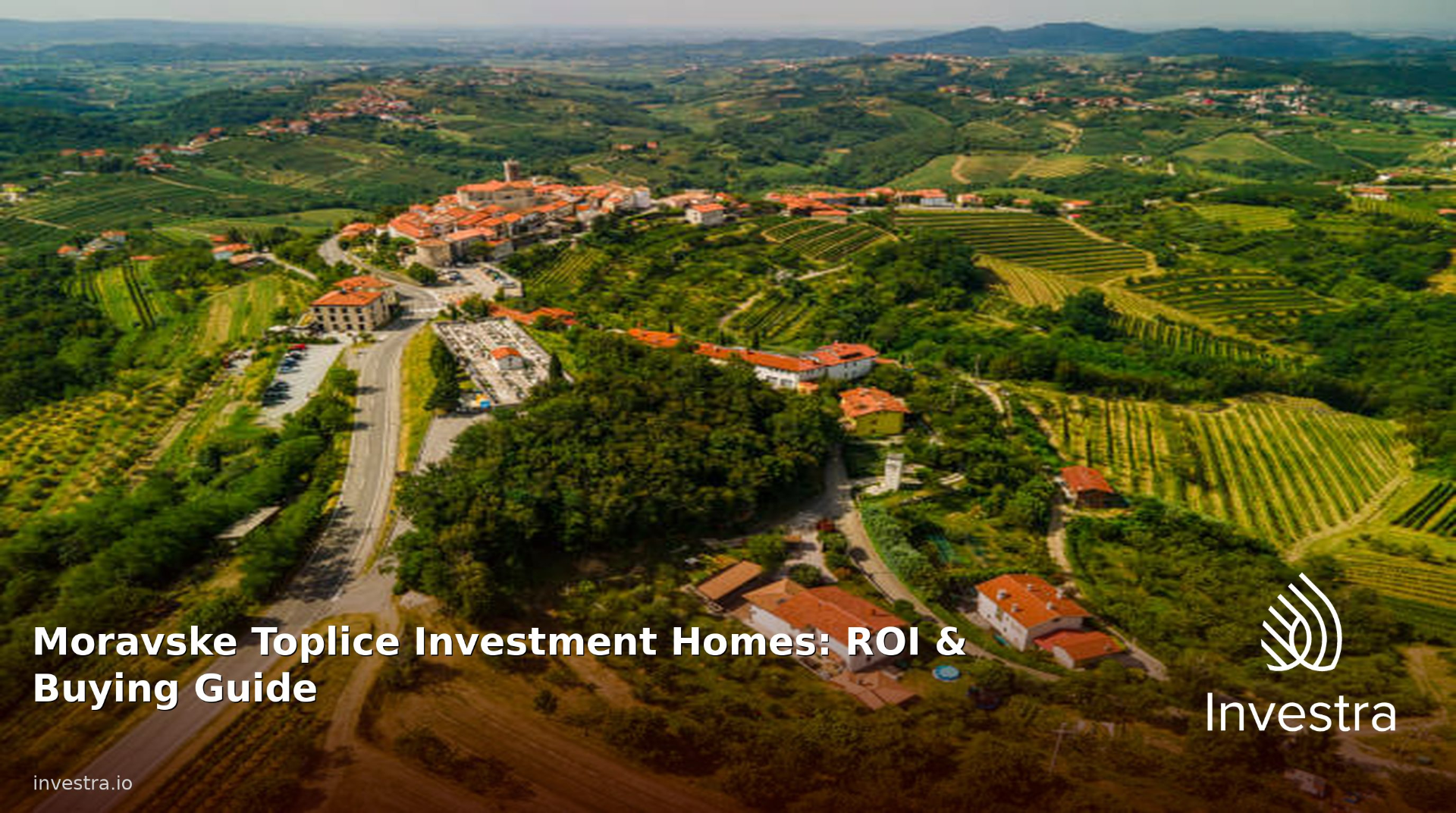
Moravske Toplice Investment Homes: ROI & Buying Guide
Moravske Toplice Investment Homes: ROI & Buying Guide
Introduction to Moravske Toplice and Prekmurje
Quick Answer: Moravske Toplice is a spa town in Slovenia's Prekmurje region known for thermal tourism and wellness offerings; for investors, the local tourism economy and proximity to regional transport links shape opportunities for moravske toplice investment homes.
Moravske Toplice sits in the northeast of Slovenia, in the region called Prekmurje. The town attracts visitors primarily because of its thermal spas and wellness resorts, but the broader region has agricultural landscapes, modest towns, and cross-border links with Hungary and Austria. When people ask me why this place matters, I point to its niche: small-region tourism that can produce steady seasonal demand while remaining under the radar compared with coastal resorts or the capital, Ljubljana. That subtlety makes moravske toplice investment homes interesting for buyers who want a combination of lifestyle and income potential.
The reality is that Prekmurje behaves differently from Slovenia’s major urban markets. Expect lower density, different tenant profiles, and tourism that peaks in summer and spa season. What surprised many buyers is how visitor demographics vary—families, domestic tourists, and regional travelers rather than large volumes of international backpackers. If you’re considering moravske toplice investment homes, you’ll need to plan for seasonality and consider how a property sits relative to spa facilities, local amenities, and transport.
To understand the market context better, read general city guides and comparative market analyses. For example, Investra has detailed city guides you can compare to get a sense of how municipal markets differ across Slovenia: Ljubljana real estate market guide, Maribor real estate market guide, and Bled real estate market guide. Comparing these gives a clearer frame for decisions in Prekmurje.
What should buyers know about moravske toplice investment homes?
Quick Answer: Buyers should know about local demand drivers (thermal spa tourism), seasonal patterns, and the legal/administrative checks required for foreign buyers; confirming up-to-date figures through local authorities and advisors is essential.
So what should buyers know about moravske toplice investment homes? First, the demand is closely tied to spa tourism and regional travel patterns. That means location matters: proximity to the main spa parks, transport nodes, and restaurant offerings can make or break short-term rental performance. In my experience, investors who visit and speak with local property managers get a truer sense of demand than those relying on national statistics alone.
Legal status and ownership rules are another critical point. Slovenia has specific rules for foreign buyers and for properties used as short-term rentals. I always advise checking the latest guidance with a local notary or the municipal office, and consulting industry-specific resources—like the buying guides for Slovenian cities published by Investra—for comparable procedural steps: Buying property in Ljubljana and Buying property in Maribor.
Finally, what about verifying returns and costs? Don’t take online adverts at face value. Ask for recent occupancy records, maintenance logs, and municipal utility estimates. If you need professional help, consult local advisors such as Findes Group & Partners (Findes Group & Partners) or independent consultants like Siniša Dagary’s investment consultation to cross-check assumptions and confirm the latest regulatory requirements.
Demand drivers and ROI considerations for Moravske Toplice investment homes
Quick Answer: Key demand drivers include spa tourism, domestic visitors, events, and regional accessibility; analyzing these helps estimate income potential, but you should verify current occupancy and revenue figures with operators and municipal tourism offices.
When assessing ROI potential of moravske toplice investment homes, ask what brings people to the town. Thermal spas are the headline attraction; wellness stays and short break leisure are core demand types. Secondary demand comes from business visitors for local events and families visiting relatives. The mix affects weekly and nightly rates, average occupancy windows, and the type of furnishing and services you’ll need to provide for guests.
But how do you translate demand into ROI? The straightforward answer is: you don’t until you gather real operational data. Request historical occupancy and average rates from comparable short-term rental managers, seek confirmation from local spa operators about visitor volumes, and examine municipal tourism reports for trends. If a seller or agent claims a specific income, ask for verifiable documentation: tax receipts, management contracts, and guest-book summaries. In my experience, the most reliable way to vet projected returns is to combine on-the-ground interviews with receipts and third-party booking platform data.
For context and best-practice reading on evaluating rental investments, the Investra rental guides can help you frame the right questions: Ljubljana rental market guide, Maribor rental market guide, and Bled rental market guide.
Types of moravske toplice investment homes and use cases
Quick Answer: Investment homes range from holiday apartments and spa-adjacent flats to standalone houses and small guesthouses; the best type depends on whether you target short-term holiday guests, longer-term tenants, or a hybrid model.
In Moravske Toplice you’ll find a variety of property types suitable for investors. Typical choices include apartment units within the town center, flats near spa complexes, small holiday houses with gardens, and occasionally renovated farmhouses in surrounding villages. Each property type attracts a different guest profile. A compact, modern apartment near spa facilities suits short-stay wellness visitors. A larger house with parking appeals to families or groups staying longer. A converted farmhouse might work as a boutique guesthouse if zoning and licensing allow it.
What surprised many buyers is the benefit of flexible setups. A property that can switch between short-term holiday lets during peak months and longer-term rentals in off-peak season can stabilize income. But switching use often requires administrative compliance and different furnishing standards. Check local municipal rules about conversions and uses—what works in Ljubljana or Maribor may not be identical here. Investra’s new-build and renovation guides offer practical steps that apply across Slovenian markets: Ljubljana new-build guide, Maribor new-build guide, and Bled new-build guide.
How to buy property in Prekmurje: step-by-step process
Quick Answer: Buying in Prekmurje follows Slovenia’s standard property purchase steps—search, due diligence, contract, notary, registration—but foreign buyer permissions and local administrative checks must be confirmed with authorities and legal advisors.
The purchase process for moravske toplice investment homes follows the typical Slovenian sequence—property search, preliminary agreement, due diligence, final deed or sales contract, notary confirmation, and land registry updates—but the details matter. Foreign buyers may need an approval or a reciprocity confirmation, depending on nationality and current Slovenian law. I always recommend verifying current steps directly with a Slovenian notary or using a local advisory team like Findes Group & Partners (Findes Group & Partners advisory team), who can outline municipal requirements and handle translation needs.
What we’ve seen with clients is the importance of a thorough legal audit before signing a preliminary contract. That audit should include a check against encumbrances, mortgage entries, utility charges, zoning restrictions, and any co-ownership statutes—especially if the property is part of a resort or apartment building. For foreign buyers, the Investra guides offer concrete walkthroughs that compare practise in other Slovenian cities; see, for example, Buying property in Bled and Buying property in Koper, which highlight typical documentation and steps you can expect.
Ownership structures, titles and legal checks for investors
Quick Answer: Choose an ownership structure that fits your tax and management plans—private ownership, company-held title, or co-ownership—and confirm titles, servitudes, and condo rules with a notary before purchase.
Deciding how to hold moravske toplice investment homes affects taxes, liability, and estate planning. Some investors buy in their own name; others use a domestic company to centralize operations, simplify VAT recovery or separate liabilities. The right choice depends on your nationality, intended use, and long-term plans. I often recommend discussing potential structures with both legal and tax advisors so you don’t discover an unexpected hurdle after purchase.
Equally important are title checks. Confirm the exact legal description, any easements, rights of way, and condominium regulations if the property is in a larger complex. For spa-adjacent properties, check whether access to facilities is governed by supply contracts or separate ownership interest. A local notary will confirm the land registry status; municipal planning departments can tell you about future zoning changes that might affect the property’s allowed uses.
If you want professional introductions, independent consultants such as Siniša Dagary advisory services can help coordinate legal, tax and operational teams. For comparative reading on ownership and legal steps in major Slovenian towns, Investra’s city buying guides are useful: Buying property in Ljubljana, Buying property in Maribor, and Buying property in Bled.
Taxes, duties and ongoing costs for Moravske Toplice investment homes
Quick Answer: Purchasers should anticipate transfer taxes, notary and registration fees, and ongoing property taxes and service charges; verify up-to-date rates with the tax office or your tax advisor before acquiring a property.
Taxes and recurring costs are among the most common surprises for new buyers. In Slovenia, purchases typically trigger transfer or registration duties, notary fees, and land registry costs. After purchase, expect municipal property taxes, utility bills, waste collection fees, and possible communal maintenance charges if the property is in a managed complex. If you plan to operate short-term rentals, there may be local tourism levies or registration obligations for hosts.
The reality is these amounts change and are influenced by municipal decisions, so don’t rely on a past transaction reported on a portal. Instead, contact the local tax office and municipal administration for current figures and any exemptions that might apply. For an operational standpoint, it helps to have a running budget that includes maintenance allowances, insurance, property management fees, and periodic refurbishment, especially for seasonal markets like Moravske Toplice.
If you need tax advice, use qualified local accountants who understand both Slovenian rules and cross-border implications for foreign owners. Services such as Siniša Dagary advisory services or the advisory teams at Findes Group & Partners (Findes Group & Partners advisory team) can point you to licensed tax consultants and notaries in the region.
Short-term rentals and Airbnb rules in Moravske Toplice
Quick Answer: Short-term rentals are a common use for investment homes in Moravske Toplice, but you must check local registration requirements, tourist taxes, and any licensing rules; confirm the current regulations with the municipality and legal counsel.
Short-term rentals, including listings on Airbnb, can be attractive for moravske toplice investment homes because spa visitors often prefer compact, serviced stays. But the devil’s in the details. Many municipalities require hosts to register with the local tourist board, collect and remit the tourist tax, and comply with safety and health regulations. Some condominium rules may limit or prohibit short-term lets, so check the building’s statutes and owners’ meeting minutes before buying.
What should you request from a seller? Obtain the property’s registration documents, any operating permits, and a record of tourist tax payments if the property was previously let. If the seller or agent claims uninterrupted bookings, ask for booking platform extracts or management company accounts. If you plan to run an Airbnb-style operation from abroad, consider a local management company for check-ins, cleaning, and emergency maintenance—this reduces friction and often improves guest reviews.
For practical operational guidance, Investra’s rental guides outline common landlord considerations in Slovenia, which you can adapt for Moravske Toplice: Ljubljana rental market guide, Maribor rental market guide, and Bled rental market guide.
Property management, local teams and guest experience
Quick Answer: Effective property management in Moravske Toplice depends on reliable local teams for cleaning, maintenance, guest communication and marketing; interview multiple managers and check references before committing.
Running moravske toplice investment homes well often hinges on your local management setup. If you’re remote, a responsive local manager becomes your on-the-ground partner for everything from cleaning and key exchange to emergency repairs and guest relations. In my experience, investors who vet three to five management companies and check client references end up with a smoother operation than those who select the first available handler.
If you prefer a hands-on approach, consider a hybrid model: local managers for day-to-day operations and an owner dashboard to oversee pricing and availability. For comparative insights into property management expectations in other Slovenian markets, you may find Investra’s neighbourhood and management-related posts useful: Ljubljana neighbourhood guide, Maribor neighbourhood guide and Bled neighbourhood guide.
Renovation, new builds and converting properties for higher returns
Quick Answer: Renovations and conversions can add value to moravske toplice investment homes, but obtain building permits, check energy and safety standards, and get contractor bids before committing to expenses.
For readers who want to compare renovation approaches, Investra’s new-build and renovation guides provide practical checklists and timelines across Slovenian markets: Ljubljana new-build guide, Maribor new-build guide, and Bled new-build guide.
Market research: verifying prices, occupancy and rental data
Quick Answer: Do not rely solely on listing ads—verify prices and occupancy by requesting audited booking data, consulting municipal tourism statistics, and getting independent valuations from local agents or asset managers.
Another useful tactic: cross-check platform data (Airbnb, Booking.com) with local managers’ calendars to spot potential overstatements. For pricing, request a professional valuation from an accredited appraiser who understands Prekmurje’s specific dynamics. If you’re comparing to other Slovenian markets to test assumptions about demand or pricing, Investra’s market guides for relevant towns offer useful comparative context: Maribor real-estate market guide, Bled real-estate market guide, and Koper real-estate market guide.
Finally, if you need a professional to assemble the data and run sensitivity analyses on occupancy and rates, consider local consultancies like Siniša Dagary or teams at Findes (Findes Group & Partners).
Exit strategies and long-term value for Moravske Toplice properties
Quick Answer: Plan exits around demand cycles—resale to domestic buyers, sale to hospitality operators, or conversion to long-term rental—and validate your exit assumptions with local agents and transaction records.
Resale timing matters. A renovation that lifts guest appeal can also improve resale prospects. Conversely, unpermitted conversions may limit buyers. What surprised many investors is how local market cycles can be long and driven by regional infrastructure changes or tourism policy. To validate resale prospects, speak with local brokers and request transaction histories from the land registry. For comparative market exit studies in Slovenian locales, refer to Investra’s city guides which discuss resale dynamics: Ljubljana guide, Maribor guide, and Bled guide.
Local partners, advisors and resources to consult
Quick Answer: Work with local notaries, tax advisors, property managers, and consultants—ask for credentials and references and verify registrations with municipal and professional bodies.
If you want introductions, Findes Group & Partners (Findes Group & Partners) and consultants such as Siniša Dagary profile are examples of professional teams that can coordinate multi-disciplinary support. Investra’s city guides also link to best-practice resources for buyers in Slovenia and offer practical checklists: Maribor neighbourhood guide, Ljubljana neighbourhood guide, and Bled neighbourhood guide.
When evaluating advisors, check whether they provide written engagement terms, clear fee structures, and a project timeline. That will help you avoid surprises, especially if you manage the investment from abroad.
Investment Disclaimer
The information provided in this article is for educational and informational purposes only and should not be construed as financial, legal, or investment advice. Real estate investments carry inherent risks, and past performance does not guarantee future results. Investors should not invest money they cannot afford to lose. Always conduct thorough due diligence and consult with qualified financial and legal advisors before making any investment decisions. Investra.io does not guarantee returns on any investment.
Frequently Asked Questions
What makes Moravske Toplice attractive for property investors?
Moravske Toplice’s appeal is rooted in its thermal spa tourism and regional leisure market—visitors seeking wellness breaks, families, and domestic tourists. Investors are attracted to the niche demand, which can support short-term rentals and seasonal occupancy. However, local rental dynamics differ from big-city markets, so confirm demand with booking data, municipal tourism statistics, and conversations with local operators before assuming income potential.
Can foreign buyers purchase moravske toplice investment homes?
Foreign buyers can acquire property in Slovenia, but there are procedural and sometimes permission-related details to check depending on your nationality and the current legal framework. To verify your eligibility and required steps, contact a Slovenian notary or a real estate lawyer, and consult municipal offices. Practical guidance can also be found in Investra’s buying guides for other Slovenian cities, which outline common documentation and steps buyers typically encounter.
How do I verify claimed rental income from a listed property?
Request verifiable documentation: management accounts, tax filings showing rental revenue, booking platform exports, and references from the management company. Cross-check seasonality in municipal tourism reports and ask for guest review histories on major booking platforms. If a seller resists providing verifiable records, treat claims cautiously and consider commissioning an independent audit or valuation before signing.
Are short-term rentals regulated in Moravske Toplice?
Short-term rentals often require host registration, compliance with safety standards, and payment of tourist taxes. Some condominiums impose rules limiting short-term lets. Because regulations and enforcement can change, confirm current rules with the municipal tourism office, the local notary, or your legal advisor prior to committing to a purchase intended for short-term rental use.
What ongoing costs should I budget for when owning an investment home?
Budget for municipal property taxes, utilities, insurance, maintenance, periodic renovations, and property management fees if you outsource operations. Also plan for administrative costs like tourist tax collection and accounting. To estimate current charges precisely, request recent utility bills from the seller, ask the municipality for tax rates, and obtain quotes from local managers and insurers.
How important is proximity to the spa complex for rental performance?
Proximity to spa facilities typically improves desirability for short-term guests seeking wellness breaks. Properties closer to major spa parks usually require less on-site amenity investment and can command stronger occupancy during peak seasons. That said, neighborhood atmosphere, parking, and access to restaurants also matter. Evaluate both location and guest experience factors when assessing properties.
Should I renovate before listing my property for short-term rent?
A targeted renovation can boost guest satisfaction and justify higher rates, but it must be costed and permitted correctly. Focus on high-impact areas—bathrooms, heating/insulation, and reliable internet. Always check for building permits and condominium rules before structural changes, and obtain multiple contractor quotes and fixed-price bids to avoid budget overruns.
Who should I hire to manage a moravske toplice investment home?
Hire a local property manager with demonstrated experience in short-term rentals, reliable references, and transparent reporting. Verify their insurance, check contract terms (fees, cancellation handling, maintenance response times), and seek managers who use multiple distribution channels for bookings. If you need introductions, consult local advisory firms such as Findes Group & Partners (advisory team) or independent consultants like Siniša Dagary advisory services.
How can I estimate future resale value?
Estimate resale value by examining recent comparable sales in Moravske Toplice and nearby towns, assessing local infrastructure plans, and reviewing tourism trends. Request historical transaction data from the land registry and talk with local brokers for qualitative market color. For broader comparative metrics, review Investra’s city market guides which help build context for expected resale dynamics.
Where can I get professional help for cross-border tax planning?
Use qualified international tax advisors who understand Slovenian tax law and your home-country regulations. Your initial point of contact can be a local accounting firm or advisory service such as Siniša Dagary advisory services or Findes Group & Partners (Findes Group & Partners), who can recommend licensed accountants and coordinate paperwork.
Recommended Reading
- Ljubljana real estate market guide
- Buying property in Ljubljana
- Ljubljana rental market guide
- Ljubljana neighbourhood guide
- Ljubljana new-build guide
- Maribor real estate market guide
- Siniša Dagary — Investment Consultant
- Business Strategy Blog
Connect With Investra
Follow Investra on social media:
Further resources cited throughout this article:
- Maribor rental market guide
- Maribor neighbourhood guide
- Maribor new-build guide
- Bled real-estate market guide
- Buying property in Bled
- Bled rental market guide
- Bled neighbourhood guide
- Bled new-build guide
- Koper real-estate market guide
- Buying property in Koper
- Siniša Dagary profile
- investment consultation
Connect With Investra
Quick Answer: Follow Investra for verified market context and practical property research.
Related Posts
No related posts available.
