
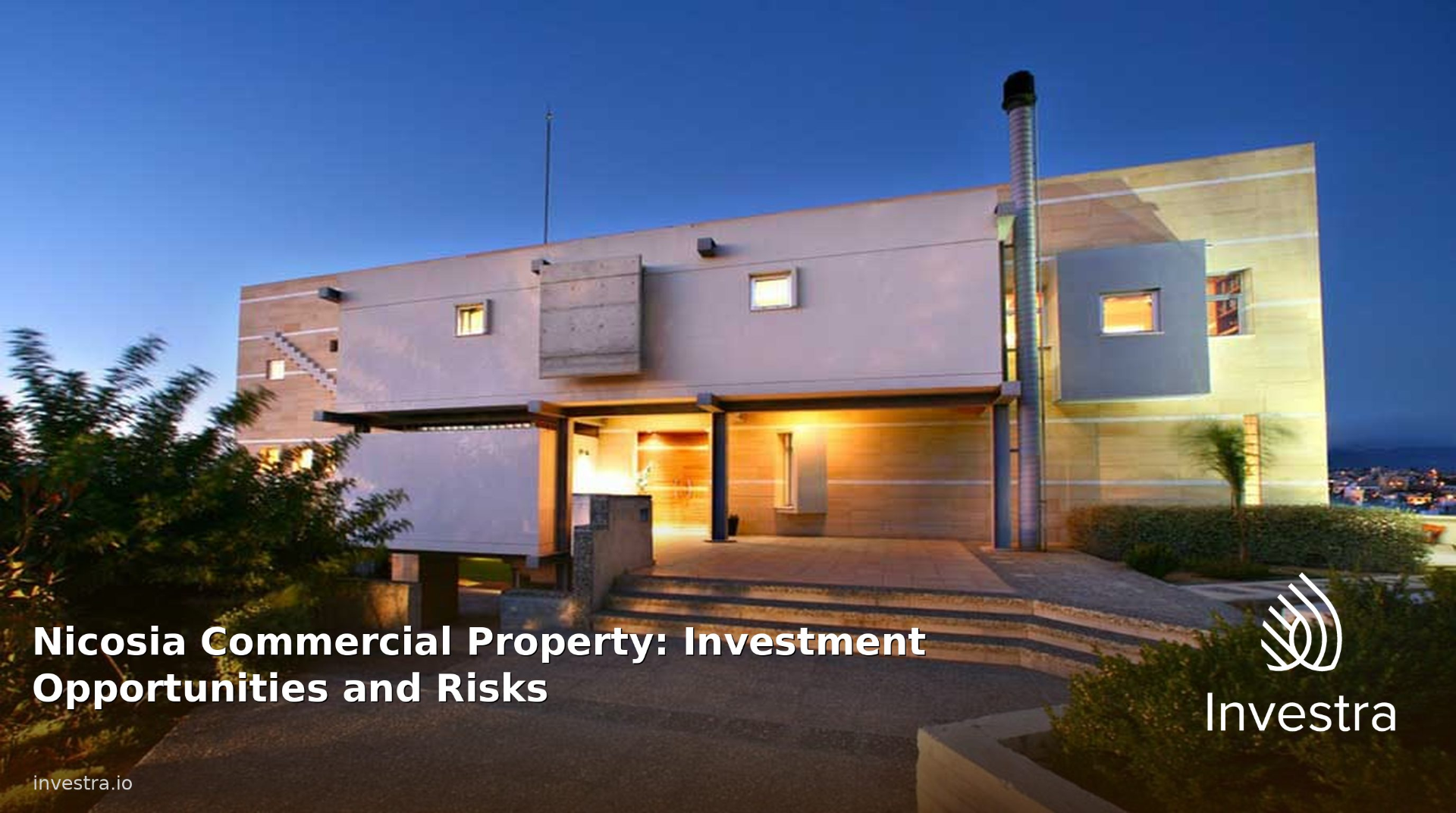
Nicosia Commercial Property: Investment Opportunities and Risks
Nicosia Commercial Property: Investment Opportunities and Risks
Overview: What Nicosia commercial property investment looks like in North Cyprus
Quick Answer: Nicosia commercial property investment covers offices, retail units, warehouses and mixed-use assets in the island's administrative capital; buyers should understand local market drivers, legal frameworks and the on-the-ground buying process before committing. Investra.io offers market-focused guides to start your research.
The first question many readers ask is simple: why focus on Nicosia? The city serves as the administrative and commercial heart of North Cyprus. In my experience, commercial activity here is driven by local administration, professional services, retail demand and small manufacturing or logistics that serve the island. That creates a different risk and opportunity profile from coastal holiday markets such as Kyrenia or Famagusta. If you’re considering Nicosia commercial property investment, you’re often buying for steady demand from businesses—banks, law firms, retailers, or light industry—rather than purely seasonal vacation rentals.
What surprised many buyers is how diverse the product types are. You can find central high-street shops, modern office developments, older mixed-use buildings and industrial estates on the city’s outskirts. The reality is that each segment follows its own dynamics: retail tracks consumer confidence and tourism spillover, offices follow white-collar employment and administrative relocation, and warehouses depend on logistics and trade volumes.
If you want granular local context, read Investra’s Nicosia reports and compare them with neighbouring markets. For comparative reads, the platforms cover Kyrenia, Famagusta and Iskele markets too, which helps you frame Nicosia within the island’s broader property landscape: Kyrenia, Famagusta, and Iskele. Those comparisons are useful when weighing urban commercial stability against coastal opportunity.
Why consider Nicosia for commercial investment?
Quick Answer: Consider Nicosia because it concentrates administrative functions, long-term tenants and fewer seasonality swings compared with resort towns, though local market research and legal checks remain essential. Investra.io has deeper market insight for investors.
Nicosia’s appeal is straightforward: it’s the place businesses and services cluster. Unlike coastal resorts where demand is often seasonal and tourism-led, commercial real estate in Nicosia tends to attract tenants that need year-round space—banks, government-related offices, clinics, restaurants and educational services. That offers income stability, but it doesn't remove risk.
Why might you choose Nicosia over Kyrenia or Famagusta? If your goal is long-term leases and lower vacancy volatility, Nicosia can win. If you prefer capital appreciation tied to tourism or holiday rentals, coastal cities might be more attractive. We’ve seen buyers shift strategies after comparing Investra’s city guides: check the Kyrenia and Famagusta pages to see contrasting buyer profiles. The choice depends on your risk tolerance, investment horizon, and intended asset type.
What should buyers know about Nicosia commercial property investment? Start with demand drivers: employment growth, public sector tenancy, university expansion and retail spending patterns. Then validate those hypotheses with on-the-ground data—local brokers, municipal planning documents and Investra market reports. For an actionable buying checklist, see Investra’s "How to Buy Property in Nicosia" guide and consult advisors like Siniša Dagary or the Findes advisory team at Findes Group & Partners advisory team.
Types of commercial properties in Nicosia: where to focus
Quick Answer: Commercial types include office buildings, high-street retail, shopping centres, light industrial units and mixed-use assets—each with different tenant markets and management needs. Investra.io maps neighbourhoods to asset types.
Deciding which asset class to pursue is the single most practical decision you’ll make. Offices tend to require fit-outs and active leasing strategies. Retail on main streets needs strong footfall and visibility, and the landlord often handles façades and common areas. Light industrial or warehouse units usually sit on the city’s periphery and can be lower maintenance, but require reliable access and utilities. Mixed-use properties—retail or cafes on the ground floor with apartments or offices above—offer diversification within a single asset.
From my observations, small-scale investors often start with single-unit retail or small office spaces because entry costs and management complexity are lower. Institutional-minded buyers look for multi-tenant blocks or developments where professional management systems can be implemented. Before you buy, ask the seller for current tenancy schedules, service-charge records and maintenance histories. If those documents aren’t available, engage a local solicitor to request them formally.
To orient yourself by area, Investra’s neighbourhood guides are useful: check the "Best Neighbourhoods in Nicosia for Property Buyers" and the "Nicosia New Build and Property Renovation Guide" for detailed zoning and product-type advice. For context about other island markets and how asset classes behave elsewhere, see Kyrenia and Famagusta market guides linked throughout this article.
Legal framework and ownership rules for North Cyprus commercial property
Quick Answer: Ownership rules and transfer procedures in North Cyprus involve title checks, municipal permits and possibly residency considerations—buyers must verify eligibility and legal processes with a qualified local lawyer. See Investra’s legal and buying guides for procedural guidance.
Legal clarity is non-negotiable. The reality is that property law and administrative practice can change, and foreign buyers must confirm current rules. I always advise clients to instruct an independent, licensed local lawyer before any funds change hands. They’ll check title deeds, mortgages, encumbrances, planning permissions and the seller’s authority to sell—each is vital to avoid future disputes.
If you’re wondering about foreign ownership rights in North Cyprus, the correct step is to verify with official sources: request a land registry search, obtain copies of deeds and municipal approvals, and check if there are any court cases or limitations affecting the property. Investra has a "How to Buy Property in Nicosia as a Foreign Buyer" guide that outlines typical steps; use it as a procedural checklist and then confirm legal details with counsel.
If you want professional advisory support, consider contacting experienced advisors such as Siniša Dagary or the Findes advisory team at Findes Group & Partners to arrange legal introductions. The key question to ask your lawyer is: what searches will you run to confirm unencumbered title, and how will you secure escrow and contract protections during the sale?
Step-by-step buying process for Nicosia commercial property
Quick Answer: The buying process typically follows listing review, due diligence, contract signing with deposit, legal title checks, municipal approvals and final transfer—always use escrow and professional advisors to protect funds. Consult Investra’s "How to Buy in Nicosia" guide for procedural details.
How does a commercial purchase proceed on the ground? From experience, investors go through predictable stages: target identification, document review, preliminary negotiations, legal searches, contract exchange with a deposit, regulatory approvals (if required), and final settlement. That sequence is logical, but timing varies depending on asset complexity and whether the property has tenants.
Early on, focus on documentation: tenancy schedules, recent utility bills, maintenance invoices, and proof of title. Ask whether any retrospective permits were issued for renovations—municipal records will confirm. If there are tenants, review lease terms carefully: who pays utilities, who is responsible for repairs, and what break clauses exist?
For the contractual phase, you’ll typically sign a sale agreement that contains conditions precedent—often subject to satisfactory legal searches and municipal confirmations. Never release full payment without a clear mechanism for title transfer. In many transactions I’ve handled, escrow arrangements or bank guarantees reduce settlement risk. For a practical how-to, see Investra’s "How to Buy Property in Nicosia as a Foreign Buyer in 2026" and contact local advisory services like investment consultation for tailored support.
Due diligence essentials: title verification, zoning, permits and compliance
Quick Answer: Due diligence must confirm genuine title, current zoning, building permits, tax status and tenant obligations—verify with land registry searches, municipal offices and a qualified solicitor before committing funds.
Due diligence is where many investors win or lose. You must prove the seller’s title is clean and that the property complies with zoning and building regulations. In my experience, the most common issues are incomplete permits, unrecorded lease side agreements and overdue municipal fees. These can materially affect value and transferability.
Start with a land registry search to confirm ownership history and any mortgages or liens. Cross-check that with municipal planning records to ensure the property’s permitted use aligns with your intended use—retrofitting a retail unit into a restaurant, for example, may require planning permissions and health inspections. Check tax records for outstanding rates and VAT status, if applicable.
If the asset has tenants, review lease contracts in detail: security deposits, rent review mechanisms, and tenant obligations for repairs. If you’re buying a building with multiple units, request a service charge ledger and recent maintenance summaries. If data is missing, ask your lawyer to obtain it formally. For stepwise guidance, Investra’s property renovation and new-build guides are helpful references and the Findes advisory team can support specialist due diligence services.
Taxes, fees and ongoing ownership costs in North Cyprus
Quick Answer: Taxes and fees include transfer taxes, registration fees, municipal rates and potential business taxes—confirm current rates and calculations with a local accountant or tax office rather than relying on published figures. See Investra and professional advisors for verification steps.
Money on paper is one thing; realised ongoing cost is another. The taxes and fees linked to acquisition and ownership are important inputs for any viability calculation. I never recommend building a financial model without direct confirmation from a local tax adviser: rules change and often specific incentives or exemptions can apply to certain commercial activities.
Typical cost categories to verify are transfer/registration fees, stamp duty, legal fees, notary charges, municipal and utility rates, and recurring business or rental taxes. For multi-tenant assets, service charges and communal maintenance can be significant, so request historical accounts. Where an asset generates rental income, consult a tax specialist to understand how rental profits are treated and what deductible expenses exist.
Rather than relying on memory or hearsay, ask for written quotes or official circulars from relevant authorities. Investra’s tax guidance and local advisory networks such as Siniša Dagary and Findes Group & Partners advisory team can point you to reputable accountants and the correct offices to confirm current obligations.
Financing commercial purchases: options and currency considerations
Quick Answer: Financing can be sourced from local banks, international lenders or private equity, and currency exposure must be managed carefully—always confirm current loan terms and eligibility with lenders and advisors. Contact Findes or Investra for lender introductions.
How will you pay for the deal? Cash buyers move fastest, but most investors use some form of financing. Local commercial loans, international mortgage products or seller financing are all possible routes. The critical point is that loan availability, terms and LTVs change, and you must verify current market offers with banks or brokers. Don’t rely on outdated examples.
Currency risk is a live issue for cross-border investors. If your income is in euros and liabilities are in a different currency, you face FX volatility. In my experience, successful buyers either match their cash flows to loan currency or hedge exposure through forward contracts or currency accounts. Ask your bank for hedging solutions and price them into your model.
If you need introductions to lenders, use reputable intermediaries—Investra can provide market contacts, as can consulting firms such as Siniša Dagary advisory services and Findes Group & Partners. Ask lenders for written pre-approval and a clear list of required documents so you know the timeline and costs involved.
Leasing strategy and property management for commercial assets
Quick Answer: A clear leasing strategy and reliable property management are essential—decide whether to manage in-house or hire professional managers, and confirm local management costs and processes. See Investra’s rental and market guides for operational benchmarks.
Owning commercial real estate means becoming, to some extent, a service provider to businesses. What we know from managing assets is that leasing terms, tenant mix and building maintenance define both income stability and asset longevity. Decide early: will you manage leases yourself or hire a professional property manager?
Risks specific to Nicosia commercial property investment and mitigation tactics
Quick Answer: Key risks include title disputes, regulatory changes, tenant insolvency and market downturns; mitigation includes thorough legal due diligence, diversified tenant mix, professional management and contingency reserves. Consult Investra and legal counsel for scenario planning.
If you want external validation of risk assumptions, commission a technical survey and a legal opinion before exchange. Advisory firms like Siniša Dagary investment insights and the Findes advisory team can help create tailored risk matrices and stress-test your business case. Above all, verify material facts rather than accepting seller statements at face value.
Exit strategies and market signals to watch in Nicosia
Quick Answer: Plan exit strategies—sale, refinance, conversion or lease-up—and watch indicators such as tenant demand, vacancy trends and planning changes; use local market reports to time exits and appraisal valuations. Investra’s market guides can help monitor signals.
For ongoing monitoring, subscribe to Investra market reports and coordinate with local brokers for transaction comps. If you’re considering conversion, consult municipal planning and legal advisors first. For valuation and exit planning, consider working with valuation professionals and advisory teams such as Siniša Dagary profile or Findes Group & Partners to ensure your assumptions are market-aligned.
Comparing Nicosia with other North Cyprus markets: Kyrenia, Famagusta and Iskele
Quick Answer: Nicosia offers different commercial fundamentals than coastal towns: more administrative and year-round demand versus tourism-led cycles in Kyrenia, Famagusta and Iskele—compare Investra city guides to decide which fits your strategy.
That difference matters for risk and liquidity. If you need steady rental income from office tenants, Nicosia may be preferable. If you seek capital growth tied to tourism and holiday-season premiums, coastal markets might be a better fit. For detailed comparisons, consult the respective Investra market guides: Kyrenia, Famagusta, and Iskele. Compare those with the Nicosia resources for a comprehensive view.
We’ve found that many investors benefit from a mixed approach—combining a stable urban commercial core asset in Nicosia with a smaller coastal holding. This can smooth returns while offering upside from tourism-driven towns. If you’re unsure which route fits you, speak to advisors such as Siniša Dagary investment consultation who can model scenarios tailored to your objectives.
Explore more on Investra: How to Buy Property in Famagusta as a Foreign Buyer in 2026 | Famagusta Rental Yield and Short-Term Let Investment Guide 2026
Investment Disclaimer
Quick Answer: This section explains that the article provides educational information and is not personalised investment, legal or financial advice; readers must verify details and seek professional counsel before acting.
The information provided in this article is for educational and informational purposes only and should not be construed as financial, legal, or investment advice. Real estate investments carry inherent risks, and past performance does not guarantee future results. Investors should not invest money they cannot afford to lose. Always conduct thorough due diligence and consult with qualified financial and legal advisors before making any investment decisions. Investra.io does not guarantee returns on any investment.
Frequently Asked Questions
Quick Answer: This FAQ section addresses common buyer concerns about title checks, taxes, financing, tenancy, and finding advisors for Nicosia commercial investments.
What should buyers know about Nicosia commercial property investment?
Buyers should prioritise legal title verification, accurate tenant and lease documentation, and an understanding of local demand drivers. Confirm zoning and permit compliance for intended uses and budget for ongoing management costs. Verify current market conditions using reputable sources such as Investra market reports and consult licensed local lawyers and tax advisors for up-to-date, personalised guidance.
How do I verify the property title and avoid disputes?
Commission a full land registry search and ask your solicitor to obtain certified copies of the title, check for mortgages or liens, and search for any pending litigation related to the property. Cross-check municipal records for planning permissions and building compliance. If any doubt exists, seek a legal opinion that details identified risks and suggested conditions precedent before exchange.
Are there special permits required to convert property use in Nicosia?
Conversion often requires municipal planning approvals and sometimes building permits or health and safety sign-offs. The exact permits depend on the scope of works and the new intended use. Always consult the municipal planning office and instruct an architect or planning consultant to prepare required applications. Your lawyer should confirm permit status before purchase.
How can I assess rental demand and current market rents?
Use multiple data points: recent lease comparables from brokers, listings on market portals, and Investra rental guides. Speak to local commercial agents and property managers for real-time intel. Avoid relying on a single source; triangulate data from market reports, broker feedback and actual transactions where possible.
What taxes and fees should I prepare for when buying commercial property?
Expect transaction-related costs (transfer and registration fees, stamp duty, legal and notary fees) and ongoing costs (municipal rates, business taxes and service charges). Tax rules can change, so consult a local tax accountant or the tax office for current rates and specific calculations relevant to your transaction.
Can foreign buyers purchase commercial property in North Cyprus?
Foreign ownership rules can vary over time and by property type. Check the most current eligibility criteria and procedural requirements with a licensed local lawyer and refer to Investra’s "How to Buy Property in Nicosia as a Foreign Buyer" guide. Professional legal advice will confirm any restrictions or additional steps required for foreign investors.
What are common financing paths for commercial buyers?
Financing options typically include local bank loans, foreign bank lending where available, private equity, and seller financing in some cases. Availability and terms depend on lender policies, asset type and borrower profile. Speak to commercial lenders directly and ask for pre-approval letters and a clear list of required documentation before pricing an offer.
How should I structure leases to protect income?
Draft leases that clearly assign responsibilities for repairs, utilities and insurance, include security deposits or guarantees, define rent review clauses and specify break clauses with penalties where appropriate. Use local legal expertise to ensure leases comply with applicable laws and protect the landlord’s interests while remaining market competitive.
Where can I find professional advisors experienced in Nicosia commercial property?
Start with trusted platforms and advisory networks. Investra provides local market contacts and guides. For personalised consultancy and transaction support, consider firms such as Siniša Dagary or the advisory teams at Findes Group & Partners. Always check credentials, ask for references and request engagement terms in writing.
What should I include in my due diligence checklist?
Include title searches, municipal and planning confirmations, lease and tenant verification, tax and utility account checks, structural and technical surveys, environmental considerations (if relevant), and a review of insurance coverage. Your solicitor and technical surveyor should formalise and complete the checklist before you exchange contracts.
How do I monitor market signals to decide when to sell?
Track vacancy trends, rental movements, new supply pipelines, changes in municipal planning and macroeconomic indicators that affect tenant demand. Subscribe to market reports, maintain relationships with brokers for transactional intelligence and use valuation professionals to test exit pricing under different scenarios.
Recommended Reading
Quick Answer: These recommended reads and links provide deeper context on Nicosia and adjacent markets, plus professional insights for investors beginning a transaction.
- Kyrenia Real Estate Market 2026: Prices, Areas & Buyer Guide
- How to Buy Property in Kyrenia as a Foreign Buyer in 2026
- Kyrenia Rental Yield and Short-Term Let Investment Guide 2026
- Best Neighbourhoods in Kyrenia for Property Buyers in 2026
- Kyrenia New Build and Property Renovation Guide 2026
- Famagusta Real Estate Market 2026: Prices, Areas & Buyer Guide
- Siniša Dagary — Investment Consultant
- Business Strategy Blog
Connect With Investra
Quick Answer: Use Investra’s social channels to follow market updates, research and listings; links below connect you to Investra on Facebook, LinkedIn and YouTube.
Stay informed through Investra’s social channels for ongoing market commentary and listing updates. Follow, subscribe and reach out via these official pages:
Connect With Investra
Quick Answer: Follow Investra for verified market context and practical property research.
Related Posts
No related posts available.
