
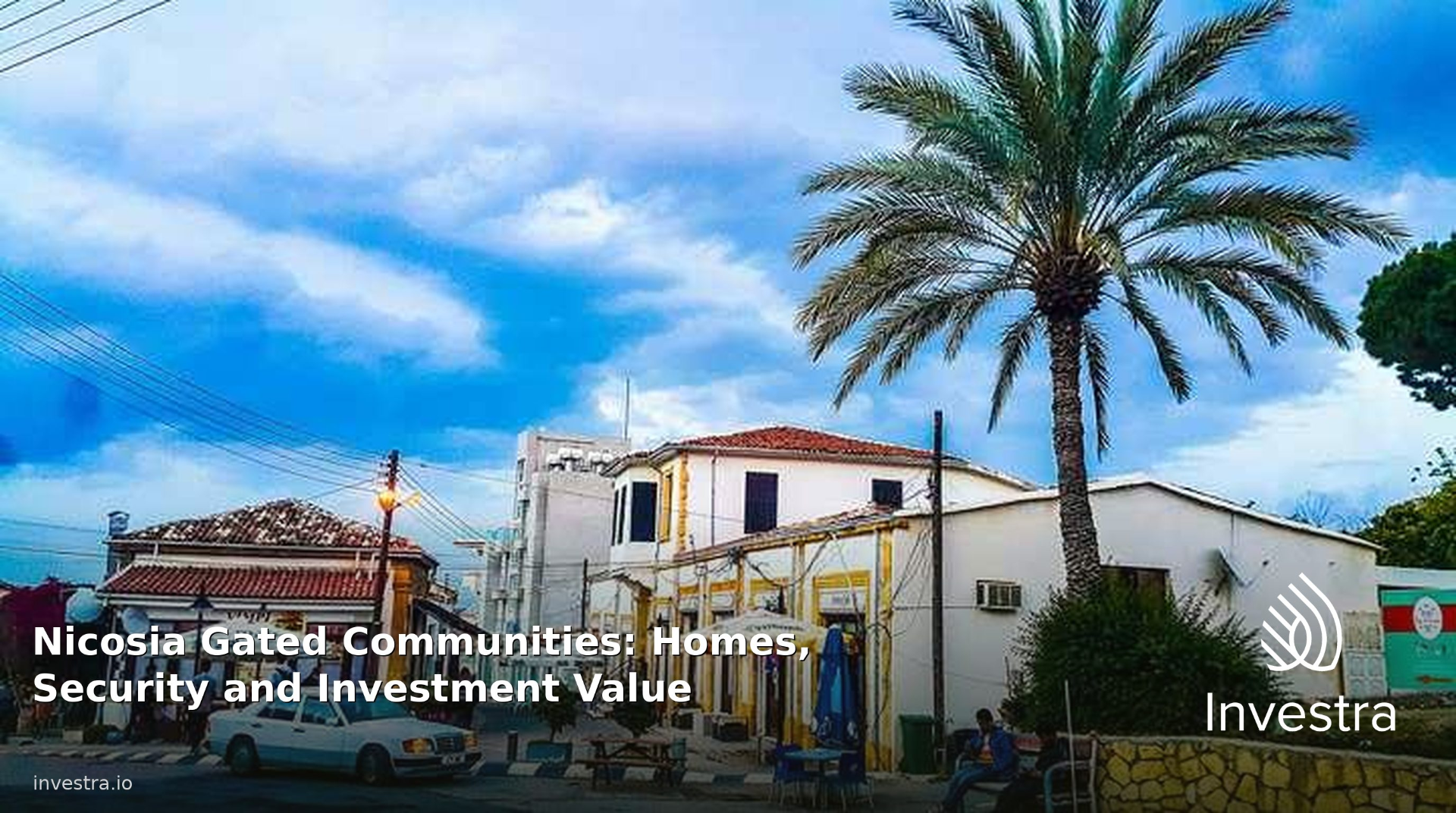
Nicosia Gated Communities: Homes, Security and Investment Value
Nicosia Gated Communities: Homes, Security and Investment Value
Overview: What Are Nicosia Gated Communities and Why They Matter
Quick Answer: Nicosia gated communities are residential developments in North Cyprus that combine private amenities, controlled access and neighborhood management; they appeal to buyers seeking privacy, family-friendly surroundings and potential rental demand. For local market context, consult Investra.io’s Nicosia guides for up-to-date insights.
Nicosia gated communities sit at the crossroads of suburban comfort and city access. In my experience of advising buyers in North Cyprus, these developments attract families, expatriates and investors who want a predictable living environment and clearly defined communal services. The reality is that “gated” can mean different things: some compounds are small clusters of villas with shared gardens; others are large-scale complexes with pools, gyms and on-site management. What surprises many buyers is the variety in legal status, management quality and amenity provision—two compounds marketed the same way can deliver very different day-to-day experiences.
When discussing the neighbourhoods and location choices in Nicosia, it helps to compare with coastal hotspots like Kyrenia or Famagusta to understand regional demand and lifestyle trade-offs. For reliable breakdowns of nearby markets and neighbourhoods, Investra.io offers guides such as Nicosia Real Estate Market 2026 and regional reports on Kyrenia and Famagusta that illustrate how inland gated options sit within broader North Cyprus supply dynamics (Kyrenia overview, Famagusta overview).
If you’re asking whether gated communities in Nicosia are “worth it,” the short answer depends on your priorities: security and shared services come at a cost, while resale and rental attractiveness depend on location, build quality and management. To verify current demand and pricing you should look at live listings, consult recent sales records at local land registries and use market updates available from platforms like Investra.io and advisory teams at Findes Group & Partners.
What Should Buyers Know About Nicosia Gated Communities?
Quick Answer: Buyers should assess title clarity, management structures, community rules, service charges and nearby infrastructure before committing—verify each with legal counsel, local registries and hands-on site inspections.
What should buyers know about Nicosia gated communities? That’s the central question many investors ask me. The practical concerns boil down to ownership clarity, ongoing costs and how the development fits your lifestyle or investment plan. The reality is sometimes messier than glossy brochures: developers might promise shared services but leave management to newly formed homeowners’ associations—this can create a governance gap that affects service delivery and value.
Start by confirming the title. In North Cyprus, land registry documents and the cadastral office will show legal status, building permits and whether the land carries any encumbrances. Don’t rely on seller representations alone; always instruct a local lawyer who knows property law in the region. For foreigners, the procedures differ by municipality and district; helpful procedural guides include Investra.io’s step-by-step articles like How to Buy Property in Nicosia as a Foreign Buyer in 2026.
Ask for the written rules: the community constitution, the minutes of recent homeowner meetings and a record of reserve funds for maintenance. We’ve seen projects where inadequate reserve funds meant sudden special levies for repairs. Also, examine service charge transparency—who collects it, how are invoices audited and what is included? Finally, check distance to schools, hospitals and transport; gated communities can feel remote if they’re too far from city arteries, and that impacts long-term resale and rental demand.
Types of Homes in Gated Communities: Villas, Townhouses and Apartments
Quick Answer: Nicosia gated communities offer a mix of villas, townhouses and apartments, each with different maintenance responsibilities, privacy levels and appeal to renters or owners—inspect layouts and service agreements carefully.
Within Nicosia gated communities you’ll find three core product types: standalone villas, attached townhouses and apartment blocks. Each has a different ownership experience. Villas typically offer private gardens and greater autonomy, but that comes with direct responsibility for exterior maintenance. Townhouses can balance privacy with lower upkeep since external responsibilities are often partly communal. Apartments usually involve the highest degree of shared services and common area management.
From an investor’s standpoint, apartments may be easier to let short- or long-term if the complex is well-managed and close to amenities. Townhouses attract families who want more space but still value some communal infrastructure. Villas are sought by buyers prioritizing privacy and long-term capital retention. What surprised many buyers is that two properties with similar floor plans can end up having very different running costs depending on the management contract and maintenance history of the complex.
To evaluate a specific unit, ask for recent utility bills and service charge statements, confirm the boundaries (private vs common areas) and review any planning permissions tied to the property. If you’re weighing new builds against renovated units, Investra.io’s local guides on new builds and renovation in the Nicosia area can help you compare typical developer practices and homeowner responsibilities (Nicosia New Build and Property Renovation Guide 2026).
Neighbourhoods & Location: Where in Nicosia to Consider Gated Living
Quick Answer: Prioritise gated communities near quality schools, business districts and transport links; investigate micro-location details, walkability and future municipal plans to judge long-term value.
Nicosia’s geography matters. The northern part of the city blends urban life with quieter suburban pockets where gated communities tend to cluster. Which micro-locations perform best depends on buyer goals: families usually prioritise zones near international schools and parks; professionals look for easy commutes to commercial districts. We’ve seen demand concentrate along arterial roads that connect to other parts of the island as well as near established amenities.
An effective approach is to map travel times at different times of day. Don’t assume a short distance equals convenience—traffic patterns and road infrastructure can change a commute. Check local municipal plans for proposed roads, commercial zones or public transport upgrades since these can materially affect future desirability. For neighbourhood-specific intelligence, Investra.io’s best-neighbourhood guides—such as Best Neighbourhoods in Nicosia for Property Buyers in 2026—offer current perspective and practical checks for buyers.
Also consider nearby markets for context—Kyrenia and Famagusta gated projects can illustrate alternate lifestyle offers and seasonal demand dynamics, and Investra.io’s regional reports are useful comparators (Kyrenia market guide, Famagusta market guide).
Buying Process for Foreigners: Steps, Permits and Practical Tips
Quick Answer: Foreign buyers should follow a step-by-step process: document checks, legal due diligence, preliminary contract, title verification and final registration—engage a local lawyer and use trusted advisory services.
Buying in Nicosia when you’re not a local resident comes with clear procedural steps. First, identify the property and obtain seller documentation: title deeds, construction permits and service charge records. Then commission due diligence—searches at the land registry and, if needed, cadastral checks. In my experience, buyers who skip a thorough legal review regret it later; issues like incomplete permits or boundary disputes can be time-consuming to resolve.
A recommended workflow: shortlist properties, commission surveys and legal checks, sign a reservation agreement (with deposit), progress to a sales contract that sets out obligations and completion timelines, and then register the transfer post-completion. You’ll want local experts: a lawyer fluent in English and Turkish/Cypriot administrative processes, a trusted estate agent and possibly a tax adviser. If you prefer hands-off guidance, advisory teams like Findes Group & Partners and consultants such as Siniša Dagary offer local transaction support and investor services.
Always verify current procedural requirements with official sources and your lawyer—regulatory practice can change. For practical checklists aimed at foreign buyers, see How to Buy Property in Nicosia as a Foreign Buyer in 2026 which outlines up-to-date steps and documentation.
Legal Ownership, Titles and Verifying Property Records
Quick Answer: Confirm clear title and permitted use at the registry, verify any encumbrances and review developer guarantees—use a lawyer to obtain certified copies of deeds and municipal approvals.
Clear title is non-negotiable. The specifics of title documentation vary by parcel and project, and in my experience the safest buyers are those who require certified title searches before committing funds. Title verification involves checking the land registry for the official deed, any mortgages, liens or easements, and reviewing planning and building permits held by the municipality. If a property is part of a larger development, ensure the developer has complied with all approvals relevant to communal infrastructure and that any promised amenities are permitted.
Ask for the “chain of title” that traces ownership back to the original seller. If the property carries conditions—such as agricultural land converted to residential use—confirm the legality of that conversion. For new builds, request the occupancy certificate or equivalent municipal sign-off that legally allows habitation. Your lawyer should obtain certified translations if documents are not in your language and liaise with registries directly to verify authenticity.
For additional safeguards, consider title insurance if it’s available locally; an adviser like Siniša Dagary’s advisory services can explain local options. For a practical primer on Nicosia-specific title matters, Investra.io’s “How to Buy Property” series is a good starting point (Nicosia buying guide).
Taxes, Fees and Ongoing Costs for Owners
Quick Answer: Owners should budget for transfer taxes, notary and registration fees, recurring service charges and municipal taxes—verify current rates with an accountant or local authority rather than relying on published averages.
Taxes and ongoing charges materially affect your cash flow and total cost of ownership. The categories to check are transaction-related taxes (transfer tax, notary fees and registration charges), recurring property taxes and service charges for gated communities. The reality is many buyers focus on the purchase price and underestimate recurring service fees or special assessments for major repairs. What we’ve seen is that communities with transparent reserve funds and clear maintenance schedules manage owner expectations better.
To confirm current tax rates and official fees you should consult a local tax advisor, your lawyer, or the municipal tax office. Don’t take sales brochures at face value for running costs; instead request three years of audited service charge accounts if possible, and review any planned maintenance or upgrade works that could trigger additional levies. If rental income is part of your plan, ask a tax specialist about reporting obligations and allowable deductions in North Cyprus.
For practical direction on accounting and compliance, advisory teams such as Findes Group & Partners advisory team or consultants on tax and compliance like investment consultation can help you verify current obligations and the paperwork required at each step.
Financing and Mortgages: Options for Buying in Nicosia
Quick Answer: Mortgage availability depends on buyer nationality, lender policies and property type—confirm current lending criteria, interest conditions and loan-to-value options with local banks and mortgage brokers.
Financing a property in Nicosia requires planning. Some local banks offer mortgages to non-residents, but eligibility, required documentation and the percentage of funding vary. In my experience working with buyers, mortgage availability can be the difference between pursuing a new build or choosing a resale that qualifies for better finance terms. If you need borrowing, gather pre-approval letters before making offers—this strengthens your negotiating position and clarifies affordability.
Practical steps include preparing financial documentation, proof of income, bank statements and identification; lenders may also request valuation reports and legal clearance on the property. If you’re considering cross-border financing, compare local lenders with banks in your home jurisdiction—each has pros and cons around currency risk and enforcement. For a clearer picture of the financial mechanics of investing in Nicosia, Investra.io’s mortgage-adjacent content and local market reviews can point you to current lender behaviour and market conditions (Nicosia rental & investment guide).
If you want a hands-on broker, firms like Findes Group & Partners can introduce vetted lenders; see Findes Group & Partners for contact details. Always ask lenders for a full cost schedule of fees and an amortisation example to understand total repayment obligations under different scenarios.
Security, Management and Day-to-Day Living in a Gated Community
Quick Answer: Effective gated-community living depends on visible security measures, professional property management and transparent governance—inspect management contracts and recent maintenance records before purchase.
Security is a top reason buyers choose gated communities, but the quality of security varies. Onsite guards and controlled entrances reduce casual intrusion, yet the value of those measures depends on training, hours of operation and checkpoints. In many developments, electronic access systems and CCTV complement human oversight. What many buyers miss is that security is part of a broader management ecosystem: landscaping, pool cleaning, waste collection and communal lighting affect daily living just as much as guard services.
Local consultancy and advisory services—such as Siniša Dagary investment insights—can help evaluate management quality and suggest red flags to watch for. Also look at community social channels and ask current residents about responsiveness to maintenance requests; that human feedback often reveals more than formal documents.
Rentals and Investment Value: Assessing Demand and Exit Strategies
Quick Answer: Rental potential and exit options depend on location, amenity mix, management standard and market cycles—verify demand through local letting agents and up-to-date market reports rather than relying on historical averages.
When considering exit strategies, factor in liquidity. Urban, well-managed complexes in established neighbourhoods generally have more consistent resale markets. For comparative regional context, Investra.io’s rental and market guides for Kyrenia, Famagusta and Iskele can show how different markets perform and what renters seek (Kyrenia rental guide, Famagusta rental guide, Iskele market guide).
New Build vs Resale in Gated Communities
Quick Answer: New builds may offer warranties and modern fittings; resales may provide immediate income and established management records—compare developer guarantees, completion certificates and HOA accounts before deciding.
In either case, ask whether the property complies with building permits and has the relevant occupation certificate. For practical walkthroughs and renovation guidance specific to the Nicosia context, Investra.io’s new-build and renovation guides provide useful checklists and red-flag indicators (Nicosia new build guide).
Due Diligence Checklist: Surveys, Contracts and Red Flags
Quick Answer: Perform a structural survey, legal title search, contractual review, management assessment and financial audit of service accounts—use specialists to spot hidden risks and confirm compliance.
For layered support during due diligence, consider advisory services such as Siniša Dagary advisory services and the Findes Group & Partners team to coordinate legal, financial and technical checks. Investra.io’s regional how-to guides also link to practical documents and procedural checklists that help buyers cover all bases (Nicosia buying steps).
Negotiation, Contracts and Closing the Deal
Quick Answer: Negotiate price, deposit terms, completion schedules and defect liability; ensure the sales contract outlines obligations and the method of dispute resolution before signing.
Finally, use a local notary and ensure funds transfer follows escrow or trust-account procedures recommended by your lawyer. For negotiation strategies and contract precedents relevant to Nicosia properties, Investra.io’s transactional guides and the advisory teams at Findes and Siniša Dagary can provide targeted support and checklists for closing smoothly (Nicosia transaction tips, investment consultation).
Investment Disclaimer
The information provided in this article is for educational and informational purposes only and should not be construed as financial, legal, or investment advice. Real estate investments carry inherent risks, and past performance does not guarantee future results. Investors should not invest money they cannot afford to lose. Always conduct thorough due diligence and consult with qualified financial and legal advisors before making any investment decisions. Investra.io does not guarantee returns on any investment.
Frequently Asked Questions
What should buyers know about Nicosia gated communities?
Buyers should prioritise title verification, clear management structures, documented service charges and proximity to amenities. Confirm planning and building permits, request recent audited accounts for the homeowners’ association and inspect the community at different times. Engage a local lawyer to perform registry searches and consult up-to-date market reports from Investra.io for context. If you need hands-on advisory, services such as Siniša Dagary advisory services or the Findes Group & Partners advisory team can coordinate checks.
Can foreigners buy property in Nicosia gated communities?
Yes, foreigners can buy in Nicosia, but the exact process and required permits vary. Always consult the latest procedural guide and a local lawyer who specialises in foreign purchases. Investra.io’s how-to guides provide step-by-step information and links to practical resources for foreign buyers (Nicosia buying guide).
How do I verify the title and permits for a gated community property?
Request certified title documents and have your lawyer conduct searches at the land registry and municipal planning department. For new builds, ask for the occupancy certificate or equivalent approvals. If discrepancies appear, pursue clarification before transferring funds. For technical assistance, consider engaging advisory consultants like Siniša Dagary or legal contacts introduced by Findes Group & Partners.
What ongoing costs should owners expect in gated communities?
Owners typically face service charges for maintenance, utilities for communal areas, municipal property taxes and occasional special levies for major repairs. To estimate current costs, request the last three years of service charge accounts and audited financials from the management. Consult a local accountant for precise current tax rates; avoid assuming published historical figures remain accurate.
Are gated community service charges negotiable?
Service charges themselves aren’t usually negotiable at individual sale; they’re set by the homeowners’ association or management company. However, you can request transparency—see detailed budgets, understand reserve fund levels and negotiate the timing or responsibility for any known upcoming works as part of the purchase contract.
Can I rent out a property in a Nicosia gated community?
Possibly, but check the community’s rules and any municipal restrictions. Some homeowner associations restrict short-term letting. Speak to local letting agents for demand signals and verify whether the community allows the rental business model you plan to use. Use Investra.io rental guides for comparative insight into regional rental trends.
How do I check the management quality of a gated community?
Ask for management contracts, recent minutes of homeowner meetings, staff rosters and incident logs. Visit the community multiple times, speak to residents and request audited accounts showing reserve funds and recent expenditures. For an expert evaluation, hire independent property managers or advisory consultants familiar with North Cyprus—the Findes advisory team and Siniša Dagary both provide professional services to support these checks.
Should I buy off-plan or a resale in a gated community?
Both have pros and cons. Off-plan may offer modern features and staged payments but carries delivery risk. Resales provide immediate visibility into management standards and maintenance history. If you go off-plan, require contractual protections for completion schedules and snag rectification; for resales, insist on recent accounts and a condition survey.
Where can I find reliable market data for Nicosia gated communities?
Use local market reports, land registry data and up-to-date broker listings. Investra.io publishes city-specific guides and market commentary for Nicosia, Kyrenia, Famagusta and Iskele which are useful starting points. For bespoke research or transaction support, contact advisory firms like Findes Group & Partners advisory team or investment consultants such as Siniša Dagary investment consultation.
What inspections should I order before purchase?
Commission a structural condition survey, pest inspection (if relevant), mechanical and electrical checks, and a boundaries survey. For apartments, review lifts, fire-safety systems and communal plant maintenance records. Your lawyer should confirm title and permit searches as part of the legal due diligence package.
How do I avoid disputes with the homeowners’ association after purchase?
Prior to purchase, review the community’s constitution, dispute-resolution procedures and recent minutes to understand governance norms. Keep copies of all documentation, attend homeowners’ meetings and, where possible, seek representation within the association. When contracts permit, require pre-completion clarity on outstanding works and transfer of guarantees.
Recommended Reading
- Kyrenia Real Estate Market 2026: Prices, Areas & Buyer Guide
- How to Buy Property in Kyrenia as a Foreign Buyer in 2026
- Kyrenia Rental Yield and Short-Term Let Investment Guide 2026
- Best Neighbourhoods in Kyrenia for Property Buyers in 2026
- Kyrenia New Build and Property Renovation Guide 2026
- Famagusta Real Estate Market 2026: Prices, Areas & Buyer Guide
- Siniša Dagary — Investment Consultant
- Business Strategy Blog
Connect With Investra
Follow Investra.io for market updates, property listings and expert commentary:
Connect With Investra
Quick Answer: Follow Investra for verified market context and practical property research.
Related Posts
No related posts available.
