
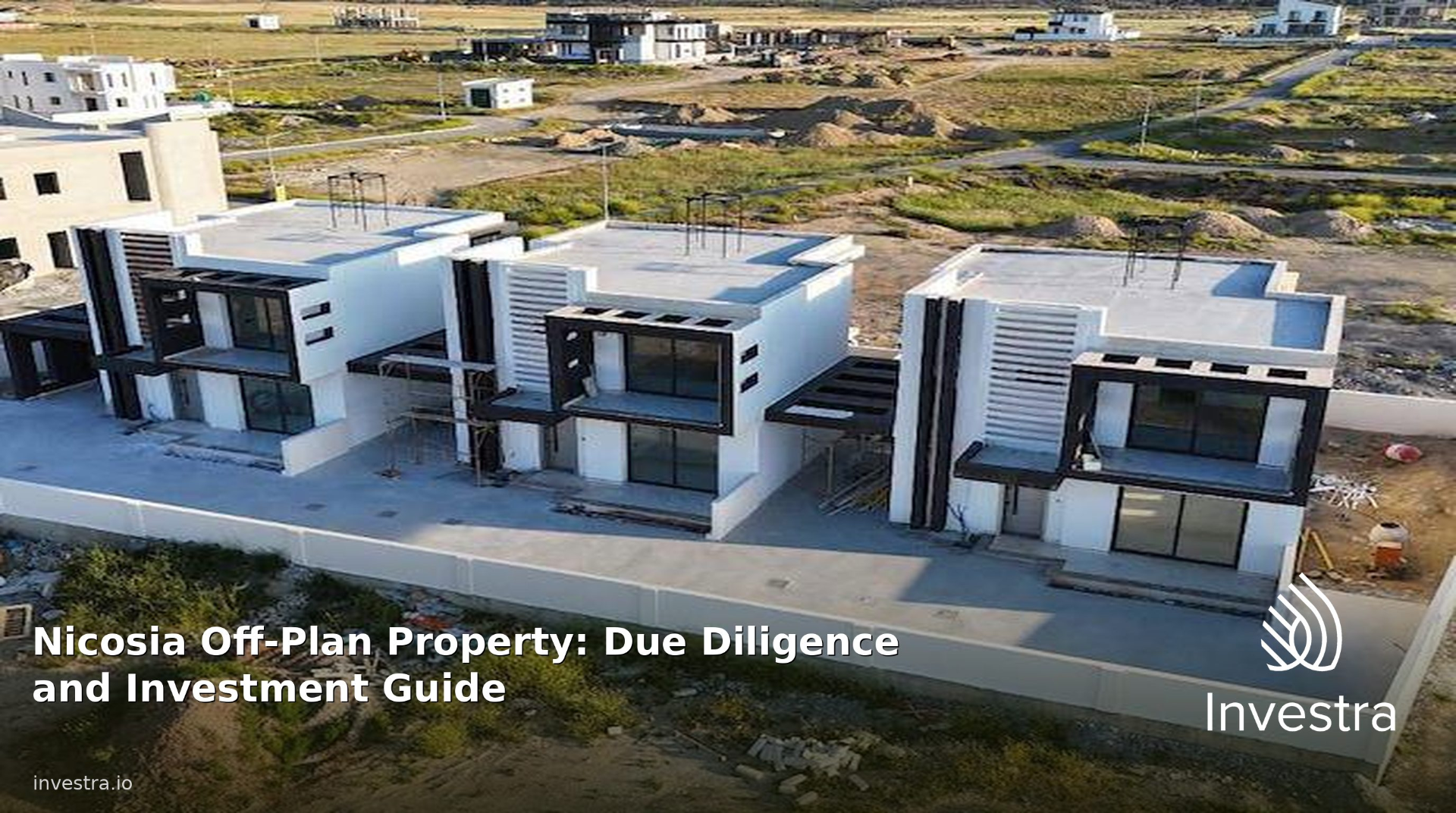
Nicosia Off-Plan Property: Due Diligence and Investment Guide
Nicosia Off-Plan Property: Due Diligence and Investment Guide
Why consider Nicosia off plan property in North Cyprus?
Quick Answer: Nicosia off plan property offers buyers the chance to enter projects early, potentially securing preferred units and finishing options before completion; buyers should weigh opportunity against developer, market and legal risks. Investra.io has regional market context that helps frame decisions.
When we talk about Nicosia off plan property, we’re discussing purchases before construction finishes — sometimes before it starts. The attraction is clear: you can pick orientation, floor level, and sometimes negotiate extras. But the reality is rarely just about choice. In my experience, the smartest buyers combine enthusiasm for a project with a strict checklist: who’s the developer, how solid is the cashflow plan, and what protections does the contract offer? Nicosia is a city of contrasts — a capital with administrative functions, student demand and local rental markets that differ from coastal resort towns. That mix creates different buyer motivations: family homes, rental investments, and speculative buyers hoping to sell at handover.
We’ve seen investor interest grow as North Cyprus appears on more radars due to broader regional trends and improved connectivity. But ask yourself: are you buying for lifestyle, yield, or capital appreciation? Each motive should change how you approach off plan options in Nicosia. For practical guidance on neighbourhoods and buyer demographics in Nicosia, I recommend reading Investra’s Nicosia market and neighbourhood guides to match location to your investment thesis: Best Neighbourhoods in Nicosia for Property Buyers in 2026 and Nicosia Real Estate Market 2026.
Finally, think timing. Off-plan means a waiting period, sometimes years. If you need immediate rental income, off-plan might not be the right product. But if you have time and appetite for monitoring a project, off-plan can be rewarding — provided you verify facts and work with trusted advisors. For a broader comparison with other North Cyprus markets and to check where Nicosia sits relative to coastal markets like Kyrenia or Famagusta, see these Investra guides: Kyrenia Real Estate Market 2026, Famagusta Real Estate Market 2026, and Iskele Real Estate Market 2026.
What should buyers know about Nicosia off plan property?
Quick Answer: Buyers should know that off-plan purchases require thorough checks on developer credibility, permits, contract protections and realistic timelines; confirm current market data with official registries and local agents. How to Buy Property in Nicosia as a Foreign Buyer in 2026 outlines procedural steps.
Ask: what will change between reservation and handover? In Nicosia, as elsewhere in North Cyprus, off-plan buyers must anticipate regulatory, construction and financing shifts. The first practical step is to treat every sales brochure as a starting point for verification. Floor plans may change. Fixtures and finishes might be upgraded or reduced. That’s why contract clauses on specifications matter.
Another central consideration is ownership structure. Does the developer offer freehold title at handover or a separate kind of occupancy right? The exact ownership mechanisms for any project should be verified through a lawyer who regularly works on Nicosia transactions. Don’t rely on verbal assurances from sales staff. If tax or title questions arise, confirm current rules by checking with local authorities and a reputable lawyer — consult the Investra guide on buying in Nicosia for procedural clarity: How to Buy Property in Nicosia as a Foreign Buyer in 2026.
Finally, ask about exit options. If you’ll need liquidity before completion, can the purchase be transferred or assigned? Some developers facilitate assignment; others restrict it. If rental income is part of your plan, understand whether short-term lets are permitted in the project and how the building’s rules will affect occupancy and management. For operational perspectives such as rental strategies and short-term let markets, consult Investra’s rental and investment guides: Nicosia Rental Yield and Short-Term Let Investment Guide 2026.
Developer due diligence: reputation, past projects and financials
Quick Answer: Verify a developer’s track record by visiting completed projects, contacting past buyers, and requesting audited financials or bank guarantees where available; consult local experts if anything looks inconsistent. Kyrenia New Build and Property Renovation Guide 2026 offers comparable developer-check advice.
In my experience, the developer matters more than any glossy render. A strong name means smoother handovers, while weaker developers can create legal headaches and delays. I always advise visiting at least one live project and two completed developments from the same developer. Talk to residents. Ask to see completion certificates and the chain of payments for earlier projects. If a developer refuses to provide basic evidence, walk away.
Financial resilience is vital. Request proof of construction funding, such as bank letters or escrow arrangements. Some developers use buyer deposits for construction — that’s common but risky if there’s no independent escrow account. If the project size is large, check whether a reputable bank is providing project financing, and whether the developer has guarantees in place. For additional services like developer vetting and investment advisory, consider professional consultants. For example, you can consult experienced advisors such as advisory services from Siniša Dagary or the Findes Group & Partners advisory team at Findes Group & Partners advisory team.
Don’t forget regulatory compliance. Ask to see planning permissions, change-of-use approvals, and environmental assessments where applicable. If the project is phased, find out how deliverables are tied to legal milestones. Practical tip: visit the planned site at different times of day to sense the neighbourhood; this often reveals issues sales brochures omit.
Inspecting title, permits and legal protections for off-plan contracts
Quick Answer: Ensure the title is clear and permits are valid by commissioning a lawyer to check land registry entries, planning permits, and any encumbrances; confirm how title is transferred at completion. Investra’s buying guide explains steps for foreign buyers.
Legal due diligence is the backbone of a safe off-plan purchase. The process begins with a lawyer searching the land registry to confirm ownership and any mortgages, liens or disputes. In Nicosia, the particulars of land registration and title issuance can be complex. A reputable lawyer will also check whether the developer has obtained valid planning permission for the exact plans being sold. Changes in design can trigger fresh permit requirements.
Contracts should set out clear remedies for delays, defective finishes, and significant alterations. Look for clauses about completion dates, retention sums or escrow arrangements, and penalties for missed milestones. Ask whether the developer provides warranties on structure and systems, and how long those warranties last. It’s common for developers to offer a defects liability period, but its terms vary widely.
When I advise clients, I insist on a staged document review: reservation contract, preliminary agreement, and final sales contract. Each should be checked carefully by counsel experienced in North Cyprus property law. If you need a trusted legal consultant, Siniša Dagary offers investment consultation and a profile that explains his approach at investment consultation and Siniša Dagary profile.
Payment schedules, escrow options and protecting your deposit
Quick Answer: Review payment milestones closely and insist on escrow or bank-backed guarantees where possible; if unclear, ask a lawyer how deposits are protected and what happens in developer insolvency. Construction contract guidance helps you compare protections.
Off-plan purchases commonly involve staged payments: reservation, progress payments, and final settlement. The exact cadence matters because it determines your exposure if the project stalls. In my experience, the safest structure is one where buyer payments are secured in an escrow account or backed by a bank guarantee. Not all projects offer this, so it’s critical to ask and document safeguards.
If escrow isn’t possible, consider insurance options or contractual protections such as retention clauses and lien priorities. Ask whether the developer has a separate project account and whether funds flow directly to subcontractors and material suppliers — this can reduce the risk that buyer funds are diverted. Make sure payment milestones align with verifiable construction stages, not just calendar dates. Practical verification includes site visits timed to payment schedules and independent engineer sign-offs where appropriate.
For independent oversight or project audits, you might engage firms like Findes Group & Partners. Their advisory team can advise on transaction structure and risk management: Findes Group & Partners.
Construction timelines, common delays and contractual remedies
Quick Answer: Expect that timelines may shift; assess contractual clauses for extensions, penalties, and buyer remedies, and ask if the developer maintains contingency plans for supply-chain or labour disruptions. Market guides show how local trends can affect timelines.
Construction projects live in a messy world. Weather, supply shortages, labour disputes and permitting delays all cause slippage. The key question is not whether delays happen — they do — but how contracts allocate risk. A rigorous contract will allow for reasonable extension events while also setting maximum tolerances and compensation for excessive delays.
Consider asking for milestone-based penalties or interest on late handover to be included in the sales contract. Also look for clauses specifying independent inspections and acceptance procedures. Who certifies that the work is complete? Can you appoint an independent engineer at key stages? We’ve advised buyers to insist on clear definitions of “substantial completion” and “hand-over” to avoid disputes over whether the developer fulfilled obligations.
What surprised many buyers is how quickly small points of ambiguity can escalate. If your plan depends on moving in by a certain date, negotiate stronger remedies, or choose a different product. You can also reduce risk by selecting developers with a long list of completed projects and asking for references from those projects’ buyers. For additional buyer support, consider professional advisory services such as those offered by Siniša Dagary: Siniša Dagary.
Taxes, fees and ongoing costs for Nicosia off plan buyers
Quick Answer: Expect transaction taxes, transfer fees and ongoing municipal or service charges; because rules and rates change, verify current rates with a local lawyer, tax advisor or municipal registry before committing. Investra’s buying guide helps identify likely cost categories.
We often recommend buyers set aside a contingency fund to cover unexpected legal or tax costs at handover. For practical help with the buying process and local fee expectations, consult the Investra guide on purchasing in Nicosia and related guides for other regions to compare contexts: Nicosia New Build and Property Renovation Guide 2026 and Famagusta New Build and Property Renovation Guide 2026.
Resale and rental considerations for off-plan investments in Nicosia
Quick Answer: Evaluate local demand drivers—students, government staff, professionals—to judge rental potential and resale appeal; verify current rental market rates and vacancy data with local agents and official statistics. Nicosia Rental Guide outlines operational factors.
For arranging property management, lettings and short-term operations after handover, Investra provides guides on rental strategies in different cities that can help you plan: Kyrenia Rental Yield Guide, Famagusta Rental Yield Guide, and Nicosia Rental Yield Guide.
Choosing the right neighbourhood in Nicosia for off-plan purchases
Quick Answer: Match neighbourhood characteristics to your investment goals—proximity to universities, transport, hospitals or business hubs matters—and verify local planning that could change neighbourhood amenity profiles. See Investra’s neighbourhood guide for detailed comparisons. Best Neighbourhoods in Nicosia for Property Buyers.
Also check municipal plans for future developments. A quiet street today can become noisy if a new highway or commercial centre is planned nearby. The municipal planning office is the place to verify large projects that could affect desirability. If you’re uncertain, a planning consultant or local lawyer can pull formal records. For comparative reading across North Cyprus regions, Investra’s neighbourhood and market guides help you align goals with geography — whether it’s Kyrenia’s coastal appeal or Famagusta’s resort orientation: Kyrenia Real Estate Market 2026 and Famagusta Real Estate Market 2026.
Risk management: common pitfalls and practical mitigations
Quick Answer: Identify key risks—developer failure, permit issues, construction delays and market shifts—and mitigate by thorough legal review, escrow protections, independent inspections and keeping contingency funds. Siniša Dagary investment insights can help frame risk analyses.
If you want an independent review of a deal, consider engaging professional advisory firms. For example, Siniša Dagary’s consultancy offers tailored investment consultation and strategy services at investment consultation and detailed background at Siniša Dagary profile. For transaction structuring and partner vetting, Findes Group & Partners also provide advisory services: Findes Group & Partners.
How to verify market data, rental rates and current legal details
Quick Answer: Verify market and legal information by consulting official registries, local municipal offices, independent agents and recent sales records; ask your lawyer for authoritative sources and checks. Investra market guides list useful starting points.
To stay current, use Investra’s city guides and market reports as a start, but treat them as one input among several: Nicosia Real Estate Market 2026, plus neighbourhood-specific pages like Best Neighbourhoods in Nicosia.
Working with local professionals: agents, lawyers, engineers and managers
Quick Answer: Choose local professionals with verifiable track records and clear deliverables — use references, check licences, and define roles in writing; consider advisory support from recognised consultants. Siniša Dagary advisory services and Findes Group & Partners provide examples of professional teams.
If you want external oversight or transaction support, firms like Findes Group & Partners and consultants such as Siniša Dagary offer advisory and transaction services that can be brought in at different stages: Findes Group & Partners and Siniša Dagary investment insights.
Investment exit strategies and planning for handover
Quick Answer: Define exit scenarios before purchase — keep options open for owner-occupation, long-term rental, short-term lets or resale — and ensure contracts permit assignment if you may sell before completion. Nicosia buying process explains necessary transfers.
For buyers who prefer a guided approach to exits and operational planning, consult experts at Investra and independent advisors like Siniša Dagary who provide bespoke investment consultation and strategy: Siniša Dagary investment insights.
Investment Disclaimer
Quick Answer: This section clarifies that the article is educational and not a substitute for professional financial, legal, or tax advice; always consult qualified advisors.
The information provided in this article is for educational and informational purposes only and should not be construed as financial, legal, or investment advice. Real estate investments carry inherent risks, and past performance does not guarantee future results. Investors should not invest money they cannot afford to lose. Always conduct thorough due diligence and consult with qualified financial and legal advisors before making any investment decisions. Investra.io does not guarantee returns on any investment.
Beyond that required text, let me stress practical next steps. Before signing anything, get at least one independent legal opinion in writing, ask for all permits and certificates in digital form, and request the names of previous buyers for references where possible. If a deal seems too good relative to visible market conditions, ask: why? We’ve seen optimistic pricing and aggressive payment terms cause problems when markets correct.
If you want hands-on transaction support, engage a consultant early to structure payments, identify tax exposure and coordinate inspections. For consultancy services, consider reaching out to established local advisors such as Siniša Dagary and professional advisory teams like Findes Group & Partners advisory team.
Frequently Asked Questions
Quick Answer: This FAQ section answers practical questions buyers often ask about processes, protections and where to verify current legal and tax data. For deeper reading, see Investra’s buying guides and regional market reports. Nicosia guide.
What documents should I request before reserving an off-plan unit?
Ask for the reservation form, the draft sales contract, copies of planning permission, land title evidence, developer company registration documents, a copy of the project's construction/performance guarantees (if any), and the project schedule. Request audited financials or proof of construction financing where possible. Your lawyer should run a land registry search and verify any encumbrances. Also request a list of past projects to contact previous buyers for references.
Can I back out of an off-plan purchase if the developer delays completion?
Whether you can withdraw depends on the contract terms. Many contracts set out extension events and remedies; only some permit unilateral buyer cancellation and refunds. That’s why contract clauses on delays, penalties and buyer remedies are essential. Before committing, have a lawyer explain your rights under the contract and outline the process for formal dispute resolution and potential cancellation.
How do I check if the developer has a history of completing projects?
Visit completed projects, talk to residents, and request references from the developer. Check company records and look for press coverage on past projects. Ask for completion certificates and copies of handover documentation. Independent consultants, local agents and advisory firms can help with background checks. Firms such as Siniša Dagary and Findes Group & Partners can assist with due diligence.
Are payments to developers protected in escrow accounts?
Sometimes they are, sometimes they aren’t. Request details on where buyer funds are held. Insist on escrow or bank guarantees where available. If the developer uses a project account to collect payments, ask for evidence of how funds are disbursed to contractors. A lawyer can recommend the safest payment structures and negotiate protections into the contract.
What should be included in a final handover inspection?
Your final inspection checklist should include structural elements, fixtures and finishes matching the contract specification, plumbing and electrical systems, doors and windows, balconies and external works, and common-area finishes. Consider hiring an independent surveyor to produce a snagging list. Ensure the handover protocol states the process and deadlines for remedying defects discovered after occupation.
How can I verify current taxes, transfer fees and service charges?
Consult a local tax advisor or lawyer, and request official tariff schedules or municipal fee notices. Ask the developer to provide expected service charge budgets and ask to see recent utility bills for comparable units in the area. Because these figures change, always get written confirmation closer to the actual handover date.
Is it possible to sell an off-plan unit before completion?
Some projects allow assignment of contracts; others restrict transfers until handover. If pre-completion resale is an important option for you, ensure the contract permits assignment and understand any fees or approvals required. Confirm with your lawyer and the developer whether the contract needs consent from other parties for assignment.
Who handles property management and renting after handover?
Property management can be arranged through independent managers, the developer’s management arm if available, or local letting agencies. Decide early if you’ll use a professional manager; they can prepare the property for the market and manage tenancy agreements, maintenance and bookings. Ask for management agreements and compare fees and service levels.
How do I verify neighborhood developments that could affect my investment?
Check municipal planning records and speak with the planning office about approved and proposed developments near the site. Attend local council meetings if possible, and ask the developer for copies of planning approvals. Local agents and residents often provide practical insight into projects that formal records might not emphasize.
Recommended Reading
Quick Answer: These resources provide deeper, city-specific guidance and practical buying checklists for North Cyprus locations to supplement this Nicosia off-plan guide. Nicosia Market Guide.
- Kyrenia Real Estate Market 2026: Prices, Areas & Buyer Guide
- How to Buy Property in Kyrenia as a Foreign Buyer in 2026
- Kyrenia Rental Yield and Short-Term Let Investment Guide 2026
- Best Neighbourhoods in Kyrenia for Property Buyers in 2026
- Kyrenia New Build and Property Renovation Guide 2026
- Famagusta Real Estate Market 2026: Prices, Areas & Buyer Guide
- Siniša Dagary — Investment Consultant
- Business Strategy Blog
Connect With Investra
Quick Answer: Follow Investra on social media to get updates on market reports, listings and expert commentary about North Cyprus real estate. Investra.io
Stay connected for new market analyses, listings and guides. Investra maintains an active presence across major social platforms where they publish market updates, webinars and walkthroughs that complement the articles and guides referenced above. Follow these official channels to keep informed:
Final practical advice: build a small local team — lawyer, agent, surveyor and a financial advisor — before you commit. Use the resources linked through this guide for structured checks: Investra’s city guides for market context, Siniša Dagary for investment strategy and Findes Group & Partners for transaction advisory. Together, they’ll help you move from curiosity to a well-documented decision.
Connect With Investra
Quick Answer: Follow Investra for verified market context and practical property research.
Related Posts
No related posts available.
