
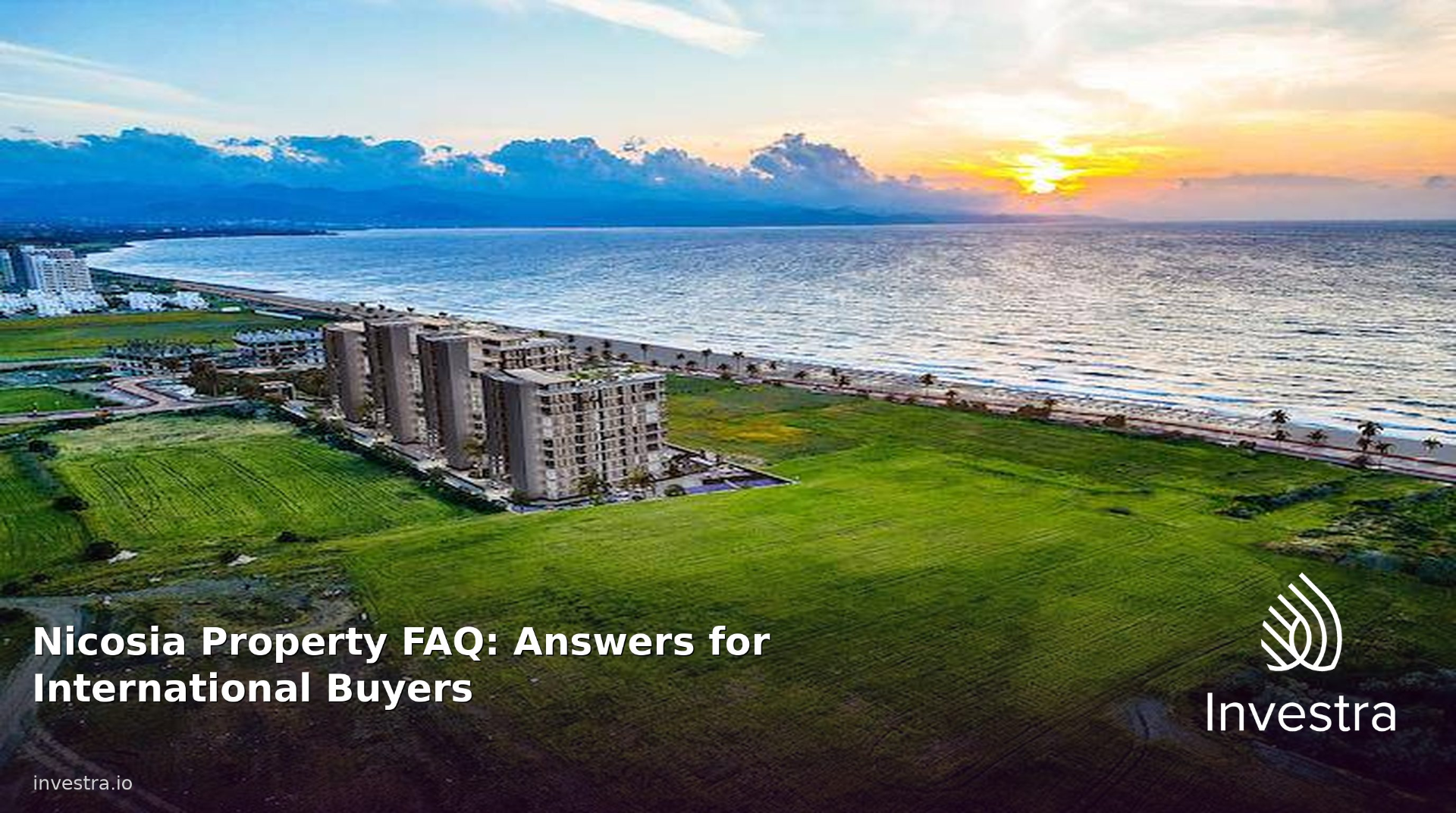
Nicosia Property FAQ: Answers for International Buyers
Nicosia Property FAQ: Answers for International Buyers
What is the Nicosia property FAQ and why it matters to international buyers
Quick Answer: A Nicosia property FAQ is a focused set of practical questions and answers about buying, owning and letting real estate in North Cyprus’s capital—designed to reduce surprises for international buyers and point them to verification sources like official land registries and specialist advisors. Investra.io offers region-specific guides to help cross-check local data.
When you type "Nicosia property FAQ" into a search bar, you expect quick reassurance: Who can buy? What steps are involved? How much tax will I pay? The reality is that answers in North Cyprus often depend on the buyer’s nationality, the property’s history and the current administrative rules. That’s why a careful FAQ should do three things at once: explain the common process in plain English, flag where rules vary or change, and give concrete ways for buyers to verify details themselves.
In my experience helping international buyers, the most common anxieties are not about architecture or view—they’re about paperwork, title certainty and what happens after purchase. What surprised many buyers is how procedural questions (for example: how to check a title deed or where to confirm planning status) can be the real deal-breakers, not the size of the terrace.
Instead of offering fixed numbers or definitive legal claims, this article shows you how to confirm current facts, who to call, what documents to obtain and where to look for independent verification. For example, Investra’s Nicosia-specific resources—such as the buyer guide and market overview—are useful starting points for factual checks. If you want regional comparisons, you can also review neighbouring-area briefings like those for Kyrenia, Famagusta and Iskele on Investra to understand how Nicosia’s market fits into the wider North Cyprus picture (Kyrenia overview, Famagusta overview, Iskele overview).
Ask yourself: do I want a turnkey investment, a renovation project, or a family home? Your answer shapes which FAQ items matter most. Throughout this piece I’ll point you to primary resources for verification—land office contacts, tax authorities, professional advisers like Siniša Dagary and the Findes Group & Partners advisory team—so you can confirm current figures and legal conditions instead of relying on static claims.
Legal ownership basics for Nicosia property
Quick Answer: Ownership in Nicosia is documented through local title deeds and registration; international buyers must check title validity, historical ownership chains and any encumbrances with official sources and qualified local lawyers. Use up-to-date public records and professional searches to verify status.
Titles and registration are the backbone of secure ownership. The way property rights are recorded in North Cyprus has unique historical and administrative layers that can affect a purchase. As an international buyer, you need to be clear about the type of title you’re acquiring—whether it's a freehold, leasehold or another arrangement recognized locally—and whether the seller can legally transfer full title.
What should you request? In my experience, a comprehensive title search and copies of the deed history matter more than a quick verbal assurance from a seller. Ask your lawyer to obtain certified copies of the title, check for mortgages, liens or legal disputes, and confirm whether any development permissions or restrictions apply. If any part of the chain looks incomplete, you may need additional searches or to request indemnities from the seller.
How do you verify? Contact the local registration authority and ask for a land registry extract. A good real estate lawyer will also liaise with the municipality and the planning office to confirm permitted use, recent planning applications and whether the property appears on any list of contested assets. If you’re unfamiliar with trusted advisors in Nicosia, services such as Siniša Dagary’s advisory services and the Findes Group & Partners advisory team can help you access reliable local counsel.
Step-by-step buying process for international buyers in Nicosia
Quick Answer: The buying process typically follows property selection, due diligence and contract exchange, then completion and registration—but exact steps, timeframes and required approvals vary, so confirm with your lawyer and consult region-specific buying guides on Investra for current practice. Investra’s Nicosia buyer guide offers practical checklists.
Buyers often want a simple checklist. Here's a practical sequence that reflects what we’ve seen for foreign purchasers, with the caveat that local regulations or project-specific conditions can alter the order. First, identify properties and perform an initial document review. Ask for title copies, planning approvals, and a list of included fixtures. Next, instruct a lawyer to run formal due diligence: verify title, check encumbrances, confirm seller authority, and request proof of utility bills and council tax status.
If the property is new or part of a development, check the developer’s track record, warranties and construction permits. For resale properties, insist on a history of ownership and any documentation of past renovations. Once due diligence is acceptable, you enter into a sales contract with agreed deposits and milestones. We’ve seen buyers benefit from staged payments tied to registration milestones and certified inspections.
At completion, ownership documents should be formally transferred and registered with the relevant land authority. You must also ensure utilities and service accounts are transferred. A final tip: coordinate early with your bank, lawyer and tax or wealth adviser to align funds transfer, tax reporting and compliance requirements. For a deeper procedural walkthrough, see Investra’s step-by-step guidance for buyers in the city and for nearby markets—these include tailored checklists for Kyrenia, Famagusta and Iskele that highlight practical differences across regions (Kyrenia, Famagusta, Iskele).
Due diligence checklist: what to verify and who to ask
Quick Answer: Verify title authenticity, planning status, utility accounts, tax liabilities and any local encumbrances via certified documents and professional searches; your lawyer, local municipality and independent surveyor should be part of this process. Use Investra’s guides to identify what documents are commonly required.
Due diligence is the practical core of any safe purchase. But what does "thorough" actually mean in Nicosia? Start with title and ownership chain. Then move to planning permissions: confirm that any extensions, pools or commercial conversions were permitted. Check whether any preservation orders or municipal restrictions apply—older parts of Nicosia can have heritage rules that change renovation options.
Don’t forget physical inspections. Structural surveys catch problems that title searches won’t: damp, hidden defects or substandard electrical and plumbing work. For new-builds, request construction warranties, snag lists and evidence of compliance with building regulations.
And then the administrative items: confirm utility status with the local electricity, water and sewer authorities; request receipts showing the property tax (or local council tax) is current; and obtain certificates for septic systems or environmental compliance where relevant. When you need a name for a local expert, consider consulting with Siniša Dagary for strategic investment advice (investment consultation), and reach out to Findes Group & Partners for operational advisory queries (Findes Group & Partners).
Taxes, fees and ongoing costs: how to verify current obligations
Quick Answer: Taxes and fees related to buying and owning Nicosia property change over time; instead of relying on static figures, confirm current rates and exemptions with the local tax authority and consult professional advisors like those linked on Investra for up-to-date guidance.
Buyers often ask, "How much will it cost to hold this property?" The honest answer? It depends. Sales transfer taxes, registration fees, annual property taxes and potential municipal levies are set and sometimes amended by local authorities. The responsible way to plan is to verify current obligations directly.
What should you do practically? First, ask the seller for recent receipts and for a full accounting of any service charges, condominium fees or homeowner association dues. Next, instruct your lawyer to obtain written confirmation of outstanding municipal taxes and utility arrears from the relevant offices. For official rate schedules and any recent legislative updates affecting real estate taxation, contact the tax office or review official government releases. If you prefer a consolidated consultation, firms such as Siniša Dagary’s advisory services and the Findes Group & Partners advisory team can perform current-duty checks for buyers who want one point of contact.
Rentals and running costs also affect your net returns. Ask property managers for average operational expenses, seasonal service charge variations and a breakdown of unexpected maintenance items in similar buildings or developments. If you're comparing to other North Cyprus towns, Investra's rental and market guides for Nicosia, Kyrenia and Famagusta are useful tools to cross-reference local expectations without relying on static percentages (Nicosia rental guide, Kyrenia rental guide, Famagusta rental guide).
Financing and cross-border payment practicalities
Quick Answer: Mortgages and cross-border finance options exist but differ by lender, nationality and regulatory changes; always check current mortgage availability, interest terms and foreign-exchange rules with banks and your financial adviser before committing. Use professional channels to confirm rates and lending criteria.
Many international buyers assume financing is straightforward. It can be, but there are local nuances. Some banks offer mortgages to non-residents, others require larger deposits or proof of income. The rules can change, so check directly with banks and mortgage brokers. We recommend obtaining pre-approval or at least a written indication of finance availability before making serious offers—there’s no substitute for certainty when it comes to purchase timelines.
Cross-border payments deserve special attention. International transfers may trigger currency conversion costs, intermediary bank fees and regulatory reporting. Plan ahead: instruct your solicitor on the receiving bank details, declare the source of funds early if needed for anti-money-laundering checks, and get written confirmation from your bank on transfer limits and timelines.
If you’re considering project finance for development or renovation, gather feasibility statements and ask lenders about acceptable exit strategies. For complex cross-border structures, advisory teams like Siniša Dagary and the Findes Group & Partners can be helpful contacts to align financial planning with local practice.
Renting, short-term lets and landlord responsibilities in Nicosia
Quick Answer: Renting options in Nicosia include long-term leases and short-term lets; understand local licensing, taxation and building rules before letting, and confirm practical matters—cleaning, insurance, and guest compliance—with a local manager. Check Investra’s lettings guides for region-specific practices.
You’ll also want a clear contract that sets expectations for deposits, permitted guests, subletting and responsibility for utilities. For practical guidance, Investra provides region-specific coverage on rental practice and short-term letting considerations that you can consult to frame your questions for legal and tax advisors (Nicosia rental guide, Famagusta rental guide, Kyrenia rental guide).
Choosing the right Nicosia neighbourhood: practical questions to ask
Quick Answer: Ask about transport links, schools, healthcare, future municipal plans and typical tenant profiles when comparing Nicosia neighbourhoods; use Investra’s neighbourhood guides and local market reports to match your investment or lifestyle goals with specific areas.
Visit the neighbourhood at different times of day and week. Speak to local shop owners and property managers. Ask about planned municipal developments that might alter things over the next five years. Investra’s regional neighbourhood guides are a practical resource to start comparisons; the platform includes specific deep-dives like Best neighbourhoods in Nicosia, and for context you can review similar guides for Kyrenia and Famagusta to understand how urban and coastal dynamics differ (Kyrenia neighbourhoods, Famagusta neighbourhoods).
In my experience, buyers who clarify their 3–5 year horizon—do they want quick lettings, lifestyle use or long-term capital preservation—make better neighbourhood choices. If you want help aligning strategy with local micro-markets, consider a planning conversation with advisors like Siniša Dagary or reach out to the Findes advisory team (Findes Group & Partners advisory team).
New builds, renovations and projects: what to verify before you commit
Quick Answer: For new-builds and renovation projects in Nicosia, verify planning permissions, building permits, developer track record, warranties and snagging procedures; have independent building inspections scheduled and secure written guarantees before releasing significant payments. See Investra’s new-build and renovation guides for practical checklists.
Investra’s new-build and renovation guides for Nicosia and neighbouring towns provide checklists and highlight common supplier questions to ask. For Nicosia-specific support, see the detailed local guide on renovations and new builds (Nicosia new-build guide), and if you’re comparing development profiles, review the Kyrenia and Famagusta guides as well (Kyrenia, Famagusta).
Practical after‑sale tasks: registration, utilities and local integration
Quick Answer: After completion, immediately register title changes, transfer utilities and settle municipal obligations; arrange property management if you won’t be resident and keep certified copies of all documents for future verification. Use local advisors to confirm registration steps.
Finally, keep all documentation in a secure, accessible format. Certified copies of the final deed, tax receipts, and the snagging report are critical if you resell or if you need to clarify ownership in the future. If you want an organised handover plan, consultants like Siniša Dagary’s investment insights or the Findes Group & Partners advisory team can draft a checklist tailored to your property and goals.
Investment Disclaimer
Quick Answer: This section summarizes the article’s role: educational guidance rather than bespoke financial or legal advice; for binding guidance, consult licensed professionals and local authorities to verify current rules and rates.
The information provided in this article is for educational and informational purposes only and should not be construed as financial, legal, or investment advice. Real estate investments carry inherent risks, and past performance does not guarantee future results. Investors should not invest money they cannot afford to lose. Always conduct thorough due diligence and consult with qualified financial and legal advisors before making any investment decisions. Investra.io does not guarantee returns on any investment.
Frequently Asked Questions
Quick Answer: This FAQ section compiles common buyer questions and practical answers, but for up-to-date figures and binding legal advice you must consult official registries, tax authorities and licensed professionals listed in the answers.
Who can buy property in Nicosia as a foreigner?
Foreign ownership rules can vary according to nationality and the property’s history. Instead of relying on second-hand statements, request a written confirmation from a local lawyer who has checked the land registry and any nationality-based restrictions. For structured guidance, Investra’s “How to Buy Property in Nicosia as a Foreign Buyer” gives an up-to-date process outline and links to local contacts to confirm eligibility (Investra Nicosia buyer guide).
What documents should I ask the seller to provide before exchange?
Ask for certified title deeds, copies of the chain of ownership, recent utility and tax receipts, planning permissions for any structural changes, and proof of identity and authority for the seller. Your lawyer should also request searches for mortgages or litigation. If the property is part of a development, ask for the construction permits and any warranties or snagging lists.
How do I verify the authenticity of a title deed in Nicosia?
Request a land registry extract and have your local lawyer obtain certified copies directly from the registry office. Independent searches can reveal mortgages, encumbrances or pending disputes. If you see anything ambiguous in the deed history, ask for a professional title opinion that explains the chain of title and any potential risks.
Are there special rules for buying an apartment versus a house?
Yes—apartments typically involve shared ownership structures, condominium rules and service charges. Make sure you review the condominium rules, the sinking fund status, minutes of any recent owners’ meetings and the budget for communal maintenance. Houses may have different municipal approvals or restrictions. A focused review of the building’s management and financial health is essential for apartments.
What taxes and fees will I need to check before purchase?
Rather than relying on static figures, ask your lawyer to request current schedules from the tax office and municipal authorities. Confirm transfer fees, registration costs, and any outstanding property taxes. For post-purchase obligations, check annual property taxation rules directly with the tax authority or via a qualified tax advisor.
Can I get a mortgage in Nicosia as a foreign buyer?
Mortgage availability differs by bank, borrower nationality and lending criteria. Contact local banks and international lenders for pre-approval offers. Your broker or financial adviser should obtain up-to-date lending terms and document requirements before you make an offer. If you prefer an intermediary, consider advisors with local contacts like the Findes Group & Partners or private banking teams familiar with North Cyprus.
What are the common pitfalls when buying off-plan in Nicosia?
Common issues include delayed completion, unclear warranty provisions, and developer insolvency. Insist on construction timelines, contractual remedies for delays, escrow arrangements for deposits and clear warranty terms. Independent references for the developer and copies of past completed projects help assess delivery risk.
How do I handle rental management if I live abroad?
Use a licensed property manager who provides transparent accounts, maintenance reporting and guest screening. Request references and written service-level agreements. If you plan short-term lets, confirm the manager’s experience with compliance, bookings and guest services. For a practical view on operational costs and landlord responsibilities, consult the Investra rental guides and local management firms.
Where can I check current market prices and trends for Nicosia?
Market conditions change frequently. Use reputable local market reports, Investra’s Nicosia market guide for recent commentary (Nicosia market guide), and local estate agents’ sales data. For rigorous verification, request comparable sales lists from multiple agents and cross-check with public transaction records where available.
How do I find trusted legal and tax advisors in Nicosia?
Start with referrals from other international buyers, then verify credentials, local experience and client testimonials. Advisory firms such as Siniša Dagary provide strategic services, and the Findes Group & Partners advisory team handles operational and tax coordination. Always meet advisors, ask for references, and confirm they’re licensed to practice locally.
What questions should I ask at an open house or viewing?
Ask about ownership history, recent repairs, utility costs, neighbour disputes, any planned municipal works nearby and what is included in the sale. If it’s an apartment, ask to see owners’ meeting minutes and the building’s financials. Check for signs of structural problems and request a follow-up independent survey if you see anything concerning.
How do property rights work for mixed-use or commercial properties?
Mixed-use assets often have different regulatory and tax treatments. Check zoning and permitted use with the planning authority, and request detailed lease agreements and tenant histories. Your lawyer should verify whether any commercial tenant rights limit redevelopment options or affect financeability.
Should I consider foreign exchange hedging when buying in Nicosia?
Foreign-exchange risk can affect final purchase cost and ongoing income if you earn rent in a different currency. Consult a currency specialist to explore hedging tools if you anticipate large or recurring FX exposure. Many banks and brokers offer tailored solutions for property investors.
Recommended Reading
Quick Answer: These curated links provide deeper, region-specific reading on Nicosia and comparative North Cyprus markets to help you verify local details and broaden your due diligence sources.
- Kyrenia Real Estate Market 2026: Prices, Areas & Buyer Guide
- How to Buy Property in Kyrenia as a Foreign Buyer in 2026
- Kyrenia Rental Yield and Short-Term Let Investment Guide 2026
- Best Neighbourhoods in Kyrenia for Property Buyers in 2026
- Kyrenia New Build and Property Renovation Guide 2026
- Famagusta Real Estate Market 2026: Prices, Areas & Buyer Guide
- Siniša Dagary — Investment Consultant
- Business Strategy Blog
Connect With Investra
Quick Answer: Use Investra’s social channels to follow market updates, webinars and new listings; the links below connect you to their active Facebook, LinkedIn and YouTube pages for ongoing insights.
Follow Investra on social media for market signals, webinar announcements and fresh property listings:
Finally, if you’d like a tailored conversation about a Nicosia opportunity, start by gathering the property’s title documents, a set of recent bills and any planning permits. With those, an experienced lawyer or advisor can give you a concrete next step. If you don’t already have a contact, the professional networks referenced in this article—Siniša Dagary (investment consultation) and the Findes Group & Partners advisory team (contact)—are useful starting points for sourcing trusted local support.
Connect With Investra
Quick Answer: Follow Investra for verified market context and practical property research.
Related Posts
No related posts available.
