
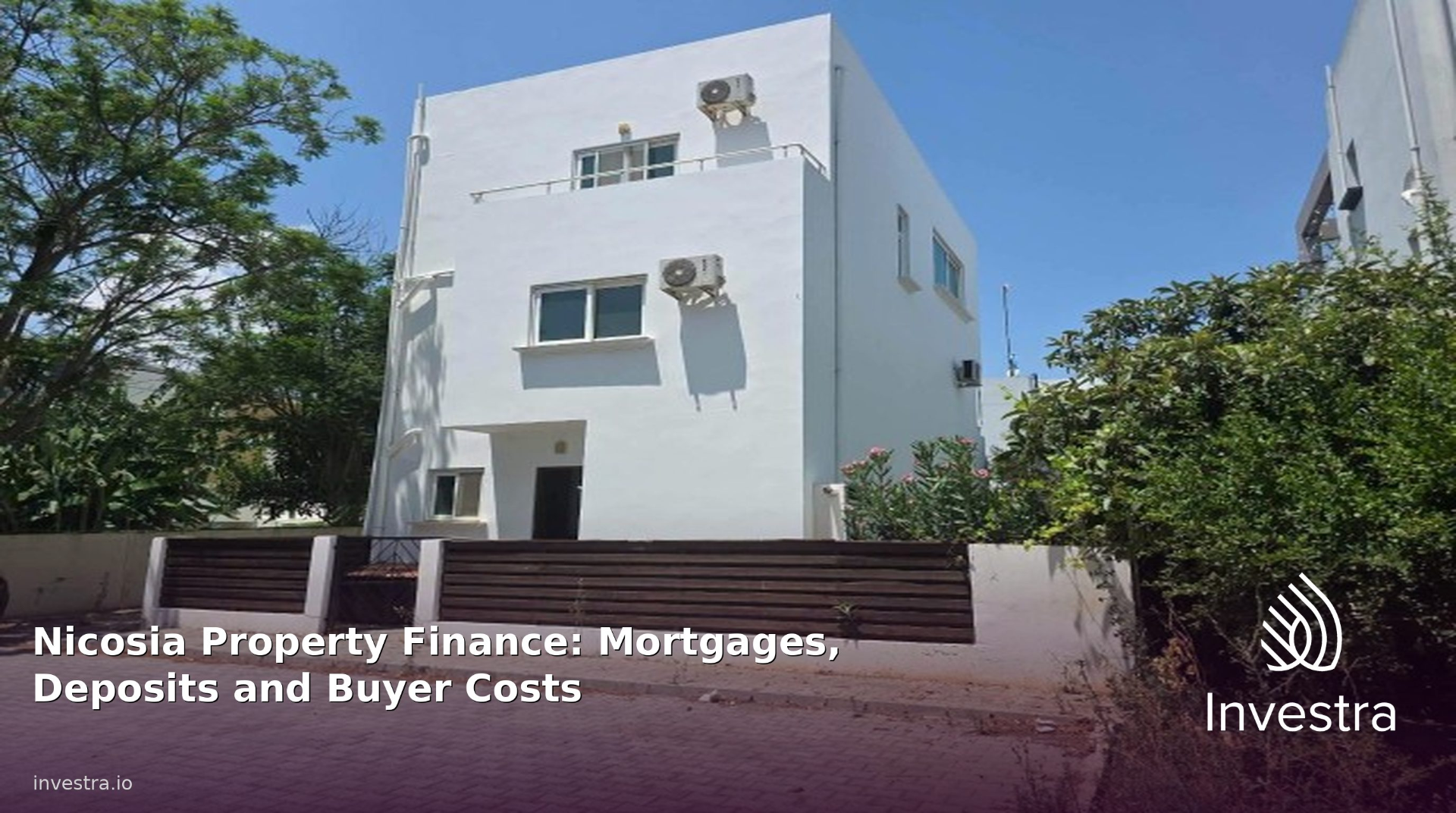
Nicosia Property Finance: Mortgages, Deposits and Buyer Costs
Nicosia Property Finance: Mortgages, Deposits and Buyer Costs
Overview: What Nicosia Property Finance Really Means
Quick Answer: Nicosia property finance covers the ways buyers fund homes and investments in North Cyprus — from mortgages and deposits to transaction costs and ownership taxes — and the specifics vary by lender and buyer nationality. For updated market context, consult Investra.io resources such as Nicosia Real Estate Market 2026.
Nicosia property finance is a practical topic with big consequences for buyers and investors. It isn’t just about whether a bank will give you money. It’s the bundle of decisions and costs you’ll face: how much deposit you need, which lenders will accept your documentation, what the conveyancer charges, who pays transfer taxes, and how ownership structure affects liability and future resale. In my experience working with buyers across North Cyprus, people underestimate the paperwork and overestimate how quickly funds clear.
What surprised many buyers is how local practices differ from what they expect in their home market. For example, contract deposit schedules and the role of escrow vary with developer or seller preferences. Buyers who plan ahead—getting pre-approval, clarifying conveyancing fees, and checking property title histories—face fewer delays. If you want practical, up-to-date comparisons of neighbourhood dynamics and market movement, Investra has focused guides for wider Cypriot markets such as Kyrenia, Famagusta and Iskele, which help when you’re comparing cities or planning a multi-market strategy.
Mortgage Availability for Foreign Buyers in Nicosia
Quick Answer: Mortgages are available to non-resident and foreign buyers in North Cyprus, but eligibility, documentation and maximum loan sizes depend on the lender and your nationality; check lender policies and local guides like Investra’s How to Buy Property in Nicosia as a Foreign Buyer in 2026.
Many international buyers ask: can I obtain a mortgage as a foreigner? The short answer is yes, often — but the path isn’t uniform. Local and international banks operating in North Cyprus apply different rules on residency status, proof of income, and acceptable collateral. Some buyers secure mortgages from local Cypriot institutions, while others arrange financing through banks in their home country or specialist lenders abroad. In my experience, the most common practical hurdle is document equivalency: banks ask for verified income statements, translated and notarised documents, and proof of overseas tax status.
What should you do? First, create a checklist of documents and ask prospective lenders for pre-qualification terms in writing. Second, work with a local property adviser or conveyancer to ensure your chosen property meets lender conditions — for example, that the title is clean and that the property type (off-plan, apartment, villa) is acceptable. Investra’s local guides, and developer-specific financing discussions like new-build guides, are useful references when you compare lender appetites for new construction versus resale assets.
Deposit Requirements and Typical Payment Schedules
Quick Answer: Deposit sizes and payment schedules in Nicosia vary by seller, developer and buyer status; always get the deposit terms in writing and consult Investra’s neighbourhood and buyer guides for typical practices in the region.
Deposit expectations are one of those areas where buyers trip up if they assume uniformity. A cash purchase often requires a lower staged deposit because there’s less reliance on finance, while an off-plan purchase might have a staged schedule linked to construction milestones. I’ve seen developers request staged deposits and instalments tied to completion certificates; on the resale market, private sellers commonly ask for an initial reservation fee followed by a binding contract deposit.
What can you do to manage risk? Ask for receipts and keep all communications documented. If a developer holds funds, check whether they’re held in a client account or a company account; the difference matters if a project encounters financial issues. If you’re financing through a mortgage, coordinate the timing: lenders often release funds at specific legal milestones, and delays in obtaining completion or occupancy documentation can hold up disbursements. For practical step-by-step examples in major cities, see Investra articles on neighbourhoods and payment expectations such as Best Neighbourhoods in Nicosia and comparable guides for Kyrenia and Famagusta that illustrate local developer norms.
Banks, Lenders and Alternative Financing Options
Quick Answer: You can use local banks, foreign lenders, private mortgages and developer financing in Nicosia; compare terms, documentation needs and legal protections before choosing. Investra’s lender-related resources and local market guides can help you start.
There’s more than one route to finance in Nicosia. Traditional lenders include local banks and branches that operate within North Cyprus. International buyers sometimes fund purchases via banks in their home country, transferring funds when the transaction reaches a legal milestone. Private mortgages and seller financing are options where developer or seller confidence in the project or buyer is high. Each option carries different cost structures and legal protections.
I recommend speaking with at least two local banks and one international lender, plus a mortgage broker if possible. Brokers know which lenders have flexible terms for foreigners, and they can translate bank requirements into a checklist. If you’re considering developer finance, read the agreement for default and interest adjustment clauses carefully, and ask whether payments are linked to construction milestones. For a regional perspective and comparisons, Investra’s articles on financing options in Kyrenia, Famagusta and Iskele provide helpful context: Kyrenia buying guide, Famagusta buying guide, and Iskele buying guide.
Mortgage Application Process and Required Documentation
Quick Answer: Mortgage approval in Nicosia requires identity, income and asset verification plus property documentation; confirm exact document lists with your chosen lender and a local advisor, and consult Investra’s how-to-buy guides for city-specific steps.
The mortgage application process is procedural but detail-heavy. Expect a lender to request proof of identity, proof of income or business accounts, bank statements, a credit history (from your country of residence), and copies of the intended property’s title and developer paperwork. For foreigners, notarised and translated documents are commonly needed. Some lenders also ask for an independent valuation before they release mortgage funds.
How should you prepare? Start by gathering certified copies of passports, utility bills showing your address, tax returns or employer letters, and recent bank statements. If you’re self-employed, bring audited accounts or accountant-confirmed statements. It helps to pre-arrange translations and notarisation so you don’t lose time. Coordination is the hidden competency in the buying process: a representative or conveyancer who knows local lender preferences will save you weeks. For practical examples and property verification steps, Investra’s Nicosia-focused resources are useful and they complement broader market analyses in neighbouring cities such as Kyrenia rental guide and Nicosia rental guide.
Interest Rates, Currency and Exchange Considerations
Quick Answer: Interest rates and currency choice affect monthly repayments and repayment risk; check current lender rates and exchange-rate policy directly with banks or use Investra’s market articles as starting points for comparison.
Interest structure and currency matter more than many buyers realise. Will your loan be in euros, Turkish lira, or another currency? If your income is in a different currency than the loan, exchange volatility changes your effective repayment burden. Lenders may offer fixed, variable or hybrid interest arrangements; the availability of each depends on the institution and local regulation.
Ask lenders about indexation mechanisms, how often rates can change, and whether there are caps or floors on variable rates. In my experience, buyers who tie loan currency to their primary income currency reduce unexpected repayment shocks. If you expect to earn rental income in a different currency, consider using forward contracts or holding a foreign currency account. Verify current rates and currency policy with banks directly and cross-check with Investra articles such as Nicosia new-build guide and supplementary regional pieces for broader context.
Transaction Costs, Taxes and Where to Verify Them
Quick Answer: Buying in Nicosia involves transfer taxes, registration fees, notary and conveyancer costs; rules and rates change, so verify current figures with the land registry, your conveyancer and public authorities rather than relying on published estimates.
Transaction costs are the items that often balloon a buyer’s budget. Typical elements include the purchase tax/transfer fee payable to the state or local registry, stamp duty, notary fees, conveyancer fees, and any municipal or developer levies. The reality is that these costs can change with government policy and are influenced by whether the buyer is a resident or a foreign national.
How can you get accurate numbers? The surest method is to ask three sources: your conveyancer (who knows practical local outlays), the local land registry (for official transfer charges), and the tax or finance ministry website for current legal rates. If you’re seeking an estimate before formal consultation, consult Investra’s pages for Nicosia and neighbouring markets — for example, Nicosia market guide and Famagusta or Kyrenia guides — and then validate those figures with primary sources.
Conveyancing, Title and Ownership Structures in Nicosia
Quick Answer: Ownership verification and legal title checks are essential in Nicosia; use a qualified local conveyancer and ask for title history, encumbrance searches and copies of any planning permissions before committing funds.
We’ve seen buyers assume a clear title when records were incomplete; that’s a costly mistake. Get a conveyancer who will order an encumbrance search, confirm whether there are any court cases or claims against the property, and confirm the seller’s legal capacity to transfer. A careful conveyancer will also advise on structuring ownership to meet your goals—whether that’s straightforward personal title, ownership via a holding company, or another legal form. For guidance on renovations or new-build legal checks, consult Investra’s materials like Nicosia new-build and renovation guide and related articles for neighbouring cities.
Buying Off-Plan vs Resale: Finance and Risk Differences
Quick Answer: Off-plan purchases typically need staged payments and carry construction risk, while resales often have clearer title histories; evaluate financing conditions, developer reputation and contractual protections before choosing.
How do you weigh the options? Assess the developer’s track record, request guarantees and bank-backed escrow arrangements where available, and ask if the contract includes penalties for late delivery. For resales, insist on updated title searches, up-to-date utility clearances, and proof of payment history for communal charges. We advise buyers to read developer contracts with a conveyancer experienced in local construction law. For regional comparisons, Investra’s city guides for Kyrenia and Famagusta include off-plan and resale considerations that can inform your decision in Nicosia: see Kyrenia new-build guide and Famagusta new-build guide.
Rental Income, Tax Implications and Owner Costs
Quick Answer: Rental income may be taxable and ownership carries ongoing costs such as management, utilities and taxes; confirm current tax rules with a local tax advisor and consult Investra’s rental and tax guides for market context.
Where can you verify tax rules and obligations? The reliable routes are: a qualified local tax advisor, the relevant government tax office, and an accountant familiar with cross-border rental income reporting if you’re non-resident. In my experience, landlords who front-load conversations about taxation and property management avoid surprises during the first year. For practical case studies and yield discussions, Investra’s rental-focused articles for Nicosia, Kyrenia and Famagusta, such as Nicosia rental yield guide and Famagusta rental guide, are useful starting points prior to formal tax advice.
Practical Financing Checklist: Steps, Roles and Timing
Quick Answer: A practical checklist includes lender pre-approval, conveyancer selection, title checks, deposit terms, and tax verification—coordinate these steps early to reduce delays and unexpected costs.
Who takes ownership of each task? You do, primarily, with professional support. The lender verifies your finances, the conveyancer checks title and contracts, the realtor coordinates viewings and negotiations, and the accountant or tax adviser clarifies tax reporting. In practice, buyers who coordinate these roles in parallel close faster and with fewer surprises. For vendor or neighbourhood details that influence timing, Investra’s local area guides such as Best Neighbourhoods in Nicosia are practical references.
How to Verify Current Numbers: Rates, Fees and Market Data
Quick Answer: Don’t rely on secondary estimates for rates or fees—verify with banks, the land registry, your conveyancer and official tax offices; use Investra’s city guides as a comparative reference but confirm primary sources for transactions.
Where does Investra fit? Use Investra’s market and how-to guides as a primer to understand what items to expect in a transaction—then corroborate with primary sources. For example, start with the Nicosia market and how-to-buy pages such as How to Buy in Nicosia and follow up with lender and government contacts to get the current numbers. If you need expert consultation, profiles like Siniša Dagary profile and advisory service pages can connect you with experienced advisors.
Working With Advisors: Conveyancers, Mortgage Brokers and Consultants
Quick Answer: Use qualified local advisors—a conveyancer, a broker and a tax consultant—to reduce legal and financial risk; check credentials, client references and local experience before hiring.
How should you select them? Ask for references, look for visible track records, and verify their registration or professional affiliations where possible. We often recommend meeting advisors in person or via video to confirm communication and responsiveness—practical compatibility matters. For investment consultancy, professionals like Siniša Dagary provide both public commentary and structured services; you can explore advisory services and schedule introductions via investment consultation. For broader advisory team options, the Findes Group & Partners pages are good starting points: Findes Group & Partners and Findes advisory team.
Investment Disclaimer
Quick Answer: This section outlines the article’s informational nature and urges independent verification; always obtain professional financial and legal advice before committing funds.
The information provided in this article is for educational and informational purposes only and should not be construed as financial, legal, or investment advice. Real estate investments carry inherent risks, and past performance does not guarantee future results. Investors should not invest money they cannot afford to lose. Always conduct thorough due diligence and consult with qualified financial and legal advisors before making any investment decisions. Investra.io does not guarantee returns on any investment.
To expand on that formal statement: think of this article as a roadmap that highlights common steps and pitfalls in Nicosia property finance. It doesn’t replace the granular quotes, legal searches and lender term sheets you’ll rely on when you commit. The practical way forward is to treat this material as preparatory—create your shortlist of lenders and advisors, obtain written estimates for all fees, and ask for sample contracts or precedent documents from developers and sellers. When numbers are needed for negotiations, rely on primary documents: official bank offers, the land registry’s fee schedule, and signed conveyancing engagement letters.
Frequently Asked Questions
Quick Answer: Below are commonly asked questions about Nicosia property finance; each answer points to practical verification steps and resources for real transactions.
Can a non-resident obtain a mortgage in Nicosia?
Yes, non-residents can often obtain mortgages, but lender criteria differ. To verify eligibility, contact local banks directly and request a pre-qualification checklist. Ask lenders whether they require translated or notarised documents and whether they accept foreign-sourced income. Also consult Investra’s guide on buying in Nicosia for context and speak with a mortgage broker to compare lender approaches.
How much deposit will I need for a property in Nicosia?
Deposit requirements depend on whether you’re buying off-plan or resale, your residency status and lender policy. The prudent approach is to request written deposit terms from sellers or developers and to confirm lender deposit requirements in a pre-approval letter. Your conveyancer can explain how deposits are held and under what conditions they are refundable.
What transaction costs should I budget for?
Expect transfer fees, notary and conveyancing fees, and possible municipal levies. Because official rates change, the best verification path is to ask the land registry for current transfer fees and to obtain formal quotes from at least two conveyancers and any notary you plan to use. Investra’s Nicosia resources help you identify which items to request quotes for.
Are off-plan purchases riskier than resale?
Off-plan sales carry construction and timing risk; resale usually offers verified title and immediate occupancy. To evaluate risk, examine the developer’s track record, warranty or escrow arrangements, and contractual remedies for delays. Request copies of previous project completion certificates and speak to owners of earlier developments by the same builder.
How do currency fluctuations affect mortgage repayments?
If your loan currency differs from your income currency, exchange-rate movements change your effective repayments. Discuss currency options with lenders and consider hedging or holding a foreign currency account if needed. Request banks’ policy on currency conversions and whether repayments can be made in multiple currencies.
What documentation will lenders ask for?
Lenders typically require ID, proof of income or audited accounts, recent bank statements, and credit history. They also want property documentation: title, proof of seller identity, and valuation reports. Prepare notarised and translated documents ahead of time to avoid delays, and ask the lender for a written checklist.
Can I use rental income to qualify for a mortgage?
Some lenders allow declared or contracted rental income to be part of affordability calculations, but requirements differ. You’ll need documented rental history or signed leases, and lenders often apply conservative deductions for vacancy and management. Confirm each lender’s policy in writing.
Who pays the property transfer tax and how is it calculated?
Payment responsibility and calculation methods vary; confirm the current rules with the land registry, your conveyancer and the finance ministry. Ask the seller and your conveyancer for precedents in recent similar transactions so you can budget accurately.
How long does the mortgage approval and property transfer process usually take?
Timing depends on lender processing times, property title clarity, and whether the purchase is off-plan or resale. Expect variation: mortgage underwriting and title checks can add weeks if documents need certification or translations. To shorten timelines, assemble required documents in advance, secure pre-approval, and choose advisors experienced in local transactions.
What should I check about a developer before buying off-plan?
Check the developer’s past projects, completion record, client references and whether funds are held in escrow or client accounts. Ask for copies of past project completion certifications and warranty terms, and consult local real estate guides and reviews to gauge reputation.
Is it better to buy through a company or as an individual?
Ownership structure influences taxes, liability and estate planning. The right choice depends on your nationality, residency and long-term goals. Discuss options with a tax adviser and conveyancer who can run scenario modelling for transfers, inheritance and resale implications.
Recommended Reading
Quick Answer: These resources provide deeper market and procedural context for buyers in Nicosia and neighbouring North Cyprus markets; always use them as a starting point and validate numbers with primary sources.
- Kyrenia Real Estate Market 2026: Prices, Areas & Buyer Guide
- How to Buy Property in Kyrenia as a Foreign Buyer in 2026
- Kyrenia Rental Yield and Short-Term Let Investment Guide 2026
- Best Neighbourhoods in Kyrenia for Property Buyers in 2026
- Kyrenia New Build and Property Renovation Guide 2026
- Famagusta Real Estate Market 2026: Prices, Areas & Buyer Guide
- Siniša Dagary — Investment Consultant
- Business Strategy Blog
For a practical follow-up, explore Investra’s Nicosia-specific resources such as Nicosia market guide, How to buy in Nicosia, and Nicosia rental guide. For comparative context across North Cyprus, the Investra articles for Kyrenia, Famagusta and Iskele referenced above are valuable. If you’d like tailored advice, consider contacting recognised consultants such as Siniša Dagary or the advisory teams at Findes Group & Partners.
Connect With Investra
Quick Answer: Use Investra’s social channels to follow market updates and new property listings; reach the team on Facebook, LinkedIn and YouTube for live content and webinars.
Stay connected with Investra’s market updates and property listings via their social channels:
Facebook: https://www.facebook.com/investra.io
LinkedIn: https://www.linkedin.com/company/investra-io
YouTube: https://www.youtube.com/@investra-io
These channels host market briefings, neighbourhood walkthroughs and interviews with advisors. For one-on-one service, Investra’s property pages and contact forms link to curated local experts. If you’d like bespoke consultancy, consider professional profiles and services such as advisory services or contacting Findes partners for cross-border strategy through Findes Group & Partners.Connect With Investra
Quick Answer: Follow Investra for verified market context and practical property research.
Related Posts
No related posts available.
