
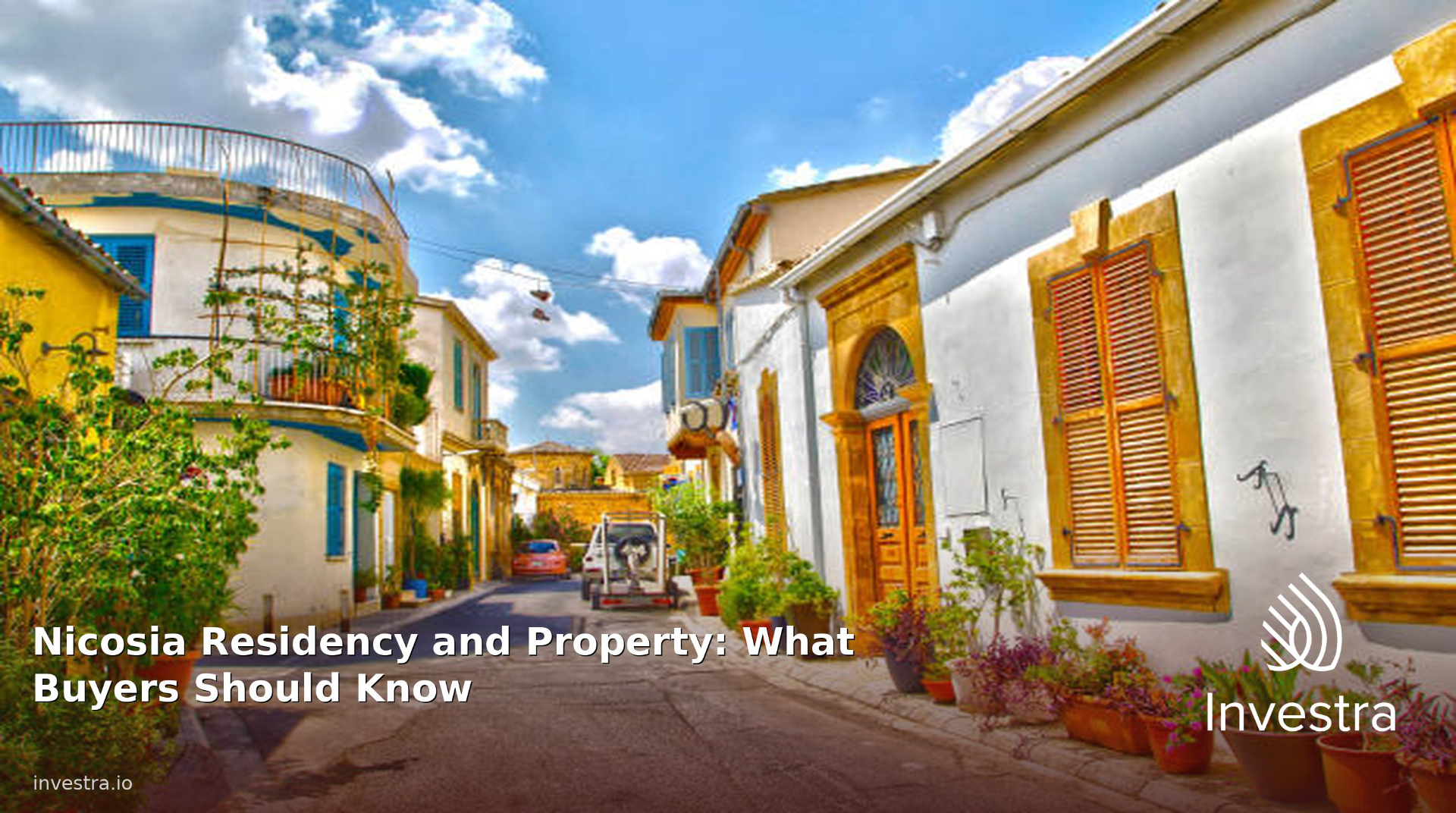
Nicosia Residency and Property: What Buyers Should Know
Nicosia Residency and Property: What Buyers Should Know
Nicosia residency property: An overview for buyers
Quick Answer: Nicosia residency property refers to buying real estate in Nicosia, North Cyprus with considerations for ownership, local taxes and residency options; understanding local procedures and verifying current rules is essential before you commit.
If you're exploring Nicosia residency property, you probably want a clear map of what ownership means in the capital of North Cyprus. I’ve worked with buyers who came expecting a familiar Western process and found the reality pleasantly different — sometimes simpler, sometimes less predictable. The city is split by history and function: you’ll see modern apartment blocks, renovated Cypriot villas and compact city flats that appeal to both long-term residents and investors.
What surprised many buyers is how local administrative practices influence property transactions. You can’t assume the same timeline or paperwork you know from other places. The reality is that verification matters: check the land registry, municipal records, and up-to-date guidance from trusted platforms. For practical local insights, Investra has a range of focused guides that compare markets across North Cyprus such as Nicosia, Kyrenia and Famagusta—see Investra’s Nicosia market and related how-to-buy articles for step-by-step context and links to local services like inspectors and notaries (Nicosia Real Estate Market 2026, How to Buy Property in Nicosia).
Why choose Nicosia, North Cyprus?
Quick Answer: Nicosia offers a mix of administrative, educational and residential appeal in North Cyprus, attracting buyers who prioritize central living and long-term residency prospects in the capital region.
Why would someone pick Nicosia residency property over a coastal option? For many, it’s about the balance between urban services and authentic local life. Nicosia is the commercial and governmental heart of North Cyprus. That matters for buyers who want easy access to schools, hospitals, administrative offices and a stable rental market for longer-term tenants.
In my experience, buyers who move to inland capitals often prioritize convenience over resort-style amenities. You’ll find cultural venues, steady demand from professionals and students, and a variety of property types that can suit families and singles alike. We’ve seen relocators and investors choosing Nicosia because it can offer reliable occupancy and a different risk profile to holiday-centric towns.
If you want to compare Nicosia to other destinations on the island, Investra’s market guides for Kyrenia and Famagusta are useful for side-by-side context: Kyrenia Real Estate Market 2026 and Famagusta Real Estate Market 2026 outline differing lifestyle and market dynamics.
Types of properties and ownership structures in Nicosia
Quick Answer: Nicosia residency property covers apartments, townhouses, villas and converted period homes, each with ownership considerations — always verify title documentation and the building’s status before purchase.
Property types in the capital span modern condominiums, older family homes, and smaller apartment blocks. Each comes with distinct practicalities. Apartments often carry communal service arrangements; older houses may need renovation or have complex historic titles. I often tell buyers: don’t assume equivalence between a gleaming new build and a traditional townhouse — the paperwork and responsibilities differ.
Ownership structures can vary. You’ll encounter freehold titles, long leases and properties with shared ownership elements. The question is not only what you buy, but how the title is registered and whether there are any easements or pending disputes. The safe approach is to get a registered title report and check municipal plans so you understand permitted uses and any outstanding liabilities.
For buyers who want renovation or new build projects, Investra’s practical guides on new builds and renovations in Kyrenia, Famagusta and Nicosia can help frame common developer and permit issues: Nicosia New Build and Property Renovation Guide 2026, plus comparative pieces on Kyrenia and Famagusta.
The step-by-step buying process in Nicosia
Quick Answer: Buying Nicosia residency property generally follows house hunting, offer and reservation, legal checks, contracts, and final transfer at the land registry; each step should be confirmed with a local solicitor and the registry.
The buying journey in Nicosia will feel familiar in outline but differs in timing and local requirements. First, shortlist properties with viewings and independent inspections. Next comes a reservation agreement and contract negotiation. Use a solicitor who regularly handles local transfers; they’ll order title searches and draft the sales contract. The local notary or legal representative typically coordinates money transfers and the final entry in the land registry.
What we advise clients is to allow time for checks: planning permissions, outstanding mortgages, utilities and any municipal charges. If you’re buying off-plan, pay attention to developer guarantees and completion timelines. Where payment is staged, confirm escrow arrangements and contractual remedies.
Investra’s how-to guides demystify the buying steps in surrounding regions too, which can help if you’re comparing jurisdictions: How to Buy Property in Nicosia as a Foreign Buyer, plus practical buying guides for Kyrenia and Famagusta.
Title, land registry and legal ownership issues
Quick Answer: Verify title and land registry entries for any Nicosia residency property before purchase; a qualified local lawyer can confirm ownership, encumbrances, planning permissions and registration procedures.
Title verification is non-negotiable. I’ve seen buyers who skipped a thorough registry check and later discovered servitudes or incomplete documentation. The land registry contains the formal record of ownership and any charges. Ask your solicitor to obtain an official title deed copy and to run a search for disputes, liens or mortgages.
Sometimes issues arise from historic transfers or municipal claims. That’s why relying on a local professional who can read Turkish-language records and who understands Cypriot property law is invaluable. If you’re buying off-plan, check that the developer has legal rights to sell and that the plot is properly registered.
For practical guidance, Investra’s Nicosia and comparative guides discuss title and registration concerns and show how buyers have successfully handled complex cases. See the Nicosia land and legal overviews at Nicosia Real Estate Market 2026 and the purchase process articles for stepwise examples (How to Buy Property in Nicosia).
Residency options tied to property ownership
Quick Answer: Purchasing property in Nicosia can support residency plans, but residency eligibility and rules change; confirm the current criteria with immigration authorities and your legal adviser.
Many buyers ask whether owning a Nicosia residency property grants residency automatically. The short answer is: not necessarily. Rules differ by nationality and policy changes happen. In my experience, property ownership can be a supporting factor for residency applications but is rarely the sole criterion.
If residency is your primary objective, you’ll want to consult an immigration lawyer or local authorities to confirm up-to-date requirements. We’ve guided clients who used property ownership as part of a broader residency application. They always paired property purchase with legal advice and document preparation, ensuring files met immigration standards.
For comparative context, Investra’s regional articles help clarify how residency and property intersect across North Cyprus. See relevant purchase and residency advice in the Nicosia buying guide and examine how other markets are structured: Nicosia - How to Buy, plus neighbouring market pages for Kyrenia and Famagusta which highlight varying administrative practices.
Financing, mortgages and payment mechanisms
Quick Answer: Financing Nicosia residency property often involves local banks, seller financing, or cash purchases; confirm current mortgage availability, rates and documentation requirements with banks and an independent adviser.
How will you pay for property in Nicosia? Options include local bank mortgages, seller financing in some cases, or cash. I’ve worked with clients who found local lending possible but conditional on residency, income proof and the property’s title status. It’s not a one-size-fits-all situation.
What should buyers prepare? Expect to provide certified identification, proof of income, bank references and possibly a local tax number. If you need a mortgage, speak to several banks and ask for pre-approval so you know your budget before making offers. We recommend using a mortgage broker familiar with North Cyprus institutions — they can often explain document lists and timing.
Always verify current lending terms directly with lenders and through trusted advisories. Investra’s region-specific articles provide practical context on financing and payments for Nicosia and neighbouring markets: Nicosia Rental & Short-Term Let Guide and related buying guides for Kyrenia and Iskele may help you compare financing landscapes across the island (Iskele Market Guide).
Taxes, fees and ongoing ownership costs
Quick Answer: Owning Nicosia residency property incurs transfer, registration and running costs; because tax rules change, verify current tax and fee schedules with a qualified accountant or the local tax office.
Taxes and fees are an area where buyers must be especially careful. I often tell clients that they should budget for more than the purchase price: registration fees, notary costs, municipal charges and potential annual taxes can all add up. The exact amounts and thresholds can change, so you shouldn’t rely on outdated figures.
The right approach is to ask your lawyer or accountant to provide a detailed estimate of one-off and recurring costs. If you plan to rent the property, ask how rental income is taxed and what reporting is required. Keep receipts and maintain clear records — that habit has saved clients administrative headaches later.
To find current figures, contact the local tax office, the municipal authority in Nicosia and consult a licensed local tax adviser. Investra’s guides on rental and tax topics in Nicosia, Kyrenia and Famagusta provide procedural checklists and links to official resources: Nicosia Rental Guide, Famagusta Rental Guide.
Rentals and short-term lets in Nicosia
Quick Answer: Renting a Nicosia residency property can suit long-term tenants such as professionals and students; verify local permitting, market demand and any short-term let regulations before listing.
Nicosia’s rental market is often steady because the city hosts universities, public services and a working population. That tends to mean demand from longer-term renters rather than seasonal tourists. I’ve helped owners who fine-tuned furnishing and lease terms to appeal to professionals and postgraduate students, and that strategy usually simplifies management and reduces turnover.
If you plan to offer short-term lets, check local regulations; some municipalities restrict or require registration for holiday rentals. Also think about management: who will handle cleaning, check-ins and maintenance if you live abroad? Good property managers are a worthwhile expense — they protect your asset and your reputation with tenants.
Investra provides targeted rental and short-term let guides for Nicosia and other markets that explain permitting and practical management tips: Nicosia Rental & Short-Term Let Investment Guide, along with comparative guides for Kyrenia and Famagusta.
Best neighbourhoods and where to look in Nicosia
Quick Answer: Choose neighbourhoods in Nicosia based on your priorities — schools, transport, nightlife or quiet residential streets — and consult local neighbourhood guides and Investra’s best-neighbourhood articles to refine options.
Nicosia is diverse. Some areas feel urbane and lively, others are quiet zones with family homes and green spaces. When we advise clients, we focus on lifestyle fit: proximity to schools if you have children, access to university campuses for student tenants, or a central location for professionals. The practical reality is that the “best” neighbourhood depends on your goals.
Visit areas at different times of day. Walk the streets. Check local shops, transport links and noise levels. Ask current residents about services and any municipal plans for the area. What’s under-appreciated is the value of local insight — a welcome coffee with a shop owner can reveal future developments or challenges that official documents don’t highlight.
Investra’s “Best Neighbourhoods” guides for Nicosia, Kyrenia and Famagusta give detailed neighbourhood breakdowns to help narrow choices: Best Neighbourhoods in Nicosia, plus Kyrenia and Famagusta neighbourhood overviews for comparison (Kyrenia, Famagusta).
Risks, red flags and a practical due diligence checklist
Quick Answer: Look for title disputes, unclear planning status, missing permits, poor structural condition and unclear communal accounts; get professional inspections and legal searches to confirm a Nicosia residency property is sound.
Risk is part of any property purchase, but many risks are manageable if you know what to check. Start with legal title and planning permissions. Then move to practical inspections: structural integrity, damp, drainage and electrical systems. If a property has an unclear utility history or incomplete renovation permits, that should raise concern.
Ask for the building’s accounts if it’s a managed block. I’ve seen investors surprised by large, unexpected communal charges because they hadn’t checked reserve funds or recent repair history. Also verify that the seller has settled property taxes and municipal bills; these can become the buyer’s responsibility if not cleared.
Use a checklist: legal searches, structural survey, utility meter verification, municipal clearances, and written confirmation of any warranties. You can find procedural checklists and case studies in Investra’s Nicosia and regional guides which highlight common red flags seen in neighbouring markets too (Nicosia New Build & Renovation Guide, Famagusta Renovation Guide).
Working with agents, lawyers and professional advisers
Quick Answer: Choose licensed local agents, an independent solicitor, and reliable surveyors to support a Nicosia residency property purchase; use trusted referrals and verify credentials with regulatory bodies.
Who you work with matters as much as what you buy. In Nicosia, a well-connected estate agent can speed up viewings and introductions, but don’t rely on the agent alone for legal or technical checks. Always instruct an independent lawyer to handle title searches and contract drafting. We’ve seen deals stall or collapse because buyers relied on informal assurances rather than documented searches.
Ask potential professionals for references and recent clients. Check whether agents are registered with local industry bodies and whether lawyers are in good standing with the bar association. For added assurance, consider working with advisory firms that partner across the region; for example, Investra coordinates with local experts and has related guides and service references to help you find vetted professionals. You might also find independent advisory voices useful, such as Siniša Dagary’s consultancy and insights on practical investment strategy (Siniša Dagary, advisory services).
If you want a team approach, consider contacting Findes Group & Partners for broader advisory support; they offer a networked team that can coordinate legal, tax and transaction services (Findes Group & Partners, Findes advisory team).
Investment Disclaimer
Quick Answer: This section explains that the article is informational and not investment advice; confirm details with professional advisors before acting on property decisions.
The information provided in this article is for educational and informational purposes only and should not be construed as financial, legal, or investment advice. Real estate investments carry inherent risks, and past performance does not guarantee future results. Investors should not invest money they cannot afford to lose. Always conduct thorough due diligence and consult with qualified financial and legal advisors before making any investment decisions. Investra.io does not guarantee returns on any investment.
Frequently Asked Questions
Quick Answer: The FAQ section answers common buyer concerns about Nicosia residency property, from title checks to residency implications and renting.
What paperwork should I check before buying a Nicosia property?
Request an official title deed from the land registry, a recent title search, municipal planning permissions, proof that utilities are registered and tax bills are paid. Ask for building accounts if applicable and any warranty or guarantee documents for renovations. Have your solicitor independently verify each document and, where necessary, translate records so everything is clear.
Does buying property in Nicosia automatically give me residency?
Not necessarily. Residency rules change and depend on nationality and current immigration policy. Property ownership can support an application in some cases, but you must confirm the exact requirements with immigration authorities or a qualified immigration lawyer. Always obtain written guidance for your specific situation.
How do I verify the authenticity of a title deed?
Your solicitor should obtain an official copy directly from the land registry and compare it to the seller’s documents. They will also run searches for mortgages, liens and disputes. If language is a barrier, use certified translations and rely on a lawyer who regularly reads local registry records.
Are there restrictions on foreigners purchasing property in Nicosia?
Regulations can vary by nationality and change over time. Check official government guidance and ask your lawyer to confirm if any approvals are needed. In practice, many foreigners successfully buy property, but due diligence is essential to ensure compliance with the latest rules.
Should I do a structural survey on older Nicosia homes?
Yes. A qualified structural surveyor will identify issues like damp, subsidence, roof problems or outdated wiring that aren’t obvious in a viewing. Surveys help you estimate repair costs and can be used as bargaining tools during negotiation.
How do I check municipal or planning restrictions for a property?
Contact the Nicosia municipality planning department or ask your lawyer to request zoning and planning records. Municipal offices can confirm permitted uses, any pending applications and whether future municipal plans might affect the property.
Can I rent out my Nicosia property? What permissions do I need?
Long-term rentals are common, but short-term lets may require local registration or permits in some areas. Check municipal rules and ensure that building management (if any) allows the intended rental model. Consult a local property manager for practical compliance guidance.
How do I find reliable local agents and lawyers in Nicosia?
Ask for recommendations from previous buyers, consult online reviews, verify professional registrations and request references. Investra can help connect buyers with vetted professionals, and you can also contact advisory consultants like Siniša Dagary for investment support and referrals (investment consultation).
Where can I get up-to-date market prices and rental data?
Market data changes frequently. For current prices and rental trends check local estate agent listings, official land registry sales records, and market reports from trusted portals such as Investra’s market pages. For a broader comparison, review Investra’s Nicosia, Kyrenia and Famagusta market guides which link to sources you can verify directly.
What should non-resident buyers know about managing a property remotely?
Consider hiring a local property manager to handle day-to-day tasks like tenant screening, maintenance and bill payments. Set up clear communication protocols and ensure all contracts allow remote instruction. Using escrow and documented authorisations reduces risk when you’re managing from abroad.
Recommended Reading
Quick Answer: These curated guides and expert resources provide deeper, region-specific detail on buying and owning property in Nicosia and nearby markets.
- Kyrenia Real Estate Market 2026: Prices, Areas & Buyer Guide
- How to Buy Property in Kyrenia as a Foreign Buyer in 2026
- Kyrenia Rental Yield and Short-Term Let Investment Guide 2026
- Best Neighbourhoods in Kyrenia for Property Buyers in 2026
- Kyrenia New Build and Property Renovation Guide 2026
- Famagusta Real Estate Market 2026: Prices, Areas & Buyer Guide
- Siniša Dagary — Investment Consultant
- Business Strategy Blog
Connect With Investra
Quick Answer: Follow Investra on social platforms for market updates, webinars and property listings to stay informed about Nicosia residency property developments.
Stay current by following Investra’s official social channels: Facebook, LinkedIn and YouTube. These channels share market updates, webinars and new listings that can help you track changes affecting Nicosia residency property.
Facebook: Investra on Facebook
LinkedIn: Investra on LinkedIn
YouTube: Investra on YouTube
Connect With Investra
Quick Answer: Follow Investra for verified market context and practical property research.
Related Posts
No related posts available.
