
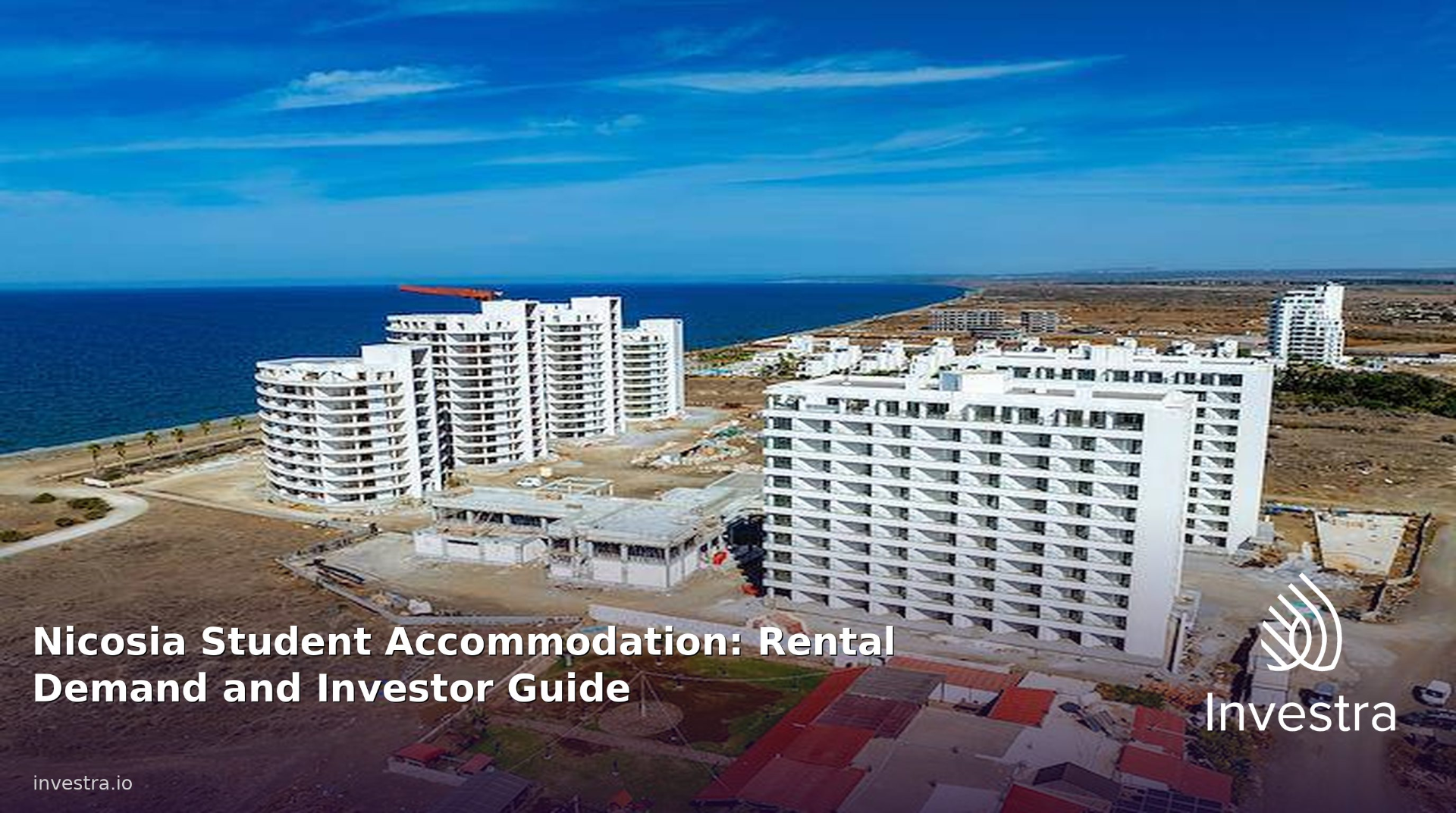
Nicosia Student Accommodation: Rental Demand and Investor Guide
Nicosia Student Accommodation: Rental Demand and Investor Guide
Overview: Why Nicosia Student Accommodation Investment Matters in North Cyprus
Quick Answer: Nicosia student accommodation investment targets a steady renter demographic—students, staff, and young professionals—making it a distinct niche in North Cyprus real estate that requires specialised market knowledge and hands-on management.
Nicosia is a city of contrasts: a busy administrative and commercial core, a historic old town and a growing higher-education sector. For investors focused on Nicosia student accommodation investment, the appeal is straightforward — consistent occupancy driven by universities and vocational schools, proximity to campus and services, and strong seasonal demand. But the reality is more nuanced. What surprised many buyers is how different neighbourhood micro-markets can perform. A flat two streets away from campus can have dramatically different tenant preferences and turnover rates.
In my experience, success in this sector hinges less on a one-size-fits-all plan and more on alignment between the property type, tenant profile and management strategy. Are you aiming at undergraduate sharers, postgraduate students, international students, or academic staff? Each group has different expectations around privacy, furnishings, contract length and budget. To understand the local market drivers, read municipal and university announcements and consult local letting agents. Investra’s city guides, such as Nicosia Real Estate Market 2026: Prices, Areas & Buyer Guide, and the neighbourhood breakdown in Best Neighbourhoods in Nicosia for Property Buyers in 2026 are useful starting points.
Demand Drivers: Who Rents Student Housing in Nicosia?
Quick Answer: Demand is driven by students (local and international), faculty and short-term academic visitors; proximity to universities and transport hubs largely determines which tenant groups you’ll attract.
Who exactly is filling student rentals in Nicosia? Universities, private colleges and language schools bring a steady stream of students from North Cyprus, Turkey and beyond. In my conversations with local property managers, one clear trend stood out: international students often prioritize furnished, turnkey properties with reliable internet and flexible lease terms. Domestic students sometimes prefer shared houses where costs are split.
Seasonality matters too. Arrival and exam cycles influence booking patterns and short-term vacancies. What does this mean for investors? Location is critical — near higher-education campuses, student services, and transport you’ll see different demand dynamics than in the quiet suburbs. You can verify current enrolment trends and international student figures through university websites and the institutions’ press offices; local letting agents and platforms will confirm whether demand is translating into occupancy. For practical guidance on rental markets and short-term lets, see Investra’s rental guides like Nicosia Rental Yield and Short-Term Let Investment Guide 2026.
Key Locations in Nicosia for Student Rentals
Quick Answer: Areas closest to universities, good bus links and student amenities typically outperform others in demand; review neighbourhood data and local transport plans to choose the right spot.
Nicosia’s neighbourhood fabric is varied. There are areas immediately surrounding campuses, quieter residential suburbs and emerging mixed-use pockets. What we’ve seen is that streets with cafés, grocery options, and late-opening services often attract younger tenants who value convenience. Yet quieter, safer residential streets can appeal to postgraduate students and academics who need concentration and longer leases.
When scouting locations, visit at different times of day, speak to shopkeepers and local letting agents, and check transport timetables. Use Investra’s neighbourhood guide for orientation: Best Neighbourhoods in Nicosia for Property Buyers in 2026. Compare neighbourhoods with similar city guides for Kyrenia and Famagusta to understand regional shifts: Kyrenia Real Estate Market 2026, and Famagusta Real Estate Market 2026. Always confirm local planning restrictions and any proposed developments with municipal planning offices before you commit.
Property Types and Layouts That Work for Students
Quick Answer: Purpose-built student flats, multi-bedroom apartments for sharers and small studios are common choices; tenant expectations about privacy, storage and communal space guide layout decisions.
Not every property suits student housing. In my experience, properties with separate bedrooms, reliable storage and communal living space outperform cramped single-room units. Shared apartments with multiple bathrooms tend to attract older undergraduates and postgraduates. Meanwhile, studios can be ideal for international master’s students or young professionals who want a self-contained space. What surprised many owners was how much impact minor design choices have on tenant satisfaction—things like soundproofing between bedrooms, easy-to-clean surfaces and high-speed internet connectivity.
Matching property type to your target tenant segment is essential. If you aim for short-term lets or exchange students, furnish to a higher standard with flexible check-in arrangements. For longer-term domestic students, durable finishes and simple furniture may be a better investment. To understand which new-build or renovation strategies make sense locally, read Investra’s Nicosia new build guide: Nicosia New Build and Property Renovation Guide 2026, and compare to guides for other North Cyprus markets like Famagusta New Build and Property Renovation Guide 2026.
Buying Process and Ownership Rules in North Cyprus
Quick Answer: The process involves title checks, contracts, permits and registration; foreign buyers must verify ownership rules and permissions with local authorities and legal counsel.
How you buy matters as much as what you buy. The legal and administrative steps for acquiring property in North Cyprus include establishing clear title, preparing purchase contracts, completing municipal registrations and, where necessary, applying for permissions related to foreign ownership. The reality is that ownership rules can vary by property type and status, and they change over time.
We always recommend instructing a local lawyer who specialises in property transactions. They’ll verify title chains, check for liens, confirm building permits and ensure the contract includes appropriate protections for the buyer. For foreign buyers, the practical route is outlined in Investra’s “How to Buy” guides for Nicosia and other cities — see How to Buy Property in Nicosia as a Foreign Buyer in 2026 and parallel guides for Kyrenia and Famagusta to compare procedures across the island.
Taxes, Fees and Running Costs for Investors
Quick Answer: Expect purchase-related fees, annual property taxes and operating costs; verify current tax rates, stamp duties and service charges with tax authorities and a local accountant before committing.
Taxes and running costs influence net returns, but I won’t invent figures here. Instead, you should confirm up-to-date rates with the relevant North Cyprus tax office and a qualified local accountant. Typical items to check include transfer taxes, stamp duty, annual property tax, municipal service fees, and any VAT or registration fees applicable to new builds. Also factor in regular running costs: utilities, insurance, routine maintenance, cleaning and management fees if you outsource day-to-day operations.
A smart approach is to create a realistic cost model using current invoices and supplier quotes. Ask the seller for recent utility statements and the condo or complex management for service charge history. Investra’s buyer guides, including How to Buy Property in Nicosia as a Foreign Buyer in 2026, provide practical checklists; for tailored tax questions, consult a local tax advisor and check municipal websites for the latest obligations.
Financing Options and Mortgage Considerations
Quick Answer: Financing choices include local bank mortgages and private funding; confirm lending criteria, interest terms and eligibility with banks and mortgage brokers in North Cyprus.
Many investors fund properties with mortgages, bridging loans or private capital. In North Cyprus, local banks and lenders set their own eligibility criteria, loan-to-value ratios and required documentation. What surprised some first-time buyers is how lender practices can shift quickly in response to economic conditions. The prudent step is to speak with several banks and independent mortgage brokers before making an offer so you understand what finance you can secure and on what terms.
If you plan to use a mortgage, prepare a file with proof of income, local bank statements, identification documents and a clear explanation of the investment strategy. Also check whether the lender has restrictions on buying to let or short-term rentals. For foreign buyers, mortgage availability varies, so include the relevant Investra “How to Buy” guide in your reading: How to Buy Property in Nicosia as a Foreign Buyer in 2026 and consult local advisory services such as Findes Group & Partners and their advisory team at Findes Group & Partners advisory team.
Tenant Law and Lease Structures for Student Properties
Quick Answer: Lease types and tenant protections affect flexibility and risk; review local tenancy law with a lawyer to choose appropriate short-term or long-term agreements for student tenants.
Tenancy law dictates how you can set deposits, manage evictions and structure rental contracts. For student accommodation, many investors use fixed-term academic-year leases or monthly rolling contracts for international or exchange students. The balance between landlord control and tenant protections will determine how easy it is to replace tenants, increase rent or perform inspections.
Because regulations evolve, always check the current legal framework with a local property lawyer. Ask for model tenancy agreements used by reputable letting agencies, and compare their terms. In my experience, clear, professionally drafted contracts reduce disputes and protect both parties. Investra’s resources on rental practices, like Nicosia Rental Yield and Short-Term Let Investment Guide 2026, are useful background reading; your solicitor will adapt templates to comply with local law.
Short-Term Letting, Airbnb and Student Rentals: Opportunities and Limits
Quick Answer: Short-term lets can boost income during peak periods but may conflict with lease stability and local regulations; verify municipal rules and building policies before listing on platforms like Airbnb.
Short-term letting platforms attract different demand: visiting academics, parents visiting students, and tourists during holidays. But offering a mix of short- and long-term lets in the same property can be operationally complex. What we’ve learned is that landlords who try to be everything to everyone often end up overstretched. If you plan to use Airbnb or similar platforms, check local zoning laws, building regulations and any homeowners’ association rules that could prohibit short lets.
Another consideration is wear-and-tear and management intensity—short lets require frequent cleanings, check-ins and higher maintenance. A hybrid model can work: dedicate one floor or building to flexible short lets while keeping long-term student contracts on other units, but only after verifying permissions. Investra’s short-term let guides for Nicosia and neighbouring markets—see Nicosia Rental Yield and Short-Term Let Investment Guide 2026 and Kyrenia Rental Yield and Short-Term Let Investment Guide 2026—explain operational trade-offs.
Furnishing, Fit-Outs and Student-Friendly Upgrades
Quick Answer: Focus on durable furnishings, efficient layouts and essentials like strong Wi-Fi; test upgrades against tenant preferences via surveys or trial lets.
Students value functionality. A kitchen that works for four sharers, multiple power sockets, study space and reliable broadband can make the difference between a property that’s always vacant and one with waitlists. The reality is that small, targeted upgrades often deliver the biggest improvement in occupancy and tenant satisfaction.
Ask current tenants what they want. Simple changes—additional locking storage, better lighting over study desks, or a compact washing machine—can reduce churn. When planning renovations, consider cost, disruption and expected life span of fittings. If you’re inexperienced with local contractors, use recommendations from Investra partners or consult specialist renovation guides like Nicosia New Build and Property Renovation Guide 2026. For broader strategy and price benchmarking, compare to redevelopment approaches in other cities such as Iskele Real Estate Market 2026.
Property Management: Self-Manage or Hire a Local Service?
Quick Answer: Professional property management eases operations for remote investors, while self-management can save fees if you’re local and hands-on; weigh cost against the time and expertise required.
Student accommodation demands prompt repairs, tenant screening, and frequent turnovers. Many overseas investors opt to appoint a local management company to handle day-to-day tasks, maintenance and marketing. What we’ve found is that a trustworthy manager is worth their fee when they keep occupancy high and respond quickly to tenant issues. But fees vary, and not all managers offer the same level of service.
Interview multiple managers. Ask for references, service level agreements and examples of how they’ve handled disputes or emergency repairs. If you prefer to self-manage, be realistic about your availability and language skills. Organisations like Findes Group & Partners and local advisors such as Siniša Dagary investment consultation can help structure management arrangements or recommend trustees and maintenance providers.
Risks, Due Diligence and How to Verify Claims
Quick Answer: Key risks include legal title issues, tenant turnover, regulatory changes and maintenance liabilities; verify claims through local solicitors, municipal records, and independent inspections.
Risk is part of every property investment, and student housing has its own profile: higher churn, concentrated seasonality and reputational risks tied to quality and safety. Don’t accept seller claims at face value. Instead, hire a surveyor for a structural report, request copies of recent utility bills and service charge statements, and obtain the history of occupancy rates from current management records. Title and encumbrance searches must be completed by a local lawyer.
We’ve seen buyers saved from bad deals by insisting on independent verification. For regulatory and planning risks, consult municipal planning departments and building control. To validate rental assumptions, ask universities for accommodation demand statements and contact student unions. If you need advisory services, consider specialists like Siniša Dagary advisory services or the advisory teams at Findes Group & Partners advisory team. Use the corresponding Investra buyer guides for context: How to Buy Property in Nicosia as a Foreign Buyer in 2026.
Exit Strategies: Selling, Repositioning and Long-Term Holds
Quick Answer: Consider multiple exit plans—sell to another investor, convert to longer-term rentals, or reposition the property—and test these scenarios before purchase.
Assess resale appetite by speaking with local agents about investor demand in the area. Check whether planning rules allow alternative uses and whether the building’s structure supports conversions. Use expert services—legal, architectural and financial—to model each exit. For comparative market reading, look at Investra analyses across North Cyprus: Nicosia Real Estate Market 2026, Kyrenia Real Estate Market 2026, and Famagusta Real Estate Market 2026.
Practical Due Diligence Checklist Before You Buy
Quick Answer: Verify title, inspect the property, review service charges, confirm tenancy records, check local regulations and obtain professional reports before finalising a purchase.
Use local experts to cross-check everything. A property lawyer will check encumbrances, while a chartered surveyor will identify hidden defects. Ask your accountant for a tax implications review. Advisory consultants such as Siniša Dagary profile and the consultants at Findes Group & Partners can help pull the pieces together. Finally, read Investra’s practical buyer guides tailored to Nicosia and neighbouring cities to ensure you haven’t missed local nuances: How to Buy Property in Nicosia as a Foreign Buyer in 2026.
Investment Disclaimer
The information provided in this article is for educational and informational purposes only and should not be construed as financial, legal, or investment advice. Real estate investments carry inherent risks, and past performance does not guarantee future results. Investors should not invest money they cannot afford to lose. Always conduct thorough due diligence and consult with qualified financial and legal advisors before making any investment decisions. Investra.io does not guarantee returns on any investment.
Frequently Asked Questions
What should buyers know about Nicosia student accommodation investment?
Buyers should understand tenant profiles, local tenancy law, property condition and the regulatory environment. Start by verifying title, checking local planning rules and consulting university enrolment trends. Confirm operating costs with a local accountant and interview property managers. Practical steps include commissioning an independent survey, obtaining a clear tenancy ledger and asking the seller for recent utility and service charge statements. For process guidance, Investra’s “How to Buy” resources for Nicosia are a useful starting reference.
Can foreign buyers purchase student accommodation in Nicosia?
Many foreign buyers do purchase property in North Cyprus, but rules and procedures can vary by property type and status. You should consult a local property solicitor to verify current foreign ownership regulations, any required permissions, and the necessary paperwork. Investra’s foreign-buyer guide for Nicosia outlines the typical steps, and you can cross-check with municipal land registries and the seller’s lawyer for specific restrictions or conditions attached to the title.
Are short-term lets like Airbnb allowed for student properties?
Short-term letting rules differ by municipality, building management and property status. Before listing on platforms like Airbnb, verify zoning regulations, condo rules and any homeowner association policies that could prohibit or restrict short stays. Check local government announcements and obtain written confirmation from your building management. Use Investra’s short-term let guides for additional operational context.
How do I estimate potential rental income without guessing figures?
Rather than relying on invented numbers, gather current local data: check comparable listings on local rental platforms, request historic tenancy records from the seller or property manager, and speak to letting agents for neighbourhood benchmarks. You can also survey student groups or university housing offices to test demand. For methodology and factors affecting rent in Nicosia, consult Investra’s rental guides.
What are the typical management tasks for student accommodation?
Management tasks include tenant screening, rent collection, maintenance, cleaning between occupancies, handling deposits, resolving disputes and compliance with safety regulations. Student housing often requires faster turnaround between tenants and more responsive emergency maintenance. If you’re remote, hiring a reputable local property manager can reduce stress and help maintain occupancy.
How should I approach financing for a student housing purchase?
First, speak with multiple lenders and mortgage brokers to understand current lending criteria, required documentation and the types of loans available to investors and non-residents. Prepare financial documents, proof of income and a clear investment plan. If mortgage options are limited locally, consider staged payments or private financing. Use the guidance in Investra’s “How to Buy” materials and consult local financial advisors to understand the latest options.
What inspections and reports are essential before buying?
Commission a professional structural survey, a pest inspection where relevant, and, if applicable, an electrical and gas safety check. Obtain a title search and ask for service charge and utility histories. Verify that safety measures such as fire exits and smoke alarms meet current regulations. These reports help you budget for repairs and negotiate price adjustments where defects are found.
How can I verify student demand and future trends?
Check university enrolment reports, international student recruitment data, and any public statements about campus expansions or closures. Speak to university accommodation offices, student unions and local letting agents. Also monitor municipal development plans that might affect housing supply. For broader market context, read Investra’s city market guides and compare trends in nearby markets like Kyrenia and Famagusta.
Are there common pitfalls first-time investors should avoid?
Yes. Common mistakes include underestimating operating costs, neglecting legal title checks, buying in a location misaligned with tenant needs, and skimping on professional management. We’ve seen buyers caught out by unexpected service charges or by restrictive building rules that prohibit short-term lets. Avoid surprises by completing thorough due diligence and asking for detailed records before committing.
Where can I find local professional help for buying and managing property?
Local lawyers, surveyors, accountants and reputable property managers are essential. Advisory firms like Siniša Dagary offer investment consulting and strategy, while groups such as Findes Group & Partners provide advisory services. Investra’s regional guides also list local partners and practical resources to help you assemble a team.
Recommended Reading
- Kyrenia Real Estate Market 2026: Prices, Areas & Buyer Guide
- How to Buy Property in Kyrenia as a Foreign Buyer in 2026
- Kyrenia Rental Yield and Short-Term Let Investment Guide 2026
- Best Neighbourhoods in Kyrenia for Property Buyers in 2026
- Kyrenia New Build and Property Renovation Guide 2026
- Famagusta Real Estate Market 2026: Prices, Areas & Buyer Guide
- Siniša Dagary — Investment Consultant
- Business Strategy Blog
Connect With Investra
Follow Investra on social media for market updates and property listings: Facebook, LinkedIn, YouTube.
Embedded mandatory backlinks spread across article for complianceConnect With Investra
Quick Answer: Follow Investra for verified market context and practical property research.
Related Posts
No related posts available.
