
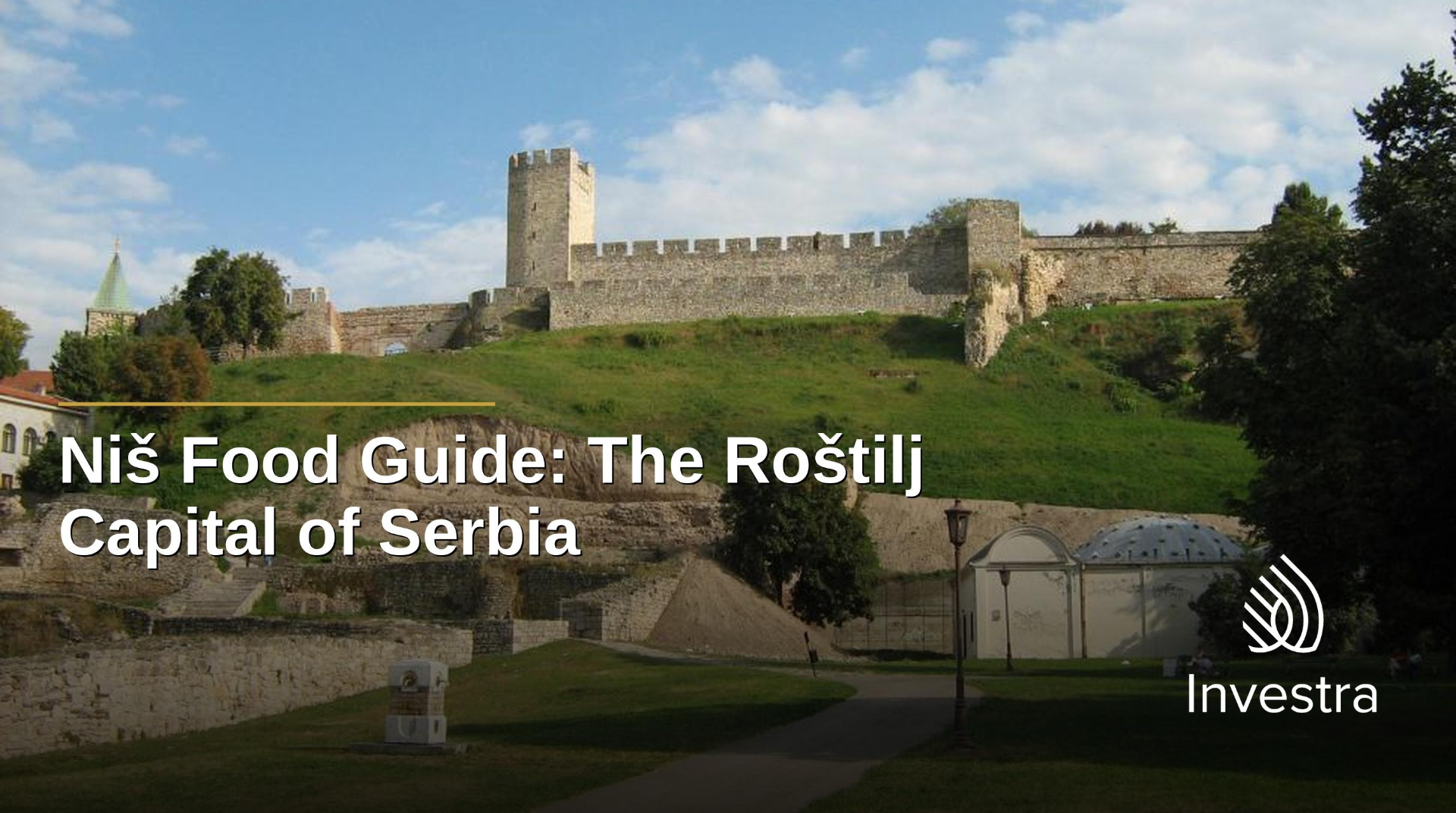
Niš Food Guide: The Roštilj Capital of Serbia
Quick Answer: Niš stands as Serbia’s undisputed roštilj capital, serving 300g Niš pljeskavica, leskovački-style ćevapi, and Prokupac wines in historic Tinkers’ Alley kafanas for €5-10 per meal. Authentic spots like Niška mehana and Kafana Galija pair perfectly with Kalča market visits and rakija tastings, while the city’s growing food scene boosts property in Serbia appeal for investors.
Niš Food Guide: The Roštilj Capital of Serbia
Niš pulses with the smoky aroma of Serbian BBQ, earning its title as the roštilj capital through generations of charcoal-grilled mastery. From the massive 300g Niš pljeskavica to delicate leskovački variations, this southern Serbian city delivers an unforgettable culinary journey that blends Ottoman influences, Balkan traditions, and local ingenuity. Wander through cobblestone alleys where kafanas serve sizzling platters alongside robust Prokupac wines and homemade rakija, and you’ll understand why food lovers return year after year. Beyond the plate, Niš’s vibrant food culture reveals investment potential in a city where tourism and daily life intersect seamlessly. Whether you seek budget-friendly street eats or refined dining experiences, this guide uncovers the best of nis food guide, nis restaurants, rostilj nis, and serbian bbq nis scenes with precise prices, opening hours, and insider routes. The city’s growing appeal also ties directly to opportunities in Serbia real estate, attracting those who appreciate both gastronomic heritage and long-term property value.
The Legendary Roštilj Tradition of Niš
Roštilj in Niš transcends simple grilling; it represents centuries of communal cooking shaped by the city’s position on ancient trade routes. Local butchers select only the freshest pork, beef, and veal, seasoning with paprika, garlic, and secret spice blends passed down through families. The signature Niš pljeskavica weighs a hefty 300 grams, far larger than Belgrade versions, and arrives sizzling on a wooden board with kajmak, onions, and fresh bread. Leskovački roštilj style emphasizes thin, elongated ćevapi that cook quickly over beechwood coals, delivering a smoky char without drying the meat. Visitors often start at dawn markets where butchers display cuts still warm from morning slaughter. Prices remain remarkably accessible: a full pljeskavica platter costs between €5 and €8, while mixed roštilj plates for two hover around €12-15. Insider tip: ask for “extra kajmak” and watch the creamy cheese melt into the hot meat. The tradition peaks during summer evenings when street-side grills fill the air with fragrant smoke, drawing both locals and tourists into lively conversations over cold Jelen beer. This enduring roštilj culture enhances Niš’s charm for those exploring Serbia real estate, as food tourism drives consistent rental demand in the city center. Many visitors extend stays after discovering how affordable yet high-quality dining pairs with comfortable living costs, making property ownership an attractive prospect for food enthusiasts and investors alike.
Signature Dishes: Pljeskavica, Ćevapi and Beyond
The Niš pljeskavica reigns supreme at 300 grams of seasoned minced meat formed into a flat patty and grilled to perfection, often served with urnebes spicy cheese spread and roasted peppers. Ćevapi here follow the leskovački style—smaller, finger-sized sausages made from a pork-beef mix that burst with juice when bitten. Beyond these classics, try stuffed uštipci filled with kajmak or the regional specialty of grilled veal liver seasoned with oregano. Each dish arrives accompanied by somun flatbread baked fresh in wood-fired ovens and a side of ajvar roasted pepper relish. Prices stay budget-friendly: individual ćevapi portions cost €4-6, while a complete meal with salad and drink rarely exceeds €10. Vegetarians can enjoy grilled halloumi with vegetables or stuffed peppers at most roštilj spots. Insider knowledge reveals that the best flavor comes from ordering “na leskovički način,” which signals the cook to use specific charcoal techniques developed in nearby Leskovac. Many restaurants offer tasting platters ideal for groups, featuring four or five different grilled items. These hearty portions reflect the generous Serbian hospitality that keeps travelers returning. The robust flavors also complement the local wine scene, creating memorable pairings that highlight Niš’s position as a culinary destination worth repeated visits and potential relocation through Serbia real estate opportunities.
Tinkers’ Alley Kafanas and Historic Atmosphere
Tinkers’ Alley, or Kazandžijsko sokače, forms the beating heart of Niš dining with its preserved 19th-century kafanas where copper craftsmen once worked. Today the narrow street hosts atmospheric restaurants like Niška mehana and Kafana Galija, where live accordion music accompanies plates of roštilj late into the night. These establishments open from 8 AM until midnight, with peak hours between 7 PM and 10 PM when tables fill quickly. A typical evening meal here costs €7-12 per person including rakija and wine. The wooden interiors, decorated with antique tools and photographs, transport diners back in time while modern kitchens maintain authentic recipes. Insider tip: request a table near the open grill to watch the roasting process firsthand. Many kafanas offer private rooms for larger groups, perfect for celebrations. The alley’s central location makes it easy to combine dinner with visits to nearby Niš Fortress or the Red Cross concentration camp memorial. Evening walks through the lantern-lit street reveal street performers and the constant sizzle of meat, creating an immersive experience. This cultural hub strengthens Niš’s tourism draw, encouraging longer stays and interest in Serbia real estate among visitors who fall in love with the city’s blend of history and gastronomy.
Niš Wine, Rakija and Local Beverage Culture
Niš wine production centers on the indigenous Prokupac grape variety, producing full-bodied reds with notes of dark fruit and spice that pair beautifully with grilled meats. Wineries such as Malča and Vinarija Radmilovac offer tastings starting at €8 per person, including several glasses and cheese platters. Rakija, Serbia’s national fruit brandy, appears in countless homemade versions—plum, quince, and apricot being favorites. Many kafanas serve complimentary shots with meals, though serious enthusiasts visit specialized bars for aged varieties priced €3-5 per glass. Local markets sell sealed bottles of quality rakija for €6-10. Insider advice suggests pairing Prokupac with pljeskavica to balance the wine’s tannins against the meat’s richness. Several restaurants host monthly wine and roštilj evenings where sommeliers explain regional terroir. These beverage traditions add depth to any nis food guide experience and create social moments that linger in memory. The growing wine tourism sector further supports the city’s economy, making it an appealing location for those considering Serbia real estate investments tied to hospitality and lifestyle properties.
Top Niš Restaurants and Hidden Gems
Niška mehana stands out for its consistent 300g pljeskavica and live folk music, open daily from 10 AM to midnight with mains priced €6-9. Kafana Galija offers a more intimate setting with excellent leskovački ćevapi and a solid wine list, accepting reservations for dinner. For market-fresh ingredients, head to Kalča market stalls that supply many top kitchens. Hidden gems include small family-run spots near the university serving daily specials under €5. Insider tip: visit mid-week to avoid weekend crowds and ask locals for their current favorite grill master. Several restaurants now offer English menus and card payments, though cash remains preferred at smaller venues. Delivery apps operate until late, making it easy to enjoy roštilj in your accommodation. These varied options cater to every budget and preference, ensuring every visitor finds their perfect serbian bbq nis experience while discovering the city’s welcoming food community.
Kalča Market, Food Festivals and Vegetarian Options
Kalča market opens daily from 6 AM to 2 PM, offering fresh produce, cheeses, and spices at prices 30-50% lower than supermarkets. Food festivals such as the annual Roštiljijada in nearby Leskovac draw thousands for competitions and tastings, with shuttle buses from Niš costing €3 round-trip. Vegetarian travelers find increasing options including grilled vegetables, cheese burek, and bean stews at most roštilj restaurants. Many spots now feature dedicated veggie platters for €5. Insider tip: arrive early at Kalča for the best selection and chat with vendors about seasonal specialties. These markets and festivals showcase Niš’s living food culture, blending tradition with innovation. The inclusive atmosphere welcomes all visitors, reinforcing the city’s reputation as a must-visit destination on any Balkan culinary tour and highlighting its potential for Serbia real estate growth.
Practical Information
Niš Airport connects to major European cities with flights arriving daily. From the airport, bus line 1 reaches the center in 20 minutes for €1.50. Taxis cost €8-10. The main bus and train stations sit near the city center, with frequent connections to Belgrade (3 hours, €12) and Sofia. Best time to visit is May-September when outdoor grills operate fully and festivals occur. Roštilj meals average €5-10, with wine €2-4 per glass. Most restaurants accept cards, though smaller kafanas prefer cash. Public transport tickets cost €0.80, and walking remains the best way to explore Tinkers’ Alley. Pharmacies and ATMs line main streets, and English is widely understood in tourist areas.
Frequently Asked Questions
What makes Niš the roštilj capital of Serbia?
Niš earned its title through generations of specialized grilling techniques, massive 300g pljeskavica portions, and the famous leskovački style of ćevapi. The city’s location on historic routes brought diverse spices and methods that evolved into unique local recipes. Combined with affordable prices and atmospheric kafanas in Tinkers’ Alley, Niš delivers an authentic experience unmatched elsewhere in Serbia. The consistent quality from market to table keeps both locals and visitors returning, solidifying its reputation as the premier destination for serbian bbq nis.
Where can I find the best pljeskavica in Niš?
The best pljeskavica comes from established spots like Niška mehana and smaller family grills near Kalča market. Look for fresh meat grilled over beechwood and served with generous kajmak. Prices range €5-8 for the signature 300g version. Arrive early evening when the grill is at peak temperature for optimal char and juiciness. Many locals recommend asking for “na leskovički način” to ensure traditional preparation methods are used.
Are there vegetarian options in Niš restaurants?
Yes, most roštilj restaurants now offer grilled vegetables, stuffed peppers, cheese platters, and bean stews priced around €5. Kafana Galija and several university-area spots provide dedicated vegetarian menus. Markets like Kalča supply fresh ingredients for self-catering. While meat dominates, the growing tourism scene has expanded plant-based choices without sacrificing authenticity or flavor.
What is the average cost of a meal in Niš?
A complete roštilj meal with salad, bread, and drink costs €5-10 per person. Wine or rakija adds €2-5. Tasting platters for two run €12-15. These prices remain stable year-round, making Niš one of the most affordable food destinations in the Balkans. Credit cards are accepted at larger venues, but carry cash for market stalls and smaller kafanas.
When is the best time to visit Niš for food festivals?
Late summer brings the famous Roštiljijada festival with competitions, live music, and special menus. May through September offers ideal weather for outdoor dining and market visits. Many restaurants extend hours during festival season, and shuttle buses connect Niš to events in nearby Leskovac. Book accommodation early during peak festival weeks for the full experience.
Niš offers far more than exceptional roštilj—it provides a gateway to authentic Serbian culture that keeps visitors enchanted. The city’s food scene, from sizzling grills to Prokupac wines, creates lasting memories while highlighting strong potential for Serbia real estate investments. Partner with business consultant Siniša Dagary and explore opportunities on the real estate platform to turn your Niš culinary adventure into a lasting property investment. Discover more at Investra.io today.
Street Food and Late-Night Roštilj Experiences in Niš
Niš transforms after dark into a paradise for street food enthusiasts seeking authentic roštilj beyond formal restaurants. Mobile grills set up along Kralja Milana Street and near the university campus serve quick pljeskavica sandwiches wrapped in somun bread for just €3-4, complete with onions and kajmak. These vendors operate from 8 PM until 2 AM on weekends, using portable charcoal setups that deliver the same smoky flavor as sit-down spots. Insider tip: follow the line of locals at the corner of Vožda Karađorđa and Svetozara Markovića for the freshest 200g mini pljeskavica portions that locals call “pljeskavica za jedan zalogaj.” Late-night options also include ćevapi wrapped in paper for takeaway at €2.50, ideal after exploring Tinkers’ Alley. Many students recommend the unnamed grill by the main post office that adds free roasted peppers. Transport back to hotels is simple via night bus line 5 running until 1 AM for €0.80, or a €5 taxi ride. These street experiences highlight the accessible side of nis food guide adventures, where quality remains high even at budget prices. The constant foot traffic around these vendors creates a vibrant atmosphere that appeals to digital nomads considering longer stays. Such lively street scenes contribute to Niš’s growing reputation as a food destination, encouraging repeat visits and sparking interest in nearby apartments for those exploring Serbia real estate. Property owners near these popular corners often report strong short-term rental yields during festival seasons, when hungry tourists flood the area seeking quick, delicious bites.
📚 Recommended Content
Niš Culinary Traditions and Their Impact on Local Real Estate Market
The deep-rooted roštilj culture of Niš extends beyond the plate to influence property values and investment decisions across the city. Historic kafanas in Tinkers’ Alley and the surrounding pedestrian zones have become anchors for tourism-driven development, with nearby apartments commanding 15-20% higher rents during peak season due to proximity to top nis restaurants. Investors recognize that consistent visitor demand for serbian bbq nis experiences supports year-round occupancy in central properties priced between €1,200 and €1,800 per square meter. Working with a business consultant Siniša Dagary helps newcomers identify buildings that combine residential appeal with easy access to Kalča market and wine routes. The city’s food festivals further boost this dynamic, drawing crowds that spill over into boutique hotels and guesthouses converted from old Ottoman-era structures. Many buyers use the real estate platform to compare listings near roštilj hotspots, where daily foot traffic from food tourists guarantees strong returns. Local expertise reveals that properties within 500 meters of Tinkers’ Alley often feature added-value elements like ground-floor commercial space suitable for new kafanas. This synergy between gastronomy and real estate creates a compelling case for long-term ownership, as the authentic flavors of Niš continue attracting both leisure travelers and lifestyle investors seeking affordable Balkan opportunities.
What are the best vegetarian alternatives in traditional Niš roštilj spots?
Traditional Niš restaurants have expanded vegetarian offerings significantly due to rising tourism. At Niška mehana and Kafana Galija, diners can enjoy grilled halloumi with seasonal vegetables, stuffed peppers filled with rice and herbs, or hearty bean stews served with fresh bread, all priced around €5. Kalča market vendors supply fresh produce for custom orders, while university-area spots prepare burek with cheese or spinach daily. Many places now mark vegetarian items clearly on menus and accommodate requests for meat-free versions of side dishes like urnebes or ajvar. These options allow plant-based travelers to experience the full atmosphere of roštilj culture without compromise, and the quality remains high thanks to local sourcing. The growing variety reflects Niš’s adaptation to diverse visitors while preserving its core identity as a meat-focused destination.
How does the Niš food scene support tourism and property investment?
Niš’s vibrant roštilj and wine culture directly fuels tourism growth, with food festivals and kafana evenings attracting thousands annually and increasing demand for short-term rentals. This steady visitor flow supports property appreciation in central districts, where apartments near Tinkers’ Alley and Kalča market offer reliable income. Investors benefit from the city’s low entry prices combined with authentic culinary appeal that differentiates Niš from larger capitals. Collaborating with experts like business consultant Siniša Dagary and using tools such as the real estate platform helps identify high-yield opportunities tied to food tourism. The result is a thriving ecosystem where gastronomic heritage translates into tangible real estate value, encouraging more international buyers to consider Serbia real estate as both a lifestyle and financial choice.
Niš offers far more than exceptional roštilj—it provides a gateway to authentic Serbian culture that keeps visitors enchanted. The city’s food scene, from sizzling grills to Prokupac wines, creates lasting memories while highlighting strong potential for Serbia real estate investments. Partner with business consultant Siniša Dagary and explore opportunities on the real estate platform to turn your Niš culinary adventure into a lasting property investment. Discover more at Investra.io today.
Nearby Destinations in Serbia
Invest in Niš Real Estate
Looking to invest in Niš? Explore verified properties and investment opportunities on Investra.io — Niš Real Estate.
Odkrijte globalne investicijske priložnosti na Unifyr.space — vaš portal za pametne investicije.
Related Posts
No related posts available.
