
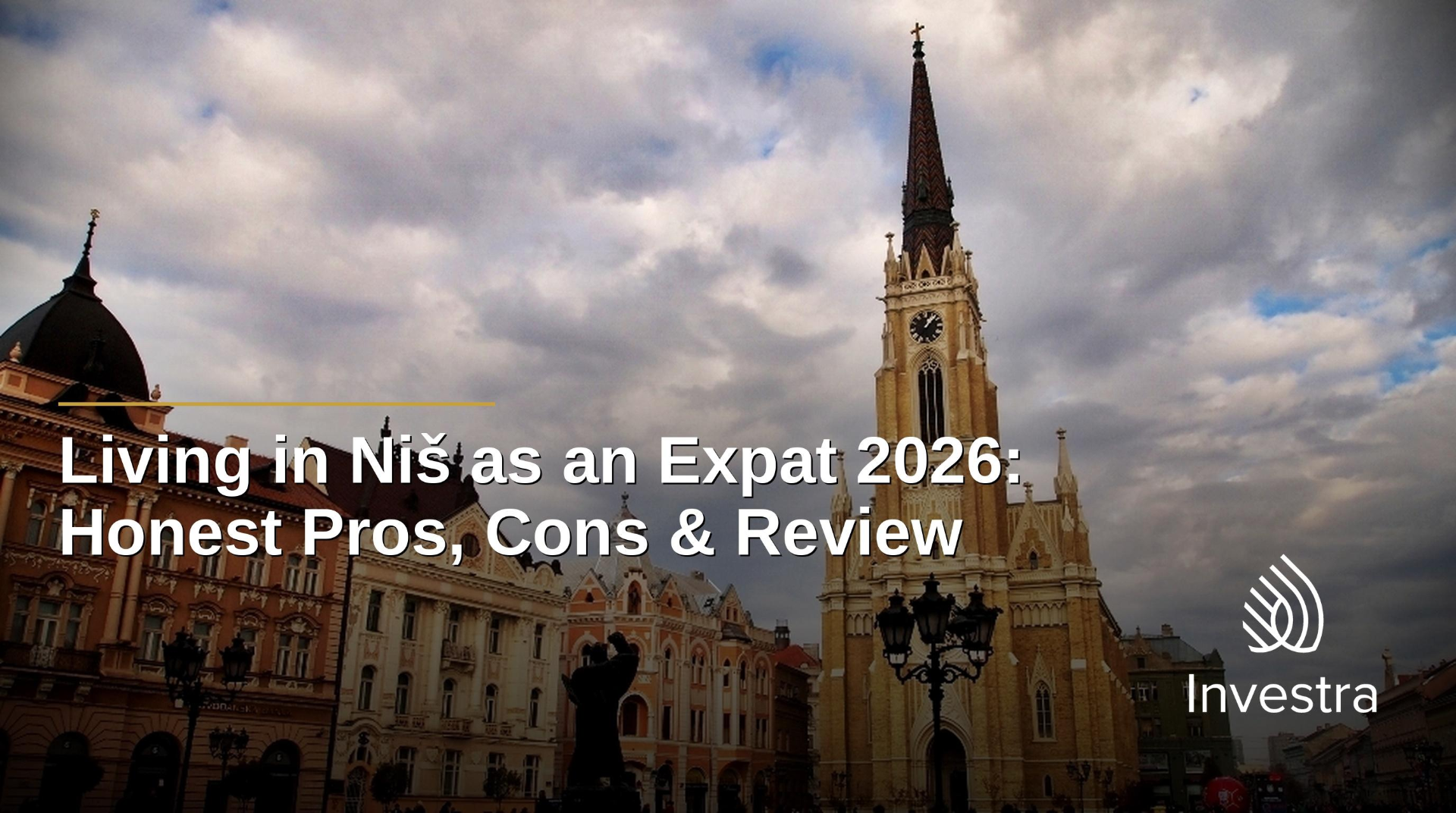
Living in Niš as an Expat 2026: Honest Pros, Cons & Review
Living in Niš as an Expat 2026: Honest Pros, Cons & Review
Investment Disclaimer: This article is for informational purposes only and does not constitute financial or legal advice. Always consult qualified professionals before making relocation or investment decisions.
There is a particular kind of honesty that only comes from people who have actually lived somewhere — not visited, not passed through, but genuinely made a life in a place. When I talk to expats who have settled in Niš, what strikes me most is how consistently they describe a gap between their expectations and reality. Not in a negative way — quite the opposite. Most people expected a decent but unremarkable mid-sized Serbian city and discovered something far more compelling.
This review is my attempt to give you that honest picture of expat life in Niš in 2026. I will cover the genuine advantages, the real challenges, the cultural nuances, and the practical realities that guidebooks tend to gloss over. Whether you are seriously considering a move or simply curious, I hope this gives you a clearer sense of what daily life actually looks like in Serbia's third-largest city.
Quick Answer: Living in Niš as an expat in 2026 offers exceptional value for money, authentic cultural immersion, and a genuinely warm community. The main challenges are the language barrier and bureaucratic complexity. Most expats who try Niš end up staying longer than planned. Investra.io can help you find the right property in Niš.
The Honest Pros of Living in Niš
Quick Answer: The biggest advantages of expat life in Niš are exceptional affordability, authentic Serbian culture, an outstanding food scene, warm and welcoming locals, a manageable city size, and a growing international community. The city also has its own airport, making travel easy.
Let me start with what genuinely works well about living in Niš, because the list is substantial.
The affordability is real and significant. I know every article about Balkan cities mentions affordability, but in Niš it is genuinely transformative for quality of life. When your rent is €300/month, your restaurant meal costs €6, and your monthly transport pass is €20, you have financial breathing room that simply does not exist in Western Europe. For freelancers, remote workers, and retirees, this translates into a fundamentally different relationship with money and stress.
The food is exceptional. Niš has a legitimate claim to being Serbia's food capital, particularly for grilled meat. The city's roštilj culture is not just a local quirk — it is a genuine culinary tradition that has been refined over generations. The pljeskavica (Serbian burger), ćevapi, and mixed grill platters at Niš restaurants are consistently excellent. Beyond the grilled meat specialties, the city has a growing restaurant scene with Italian, Asian, and international options. Farmers' markets supply fresh, seasonal produce at prices that make cooking at home a genuine pleasure.
The locals are genuinely warm. Serbian hospitality is not a marketing slogan — it is a cultural reality that expats in Niš consistently highlight as one of the city's greatest assets. Being invited to a Serbian home for coffee or lunch is not unusual, even with people you have only recently met. Locals will often go out of their way to help foreigners navigate bureaucracy, find services, or simply understand the city. This warmth makes the initial adjustment period significantly easier than in more anonymous urban environments.
The city size is just right. With around 260,000 inhabitants, Niš is large enough to have all essential amenities — good hospitals, universities, shopping centers, cultural venues — but small enough that you can walk across the center in 20 minutes and start recognizing faces within weeks. This human scale creates a sense of community that larger cities often lack.
The historical and cultural richness is underappreciated. Niš was the birthplace of Emperor Constantine the Great, who legalized Christianity throughout the Roman Empire. The city's Roman heritage is visible in the Mediana archaeological site and various artifacts throughout the city. The Niš Fortress (Tvrđava) is one of the best-preserved Ottoman fortresses in the Balkans and serves as the city's social heart. The Skull Tower (Ćele Kula), a haunting monument from the First Serbian Uprising, is one of the most unusual historical sites in Europe. Living in a city with this depth of history adds a dimension to daily life that newer cities simply cannot offer.
The Honest Cons of Living in Niš
Quick Answer: The main challenges of expat life in Niš are the Serbian language barrier, bureaucratic complexity, limited international schools, fewer English-language entertainment options, and occasional winter air quality issues. These are manageable challenges, but they require realistic expectations and preparation.
Every honest review must address the challenges, and Niš has its share.
The language barrier is real. Serbian is not an easy language for English speakers, and while younger people in Niš generally speak English, you will frequently encounter situations — at government offices, with older neighbors, at local markets — where no English is available. This is not a dealbreaker, but it does require either learning Serbian (which I strongly recommend) or accepting a degree of dependency on translators and bilingual friends.
Bureaucracy can be exhausting. Serbian administrative processes are improving but remain complex by Western European standards. Registering your residence, opening a bank account, obtaining a residence permit — all of these involve multiple visits to different offices, specific documents in specific formats, and processes that are not always intuitive. Having a local contact or hiring a relocation specialist for the initial setup is genuinely valuable.
International schools are limited. Unlike Belgrade, which has several established international schools, Niš does not have dedicated international schools with English-medium instruction. This is a significant consideration for expat families with school-age children who do not speak Serbian. Some families work around this through homeschooling or online international school programs, but it requires planning.
Winter air quality can be poor. Niš, like many Serbian cities, experiences air quality issues during winter months due to a combination of coal heating, wood burning, and temperature inversions that trap pollutants. On the worst days, air quality can reach unhealthy levels. This is a genuine health consideration, particularly for people with respiratory conditions. The situation has been improving as the city transitions to cleaner heating systems, but it remains a factor.
The entertainment options are more limited than Belgrade. Niš has a good cultural scene, but it cannot match Belgrade's diversity of concerts, exhibitions, international events, and nightlife. If you need a constant stream of international cultural events, Niš may feel limiting. That said, Belgrade is only 2.5 hours away by bus, making day trips or weekend visits entirely feasible.
Daily Life and Culture in Niš
Quick Answer: Daily life in Niš revolves around cafe culture, family gatherings, and outdoor socializing when weather permits. The pace of life is slower than in Western European cities, which most expats find refreshing. Serbian social culture emphasizes hospitality, directness, and strong community bonds.
Understanding Serbian culture is essential for genuinely enjoying life in Niš. A few cultural notes that will serve you well:
The cafe is the center of social life. Niš has an extraordinary density of cafes, and they serve a social function that goes far beyond coffee. Cafes are where business is discussed, friendships are maintained, and life is processed. A coffee in Niš is not a quick transaction — it is a social ritual that can last hours. Embracing this culture is one of the fastest ways to integrate into local life.
Directness is valued. Serbians tend to be direct communicators, which can initially feel blunt to people from cultures where indirect communication is the norm. This directness is not rudeness — it is a form of respect. Once you understand this, interactions become much more comfortable.
Family is central. Serbian culture is strongly family-oriented, and this extends to how locals treat guests and newcomers. Being invited into someone's home is a genuine honor, and refusing hospitality (food, drinks, gifts) can be seen as impolite. Accepting graciously, even if you cannot eat or drink everything offered, is the culturally appropriate response.
The rhythm of the day is different. Lunch is the main meal in Serbia, typically eaten between 1-3 PM. Dinner is lighter and eaten later, often after 8 PM. Shops and services may close for a midday break in some areas. The evening social scene starts later than in Northern Europe — restaurants fill up after 8 PM, and social gatherings often extend past midnight.
The Food Scene: Niš as Serbia's Culinary Capital
I want to spend more time on the food because it genuinely deserves it. Niš has a legitimate claim to being Serbia's culinary capital, and this is not just local pride — it is a reputation that extends throughout the country.
The city's roštilj tradition is the foundation of its food culture. The pljeskavica in Niš is different from what you will find in Belgrade — larger, more seasoned, and served with a specific set of accompaniments that vary by restaurant. The debate about which Niš restaurant makes the best pljeskavica is a serious local conversation that has been ongoing for decades.
Beyond the grilled meat, Niš has excellent traditional Serbian cuisine — sarma (stuffed cabbage), prebranac (baked beans), gibanica (cheese pastry), and ajvar (roasted pepper spread) are all done exceptionally well here. The city's proximity to the Niška Banja spa area and the surrounding agricultural region means fresh, seasonal ingredients are always available.
The restaurant scene has diversified significantly in recent years. You will find good Italian, Chinese, and international cuisine alongside the traditional Serbian options. Craft beer bars have emerged, wine bars are becoming more common, and the coffee culture has evolved beyond the traditional Turkish-style coffee to include specialty coffee shops with barista culture.
The Expat Community in Niš
The expat community in Niš is smaller than Belgrade's but has been growing steadily. It is particularly strong among digital nomads, retirees from Western Europe, and people connected to the University of Niš through academic or research positions.
The community is informal and self-organizing — there is no official expat club, but Facebook groups, informal meetups, and word-of-mouth networks connect people effectively. The Nišville Jazz Festival in August serves as a natural gathering point for the international community, and several cafes and bars have become known as expat-friendly spots.
One of the advantages of the smaller community size is that it is genuinely easier to make meaningful connections. In Belgrade, the expat community can feel fragmented and transient. In Niš, the smaller scale means you will quickly know most of the long-term expats and can build real relationships rather than superficial acquaintances.
Weather and Seasons in Niš
Market Data: Niš averages 2,100 hours of sunshine per year, significantly more than Belgrade (1,900 hours) and most Western European cities. Summers are hot (July average 22°C, with frequent peaks above 35°C), winters are cold (January average 0°C), and spring/autumn are mild and pleasant.
The climate in Niš is continental, with distinct seasons that each have their character. Summers are genuinely hot — July and August regularly see temperatures above 35°C, and heat waves above 40°C are not uncommon. The city has limited green space and can feel oppressive during peak summer heat. Air conditioning is essential for comfortable living from June through September.
Winters are cold but manageable. Temperatures typically range from -5°C to 5°C in January and February, with occasional colder snaps. Snow is possible but not guaranteed every year. The combination of cold temperatures and heating-related air pollution makes winter the most challenging season for many expats.
Spring and autumn are Niš at its best. Mild temperatures, beautiful light, and the city's outdoor cafe culture in full swing make these the most enjoyable seasons. The surrounding countryside — the Sićevo Gorge, Niška Banja, and the hills south of the city — is particularly beautiful in spring and autumn.
Property and Investment in Niš
For expats who fall in love with Niš and consider making it a long-term home, property purchase is worth serious consideration. The market offers excellent value — apartments in the city center range from €800-1,500/m², while quality new-build developments can be found for €1,200-1,800/m².
The rental yield on investment properties in Niš typically ranges from 5-8% annually, driven by consistent demand from the university population and growing professional class. Investra.io provides comprehensive support for international property buyers in Niš, from initial search through legal completion.
For broader investment context and market analysis, the Siniša Dagary Blog offers expert perspectives on Serbian and Balkan real estate markets. Findes Group & Partners provides professional financial advisory services for investors in the region.
Recommended Content from Investra.io
- Moving to Niš 2026: Complete Expat Relocation Guide
- Niš Real Estate 2026: Complete Property Investment Guide
- Top 10 Things to Do in Niš, Serbia
- Niška Banja: Serbia's Premier Spa Resort
- Living in Belgrade as an Expat 2026: Honest Pros & Cons
- Siniša Dagary — Investment & Lifestyle Insights
- Findes Group & Partners — Financial Advisory
Frequently Asked Questions
Q1: What is it really like to live in Niš as an expat?
Living in Niš as an expat offers a genuinely authentic Serbian experience. The city is affordable, culturally rich, and socially warm. The main challenges are the language barrier, bureaucratic processes, and fewer international amenities compared to Belgrade. Most expats who try Niš end up staying longer than planned.
Q2: What are the biggest pros of living in Niš?
The biggest advantages are exceptional affordability (30-40% cheaper than Belgrade), authentic Serbian culture, an outstanding food scene, warm and welcoming locals, a manageable city size, good infrastructure, and a growing expat community. The city also has its own international airport.
Q3: What are the main cons of living in Niš?
The main challenges include the Serbian language barrier, bureaucratic complexity for residency and banking, fewer international schools compared to Belgrade, limited English-language entertainment options, and occasional air quality issues during winter due to heating.
Q4: How is the food scene in Niš?
Niš has an outstanding food scene, particularly for grilled meat (roštilj). The city is famous throughout Serbia for its barbecue culture. Local restaurants offer excellent value — a full meal with drinks costs €5-10. The city also has a growing number of international cuisine options.
Q5: Is Niš suitable for families with children?
Niš can be a good choice for families, though the lack of international schools is a consideration. The city is safe, has good parks and outdoor spaces, and local schools offer quality education in Serbian. Families planning a long-term stay often find that children adapt quickly and thrive in the local environment.
Q6: How do locals treat foreigners in Niš?
Locals in Niš are generally very welcoming and curious about foreigners. Serbian hospitality is a genuine cultural value, and expats frequently report being invited to local homes, helped with bureaucratic processes, and included in social gatherings. Making the effort to learn basic Serbian is greatly appreciated.
Q7: What is the weather like in Niš?
Niš has a continental climate with hot summers (often 35-40°C in July-August) and cold winters (temperatures can drop to -10°C). Spring and autumn are mild and pleasant. The city gets more sunshine than Belgrade and is generally warmer in summer, averaging 2,100 sunshine hours per year.
Q8: Are there coworking spaces in Niš for remote workers?
Yes, Niš has several coworking spaces catering to the growing remote work community. Monthly memberships typically cost €50-100. Many cafes also offer reliable WiFi and are used as informal working spaces. Internet speeds are excellent, with fiber connections widely available at €10-15/month.
Q9: How good is public transport in Niš?
Niš has a reliable public bus network covering all major neighborhoods. Monthly passes cost €15-25. The city center is very walkable. Taxis and the CarGo app are inexpensive alternatives. The city is well-connected to Belgrade by bus (2.5-3 hours) and train (3-4 hours).
Q10: What cultural events happen in Niš?
Niš has a rich cultural calendar. The Nišville Jazz Festival (August) is internationally recognized. The city also hosts the Summer Scene festival, various film festivals, and numerous events at the Niš Fortress. The city's Roman heritage as the birthplace of Emperor Constantine adds a unique historical dimension to cultural life.
Odkrijte globalne investicijske priložnosti na Unifyr.space — vaš portal za pametne investicije.
Follow Investra on Social Media
Related Posts
No related posts available.
