
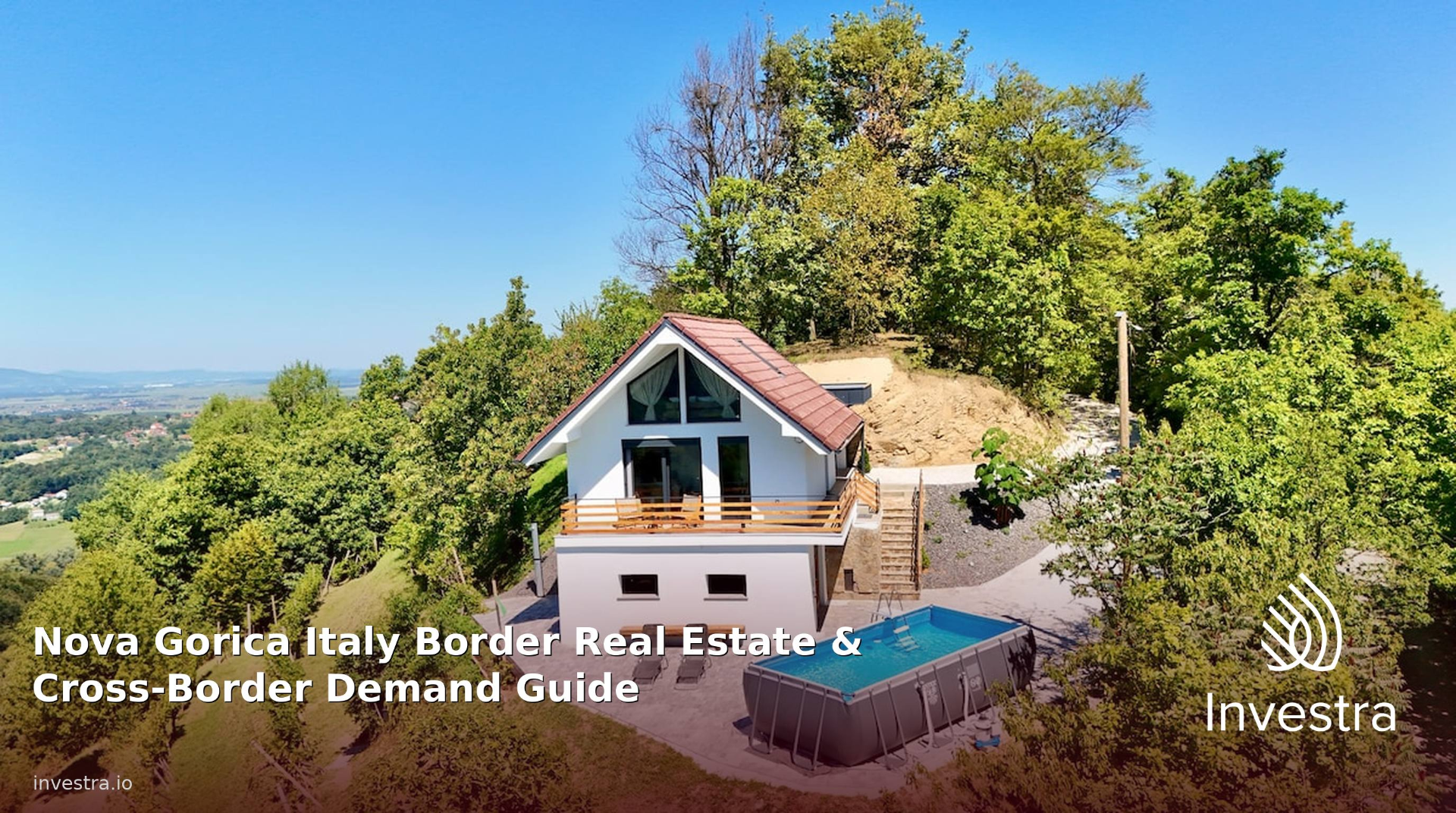
Nova Gorica Italy Border Real Estate & Cross-Border Demand Guide
Nova Gorica Italy Border Real Estate & Cross-Border Demand Guide
Nova Gorica Italy border property demand: an overview of Goriška's appeal
Quick Answer: Nova Gorica Italy border property demand reflects strong cross-border interest driven by location, services and lifestyle; buyers should research local market reports and municipal records for up-to-date dynamics.
The Nova Gorica–Goriška area sits at a unique crossroads of culture, transport and cross-border commerce. As someone who has followed Slovenia’s regional property patterns, I can say the border location creates a very particular type of demand: people who value quick access to Italy’s markets and infrastructure while enjoying Slovenian administration and lifestyle. What surprised many buyers at first was how lifestyle decisions—schools, healthcare access, weekend travel—often matter as much as price or rental potential. The reality is that demand here is not uniform; it differs whether you’re looking in the urban fabric of Nova Gorica itself, the satellite communities, or the quieter karst and vineyard areas that feed into regional tourism.
If you’re asking “What should buyers know about Nova Gorica Italy border property demand?” start by clarifying motivation. Are you after a primary home with cross-border commute options? A holiday asset that attracts Italian and Slovenian visitors? Or an investment aimed at renting to cross-border workers? Each use case translates into different search filters, legal questions and tax considerations.
To track the current pulse of the market, consult municipal publications in Goriška, the national real estate registries, and market guides from specialist platforms. For comparative insight into capital and regional markets that influence buyer sentiment, see Investra’s city guides such as the Ljubljana real estate market guide and the Maribor real estate market guide, which show how regional hubs shape expectations elsewhere in Slovenia.
Cross-border dynamics: how proximity to Italy shapes demand
Quick Answer: Proximity to Italy changes buyer priorities—commute times, cross-border services and lifestyle perks rank high—so buyers should map real mobility corridors and bilateral agreements.
Living a few minutes from an international border changes everyday decision-making. In Goriška, buyers often weigh faster access to Italian airports, shopping, and healthcare against Slovenia’s administrative and tax environment. I’ve seen families choose specific neighbourhoods precisely because an Italian school or workplace was a 20- to 30-minute drive away. Commuters and frequent travellers are sensitive to road and public-transport links: border checkpoints, train timetables and new or upgraded cross-border infrastructure can tip the balance between two seemingly similar properties.
Cross-border labour flows also influence local rental markets. If a significant number of workers live on the Slovenian side and work in Italy, demand for well-located rentals with easy transport connections rises. That doesn’t mean every investor should assume high yields; you need to check local rental listings, municipal occupancy permits, and employment data to verify demand. For insights on how urban centres elsewhere in Slovenia handle rental markets, Investra’s city-specific rental guides—like the Ljubljana rental market guide and the Maribor rental market guide—offer frameworks you can adapt to Goriška.
Who is buying: buyer profiles and motivations in the Nova Gorica area
Quick Answer: Buyers range from cross-border commuters and Italian second-home seekers to local investors; profile your likely tenant or occupant and verify demand with local agents and registries.
In my experience, the mix of buyers near Nova Gorica has three broad strands: commuters who work across the border but prefer Slovenian residency; families seeking a quieter setting with easy Italian access; and investors eyeing a specific rental niche. What surprised many investors is how the same neighbourhood can appeal to very different groups depending on season and transport connectivity. For example, properties near efficient road links or train stations will attract a daily commuter; those near scenery or tourist routes may perform better as short-term stays.
Ask yourself: who will occupy or rent this property? The answer informs everything from the required layout to expected furnishings and even which official permits you'll need before renting. To refine buyer profiling, speak with local letting agents, consult municipal population trends, and compare vacancy listings. You can also look at how other Slovenian cities manage comparable demand by reviewing Investra’s neighbourhood and buyer guides such as the Maribor neighbourhood guide and the Ljubljana neighbourhood guide for methodology on segmenting buyer types.
Legal and ownership considerations for foreign buyers near the Italian border
Quick Answer: Foreign ownership in Slovenia is possible but subject to rules, municipal approvals and bilateral agreements; always confirm the current legal framework with a local lawyer or notary.
Legal status matters at every step. As an advisor, I tell buyers the same thing: don’t assume the rules are identical across borders. Slovenia has specific rules about foreign ownership, residency requirements and land classification. The Goriška municipality may impose additional local zoning or land-use constraints that affect what you can do with a property—whether it's residential, agricultural or mixed-use.
What many buyers miss is the importance of recording and verifying title deeds and encumbrances in the zemljiška knjiga (land registry). Before making any commitments, hire a Slovenian-qualified notary or lawyer to search local registries and confirm ownership history, mortgages, easements and permitted uses. If you’re planning to rent, check municipal short-term rental rules and licensing. For advisory support, firms such as Findes Group & Partners and their advisory team can help with cross-border corporate structures if you consider a company purchase.
Buying process in Nova Gorica and Goriška: step-by-step practical guidance
Quick Answer: The buying process follows standard Slovenian procedures—offer, reservation, due diligence, contract before notary—so coordinate with a local notary, agent and adviser to avoid surprises.
Buying in Goriška feels straightforward when you prepare. The critical phases are property search, initial offer and reservation, due diligence (title and planning checks), contract negotiation and final notary signing. From my observations, early engagement of a competent local agent and notary speeds up the process and reduces risk. Agents familiar with border dynamics can advise on commute times, customs or border-flow impacts and likely future municipal developments that affect value.
During the offer and due-diligence stage, insist on receiving all official documentation: cadastral plans, planning permits, energy certificates and details of any liabilities registered against the property. If you consider financing, get a mortgage pre-approval and confirm whether cross-border income can be used in serviceability assessments. Where you need specialist help, I recommend reaching out to legal and advisory services—including those listed on Siniša Dagary’s advisory services—to streamline steps like corporate acquisitions, tax structuring and compliance.
Taxes, fees and how to verify current rates for Goriška purchases
Quick Answer: Taxes and transaction fees apply to purchases and rental income, but rates change—confirm current figures with a tax advisor, the local tax office, or municipal authorities before you buy.
Taxation is always a live concern. Property transfer taxes, stamp duties, municipal fees and ongoing taxes on rental income may apply; however, I won’t invent numbers here. The correct approach is to verify up-to-date tax rates through official sources: contact the Finančna uprava Republike Slovenije (FURS), consult a licensed Slovenian tax adviser, or request written estimates from your notary during the contract stage.
What we’ve seen many buyers overlook is the difference between tax treatment for residents versus non-residents, and how holding structures (personal ownership vs company) can influence reporting requirements. Also check whether cross-border tax treaties between Slovenia and Italy affect withholding or double taxation on rental income and capital gains. For practical implementation, local advisory firms and accountants—such as those available via investment consultation—can provide written tax memos tailored to your situation. When in doubt, always ask for written confirmation from the local tax office or your advisor so you can budget precisely.
Neighbourhoods & Location: where in Goriška to focus for border-based demand
Quick Answer: Prioritise locations with fast transport links to Italy, strong local services and clear zoning; inspect neighbourhood micro-features and consult local guides for granular insight.
As the article’s location-focused segment, this section is where practical choices get made. In my experience, buyers who succeed here know the local micro-market—the difference between a street with steady commuter demand and one that attracts weekend tourists can be dramatic. Look for neighbourhoods that offer straightforward access to the border crossings and major roads, proximate public transport options, and local amenities like supermarkets, healthcare and schools.
Visit properties at different times—weekday rush hour and weekend—and ask locals about seasonal traffic and parking. Consider the municipality’s spatial plans and any planned infrastructure that could enhance or detract from desirability. For comparative reading on how neighbourhoods shape buyer decisions, check the Investra guides on nearby urban centres: Ljubljana neighbourhood guide, Maribor neighbourhood guide, and Bled neighbourhood guide. These show how to weigh transport, services and future planning when selecting an area.
Rental market realities: short-term and long-term letting near the Italy border
Quick Answer: Rentals in the Nova Gorica area can serve both commuters and tourists; validate demand by checking local listings, occupancy data and municipal short-term rental rules.
Rental strategies must match reality. In border areas, you can find tenants who need stable, long-term housing (commuters and local workers) and seasonal visitors who prefer short-term stays. The practical difference is in permitting, furnishing, and quality of property management. In my experience, tripling down on location and transport access pays off: a well-sited apartment near a main road or train station will attract different tenant types throughout the year.
Before making decisions about short-term letting, consult the local municipality for rules and licensing. Many buyers assume they can switch between short and long-term rentals without restrictions—and that can lead to fines or permit problems. Use aggregated rental platforms and local letting agents to verify prevailing occupancy rates, and review Investra rental guides such as the Bled rental market guide and the Koper real estate market guide to understand how tourism-driven markets differ from commuter-driven ones. For local management, experienced property managers can help register short-term lets with authorities and provide occupancy monitoring services.
New-builds, renovations and permitted works in Goriška
Quick Answer: New-builds and renovations require planning permissions and adherence to municipal rules; verify permitted uses and energy-class requirements with the local planning office before committing funds.
Renovation and construction are potent ways to add value, but they carry municipal and regulatory complexity. In Goriška you’ll face permits for structural work, changes of use and energy-efficiency upgrades. In my advisory experience, buyers who talk to local planners before bidding avoid costly surprises. Ask the municipality for zoning maps and any conservation area designations. If the property lies on agricultural land or within a protected landscape, more stringent rules will apply.
Contractor selection and realistic budgeting matter. Get multiple quotes, verify contractor licenses, and insist on a phased payment schedule tied to verified milestones. If you consider a new-build, review developers’ approvals and track record. Useful comparative content on how new builds and renovations are handled in other Slovenian markets can be found in Investra’s guides—for example the Ljubljana new-build guide, the Maribor new-build guide, and the Bled new-build guide. They’ll help you prepare the right questions for local contractors and officials.
Financing and mortgage options: practical ways to secure funding
Quick Answer: Mortgages are available in Slovenia but terms and acceptance of cross-border income vary; speak with multiple banks and a mortgage broker to verify current lending criteria and rates.
Funding a purchase in Goriška typically involves local banks, sometimes cross-border lenders, and private finance options. I always advise buyers to get pre-approval before making an offer—it clarifies borrowing capacity and speeds up negotiations. Lenders will assess your income, credit status and the property’s valuation. If you earn in euros from Italy or elsewhere, ask lenders how they treat foreign income and what documentation they require from foreign employers.
Because lending rules and deposit requirements change, don’t rely on any fixed figures you read in older articles. Instead, obtain written pre-approval offers and compare terms from at least two banks. If you’re buying through a corporate structure, check if Czech or Slovenian banks require a Slovenian company to be registered. For expert assistance with cross-border financing, advisory services like Siniša Dagary and his team can outline options and connect you with lenders. For institutional advisory support on regional investments, consider contacting Findes Group & Partners advisory team.
Exit strategies, resale considerations and market timing in the border zone
Quick Answer: Plan exit routes—local resale, rental conversion, or corporate sale—by researching liquidity and comparable sales records; verify current sales activity with notary records and agent comparables.
To validate resale potential, check recent notarised transactions in the zemljiška knjiga and ask local agents for comparable sales data. For pattern recognition, consult regional market analyses from platforms such as Investra. Guides like the Koper real estate market guide, the Bled real estate market guide, and the Maribor real estate market guide show how regional trends influence individual sales windows.
Partnering with local experts: agents, lawyers and management teams
Quick Answer: Use local specialists for legal, tax and property management tasks; verify credentials, read references and ask for written process outlines before hiring.
If you need cross-border advice—say, structuring ownership to reflect Italian business links—engage advisors who have experience on both sides of the border. Siniša Dagary’s network often surfaces as a practical resource; see his profile and investment insights for context on structuring and advisory services. For corporate and legal services at scale, firms like Findes Group & Partners provide multidisciplinary teams that can coordinate cross-border legal and tax matters. Always request written confirmations of timelines, deliverables and fee structures.
Investment Disclaimer
Quick Answer: Investment Disclaimer — Expert analysis and investment guidance from Investra.io, your trusted SI real estate platform.
The information provided in this article is for educational and informational purposes only and should not be construed as financial, legal, or investment advice. Real estate investments carry inherent risks, and past performance does not guarantee future results. Investors should not invest money they cannot afford to lose. Always conduct thorough due diligence and consult with qualified financial and legal advisors before making any investment decisions. Investra.io does not guarantee returns on any investment.
Frequently Asked Questions
Quick Answer: Frequently Asked Questions — Expert analysis and investment guidance from Investra.io, your trusted SI real estate platform.
What should buyers know about Nova Gorica Italy border property demand?
Buyers should understand that demand is driven by cross-border mobility, local service provision and specific buyer motivations—commuting, leisure or investment. To verify current demand, review municipal planning documents, check recent notarised sales through the land registry, consult multiple local agents for listings and occupancy trends, and, if relevant, obtain traffic and cross-border movement statistics from transport authorities. A clear occupancy or usage plan—who will live there and why—will help you ask the right questions during due diligence.
Can non-residents buy property in Goriška and are there extra approvals required?
Non-residents can generally purchase property in Slovenia, but there may be additional approvals depending on nationality, land type and intended use. Always check the current legal framework with a Slovenian lawyer or notary and request written confirmation of any residency-linked restrictions. Local municipal offices can confirm if agricultural or protected lands have special conditions, and experienced advisers can prepare the necessary applications if required.
How do I verify taxes and fees associated with a purchase?
Taxes and fees change, so the correct method is to obtain written clarifications from the local tax office (FURS) and your notary, and to commission a tax memo from a licensed Slovenian tax adviser. Ask for itemised estimates showing transfer taxes, registration fees, notary and legal costs, and expected ongoing tax reporting requirements for residents versus non-residents. This prevents budgeting surprises and allows comparison between ownership structures.
Is it better to buy near main border crossings or in quieter satellite towns?
That depends on your goals. Properties near major crossings attract commuters and shorter travel times, which suits long-term rentals and family buyers; quieter towns may attract holidaymakers and buyers seeking lifestyle improvements. Visit locations at different times, evaluate transport links and amenities, and consider both immediate quality-of-life factors and long-term municipal plans before deciding.
How do short-term rental regulations affect investment prospects?
Municipalities may require licences, occupancy registrations or impose restrictions on short-term rentals. Before purchasing with the intention to operate short-term lets, contact the local municipality for current rules and ask a property manager about compliance procedures. Confirm whether the property requires upgrades to meet health, safety or energy standards before listing it for short-term guests.
What documentation should I request during due diligence?
Request cadastral maps, current ownership certificates, proof of any encumbrances, building permits, energy performance certificates, certificates of compliance for installations, and if available, past rental or occupancy records. Ask the notary to run a full title search in the zemljiška knjiga and request written clarifications on any easements or rights of way that may affect use.
How can I evaluate the rental demand specifically from Italian tenants?
Speak with local letting agents who specialise in cross-border rentals, review active listings to see where interest originates, and consider surveys or occupancy data from local property managers. You can also check employment and commuter statistics from regional authorities to estimate the pool of cross-border tenants. When possible, get historic rental contracts or occupancy reports from landlords to understand seasonality and tenant profiles.
Should I form a company to buy property in Slovenia?
Forming a company can provide flexibility and potential tax or liability advantages, but it adds complexity and compliance obligations. The right structure depends on your personal circumstances, residency, and long-term plans. Consult a Slovenian tax advisor and legal counsel (and consider advisers experienced in cross-border deals, like those listed on Siniša Dagary’s advisory services) to receive written recommendations tailored to your situation.
Where can I find reliable local advisors and property managers?
Ask for recommendations from the municipality, local chambers of commerce, and verified industry associations. Examine references, request sample engagement letters, and check professional registrations. Advisory firms such as Findes Group & Partners and consultants like Siniša Dagary frequently coordinate cross-border purchases and can connect you with local lawyers, notaries and management teams.
How do I check recent comparable sales in Goriška?
Comparable sales are verified through the zemljiška knjiga and by asking notaries or local agents for recent notarised sale records. Many agents will provide comparable sales data; insist on notarised records when possible. For context on how to interpret comparables in different Slovenian cities, consult Investra market guides such as the Bled real estate market guide and Maribor real estate market guide.
What are the key red flags to watch for before buying?
Red flags include unclear or missing title documents, unregistered alterations, unresolved mortgages or liens, ambiguous planning status, and sellers reluctant to allow a full technical inspection. Always require a formal title search, a building inspection by a qualified engineer, and written clarifications from the municipality regarding permitted uses. If anything seems rushed or opaque, pause and investigate further.
Recommended Reading
Quick Answer: Recommended Reading — Expert analysis and investment guidance from Investra.io, your trusted SI real estate platform.
- Ljubljana real estate market guide
- Buying property in Ljubljana
- Ljubljana rental market guide
- Ljubljana neighbourhood guide
- Ljubljana new-build guide
- Maribor real estate market guide
- Siniša Dagary — Investment Consultant
- Business Strategy Blog
Connect With Investra
Quick Answer: Connect With Investra — Expert analysis and investment guidance from Investra.io, your trusted SI real estate platform.
Stay connected with Investra for market updates and support. Facebook: https://www.facebook.com/investra.io. LinkedIn: https://www.linkedin.com/company/investra-io. YouTube: https://www.youtube.com/@investraio.
Additional Investra and Sinisa/Findes links used throughout the article for referenceConnect With Investra
Quick Answer: Follow Investra for verified market context and practical property research.
Related Posts
No related posts available.
