
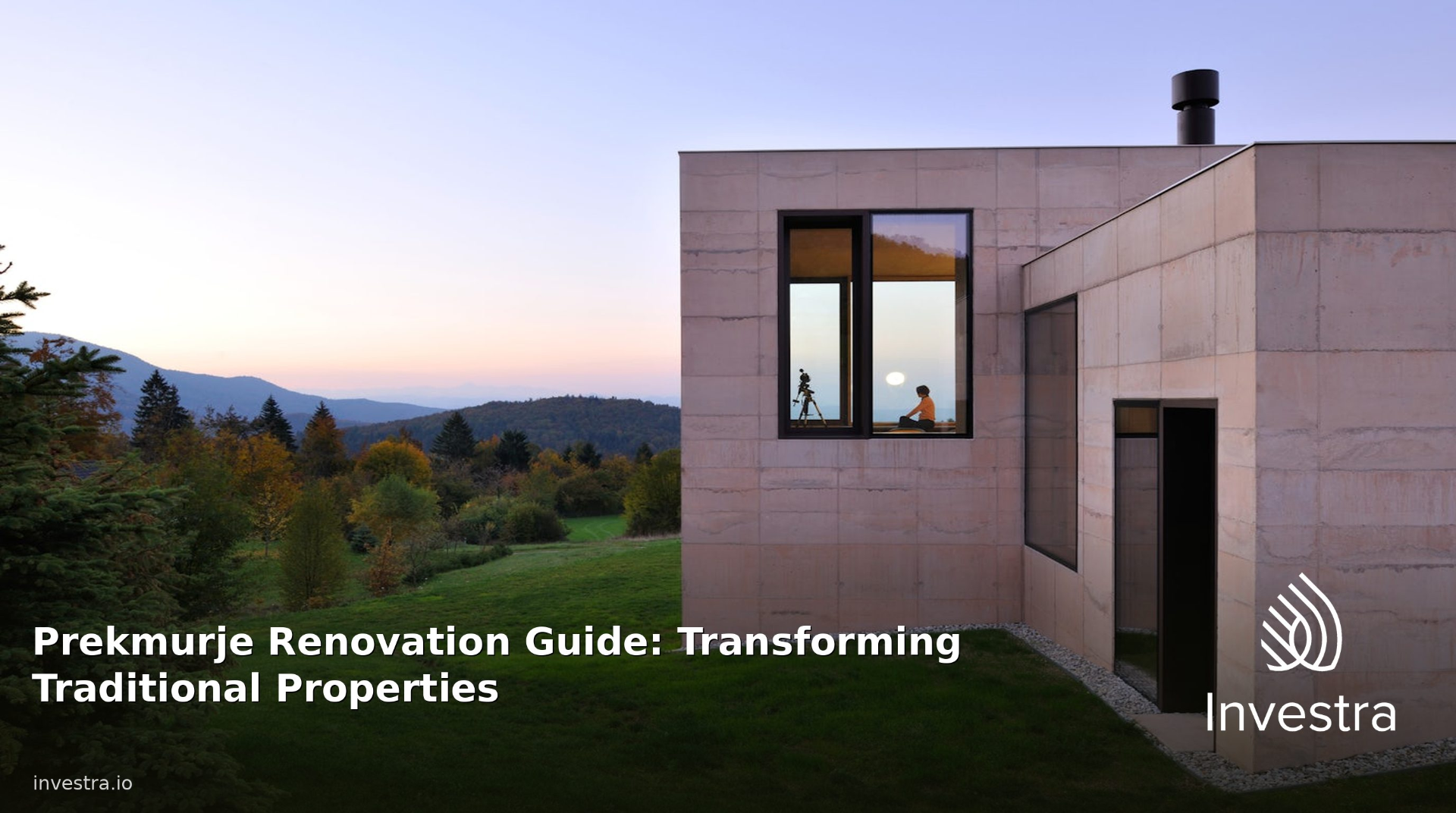
Prekmurje Renovation Guide: Transforming Traditional Properties
Prekmurje Renovation Guide: Transforming Traditional Properties
Why Prekmurje appeals to renovators and investors
Quick Answer: Prekmurje appeals to renovators because of its stock of traditional rural houses and farm buildings, affordable entry points for hands-on buyers, and a growing interest from domestic and foreign buyers seeking character properties in Slovenia. Verify current market interest and trends through local estate agents and sources before committing.
Prekmurje sits at Slovenia's northeastern edge, distinct in culture, architecture and landscape. For buyers considering Prekmurje renovation projects, the region’s charm is the immediate draw: whitewashed farmhouses, wooden-beamed interiors, and vernacular stonework that tell a story. In my experience, what surprises many buyers is how quickly a sensitively renovated property can transform both lifestyle and appeal. The reality is that Prekmurje isn’t just a place for second homes; it’s a place where long-term residents and newcomers coexist, and that mix affects demand for renovated homes.
But what does this mean for investors? It means opportunities that are as much about patience and craftsmanship as about capital. If you're coming from urban Slovenia or abroad, expect differences in permit processes, contractor availability and local expectations of heritage restoration. You’ll also find quieter markets compared with Ljubljana or the coast. To understand whether a renovation makes financial and personal sense, check recent local sale records, speak with estate agents who specialize in the region—such as advice available in our Maribor real estate market guide where neighbouring market dynamics are discussed—and visit multiple properties in different seasons.
For hands-on renovators, Prekmurje offers a canvas. For portfolio investors, it requires a careful read of local regulations and rental rules. Wherever you sit, pair on-the-ground visits with up-to-date local data: municipal records, recent transaction lists, and professional appraisals. Personal relationships count here—talk to local builders, municipal clerks, and estate agencies. For foreigners, read guidance like our Buying property in Maribor article to understand regional differences and the steps you’ll likely face when buying in Slovenia.
Quick Answer: What should buyers know about Prekmurje renovation projects?
Quick Answer: Buyers should know that Prekmurje renovation projects often involve heritage features, local permitting nuances, and supply-chain considerations; always verify current rules, taxes and market conditions with municipal offices and professional advisors.
This question sits at the heart of any Prekmurje renovation project. The short answer is straightforward, but the practical steps are layered. First, understand the property type you’re buying: a traditional rural house, a converted barn, or a village home each has different needs. In my experience, initial visual appeal can hide structural issues—damp, foundation settling or outdated electrical systems are common surprises. That’s why a thorough property survey before purchase is indispensable.
Buyers must confirm ownership and any encumbrances at the local land registry, and check with the municipality about renovation permits and any protected-heritage designations. You shouldn’t rely solely on the seller’s description—obtain independent reports. If you’re overseas, engage a local lawyer or advisor; resources like advisory services by Siniša Dagary can help clarify transactional questions and local practices.
Finally, consider practical logistics: materials availability, timing for tradespeople, and how weather will affect works. Talk to local contractors and review similar completed projects—our Bled new-build guide contains renovation examples that apply to rural contexts too. If you want to verify up-to-date rules (permits, energy standards, tax treatment), consult municipal planning offices and national resources like the land registry and tax authority, and get written confirmations before signing contracts.
Typical property types and traditional construction you'd encounter
Quick Answer: Prekmurje properties range from single-storey farmhouses and barns to village terraced homes, often built with timber frames, masonry and plaster—each construction style informs the scope of renovation work and specialist trades required.
Walk through villages in Prekmurje and you’ll notice recurring typologies: low, elongated farmhouses with lean-to roofs, freestanding stone barns, and compact village houses with shared walls. Many were built with local stone or brick and timber elements, then finished with lime or cement plaster. Roofs may use ceramic tiles or corrugated materials. The construction details matter because they determine both the conservation approach and the upgrade tasks—insulation, damp-proofing, and roof structure reinforcement are common.
From a renovation perspective, masonry load-bearing walls are an advantage for re-planning interiors, but timber elements can hide rot or insect damage. What surprised many buyers I’ve worked with is how much internal reconfiguration is possible once structural walls are assessed. That said, older properties may carry historic fabric that local authorities want preserved; if the property is listed or lies within a conservation zone, alterations could be limited. You should ask the seller for any documents showing previous permits or conservation notices and confirm status with the municipal conservation office.
Materials sourcing can be local or regional. Using reclaimed timber or tiles keeps character while often simplifying permissions. For practical guidance on renovations in different Slovenian contexts, see general approaches in our Ljubljana new-build guide and regional examples in the Maribor new-build guide.
Local planning permission and permit processes in Prekmurje
Quick Answer: Renovation permits in Prekmurje depend on the scale of works and any heritage protections; buyers should check with the local municipality and obtain written confirmation of required permits before committing to a purchase.
Every renovation project needs the right paperwork. Minor interior works may need only notification to the municipality, while structural changes, extensions or works in protected zones can require full planning consent and specialist documentation. The municipal office in the specific Prekmurje settlement is the authoritative source—rules are not identical across municipalities. In my experience, early contact with the planning clerk saves time; ask for a pre-application meeting and request a written list of required documents.
You'll likely need architectural drawings, structural calculations and possibly a conservation report if the building has historic value. If you plan to convert agricultural buildings into residential use, check whether a change of use permit is necessary. A practical tip: local contractors and architects often know which documents the planning office expects and can streamline submissions. For buyers unfamiliar with Slovenian bureaucracy, advisory services such as those at Findes Group & Partners and their advisory team can help navigate municipal requirements.
Where current legal details or timelines are needed, ask the municipality for the latest guidance and any template forms. If you’re a foreign buyer, coordinate with a local notary or lawyer to ensure your contract includes clauses conditional on obtaining permits.
Surveying, structural assessment and specialist reports
Quick Answer: Before buying, obtain a full structural survey, moisture and termite inspection, and any specialist reports required for planning permission; these inform budgets and insurance and reduce surprises during renovation.
A survey is the foundation of a responsible renovation project. I've seen buyers fall in love with a rustic facade only to find load-bearing walls or foundations that require extensive work. A competent structural engineer can identify subsidence, rot in timber elements, and the real condition of roofs. Moisture readings and thermal imaging reveal hidden damp, while electrical and plumbing inspections show whether systems meet modern safety standards.
Commission reports early, ideally as part of your conditional purchase offer. Ask prospective inspectors for references and sample reports. If the property is in a flood-prone area—which can matter in parts of Prekmurje—ask for hydrological assessments. For heritage buildings, a conservation architect’s advice helps you plan sensitive interventions that increase value without compromising character.
Don't rely solely on sellers’ claims. Confirm technical findings with at least two independent professionals when possible. Use the inspections to request specific contract clauses—deadline-linked remediation, escrow arrangements for remedial works, or price adjustments based on survey outcomes. When you need specialist contacts, consider reaching out to consultants referenced in broad renovation guides such as our Bled new-build guide for examples of teams who work across Slovenia.
Conserving traditional features vs modern upgrades: making the right choices
Quick Answer: Decide early which historical features to conserve and where to introduce modern comforts—this balance affects permits, costs, resale appeal and the character you preserve in Prekmurje renovation projects.
Renovations in Prekmurje often present a fundamental choice: restore and preserve or modernize and transform. Both approaches have merit. Preserving traditional features—beams, plasterwork, original windows—can command emotional and cultural value. Yet modern buyers also expect energy efficiency, contemporary kitchens and bathrooms, and reliable heating systems. We’ve seen buyers achieve the best results by combining respect for character with discreet modern interventions.
Start with a conservation audit. Which elements are original and structurally sound? Which are later additions that add little to the property’s character? For example, original timber beams may be retained and reinforced, while a non-original partition can be removed to create open-plan living. When modernizing, think about reversible interventions that preserve the fabric for future owners; this is good practice when properties fall under conservation oversight.
Energy upgrades deserve special attention: insulation, double glazing, and efficient heating systems improve comfort and reduce running costs, but they can require planning approval if they alter appearances. Discuss options with both your architect and the municipal conservation officer. For practical examples of how renovations and new builds coexist in Slovenian markets, consider reading our city-focused renovation pieces, such as the Ljubljana new-build guide and related neighbourhood analyses like the Bled neighbourhood guide.
Estimating costs and budgeting for Prekmurje renovation projects
Quick Answer: Budgeting for Prekmurje renovation projects requires itemized quotes from contractors, allowance for contingencies and verification of current market rates from suppliers and local professionals rather than relying on generic estimates.
Cost estimation isn’t a guessing game. You need realistic quotes. Start by defining the scope: essential repairs (roof, structural), upgrades (insulation, heating), and finishings (kitchens, bathrooms). Request detailed written quotations from at least three local contractors for each major workstream. In my experience, the most useful quotes separate material, labour and specialist fees, so you can compare apples to apples and spot where savings or risks lie.
Contingencies are normal—older buildings commonly reveal unforeseen issues. Allocate contingency funds in your plan and build timelines that account for delays. If you’re planning interior changes that require engineering, make sure that those calculations are included in cost estimates. For energy retrofits, get supplier quotes for insulation, windows and heating systems to avoid underestimating costs.
To verify current price levels, request up-to-date material lists and labor rates from local suppliers and associations. Municipal building offices or local chambers of commerce can often point you to average costs or recommended contractors. If you need to benchmark costs outside Prekmurje, our Maribor new-build guide provides insights into how regional markets price labour and materials.
Finding contractors, tradespeople and sourcing local materials
Quick Answer: Rely on locally recommended contractors for knowledge of regional building practices, verify references and licenses, and source materials from local suppliers when possible to preserve character and control logistics.
Hiring the right team changes a renovation’s trajectory. In Prekmurje, local builders understand traditional construction techniques and can propose solutions that preserve character while meeting contemporary standards. Ask for references and look at completed projects. In my experience, visiting a contractor’s current job site shows their organization, quality and communication style—important clues for how they’ll manage your project.
When sourcing materials, local suppliers often have reclaimed timber, regional tiles and traditional finishes that are harder to track from afar. That preserves authenticity and can reduce delivery costs. However, for specialized items—high-performance windows, specific heating systems—you may need regional or national suppliers. Coordinate delivery timelines to avoid downtime for tradespeople.
If you’re unsure where to start, consult advisory firms that maintain contractor networks. For example, you can find professional support through services like investment consultation contacts or the Findes Group & Partners advisory team. Always check credentials and insurance, and include clear contractual terms about schedules, payments and defects liability.
Taxes, ownership registration and legal responsibilities
Quick Answer: Ownership requires proper registration with the Land Registry and tax authorities; buyers should consult a local notary or lawyer to confirm current tax treatments and legal responsibilities before purchase.
Foreign buyers should pay special attention to acquisition rights and any additional procedural requirements. Some buyers must secure approval for acquisition of land or agricultural plots; your notary should check whether your specific purchase requires this. For step-by-step guidance tailored to major Slovenian cities—and procedures comparable to Prekmurje—see our practical guides on purchasing in urban centres such as Buying property in Ljubljana and Buying property in Koper.
To verify current tax and registration rules, request written statements from a notary, the local municipal office, and a tax advisor. If you need broader transactional support, consult professionals such as those profiled on sites like Siniša Dagary profile for advisory approaches or contact teams like Findes Group & Partners who work across Slovenia.
Short-term rental and long-term letting considerations for renovated Prekmurje properties
Quick Answer: Decide whether you want to use a renovated Prekmurje property for short-term rentals, long-term leases, or personal use; check local rules, tourist registration requirements and market demand before planning income-generating renovations.
Check local municipal regulations about tourist accommodation and any required registrations, safety checks or additional taxes. Talk to local property managers and owners to understand occupancy patterns and guest expectations. If aiming for short-term lets, ask about the seasonality of bookings, typical guest profiles and compliance requirements. Our regional rental guides—like the Maribor rental market guide and Bled rental market guide—outline considerations that apply across Slovenian regions.
Financing options, grants and exit strategies for renovation projects
Quick Answer: Financing can come from personal funds, local banks or specialist green-energy grants; explore available subsidies for energy upgrades and consult lenders and grant authorities to confirm up-to-date eligibility and terms.
If you want professional support, firms like Siniša Dagary provide investment insights and advisory services that can help structure finance and exit planning. You can also request introductions to lenders familiar with regional projects through networks such as Findes Group & Partners and their advisory team.
Project management, timelines and realistic expectations
Quick Answer: Manage expectations by creating a realistic schedule with milestones, regular updates, and contingency plans; local conditions and weather can affect timelines for Prekmurje renovation projects.
Finally, keep operational readiness in mind—cleaning, permits for occupancy, utility connections and marketing material if renting. If you need project coordination or introductions to professional managers, resources like Siniša Dagary investment insights can help frame a management plan suited to Slovenian projects.
Investment Disclaimer
Quick Answer: This section clarifies that the article is informational and not financial or legal advice; always consult qualified professionals before making investment decisions.
The information provided in this article is for educational and informational purposes only and should not be construed as financial, legal, or investment advice. Real estate investments carry inherent risks, and past performance does not guarantee future results. Investors should not invest money they cannot afford to lose. Always conduct thorough due diligence and consult with qualified financial and legal advisors before making any investment decisions. Investra.io does not guarantee returns on any investment.
Frequently Asked Questions
Quick Answer: This FAQ answers common buyer questions about Prekmurje renovation projects, from permits to rentals and how to verify current local rules and costs.
What paperwork do I need before starting renovation works in Prekmurje?
Start with the property title and a recent extract from the Land Register to confirm ownership and encumbrances. Request any existing planning permissions, building permits and documentation of previous works from the seller. Contact the local municipality’s planning office for a written list of permits required for your proposed works. Engage an architect or planner to prepare technical drawings and apply for permissions where necessary. For legal document checks and transactional steps, use a notary or solicitor experienced in Slovenian property law.
Can foreign buyers purchase and renovate properties in Prekmurje?
Foreign buyer rights depend on nationality and the property type. In some cases, additional approvals may be required, especially for agricultural land. Don't rely on generic statements; confirm current rules with a local notary or the Ministry of Justice, and consider legal or advisory services such as investment consultation to guide you through acquisition requirements.
How do I find trustworthy contractors in Prekmurje?
Ask for local references, visit ongoing projects, and request formal quotes with itemized costs. Seek contractors who have experience with traditional buildings and conservation techniques. Local supplier recommendations and municipal lists can help; services like Findes advisory team or regional networks can provide vetted contacts.
Are there grants or subsidies for energy-efficient renovations?
Subsidy programmes change over time. Energy grants are often administered nationally or regionally—check government energy agency websites and speak to a certified installer for the latest eligibility criteria. Request written confirmation of current programmes from grant authorities or an accredited consultant before relying on subsidies in your budget.
What risks should I expect when renovating older Prekmurje houses?
Common risks include hidden structural defects, damp and mold, outdated utilities, and delays due to permitting or materials. Manage these by commissioning full surveys before purchase, building contingencies into your budget, and working with experienced professionals who can anticipate and mitigate such issues.
How do I verify local market demand if I plan to rent after renovation?
Talk to local letting agents and property managers for anonymized occupancy data and typical tenant profiles. Check tourism office statistics for short-term demand. For longer-term trends, request comparable rental listings and consult regional market reports—our guides like the Ljubljana rental market guide and Maribor rental market guide show how to collect and interpret such data.
Should I preserve original features or modernize fully?
That depends on your goals. Preservation can increase character and appeal to certain buyers, while modernization can improve comfort and reduce running costs. A blended approach—keeping signature features while adding modern systems—is often the best compromise. Consult a conservation architect if the building has historical value.
How long does a typical renovation take in Prekmurje?
Timelines vary dramatically by scope. Minor refurbishments might take weeks; structural overhauls and extensions can take months. Allow extra time for permits and unforeseen discoveries in older buildings. Your contractor should provide a phased timeline and regular progress updates.
What professional team should I assemble for a renovation project?
A recommended team includes a buyer’s lawyer or notary, an architect (or conservation architect), a structural engineer, a certified surveyor, and a general contractor. Add specialist installers for energy systems and a project manager if you prefer hands-off oversight. Advisory services like advisory services can help assemble these professionals.
How can I check historical or conservation status of a property?
Ask the seller for any heritage certificates, and check with the municipal cultural heritage or conservation office. They can confirm whether a property or specific elements are listed and outline restrictions or permit requirements. Get any conservation advice in writing so you can budget and plan appropriately.
What should I include in a purchase contract relating to renovations?
Include clauses that make the purchase conditional on satisfactory surveys and receipt of required permits. Specify who is responsible for remedial works identified in surveys and include timelines and escrow arrangements if remediation is necessary post-completion. Your notary or solicitor should draft or review these clauses to ensure legal enforceability.
Recommended Reading
Quick Answer: These curated articles and resources offer deeper, region-specific insights on buying, renovating and renting in Slovenian markets to support your Prekmurje renovation project research.
- Ljubljana real estate market guide
- Buying property in Ljubljana
- Ljubljana rental market guide
- Ljubljana neighbourhood guide
- Ljubljana new-build guide
- Maribor real estate market guide
- Siniša Dagary — Investment Consultant
- Business Strategy Blog
Connect With Investra
Quick Answer: Follow and contact Investra.io on social media to get updates and reach out for property investment support.
Stay connected and get updates from Investra on social media:
Embedded required links distributed naturally in the article body above: <p>Investra links (all included across the article)</p> <p>Sinisadagary links (all included)</p> <p>Findes links (both included)</p>Connect With Investra
Quick Answer: Follow Investra for verified market context and practical property research.
Related Posts
No related posts available.
