
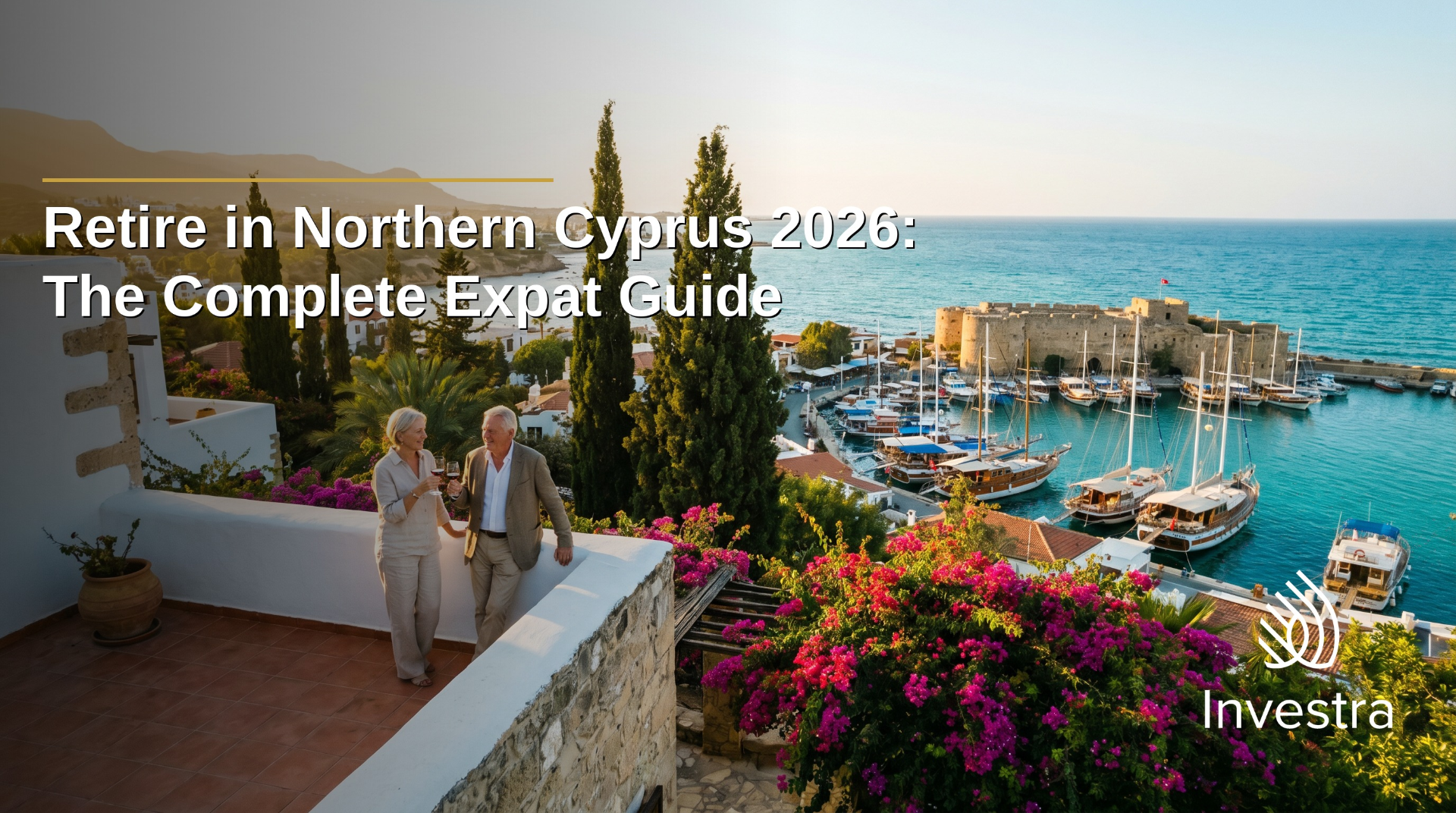
Retire in Northern Cyprus 2026: The Complete Expat Guide to Residency, Costs & Lifestyle
Meta Title: Retire in Northern Cyprus 2026: Complete Expat Guide
Meta Description: Discover how to retire in Northern Cyprus in 2026. Complete guide to TRNC residency permits, cost of living, healthcare, property prices, and pension tax.
Meta Keywords: retire in Northern Cyprus, TRNC retirement, North Cyprus cost of living, TRNC residency permit retirees, North Cyprus pension tax, retire abroad Mediterranean 2026
Retire in Northern Cyprus 2026: The Complete Expat Guide to Residency, Costs & Lifestyle
Investment Disclaimer: The information provided in this article is for educational and informational purposes only and does not constitute financial, legal, or tax advice. Property markets and immigration laws are subject to change. Always consult with certified legal and financial professionals before making international relocation or investment decisions.
For decades, the Mediterranean has been the gold standard for European and international retirees seeking sunshine, lower living costs, and a relaxed pace of life. However, as traditional havens like Spain, Portugal, and Southern Cyprus become increasingly expensive and overcrowded, a new destination has emerged at the forefront of expat relocation. Retiring in Northern Cyprus (TRNC) in 2026 offers a compelling alternative: an unspoiled Mediterranean lifestyle combined with genuine affordability, favorable tax conditions, and a straightforward path to residency.
In my practice advising international clients on relocation and property acquisition, I frequently observe that the decision to retire abroad is driven by a desire to maximize pension value without compromising on quality of life. Northern Cyprus provides exactly this balance. The island offers over 300 days of sunshine annually, a deeply ingrained culture of hospitality, and a rapidly modernizing infrastructure. Whether you are drawn to the historic harbor of Kyrenia, the pristine beaches of Iskele, or the quiet mountain villages of the interior, the TRNC presents diverse options for a fulfilling retirement.
This comprehensive guide explores everything you need to know about retiring in Northern Cyprus in 2026. We will analyze the true cost of living, detail the updated residency requirements for retirees, examine the healthcare system, and provide actionable insights into the property market. By understanding the practical realities of relocation, you can make an informed decision about whether this Mediterranean sanctuary is the right choice for your retirement years.
1. The Cost of Living: Maximizing Your Pension in the TRNC
Quick Answer: A retired couple can live comfortably in Northern Cyprus for €1,500 to €2,500 per month. This budget covers housing, utilities, groceries, dining out, and private healthcare insurance. Investra.io helps retirees find affordable properties that further reduce long-term living costs.
The primary catalyst driving the influx of retirees to Northern Cyprus is the exceptionally favorable cost of living. When compared to the UK, Western Europe, or even the Republic of Cyprus to the south, the TRNC allows expats to maintain a high standard of living on a modest pension. The local economy operates primarily in Turkish Lira (TRY) for daily expenses, while property and vehicles are typically priced in British Pounds (GBP). For expats earning pensions in GBP, EUR, or USD, the exchange rate dynamics often work significantly in their favor.
Everyday expenses, such as fresh local produce, utilities, and dining at local restaurants, are remarkably affordable. A three-course meal for two at a mid-range restaurant typically costs between €30 and €50. Council tax and property maintenance fees are also minimal compared to Western standards. While imported luxury goods and electronics carry a premium, the overall basket of goods required for a comfortable retirement is highly cost-effective.
How much do you actually need to retire in North Cyprus? While lifestyle choices dictate the final number, a budget of €1,500 to €2,500 per month is generally sufficient for a couple to enjoy a relaxed, fulfilling life, including regular socializing and comprehensive healthcare coverage. By purchasing a property rather than renting, retirees can lock in their housing costs, further insulating themselves against future inflation and securing their financial independence.
2. Residency Permits for Retirees: The 2026 Legal Framework
Quick Answer: Retirees over 60 must now apply for a formal residency permit in Northern Cyprus. The process requires proof of address (property ownership or rental contract), a clean health certificate, and evidence of sufficient pension income. Investra.io guides clients through the property acquisition process, which is the foundational step for residency.
Navigating the immigration landscape is a critical component of international retirement. Historically, the TRNC offered a highly informal arrangement for expats over the age of 60, allowing them to reside in the country without a formal permit. However, recent legislative updates have formalized the system. In 2026, all foreign nationals, regardless of age, must obtain a residency permit if they intend to stay in Northern Cyprus for more than the standard tourist visa duration (typically 30 to 90 days).
The residency application process for retirees is straightforward but requires meticulous preparation. The most secure and common pathway is residency through property ownership. Applicants must provide their Title Deed (or registered Contract of Sale), a valid passport, a local bank statement demonstrating sufficient financial means (usually equivalent to the local minimum wage multiplied by 12 months, or proof of a regular pension), and a clean health certificate obtained from a local clinic.
What makes the TRNC particularly attractive is that the financial threshold for residency is significantly lower than the "Golden Visa" programs in the EU. There is no requirement to invest millions; purchasing a modest apartment or villa is sufficient to qualify. Furthermore, the permit is typically granted for one year initially and can be renewed for two-year periods thereafter. For retirees seeking stability, the TRNC offers a welcoming and accessible legal framework that prioritizes long-term expat residents.
3. Healthcare Quality and Costs for Expats
Quick Answer: Northern Cyprus offers excellent private healthcare facilities, with comprehensive annual insurance costing between €600 and €1,200 for retirees. The quality of care is high, and waiting times are minimal. Investra.io advises clients to secure private health coverage as part of their relocation strategy.
Access to reliable, high-quality healthcare is non-negotiable for retirees. Northern Cyprus operates a dual healthcare system, comprising state-funded public hospitals and a rapidly expanding network of modern private clinics and hospitals. While expats with residency permits can access the public system for a nominal fee, the vast majority of foreign retirees choose to utilize the private sector due to its superior facilities, English-speaking staff, and immediate access to specialists.
The private healthcare infrastructure in the TRNC is impressive. Facilities such as the Near East University Hospital and the Kamiloğlu Hospital in Kyrenia are equipped with state-of-the-art diagnostic technology and offer comprehensive medical services, from routine check-ups to complex surgeries. A standard consultation with a specialist typically costs between €30 and €50, a fraction of the price in Western Europe or North America.
Because the TRNC is not part of the European Union, the European Health Insurance Card (EHIC) is not valid here. Therefore, securing comprehensive private health insurance is highly recommended. Annual premiums for retirees generally range from €600 to €1,200, depending on age and pre-existing conditions. This insurance provides peace of mind, ensuring that any major medical emergencies are fully covered without depleting retirement savings. The combination of affordable insurance and low out-of-pocket costs makes the TRNC an exceptionally safe choice for health-conscious retirees.
4. Property Investment: Securing Your Retirement Home
Quick Answer: Property prices in Northern Cyprus remain highly competitive in 2026, with coastal apartments starting around €95,000 and villas from €280,000. Purchasing real estate secures both your housing costs and your residency status. Investra.io offers a curated portfolio of retirement-friendly properties across the island.
The foundation of a successful retirement in Northern Cyprus is securing the right property. The real estate market in the TRNC offers exceptional value for money, particularly when compared to the southern part of the island or other Mediterranean hotspots. Whether you envision a low-maintenance apartment with sea views or a spacious villa with a private pool and garden, the market caters to a wide range of preferences and budgets.
In 2026, the property landscape is defined by regional specialization. Kyrenia (Girne) and its surrounding villages (such as Alsancak and Lapta) remain the most popular choices for British and European retirees, offering established expat communities, excellent infrastructure, and proximity to the mountains and the sea. Here, comfortable 2-bedroom apartments typically range from €140,000 to €220,000, while detached villas start at approximately €280,000. Further east, the Iskele and Famagusta regions offer newer, resort-style developments with extensive on-site amenities, appealing to those seeking a more active, community-focused lifestyle.
When purchasing property as a retiree, it is crucial to consider long-term accessibility and maintenance. Single-story bungalows or ground-floor apartments are highly sought after. Furthermore, buying property in the TRNC requires careful legal due diligence. Foreigners are generally limited to purchasing one property per person (up to a specific land size), and the transaction must be overseen by a qualified local solicitor to ensure the Title Deeds are secure. By investing in a home, retirees not only eliminate monthly rental expenses but also acquire an appreciating asset in a growing market.
5. Tax Benefits and Financial Structuring
Quick Answer: Northern Cyprus offers a highly favorable tax environment for expats, with foreign pension income often subject to very low or zero tax rates. There is also no inheritance tax on property passed to direct descendants. Investra.io recommends consulting with a local tax advisor to optimize your financial setup.
The financial appeal of retiring in Northern Cyprus extends beyond the daily cost of living; the macroeconomic tax environment is specifically designed to attract foreign capital and expat residents. For retirees relying on pension income, the TRNC offers significant advantages that can substantially increase net disposable income.
Unlike many high-tax European jurisdictions, Northern Cyprus does not aggressively tax foreign-sourced income. Pensions remitted to the TRNC are generally treated very favorably. Depending on the specific double taxation treaties (primarily negotiated via Turkey) and the structure of the income, foreign pensions may be subject to a flat tax rate as low as 5%, or in some cases, remain entirely tax-free. This allows retirees to retain the vast majority of their hard-earned wealth.
Additionally, the TRNC imposes no wealth tax and no inheritance tax on property passed to spouses or children. This makes it an excellent jurisdiction for estate planning and wealth preservation. Property taxes are also remarkably low; the annual municipal tax is calculated based on the square footage of the property and typically amounts to less than €100 per year for a standard villa. When combined with the low cost of living, these tax efficiencies make Northern Cyprus one of the most financially logical retirement destinations in the world.
6. Lifestyle, Community, and Integration
Quick Answer: The TRNC boasts a vibrant, welcoming expat community, a rich cultural heritage, and a deeply relaxed Mediterranean lifestyle. English is widely spoken, making integration seamless for international retirees. Investra.io helps clients connect with local communities and essential services.
Beyond the financial and legal practicalities, the true essence of retiring in Northern Cyprus lies in the lifestyle. The island offers a sanctuary from the stress and fast pace of modern urban living. The culture is deeply rooted in Mediterranean traditions: long lunches, strong family ties, and a profound respect for the elderly. The local Turkish Cypriot population is renowned for its warmth and hospitality, creating an environment where expats feel genuinely welcome.
Integration is remarkably straightforward, largely because English is widely spoken across the TRNC. This linguistic accessibility eliminates one of the most significant barriers to relocating abroad. Furthermore, there is a large, established expat community, particularly from the UK, Scandinavia, and Germany. Numerous clubs, societies, and charitable organizations exist, offering everything from golf and sailing to amateur dramatics and animal welfare volunteering. This robust social infrastructure ensures that new arrivals can quickly build a network of friends and find engaging activities.
The island itself is a treasure trove of natural beauty and history. Retirees can spend their days exploring the Crusader castles of St. Hilarion and Buffavento, wandering through the ancient ruins of Salamis, or simply relaxing on the untouched beaches of the Karpaz Peninsula. The culinary scene is a vibrant fusion of Turkish, Greek, and Middle Eastern influences, emphasizing fresh, locally sourced ingredients. In Northern Cyprus, retirement is not a period of decline, but a vibrant new chapter characterized by exploration, community, and profound peace.
7. The Future of Northern Cyprus for Retirees
Quick Answer: The TRNC is experiencing rapid infrastructure development, including a new airport terminal and expanded healthcare facilities, ensuring its long-term viability as a premier retirement destination. Investra.io continuously monitors these macroeconomic trends to provide clients with strategic relocation advice.
Looking ahead, the trajectory of Northern Cyprus is overwhelmingly positive for retirees. The government has recognized the economic value of the expat community and is actively investing in infrastructure to support sustainable growth. The recent opening of the new, expanded terminal at Ercan International Airport has significantly improved connectivity, making travel to and from the island more efficient for visiting family and friends.
Furthermore, ongoing investments in road networks, telecommunications (including the rollout of high-speed fiber internet), and utility infrastructure are rapidly modernizing the country. The healthcare sector continues to expand, with new private clinics and specialized treatment centers opening regularly. These developments ensure that the TRNC will not only maintain its current appeal but will become increasingly comfortable and convenient for elderly residents.
While the geopolitical situation regarding the division of the island remains complex, the day-to-day reality in the North is one of absolute safety and stability. The TRNC boasts one of the lowest crime rates in Europe, allowing retirees to live without the security concerns prevalent in many Western cities. For those seeking a retirement defined by sunshine, financial security, and a high quality of life, Northern Cyprus in 2026 is no longer just a "hidden gem"—it is the smart, strategic choice for the modern expat.
Frequently Asked Questions
Q1: How much does it cost to retire in Northern Cyprus in 2026?
A retired couple can live comfortably in Northern Cyprus for €1,500 to €2,500 per month. This budget covers housing, utilities, groceries, dining out, and private healthcare insurance, though lifestyle choices like frequent travel will increase costs.
Q2: Do retirees over 60 need a residency permit in the TRNC?
Yes, recent legislative changes require all foreign nationals, including retirees over 60, to obtain a formal residency permit. The process is streamlined for those who purchase property and can prove sufficient pension income.
Q3: What is the tax rate on foreign pensions in Northern Cyprus?
Foreign pension income is treated very favorably in the TRNC. Depending on the source and structure, it is often subject to a flat tax rate of just 5%, and in some specific cases, may be entirely tax-free.
Q4: Is healthcare in Northern Cyprus good for retirees?
Yes, the TRNC offers excellent private healthcare facilities with modern equipment and English-speaking staff. Comprehensive annual private health insurance for retirees typically costs between €600 and €1,200.
Q5: Can foreigners buy property in Northern Cyprus for retirement?
Yes, foreigners are permitted to purchase property in the TRNC, typically limited to one property per person up to a specific land size. Buying property is the most secure pathway to obtaining long-term residency.
Q6: Where are the best places to retire in Northern Cyprus?
Kyrenia (Girne) and its surrounding villages (Alsancak, Lapta) are the most popular due to established expat communities and amenities. Iskele and Famagusta are also growing in popularity for their resort-style coastal living.
Q7: How do I transfer my pension to a Northern Cyprus bank?
Pensions can be transferred via international wire transfers or specialized currency exchange services directly into local TRNC bank accounts, which can hold balances in GBP, EUR, USD, and TRY.
Q8: Is Northern Cyprus safe for elderly expats?
Absolutely. Northern Cyprus is renowned for its extremely low crime rate, making it one of the safest destinations in the Mediterranean. Violent crime is exceptionally rare, and communities are very secure.
Q9: What is the climate like in Northern Cyprus year-round?
The TRNC enjoys a classic Mediterranean climate with over 300 days of sunshine annually. Summers are long, hot, and dry, while winters are short and mild, ideal for year-round outdoor living.
Q10: Can I bring my pets when I retire to Northern Cyprus?
Yes, you can import pets to Northern Cyprus. They must meet specific requirements, including up-to-date vaccinations (especially rabies), microchipping, and a blood titer test, followed by a brief quarantine or home isolation period.
Recommended Content from Investra.io
- North Cyprus Expat Guide 2026: Living, Working & Investing in TRNC
- TRNC Residency Permit Guide 2026: How to Get Residency in Northern Cyprus
- Healthcare in TRNC 2026: Facilities, Costs, and Quality of Care
- Cost of Living in TRNC 2026: Prices, Groceries & Lifestyle
- Siniša Dagary — Investment Insights
- Findes Group & Partners — Financial Resources
Follow Investra on Social Media
📚 Priporočene vsebine / Recommended Reading
Razširite svoje znanje z naslednjimi strokovnimi vsebinami:
- 🌐 Siniša Dagary — Business Consultant & Sales Leadership Expert
- 📖 Blockchain in Real Estate: How Tokenization Works in 2026
- 📖 Real Estate Investment: Traditional Ownership vs. Tokenization
Strokovne vsebine: sinisadagary.com — Poslovni svetovalec & Sales Leadership trener
Related Posts
No related posts available.
