
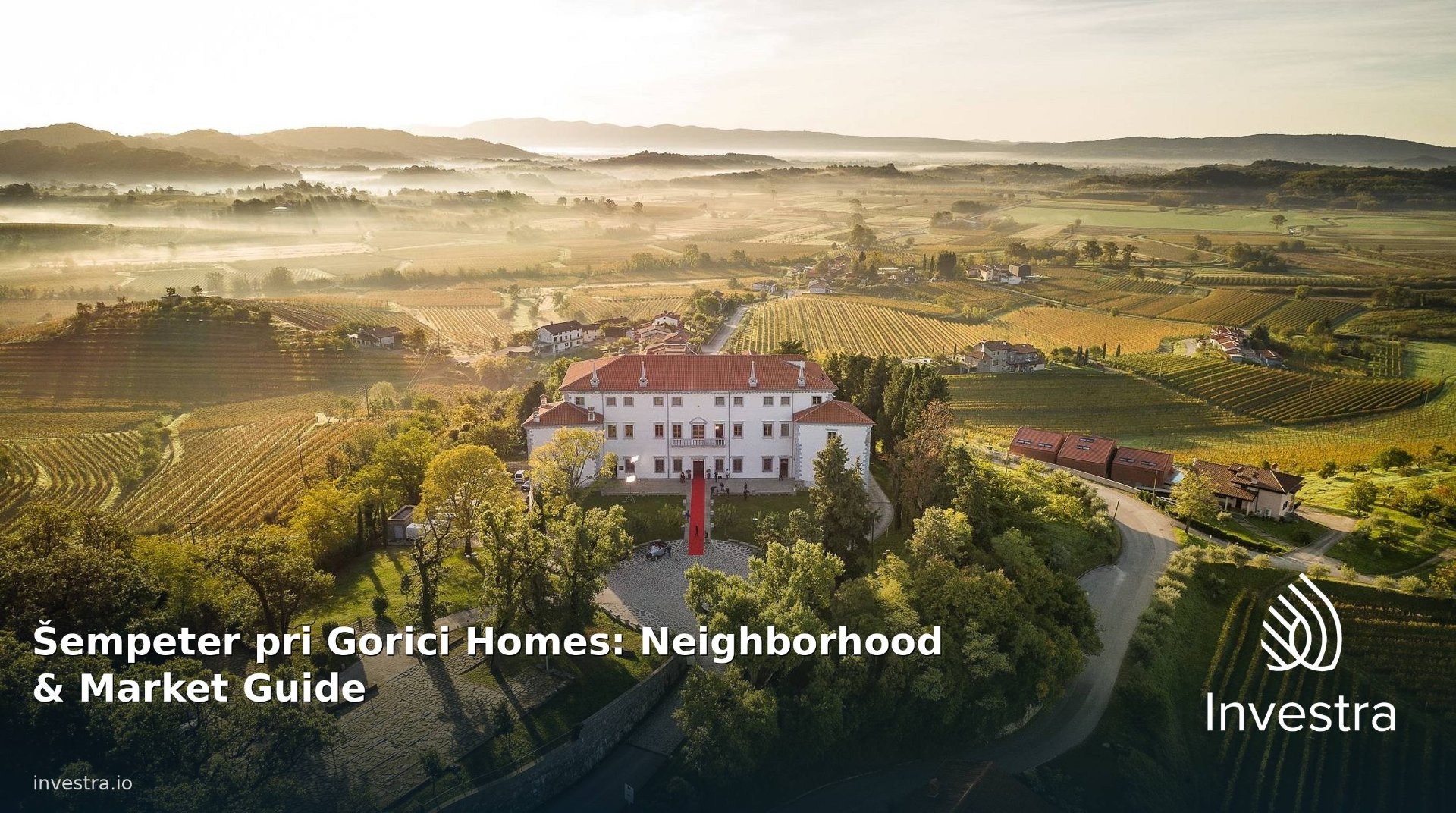
Šempeter pri Gorici Homes: Neighborhood & Market Guide
Šempeter pri Gorici Homes: Neighborhood & Market Guide
What buyers should know about Šempeter pri Gorici homes for sale
Quick Answer: Šempeter pri Gorici homes for sale attract buyers looking for a compact town with strong cross-border connections to Italy, proximity to Nova Gorica, and practical commuter links; buyers should research local market listings, planning rules, and verify current data with local agents and registries.
If you're searching for Šempeter pri Gorici homes for sale, you’re considering a location that sits at the crossroads of urban convenience and regional charm. In my experience working with buyers in the Goriška region, what surprises many is how much daily life is shaped by the town’s position near the Slovenian-Italian border: shopping, services, and employment are often spread across two countries, which can be an advantage for lifestyle flexibility and commuting. But what does this mean for buyers? It means you need to think beyond a single property checklist and examine cross-border transport, municipal services, and regional planning documents.
The reality is that every purchase in Šempeter pri Gorici requires local verification. Don’t rely on dated listings or single brokers. Check the real estate registry (Land Registry or Zemljiška knjiga), request current cadastre extracts, and consult with municipal planning offices to confirm permitted uses and any ongoing or proposed infrastructure projects. If you want a starting point for local market context, our Ljubljana and Goriška-focused materials can help frame what's happening nationally and regionally—see the Ljubljana real estate market guide and local town analyses like the Maribor market guide for comparative context.
Finally, remember that precise figures—average prices, typical transaction taxes, current rental demand—change frequently. After you shortlist properties, verify up-to-date numbers with the municipal office, licensed estate agents in Goriška, and professional advisors like the Findes Group & Partners advisory team. If you prefer individual consulting, people such as Siniša Dagary offer services tailored to cross-border investments and due diligence.
Neighborhoods and micro-areas in Šempeter pri Gorici
Quick Answer: Šempeter pri Gorici's neighbourhoods vary from quiet, family-oriented streets near green spaces to denser zones close to commercial hubs; choose based on commute needs, noise tolerance, and proximity to services.
The neighbourhood you pick in Šempeter pri Gorici will shape daily life more than the property itself. There are residential pockets with single-family houses and gardens, and smaller clusters of apartment buildings closer to the town centre. Some streets feel village quiet; others are activated by nearby shops, schools and bus routes. In my experience, buyers who travel for work prioritise fast road links and public transport, while second-home buyers often prioritise privacy and access to regional leisure like the Vipava Valley or the Karst.
Ask practical questions when visiting: how late do shops stay open? Where are the closest health services and schools? Are there municipal plans for new roads or commercial developments nearby? We’ve seen buyers make different decisions based on subtle differences—a house two streets from a primary school feels very different from one two streets from a busy arterial road. For a structured look at urban vs suburban options across Slovenia's cities to compare patterns, check resources like the Ljubljana neighbourhood guide or the Maribor neighbourhood guide.
Don’t forget cross-border amenities: residents often use services in Gorizia (Italy) and Nova Gorica depending on where they find better options. That opens benefits but requires checking access rules, such as parking regulations and any differences in emergency service arrangements. If you’re mapping micro-areas, take photos at different times of day and speak to local shopkeepers or the municipality; they can give you the on-the-ground perspective that listing descriptions rarely capture.
Goriška region market dynamics and nearby city influences
Quick Answer: The Goriška region's market is shaped by local demand, cross-border movement to Italy, and influences from nearby urban centres like Nova Gorica and Koper; compare market reports and local listings to form a current picture.
Goriška sits in a distinct position within Slovenia’s real estate landscape. Proximity to the Italian border and to urban hubs influences buyer behaviour and supply availability. What we've seen is that buyers often look beyond municipal borders when evaluating value and lifestyle, checking opportunities in Nova Gorica, Koper, and even Ljubljana for comparative perspectives. For example, developers and buyers may refer to city guides such as the Koper real estate market guide or the Ljubljana market guide when assessing regional trends.
Trends that matter here include commuting patterns, cross-border employment, and seasonal tourism flows. If you’re evaluating Šempeter pri Gorici homes for sale with rental potential, consider how proximity to transport corridors and tourist routes affects occupancy. The reality is local markets move in response to national policy and cross-border labour markets. To verify current supply and demand, consult municipal publications, the Slovene Statistical Office, and multiple local agents. If you want project-focused insights, read specialised articles like the Maribor rental market guide or the Bled rental market guide for how tourist towns differ from commuter towns.
Finally, local infrastructure projects—new roads, hospital expansions, or school upgrades—can shift micro markets quickly. Always ask for the latest municipal planning maps and speak with the local planning office to confirm any proposals that might affect the neighbourhoods you’re considering.
The buying process in Šempeter pri Gorici: step-by-step practical guide
Quick Answer: Buying Šempeter pri Gorici homes for sale follows Slovenia’s standard property process: agree terms, complete due diligence, sign a purchase contract, register the title, and settle taxes and fees—verify each step with licensed local notaries and registries.
The Slovenian property purchase process has consistent formal stages, but local practice varies. From my conversations with buyers, the steps that cause the most confusion are timing of notary appointments, the role of advance deposits, and how to confirm clean title records in the Land Registry. Start by engaging a licensed real estate agent or a legal adviser familiar with Goriška. For foreign buyers, the process can include additional checks: certain nationals may require permission from the Ministry of Justice or must use a Slovenian company depending on the property type. To find exact, current requirements, consult the ministry’s website and the local municipality.
A practical sequence usually looks like this: find a property; obtain pre-contract information and municipal confirmations; instruct a notary or lawyer to perform title and encumbrance searches; negotiate a private reservation or preliminary contract; sign a notary public purchase contract; pay associated transactional costs; register the change of ownership at the Land Registry. Don’t skip a visual inspection and a technical survey—particularly if the property is older. For insights on buying in nearby urban markets—which share many procedural steps—see the detailed buyer guides for Ljubljana and Maribor: Buying property in Ljubljana and Buying property in Maribor.
When it comes to verification, confirm the property’s cadastral plot number, any registered mortgages, and whether there are enforcement orders or disputes. Use the official electronic land registry portals and ask your notary for certified extracts. If you're unfamiliar with Slovenian procedures, consider advisory services—such as those offered by Findes Group & Partners advisory team or consultants like Siniša Dagary—to coordinate searches, translations, and filings.
Ownership, registration and taxes on property in Goriška
Quick Answer: Ownership is formalised through registration in the Land Registry; taxes and transaction fees apply and can change, so verify current rates with the tax office, a notary, or local advisors before you commit.
Owning property in Šempeter pri Gorici means your name must appear in the Land Registry (Zemljiška knjiga). The notary prepares the necessary documentation and files the ownership change. Be mindful of encumbrances like registered mortgages or easements—these transfer with the land unless formally removed. In practice, buyers often ask if non-residents face restrictions; the answer depends on nationality, whether a reciprocity condition is in force, and the property type, so always check the Ministry of Justice and municipal guidance for confirmation.
Tax matters are a frequent source of confusion. There are transactional taxes, possible capital gains considerations, and routine municipal taxes such as property tax or waste fees. I avoid giving headline percentages here because these items change and can be influenced by residency, property age, and whether you intend to rent. Instead, verify current liabilities by asking the municipal tax office, consulting a tax advisor, or checking official national tax guidance. Notaries and professional advisors can provide a fee estimate tailored to your transaction.
Legal title and registration checks should include a search for zoning restrictions and building permits. If the property has had unauthorised extensions, the municipality may require remediation. You can request historical permit records from the local planning office. For a look at how different Slovenian cities handle new builds and renovations, read the regional new-build guides such as the Maribor new-build guide and the Ljubljana new-build guide, which reflect practical paperwork and permitting steps useful across regions.
Rental and short-term let considerations for Šempeter pri Gorici homes
Quick Answer: Renting out Šempeter pri Gorici homes for sale can be viable, but you must check municipal short-term let rules, tax registration, and market demand; consult up-to-date local rental reports before deciding.
If you're buying Šempeter pri Gorici homes for sale with rental income in mind, ask where your tenants will come from. Are you aiming at long-term local tenants—professionals and families—or short-term visitors who want access to cross-border attractions and regional tourism routes? The rental market’s profile will determine furnishing, maintenance standards, and marketing channels. From what we've seen, properties placed near transit routes or with easy access to Nova Gorica attract different tenant segments than those in quiet suburban pockets.
Short-term lets require special attention. Municipalities across Slovenia have introduced varying registration and safety requirements for short-term accommodation. Also, short-term operations often trigger specific tax registration and local service fees. Never assume a property that can be rented long-term can automatically be used for tourist lettings—ask the municipality for current rules and consult an accountant for tax registration. For the practical approach to rent and yield assessment, consider reading market-focused resources like the Ljubljana rental market guide and similar guides for Bled and Maribor.
Operationally, factor in property management if you don’t live locally. Property managers handle guest communication, cleaning, and maintenance, but they add to operating costs. If you want cross-border guests, ensure tax and VAT registration is sorted and check whether any double-taxation agreements between Slovenia and Italy apply to your income streams. Professional advisers such as advisory services or the Findes Group & Partners can help set up compliant rental operations.
New builds, renovations and construction advice for buyers
Quick Answer: When considering Šempeter pri Gorici homes for sale, decide early if you’ll buy new-build, renovate, or both; verify permits, builder credentials, and compliance with local planning rules before committing.
Deciding between buying a new-build or renovating an older property is a core choice. New builds can offer lower immediate maintenance and modern standards, but renovation can unlock value in well-located houses. The practical questions are straightforward: does the property have valid building permits? Are there any unresolved code violations? What are the expected timelines for permitted work? One lesson from my work with clients is to never assume permits are in order—always request and review permit histories through the municipal office and get a technical building inspection.
If you're buying a property that needs work, ask builders for references and proof of insurance, and check whether they are registered to operate in Slovenia. For larger structural or permit-driven renovations you’ll need architectural plans and municipal approval. To understand how renovations and new builds are handled elsewhere in Slovenia, I recommend the regional new-build guides such as the Bled new-build guide and the Maribor new-build guide. These documents outline the practical steps for permits and contractor selection that apply across municipalities.
Cost estimates and timelines shift rapidly, so get at least three written quotes and a clear payment schedule. Also check whether the property lies in a zone with heritage restrictions—renovating a listed building can be rewarding but requires specialist approvals. If you’re not fluent in Slovenian construction law, use bilingual advisers to translate plans and contracts. Consultants such as Siniša Dagary offer project oversight and can coordinate between local builders and foreign buyers.
Due diligence, financing and who to hire in Goriška
Quick Answer: Conduct thorough due diligence, secure pre-approval from banks if financing, and hire a notary, lawyer, and local tax advisor; use specialist consultants for cross-border or complex transactions.
Hire reliable professionals. A licensed notary will handle the legal registration; an independent lawyer should review contracts, especially if the sales documents are in Slovenian. Engage a certified surveyor for technical inspections and a tax advisor for transaction-related taxes and recurring liabilities. For cross-border complexities—if you spend time in Italy or rent to Italian guests—consult advisors who understand both systems. Firms such as Findes Group & Partners and independent consultants like Siniša Dagary advisory services can coordinate legal, tax and administrative checks.
Finally, plan for contingency. Even with excellent due diligence, issues such as unexpected permit requirements, title anomalies, or minor structural problems can appear. Build a buffer into your timeline and budget for the unknowns, and insist on clear contractual protections—deposit terms, deadlines, and remedies for breaches. For insights on buying and financing in urban markets, read our guides on Buying property in Koper and Buying property in Bled, which include lender and process considerations useful across Slovenia.
Investment Disclaimer
Quick Answer: This section outlines the limitations of the information provided and reminds readers to consult qualified advisors before making investment decisions.
The information provided in this article is for educational and informational purposes only and should not be construed as financial, legal, or investment advice. Real estate investments carry inherent risks, and past performance does not guarantee future results. Investors should not invest money they cannot afford to lose. Always conduct thorough due diligence and consult with qualified financial and legal advisors before making any investment decisions. Investra.io does not guarantee returns on any investment.
Beyond that mandated paragraph, I want to stress the importance of verifying specifics for Šempeter pri Gorici homes for sale. Tax rules, permitting processes, and local market conditions change. Use the Land Registry, municipal planning departments, and licensed professionals to confirm details. If you plan to rely on rental income, speak with local property managers and accountants for up-to-the-minute guidance. For local advisory services, see contact points like the Findes Group & Partners advisory team and consultants such as Siniša Dagary — investment consultation.
Frequently Asked Questions
Quick Answer: This FAQ answers common questions buyers ask about Šempeter pri Gorici homes for sale, from legal checks to practical living considerations.
The following questions reflect the most frequent queries buyers raise when considering Šempeter pri Gorici. Each answer aims to point you toward verification methods and local resources rather than making definitive claims—because legal details and numbers change frequently.
What documentation should I request when viewing a Šempeter pri Gorici property?
Ask the seller for the property’s cadastral plot number, the Land Registry extract (zemljiškoknjižni izpisek), building permits, certificates of energy performance if available, and recent utility bills. Request documentation of any renovations, warranties, and proof of payment for municipal fees. Have your notary or lawyer verify all submitted documents against official registries. If the documents are in Slovenian, obtain certified translations before signing anything.
Can foreigners buy property in Šempeter pri Gorici?
It depends on your nationality and the type of property. Slovenia’s rules can require reciprocity or ministry permissions for non-EU nationals, and agricultural land often has stricter rules. To confirm your eligibility, consult the Ministry of Justice and the municipality. A Slovenian notary or a lawyer experienced with foreign buyer cases can guide you through any permission processes and documentation requirements.
How do I verify current market prices for Šempeter pri Gorici homes for sale?
Use multiple sources: recent sales registers via the Land Registry, reports from licensed agencies operating in Goriška, and up-to-date listings on local property portals. For broader context, compare regional reports like the Ljubljana market guide or the Maribor market guide. Ask a local agent for comparable sales (comps) and request documentation for those sales.
What taxes and fees should I expect at purchase?
Transactional taxes and notary fees apply, and municipalities may charge local taxes. Because rates and rules vary and change over time, verify current obligations with a notary, a tax advisor, or the municipal tax office. They will provide an itemised estimate for your particular transaction, including any potential exemptions or special cases.
Is renting out a property in Šempeter pri Gorici straightforward?
Renting is possible but requires compliance with national tax law and municipal rules. Long-term rentals are generally simpler administratively than short-term tourist lets, which may have registration, safety, and service requirements. Speak to a local property manager and tax advisor to understand obligations and to develop a short- or long-term rental strategy that fits your goals.
How can I check whether a property has unresolved legal issues?
Order a certified extract from the Land Registry and review encumbrances, mortgages, and court liens. Ask the notary to perform a full title search and to confirm whether any enforcement cases exist. If you suspect disputes, request copies of any litigation documents and consult a lawyer before proceeding.
What should I know about renovation permits?
Minor cosmetic work often doesn’t need permits, but structural changes, extensions, and changes to use typically require municipal approval and building permits. Before buying, request the permit history and speak with the municipal planning office to confirm permitted uses. If a property has unauthorised works, discuss the implications with a lawyer and an architect.
Where can I get reliable local advice and project management?
Local advisory firms and consultants experienced in Slovenian property law are essential. Consider contacting the Findes Group & Partners advisory team or a private consultant such as Siniša Dagary advisory services for coordinated legal, tax, and project management support.
How do cross-border issues with Italy affect ownership and use?
Cross-border living can offer convenience but also introduces differences in services, tax residency rules, and healthcare arrangements. If you spend significant time in Italy or rent to Italian nationals, check bilateral agreements, healthcare eligibility, and any tax implications. Legal and tax advisors with cross-border expertise can clarify residency thresholds and reporting obligations.
Recommended Reading
Quick Answer: The following curated guides offer deeper, region-specific insights into Slovenian cities, buying steps and renovation considerations to help contextualise Šempeter pri Gorici decisions.
- Ljubljana real estate market guide
- Buying property in Ljubljana
- Ljubljana rental market guide
- Ljubljana neighbourhood guide
- Ljubljana new-build guide
- Maribor real estate market guide
- Siniša Dagary — Investment Consultant
- Business Strategy Blog
These readings will expand your understanding of regional market mechanics, legal processes and renovation best-practices. For more targeted information on Maribor, Bled, Koper and the rental market across these towns, I also recommend exploring the specific Investra guides within the article body which cover neighbourhood choices, buying as a foreigner, rental strategies and new-build processes across Slovenia. If you want an advisory conversation, use the contact channels on the Sinisa Dagary site or the Findes Group & Partners advisory pages listed earlier.
Connect With Investra
Quick Answer: Follow Investra.io on social media to get updates, market commentary, and new listings relevant to Šempeter pri Gorici and the wider Slovenian market.
Stay connected with Investra for market updates and new property opportunities. Below are working social links to follow Investra.io on major platforms:
Facebook: https://www.facebook.com/investra.io
LinkedIn: https://www.linkedin.com/company/investra-io
YouTube: https://www.youtube.com/@InvestraIO
If you prefer personalised assistance, consider contacting local advisory services mentioned earlier: Findes Group & Partners advisory team or Siniša Dagary — investment consultation. They can coordinate viewings, due diligence and multi-jurisdictional planning that often arises with Šempeter pri Gorici homes for sale.
Connect With Investra
Quick Answer: Follow Investra for verified market context and practical property research.
Related Posts
No related posts available.
